
What Is the Best Washer to Buy for Your Home?

The best washer is the one that fits your home and routine. Look for a machine that matches your available space, water and drain connections, usual laundry load, and comfort with hands-on work. A washer that seems like a good fit can still cause trouble if it has nowhere safe to drain or leaves you moving clothes between tubs.
Start by checking where the washer will sit and whether you have standard water and drain connections. Without them, a portable washer may work, but only if its water supply and drain setup suit your space. Then consider how much laundry you wash at once and whether you want the machine to handle each step or are willing to transfer clothes yourself. These checks will help narrow the choice before you compare how different washers work.
The best washer solves your everyday laundry problem
Start with the place where the washer will sit, then check how it gets water and sends it away. A machine that fits the room but cannot connect safely is not a good fit. The same goes for a washer that works but leaves you washing several tiny loads or moving wet clothes by hand when you do not want to.
Think about a normal week, not an unusually large load. Do you mostly wash a few shirts and towels, or do you regularly wash bulky bedding and a family’s clothes? Your usual load helps show whether a compact washer will keep up or whether a full-size machine makes more sense.
Then be honest about the work you are willing to do. Some washers handle the wash and spin steps in one machine. Others have separate tubs, so you move clothes from the wash tub to the spin basket yourself. That transfer may be manageable for a small load, but it can become a chore if you do laundry often.
Make a short list before comparing machines: the space you have, the water and drain connections available, the size of your usual load, and whether you want an automatic cycle. A washer that meets those needs is a better choice than one that looks appealing but makes laundry harder at home.
Standard hookups suit full-size washers; portable ones need a plan
Standard washer hookups are the water connections and drain connection set up for a washing machine. If your home has hot and cold water supply hoses and a nearby drain, a regular washer may be the simplest option. Check that the connections are in good condition and that the washer can sit close enough without bending or crushing the hoses.
If you rent, live in an apartment without laundry connections, or need a washer in an RV, a portable model may be worth considering. But “portable” does not mean it can operate anywhere with no setup. You still need a dependable way to supply water, a place for used water to go, and an electrical outlet that meets the washer’s instructions.
Some portable washers connect to a faucet with a quick-connect sink adapter, a fitting that clicks onto a compatible faucet. Look closely at your faucet before buying. A standard threaded faucet may accept a common adapter, while a pull-out spray faucet often needs a different connection or a dedicated utility-sink tap. Confirm the exact adapter requirements with the washer’s product page or manual.
Also check where the drain hose will reach. A washer with a built-in drain pump pushes used water through a hose, which may allow the hose to reach a sink or standpipe. A gravity drain hose relies on water flowing downhill, so it needs to lie in the position the manufacturer specifies and reach a suitable floor drain or other approved drain point.
Do not assume a kitchen sink is a safe drain just because the hose reaches it. The hose must stay secured so water cannot jump out of the sink during draining. If you cannot make a firm, safe connection or have nowhere suitable for the water to drain, choose another location or ask the property manager or a qualified plumber before buying.
Automatic washers save transfers; twin tubs need your help
A fully automatic washer handles the wash, rinse, and spin steps as part of its cycle. You load clothes, add the recommended detergent, choose a cycle, and return when the machine finishes. This is usually the easier style if you want to start a load and do something else while it runs.
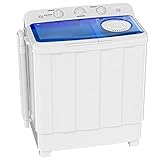
A twin tub has a wash tub where clothes are washed and a separate spin basket that removes some water. You move clothes between the tubs by hand. Some twin-tub designs let one tub wash while the other spins, but you still need to keep an eye on the process and transfer each load yourself.
Picture a load of towels before choosing. With a twin tub, you may need to take a wet bundle from the wash tub and place it in the spin basket, then repeat the steps for the next batch. Wet clothes can feel heavy, so consider whether lifting and moving them is comfortable for you.
Automatic does not always mean full-size, and portable does not always mean manual. Read the product page carefully to see whether the washer completes the wash and spin stages on its own or requires you to move clothes. If you want to avoid hands-on transfers, look for clear instructions describing an automatic wash-rinse-spin cycle.
Think about timing, too. A twin tub may suit someone who can stay nearby and manage each step. If you often start laundry while working, caring for children, or leaving home, a machine that needs repeated attention may not fit your routine, even if it fits the room.
Measure the space and match it to your loads
Measure the spot where the washer will stand before ordering. Check the width, depth, and height of the available space, then compare those measurements with the washer’s listed dimensions. Leave room for the lid or door to open, and make sure you can reach the faucet, shutoff valves, and drain hose without moving the machine every time.
Allow space behind the washer for hoses, using the manufacturer’s clearance instructions. A machine that fits tightly against a wall can pinch a hose or make a connection hard to reach. Also measure doorways, hallways, and turns along the route into the room, not just the final parking spot.
Match the washer’s listed capacity to what you wash most often. A compact washer may be convenient for a few everyday clothes, but bulky towels or bedding can take up more room than their weight suggests. Check the manufacturer’s guidance for load size and do not pack clothes tightly just to avoid running another load.
Use this quick checklist before deciding:
- Measure the location: Check width, depth, height, opening space, and the path the washer must travel through.
- Picture a normal load: Consider your usual mix of clothes, towels, and bedding rather than an occasional small load.
- Check the work involved: Decide whether you can comfortably move wet clothes between tubs or want the washer to handle the steps.
- Confirm the floor and position: The washer needs a stable, level place. Follow the manual’s directions for adjusting its feet and setting it in place.
A washer that shakes, shifts, or walks across the floor is not properly settled. Stop the cycle if that happens, then check whether the machine is level and whether clothes have bunched on one side. Do not keep running it while it moves, since movement can strain hoses or damage nearby items.
Confirm water, drainage, and power before buying
First, identify the water source. For a full-size washer, check for hot and cold water shutoff valves and the supply hoses the machine requires. For a portable washer, check whether the listed faucet connection fits yours, or whether the model needs another water supply arrangement. The product instructions are the final word on connections.
Next, trace the drain hose from the washer to the place where water will go. Check its required height, position, and reach in the manual. Keep the hose from kinking, slipping, or resting where it could flood a room if it comes loose. If you cannot secure the hose or confirm that the drain can handle the water, do not run the washer until the setup is corrected.
Check the electrical instructions before bringing the machine home. Many household washers call for a standard 120-volt, 3-prong grounded wall outlet, but requirements vary by model. Use the outlet and connection method stated by the manufacturer. Avoid an ungrounded two-prong plug or a lightweight extension cord; if the proper outlet is missing, ask a qualified electrician rather than improvising.
Before the first load, make sure water connections are tight and the drain hose is secured. Turn on the supply as directed and watch the connections for leaks. If water appears around a hose, valve, or outlet, stop the washer and shut off the water if you can do so safely. Contact a qualified plumber or electrician for a connection you cannot safely correct.
Use the detergent type and amount listed in the manual. Too much soap can leave residue and create excess suds, especially in a washer designed for low-suds HE (High Efficiency) detergent. Keep the lid open between loads if the manual allows it, so the inside can air out and stale damp smells are less likely to build up.
Compact washers help when space or hookups are limited
A compact washer can make sense if a full-size machine will not fit, you have a small amount of laundry at a time, or you need a portable setup. It is most useful when its water supply, drain, and electrical needs match the place where you plan to use it. A small footprint alone does not guarantee an easy setup.
Before buying, compare how the machine works with your daily routine. Confirm whether it is fully automatic or has separate wash and spin tubs, how much laundry the maker says it can handle, and whether the drain hose can reach a safe drain. Check the dimensions and connection details on the product page, then read the manual for any requirement that is not clear.
Compact models are not a substitute for every household’s main washer. If you regularly wash large or bulky loads, check whether the stated capacity and load guidance suit that work. If you would have to split every load into many small batches, the space savings may not be worth the extra time.
Choose the setup you can use safely and comfortably, not simply the smallest machine. A portable washer is a practical option only when you can secure its water connection, route its drain correctly, and manage the amount of laundry it handles. If any part of the setup is uncertain, confirm it with the manufacturer or a qualified local professional before connecting the washer.

- TAR Score8.9
TAR Score is a ranking system developed by TopAppliancesReviews.com. TAR score has no relationship or impact from any manufacturers or sales agent websites. Learn more
- BrandGIANTEX

- TAR Score8.6
TAR Score is a ranking system developed by TopAppliancesReviews.com. TAR score has no relationship or impact from any manufacturers or sales agent websites. Learn more
- BrandGIANTEX

- TAR Score7.9
TAR Score is a ranking system developed by TopAppliancesReviews.com. TAR score has no relationship or impact from any manufacturers or sales agent websites. Learn more
- BrandWinado
- TAR Score7.2
TAR Score is a ranking system developed by TopAppliancesReviews.com. TAR score has no relationship or impact from any manufacturers or sales agent websites. Learn more
- BrandAuertech

- TAR Score7.1
TAR Score is a ranking system developed by TopAppliancesReviews.com. TAR score has no relationship or impact from any manufacturers or sales agent websites. Learn more
- BrandGeneric
Last update on 2026-11-09 / Affiliate links / Images, Product Titles, and Product Highlights from Amazon Product Advertising API
Related guides: what is the best clothes washer to buy and what is the best washer dryer to buy.


10 Best Washing Machine For King Size Comforter of 2026 For Bulky Bedding

11 Best Semi Automatic Washing Machine Under 10000 of 2026 For Apartments and RVs

9 Best Compact Refrigerator For Beer Bottles of 2026 For Upright Bottle Fit

10 Best Quality Semi Automatic Washing Machine of 2026 For Leak-Free Laundry

11 Best Small Washer Machine of 2026 For Everyday Laundry

12 Best Vibration Pads For Washing Machine of 2026 To Stop Walking and Shaking

11 Best Selling Front Load Washing Machine of 2026 For Quiet Odor-Free Laundry

11 Best Washing Machine For King Size Bedding of 2026 To Prevent Cycle Errors





