
How to Use the Knife Tool in Illustrator to Cut Shapes

Most beginners assume Adobe Illustrator has a dedicated cutting button sitting right on the main toolbar. In reality, the tool stays tucked away under another icon, but using it takes just one motion. Press and hold the Eraser icon until the hidden menu pops up, pick the Knife, and drag across any shape to divide it. Holding down the Alt key (Option on a Mac) locks that cut into a straight line instead of a loose freehand wave.
How the cut turns out depends on a couple of simple setup details. Leaving artwork unselected causes the blade to slice through every layer underneath, so picking your target shape first keeps the background safe. The tool also requires a solid enclosed shape, which means live text and open lines must become regular outlines before cutting. Mastering these few steps makes slicing your artwork fast and frustration-free.
Locating the Hidden Knife Tool on Your Toolbar
Adobe Illustrator groups related tools under single buttons to keep your screen organized. Because of this layout, the Knife Tool does not have its own visible icon on the main toolbar. It hides behind the Eraser Tool alongside the Scissors Tool.
To find it, look at the vertical toolbar on the left side of your artboard. Locate the Eraser Tool, which looks like a rectangular eraser block. Click and hold your left mouse button over the Eraser icon for one second, or right-click it. A small pop-out flyout menu will appear. Click the Knife Tool, which displays a small angled blade icon.
If the knife does not appear in that flyout menu, your workspace is currently set to the Basic toolbar layout. The Basic setting hides many secondary vector tools. To fix this, go to the top menu bar, click Window, hover over Toolbars, and select Advanced. Your toolbar will expand with every tool Illustrator offers, adding the Knife Tool to the Eraser menu.
You can also keep these tools visible while working. When the pop-out menu opens, click the thin vertical bar on its right edge. This tears off the menu into a small floating palette containing the Eraser, Scissors, and Knife tools that you can position anywhere on your screen.
How to Cut a Shape Without Slicing Other Layers
The most common problem beginners face with the Knife Tool is slicing through artwork they never intended to touch. By default, the knife cuts through every unlocked object sitting under your drag line. Following these steps ensures your cut divides only the exact shape you want to split.
-
Select your target shape with the Selection Tool (the black arrow).
Reason: Selecting a specific shape restricts the cut to that object alone, protecting background colors and nearby elements from accidental slices. -
Switch to the Knife Tool in your toolbar.
Reason: The mouse pointer turns into an angled blade icon, confirming that Illustrator is ready to slice vector paths (the digital outlines of your artwork). -
Position your cursor on the empty canvas just outside your shape border.
Reason: Starting outside the border ensures your cut line crosses the outer edge completely, preventing partial notches inside the shape. -
Click and drag your mouse across the shape in one continuous motion.
Reason: The tool draws a freehand cut line across your artwork that instantly divides the shape into two separate pieces. -
Release your mouse button once the cursor reaches empty space on the opposite side.
Reason: Passing through the opposite border ensures Illustrator generates clean anchor points (the corner or curve dots that hold shapes together) and closes both new edges automatically. -
Switch back to the Selection Tool or the Direct Selection Tool (the white arrow).
Reason: The Knife Tool can only slice shapes; it cannot select, move, or restyle objects once the cut is finished. -
Click on an empty area of your canvas to deselect your artwork.
Reason: Illustrator keeps both freshly sliced halves selected together, which makes them move as a single unit until you clear the selection. -
Click on just one half of the sliced shape and move or recolor it.
Reason: Clearing the selection lets you pick one piece independently, confirming that the cut worked and allowing you to apply custom colors to each half.
Making Straight and 45-Degree Cuts with Keyboard Keys
Dragging the Knife Tool freehand creates an organic, wavy incision. That works well for freeform artwork, puzzle cutouts, or uneven color patches. But logos, icons, and UI elements usually require a crisp, flat cut. You can control the angle of the blade by holding modifier keys while you slice.
- Hold the Alt key (Option on Mac) before clicking: This command forces the knife to cut in a straight line between where you click down and where you release your mouse.
- Add the Shift key for locked 90-degree and 45-degree angles: Holding both Alt and Shift (Option and Shift on Mac) locks your cut to exact vertical, horizontal, or 45-degree diagonal lines.
- Release the mouse button before letting go of your keyboard keys: If you release Alt or Shift before letting go of the mouse, Illustrator immediately converts your straight cut into a wobbly freehand line.
- Watch the straight preview line on your canvas: While holding Alt, Illustrator displays a thin guide line across your artwork so you can confirm the exact angle before completing the cut.
- Start and finish past the shape edges: Even with straight cuts, you must click down outside the starting border and release past the finishing border to divide the object cleanly.
Fixing Common Knife Tool Mistakes and Errors
When the Knife Tool refuses to cut, the issue is almost always the structure of your artwork. The tool is designed specifically for a closed path (a solid enclosed shape like a circle, rectangle, or filled polygon). Here is how to fix the four most common snags.
The Knife Tool Will Not Cut Live Text
Dragging the knife across a headline or paragraph does nothing. Illustrator treats live text as editable typography rather than raw geometry, so the knife cannot slice font characters while the software expects you to type words.
To fix this, select the text box with the black arrow. Go to the top menu, click Type, and choose Create Outlines (an Illustrator command that turns live text into shapes). You can also press Control + Shift + O on Windows or Command + Shift + O on Mac. Once your letters convert into vector shapes, the knife will slice through them easily.
The Knife Tool Fails on Single Open Lines
If you draw a line with the Line Segment Tool or an open stroke with the Pen Tool, the Knife Tool will ignore it. The Knife Tool needs an enclosed area to split. It cannot divide a line that has no interior fill.
To split an open line, use the Scissors Tool instead and click directly on the stroke. If you prefer using the Knife Tool, convert the stroke into an enclosed shape first. Select your line, go to Object on the top menu, choose Path, and click Outline Stroke. This turns your thin line into a filled rectangle that the knife can slice.
Background Artwork Gets Cut by Accident
If you slice across an object without selecting it first, the knife cuts through every unlocked layer beneath your cursor. A single drag can damage background gradients, decorative borders, and secondary illustrations.
You can prevent this by using the Layers panel. Locate the layers holding your background elements on the right side of your workspace. Click the small blank square next to the eye icon to display a padlock. Once a layer is locked, the Knife Tool cannot alter it, even if you cut directly across it.
Shapes Trapped Inside Clipping Masks
A clipping mask acts like a frame that hides extra artwork outside a set border. If you try to cut an object sitting inside a clipping mask, the Knife Tool may cut the invisible frame instead of your illustration, or fail completely.
To cut artwork inside a mask, double-click the object with the Selection Tool to enter Isolation Mode. Make your cut with the Knife Tool inside this isolated space. Once finished, press the Escape key or double-click blank canvas space to return to your normal workspace.
Comparing the Knife, Scissors, and Eraser Tools
Because Illustrator nests the Knife, Scissors, and Eraser tools together in the toolbar, beginners often confuse their roles. Each tool alters digital artwork in a fundamentally different way.
The Knife Tool
The Knife Tool is built for solid enclosed shapes. When you slice a filled circle in half, the tool draws new connecting lines between the cut points. Both resulting pieces become closed shapes with their own fills and borders. It works freehand or in straight lines using keyboard shortcuts. Use the Knife Tool when you want to divide a shape into puzzle pieces, create geometric color splits, or carve an object into multiple usable parts without leaving open gaps.
The Scissors Tool
The Scissors Tool is a precision instrument designed for single points and open lines. It requires you to click directly on an anchor point (a corner or curve dot) or directly on a path line. When you snip a line with the Scissors Tool, it breaks the path into two open segments without closing the endpoints or filling the gap. Use the Scissors Tool when you want to trim an open line, cut a border, or disconnect specific points along an outline.
The Eraser Tool
The Eraser Tool deletes vector artwork entirely, functioning like a physical rubber eraser on paper. While the Knife Tool makes a microscopic hairline incision that keeps all your artwork intact, the Eraser Tool vaporizes whatever lies beneath its brush diameter. As you drag across a shape, it carves out an open valley and automatically rebuilds closed boundaries along the edges. Use the Eraser Tool when you want to punch holes through shapes or sculpt organic negative space.
Frequently Asked Questions
Why did the Knife Tool slice through my background illustration?
The Knife Tool cuts through every unlocked object on your screen if nothing is selected before you drag. To protect your background artwork, select the specific shape you want to cut using the Selection Tool (black arrow) before picking up the Knife. You can also lock background layers in the Layers panel by clicking the square next to the eye icon to display a padlock.
Can I use the Knife Tool on an imported photo or raster image in Illustrator?
No, the Knife Tool only cuts vector paths, which are mathematical digital outlines. It cannot cut pixel-based raster images such as JPEG or PNG photographs. If you need to cut a photograph inside Illustrator, crop the image using a clipping mask or trace the image into vector paths first using the Image Trace feature.
Why does my cut shape still move as one piece after using the Knife Tool?
Illustrator automatically leaves both sliced pieces selected together right after you complete a cut. Because both halves remain highlighted, dragging one half pulls the other half along with it. Switch to the Selection Tool, click once on an empty area of your canvas to clear the selection, and then click directly on just one of the halves to move it independently.
What is the keyboard shortcut for the Knife Tool in Illustrator?
Adobe Illustrator does not assign a default single-letter keyboard shortcut to the Knife Tool. You can activate the Eraser Tool by pressing Shift + E and then hold the eraser icon to pick the knife. Alternatively, you can create a custom shortcut by going to Edit on the top menu, selecting Keyboard Shortcuts, locating the Knife Tool under Tools, and assigning your own key combination.
Related guides: how to use a knife sharpener tool and how to use a knife sharpening tool.


Top Best Quiet Portable Generator Electric Start 2026 - (2026 Updated)

The 10 Best Portable Power Station For Tailgating 2026

10 Best Washing Machine For King Size Comforter of 2026 For Bulky Bedding

11 Best Semi Automatic Washing Machine Under 10000 of 2026 For Apartments and RVs

The Best Concrete Floor Buffer 2026 - Top Choices

Best Cooling Fan with HEPA Filter: Our 2026 Top Picks for Cleaner Air
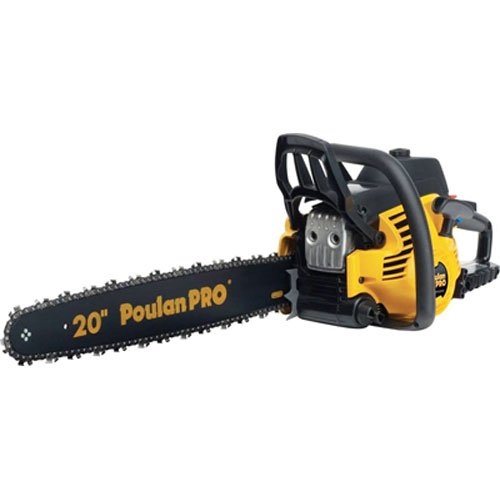
Best poulan chainsaw 2026 - Reviews & Buying Guides

Value Picks: 10 Vitamix 5300 Best Price of 2026






