
What Can a Ryobi 1800 PSI Pressure Washer Clean Safely?

This pressure level handles most home chores. It delivers plenty of force to clean cars, siding, outdoor furniture, and wood decks without gouging surfaces. Dust, road grime, and light green mildew rinse away quickly under a wide spray. But it does not have the raw strength to lift deep oil stains off old concrete or strip peeling fence paint.
Clean results depend on three basic details. Soft wood and vehicle paint need a wide spray tip to prevent scratches, while hard brick can take a narrower stream. The unit also requires a steady flow of water from your garden hose and a standard safety wall outlet with a reset button to prevent motor burnout. The steps below show you how to set up safely and choose the best spray tip for every task.
The Short Version
- An 1800 PSI (water spray pressure) electric washer is built for routine home upkeep, easily tackling muddy cars, vinyl siding, patio furniture, and composite decking without the risk of chewing into soft surfaces.
- It lacks the raw hydraulic force needed for commercial paint removal, lifting deeply set oil puddles from concrete, or rapidly blasting wide driveways.
- Before flipping the power switch on, you must always purge (flushing trapped air out before turning on power) by squeezing the trigger wand until water runs in a solid, unbroken stream.
- To protect the electric motor from sudden burnout, plug directly into a standard 120-volt GFCI (a safety wall outlet with a reset button) and verify your outdoor garden spigot delivers at least 1.5 gallons per minute.
What 1800 PSI Cleans Well and Where It Falls Short
An electric unit rated at 1800 PSI delivers roughly thirty to thirty-five times the pressure of a standard garden hose nozzle while using about 1.2 GPM (water flow volume). That combination produces plenty of scouring power for thin layers of dirt, moss, and road grime. Because the water volume remains controlled, the spray lifts grime cleanly rather than blasting dirty mud splatters all over your shoes and patio walls.
This pressure level works exceptionally well on everyday household surfaces:
- Vehicles and work equipment: Cars, pickup truck beds, SUVs, motorcycles, and riding mowers. It strips dried road salt and bug splatter from bumpers and wheel wells without peeling clear coats or stripping factory vinyl decals.
- Outdoor patio areas: Moldy plastic lawn chairs, powder-coated metal patio tables, composite deck boards, and decorative stone walkways. It washes away seasonal green algae and pollen in a single pass.
- Home exterior trim: Vinyl siding, garage door panels, sealed wood fences, brick entry steps, and stained outdoor trash bins.
Understanding the limits of an 1800 PSI machine is just as important as knowing what it can clean. Trying to use a light-duty electric washer for heavy industrial chores leads to frustration and damaged equipment.
Poured concrete driveways with old motor oil stains present a major hurdle. Automotive fluids soak deep into the microscopic pores of concrete. An 1800 PSI washer will rinse off loose surface dust, but it lacks the force to lift embedded grease without commercial-grade chemical cleaners and stiff wire brushing.
Peeling layers of old exterior paint from siding or restoring weather-beaten wood decks is another task where this tool falls short. To strip cured paint or remove grey, sun-damaged wood fibers with 1800 PSI, you would have to hold the nozzle two inches from the surface. Holding the spray that close produces uneven lines and gouges soft cedar or pine boards, leaving deep splinters across your deck floor. For massive areas like two-car driveways or wrap-around porches, the narrow spray path also means the job will take hours longer than it would with a larger commercial washer.
How to Start Your Pressure Washer Safely to Protect the Pump
The internal pump of an electric washer relies on incoming water for both cooling and lubrication. Running a pump dry for even thirty seconds can overheat internal valves, warp plastic parts, and ruin rubber pressure seals. Air trapped inside the pump head can also cause sudden pressure spikes that damage the motor. Follow this sequence every time you set up your machine.
- Attach the garden hose securely: Screw a standard 5/8-inch garden hose onto the water inlet collar on the machine. Tighten it by hand until the rubber washer seats firmly so air cannot leak into the water line.
- Turn the outdoor spigot all the way open: Open the garden faucet completely. You want the maximum available house water pressure filling the hose before the machine turns on.
- Purge the trapped air from the system: Pick up the spray gun without any nozzle snapped into the wand. Squeeze and hold the trigger. You will hear air hissing, sputtering, and spitting out of the metal barrel. Keep holding the trigger down until a smooth, steady stream of water pours freely from the wand tip.
- Plug into a grounded power supply: Connect the power cord directly to an exterior 120-volt GFCI outlet. Press the built-in reset button on the cord plug and look for the indicator light to confirm the connection is active.
- Snap in your nozzle and switch on: Insert your selected spray nozzle into the quick-connect wand collar until it clicks firmly into place. Flip the rocker switch to the ON position. The motor will hum briefly to pressurize the line, then fall silent until you pull the trigger to start washing.
Nozzle Selection Guide for Wood, Vinyl, Concrete, and Cars
The colored tips that click into the spray wand control the width and intensity of the water stream. Using the wrong tip on a delicate surface can cut grooves into wood or blast paint right off a car fender. Matching the nozzle angle to the material ensures quick cleaning without accidental gouges.
- The 40-degree wide fan tip (white): This is your gentlest option. It spreads the water out into a wide, soft fan pattern that sweeps across broad areas. Use this nozzle on vehicle body panels, clear coats, car windows, painted porch railings, outdoor patio cushions, and fiberglass screens.
- The 25-degree general cleaning tip (green): This tip provides the ideal balance of scraping force and coverage area. It is narrow enough to scrub away grime yet wide enough to move across surfaces quickly. Use it on vinyl siding, composite deck planks, painted wood fences, aluminum shed walls, and plastic garbage cans.
- The 15-degree chisel tip (yellow): This nozzle concentrates the stream into a sharp, narrow band with significant impact force. Use it on tough, non-porous surfaces like unpainted brick steps, concrete stepping stones, rust on iron patio furniture, and dried mud caked onto wheel rims. Never use this tip on soft wood, painted trim, or automotive finishes.
- The low-pressure soap tip (black or blue): This nozzle features a wide internal opening that drops water pressure across the pump. That drop in pressure activates the internal suction valve to draw liquid cleaner from the onboard detergent tank, laying down a rich foam over your car or patio furniture before you rinse.
Always practice the golden distance rule: begin spraying with the nozzle tip held at least eighteen inches away from the surface. Sweep the wand side to side, and gradually lower the tip to between eight and twelve inches once you confirm the surface handles the pressure without marking. Never hold the nozzle closer than six inches to any painted surface or wooden board.
Power and Water Supply Rules to Prevent Motor Burnout
Electric pressure washers draw substantial electrical current and need a steady stream of water to operate reliably. Starving the machine of either water or electricity will quickly cause permanent motor or pump damage.
Your outdoor water spigot must supply enough water volume to keep the pump continuously fed. An 1800 PSI washer with a 1.2 GPM rating needs at least 1.5 to 2 gallons per minute coming out of the garden hose. If the hose cannot supply enough volume, the pump suffers from cavitation (pump shaking due to lack of water). Cavitation pulls air bubbles into the pump cylinders, creating severe vibration, loud knocking noises, and cracked internal seals.
You can verify your water supply in less than a minute. Place an empty five-gallon bucket beneath your outdoor faucet, open the valve fully, and time the fill. If the bucket fills halfway in under ninety seconds, your water supply is more than fast enough to protect the pump.
On the electrical side, plug the unit into a dedicated 120-volt, 15-amp or 20-amp household circuit. Never use light-duty household extension cords with an electric pressure washer. Long, thin cords create electrical resistance that drops the voltage reaching the motor. When voltage drops, the motor draws excess current to compensate, which generates extreme heat inside the motor windings and trips your breaker.
If your project takes you far from the nearest wall outlet, do not reach for a basic cord. Instead, hook up an extra length of garden hose to move the washer closer to your work, keeping the electrical plug connected directly to the wall. If an extension cord is unavoidable, choose a heavy-duty 12-gauge outdoor cord under fifty feet long.
Troubleshooting Pulsing Water Flow and Sudden Cutoffs
When an electric washer begins acting up, the problem usually traces back to water supply restrictions or minor electrical interruptions. You can resolve most operating issues with a few simple checks.
If the spray pulses erratically, revving up and down while you hold the trigger, the machine is starving for water or fighting a clogged nozzle. When dirt or mineral flakes lodge inside the tiny nozzle hole, water backs up inside the wand. This sudden pressure buildup triggers the internal bypass valve to cycle on and off continuously. Turn the machine off, disconnect the nozzle, and clear the tiny orifice using a fine wire or an unbent paper clip.
Next, inspect the garden hose for sharp bends or kinks. Much like checking for water flow blockages when learning how to fix common semi-automatic washer problems, confirming that your outdoor supply line lies flat and unkinked prevents sudden pressure drops. Turn off the spigot, unscrew the garden hose from the back of the pressure washer, and pull out the small plastic mesh inlet filter screen. If sand, silt, or rust flakes cover the mesh, rinse it clean under a kitchen faucet before reassembling.
If the motor stops running completely and refuses to turn back on, the thermal safety protector has likely tripped. Compact electric motors build up heat quickly when operated continuously on hot summer afternoons. Unplug the power cord and let the machine sit in the shade for twenty to thirty minutes so the internal thermal switch can cool down and reset. Check the GFCI plug on the cord as well; push the reset button until you hear a sharp click to restore power.
Small puddles beneath the washer frame usually point to a worn garden hose connection rather than an internal pump failure. Remove your garden hose fitting and check the soft rubber O-ring inside the collar. If the ring is cracked, flattened, or missing, replace it with a fresh hose washer to stop water leaks and prevent air from entering the pump.
What to Look for in a Compact Electric Cleaning Machine
When choosing an electric cleaning machine for home upkeep, prioritize practical handling features and durable fittings over exaggerated pressure numbers. A well-designed tool should feel simple to carry, easy to hook up, and stable while you pull the hose around outdoor corners.
Consider the frame style that best matches your storage area. Lightweight hand-carry models with top grab handles take up very little space on a garage shelf, but you must carry them by hand across the yard. Upright models with large wheels roll easily over grass and uneven garden paths, making them more comfortable for homeowners who prefer not to lift equipment during cleanups.
Look closely at hose quality. Stiff plastic hoses tend to hold their factory coils, kinking easily and tipping over lightweight machines whenever you pull the spray wand around a vehicle. A flexible, kink-resistant hose that lays flat makes outdoor washing far smoother and prevents accidental tip-overs.
Finally, look for machines featuring an automatic total-stop switch. This feature cuts power to the electric motor the exact second you let go of the spray trigger. It keeps the machine whisper-quiet while you move patio chairs, reduces wear on internal pump valves, and lowers electrical draw throughout your cleaning session. Evaluating these practical setup details is very similar to weighing household conveniences when reading about what are the different types of washing machines, ensuring you pick a tool that fits your storage habits and yard layout.
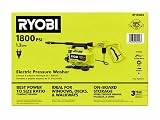
- TAR Score9.0
TAR Score is a ranking system developed by TopAppliancesReviews.com. TAR score has no relationship or impact from any manufacturers or sales agent websites. Learn more
- BrandRYOBI

- TAR Score8.5
TAR Score is a ranking system developed by TopAppliancesReviews.com. TAR score has no relationship or impact from any manufacturers or sales agent websites. Learn more
- BrandGreenworks

- TAR Score8.3
TAR Score is a ranking system developed by TopAppliancesReviews.com. TAR score has no relationship or impact from any manufacturers or sales agent websites. Learn more
- BrandRYOBI

- TAR Score7.5
TAR Score is a ranking system developed by TopAppliancesReviews.com. TAR score has no relationship or impact from any manufacturers or sales agent websites. Learn more
- BrandRYOBI
Last update on 2026-11-03 / Affiliate links / Images, Product Titles, and Product Highlights from Amazon Product Advertising API
FAQs
Can an 1800 PSI pressure washer damage car paint?
Yes, it can cause damage if you use an aggressive nozzle tip or hold the wand too close to the panels. Always use the broad 40-degree white spray tip and keep the nozzle at least twelve to fifteen inches away from the vehicle body. Check for existing rock chips or flaking clear coat before spraying, as high-pressure water can peel loose paint edges right off the metal.
Can I connect hot water to an electric pressure washer?
No, you must never connect a standard residential electric washer to a hot water tap. These machines are engineered strictly for cold water supply lines, and running water above 100 degrees Fahrenheit will melt the rubber pump packings, warp internal plastic valves, and ruin the pump. Supplying hot water to a cold-water unit will void the manufacturer warranty.
Why does the motor stop running when I release the trigger?
This is a built-in safety and preservation feature called a total stop system. When you release the spray gun trigger, internal water pressure activates a switch that instantly shuts off the electric motor. The motor will start up automatically the moment you pull the trigger again, which keeps the pump cool and saves electricity.
How do I protect the internal pump during winter storage?
Water left inside the pump housing expands as it freezes, which easily cracks the metal casting and destroys the machine. Before cold weather hits, disconnect all hoses, hold the spray trigger down to let gravity drain the wand, and pump a small bottle of pressure washer pump protectant into the water inlet. Store the unit inside an insulated basement or heated garage that stays above freezing all year.
Related guides: best ryobi pressure washer.


10 Best Washing Machine For King Size Comforter of 2026 For Bulky Bedding

11 Best Semi Automatic Washing Machine Under 10000 of 2026 For Apartments and RVs

9 Best Compact Refrigerator For Beer Bottles of 2026 For Upright Bottle Fit

10 Best Quality Semi Automatic Washing Machine of 2026 For Leak-Free Laundry

11 Best Small Washer Machine of 2026 For Everyday Laundry

12 Best Vibration Pads For Washing Machine of 2026 To Stop Walking and Shaking

11 Best Selling Front Load Washing Machine of 2026 For Quiet Odor-Free Laundry

11 Best Washing Machine For King Size Bedding of 2026 To Prevent Cycle Errors







