
How to Use a Knife Sharpening Rod Safely

Setting the rod tip down on a cutting board and pulling the knife downward from heel to tip four or five times per side gets a blade cutting cleanly again. How well that works depends on whether the metal edge is simply bent out of line or completely worn flat. Most household rods realign microscopic folds in the steel rather than shaving away metal, so gentle pressure is all it takes to restore cutting bite.
The right motion also changes with the specific blade and rod. Japanese knives require a steeper fifteen-degree tilt, while thicker Western blades sit closer to twenty degrees. Smooth steel rods only straighten the line, whereas ceramic or diamond rods shave off tiny bits of steel. If the blade still slips against a tomato after a few passes, the metal is truly blunt and needs a whetstone instead. Anchoring the rod on the counter first makes the whole motion safe and easy to control.
The Short Version
- Anchor the tip: Place the rod tip straight down on a cutting board backed with a damp cloth to stop slipping.
- Match the angle: Tilt the blade to 20 degrees for Western knives or 15 degrees for Japanese blades.
- Glide from heel to tip: Draw the knife down and back smoothly using light pressure, letting the knife weight do the work.
- Alternate sides: Make 4 to 5 light passes per side to push the microscopic cutting edge back to center.
What the Rod Actually Does: Straightening vs. Sharpening
Many cooks pull the long metal rod out of their knife block and assume it grinds a fresh edge onto their cutlery. In most kitchens, that tool is a honing rod rather than a true sharpener. Honing means straightening a bent edge without shaving off metal.
When you chop vegetables or slice meat, the razor-thin cutting line takes constant abuse. Under a microscope, that cutting line is a microscopic ribbon of steel. With normal daily prep work, this delicate ribbon bends, curls, or rolls sideways. The knife feels dull because the teeth point in the wrong direction, not because the metal is missing. A smooth or grooved steel rod pushes that bent ribbon back upright in seconds.
True sharpening grinds away old metal to expose a brand-new edge. You do that with a coarse stone when the blade has chips, nicks, or rounded edges. Some specialty rods feature an abrasive surface with diamond coating or ceramic grit, which is the roughness level of an abrasive surface. Those abrasive rods do remove fine amounts of metal. Standard steel rods, however, simply restore alignment to the bevel, which is the slanted side that forms the sharp cutting line.
The Safe Countertop Method Step by Step
TV chefs often hold a honing rod horizontally in midair, slashing their knives back and forth at high speed. Trying that at home is dangerous. It puts your fingers in the path of a moving blade, and working in open air makes holding a consistent angle nearly impossible. The countertop method gives you firm balance, steady control, and complete safety.
Follow these steps to hone your blade securely:
- Set up a non-slip base. Place a damp cloth on your countertop, then put a cutting board directly on top. Place the tip of the rod straight down on the board, holding the tool vertically like a tent pole. The damp cloth stops the board from sliding, while the board protects your counter.
- Grip the handle properly. Hold the rod handle firmly in your non-dominant hand, keeping fingers behind the guard. Hold the knife in your dominant hand, resting your thumb on the spine for control.
- Set the heel against the rod. Place the heel of the knife (the wide rear part of the blade closest to the handle) against the top of the rod, right below the handle guard. Point the sharp edge downward toward the board.
- Match the tilt. Angle the blade away from the rod until it matches the bevel. For most kitchen knives, this is about the thickness of two pennies stacked between the spine and the steel.
- Pull down and back. Glide the knife down toward the board while pulling the blade toward you. Move in one smooth arc so the contact point travels along the edge, finishing near the tip just above the board.
- Switch sides. Place the other side of the blade on the opposite side of the rod and repeat the same downward motion.
Finding the Right Angle (15 to 20 Degrees)
Finding the right angle sounds technical, but you can find it in seconds with a simple visual check. Hold your knife blade flat against the steel rod at a 90-degree right angle. Tilt the blade halfway toward the rod to find 45 degrees. Tilt it halfway again, which brings you to roughly 22 degrees. Drop the spine just a tiny fraction closer to the steel, and you are right at 20 degrees.
Most Western knives, including sturdy German high-carbon steel knives, use a 20-degree utility edge per side. This angle is durable and withstands heavy chopping through root vegetables. Delicate Asian blades, such as high-carbon Japanese chef knives, typically feature a steeper 15-degree slicing edge per side. To hit 15 degrees, lower the blade a bit further from that 22-degree mark.
Consistency matters far more than hitting an exact mathematical degree. If you hold a steady 18-degree tilt through every stroke, your knife will end up sharp. If you wobble between 12 degrees and 25 degrees, you will round off the edge.
Stroke Count and Pressure: Less Is More
Using a sharpening rod requires a gentle touch rather than muscle. Heavy force ruins your alignment and can bend the delicate metal out of shape.
- Use light pressure: Press with roughly two to three pounds of force, about the resting weight of your hand. If you push hard enough to flex the blade, you are pressing too firmly.
- Listen for a smooth whisper: A proper pass makes a quiet, clean swishing sound. A screeching scrape means you are pressing too hard or holding an angle that is too steep.
- Stick to 4 to 6 passes per side: A curled edge pops back into position after just a few light strokes. Making dozens of passes wastes time and increases the risk of slipping.
- Alternate every stroke: Hone one side, then the other. Repeating strokes on only one side creates a burr, which is the microscopic wire edge or curved sliver of metal that forms on the opposite side during sharpening. Alternating strokes centers the bevel.
Common Mistakes That Ruin the Edge
A few common missteps can dull a blade instead of fixing it. Avoid these habits during food prep:
- Swinging in midair: Honing without resting the tip on a board causes unpredictable angles and risks severe cuts if the blade slips. Always plant the tip firmly on a stable cutting board.
- Smacking the tip into the board: Stop each stroke right before the knife tip touches the board. Slamming the tip into wood or plastic bends or chips the point.
- Rushing the stroke: Fast strokes make the blade bounce. Take one to two seconds per stroke so you can feel contact from heel to tip.
- Honing dirty blades: Never hone a knife covered in food juices or grease. That residue clogs the rod. Wash and dry blades immediately instead of soaking in sinks or running through dishwashers.
- Wiping toward the edge: Always wipe down your knife with a towel after honing to remove microscopic steel dust. Wipe from the spine down past the edge, never along the cutting line.
When a Rod Cannot Help and You Need a Stone
A honing rod maintains a working edge, but it cannot fix every dull blade. If you hone a knife that has been neglected for years, the rod will not bring it back. When an edge wears down flat or develops chips from bone, there is no straight line left to push back into shape.
In those cases, you need a sharpening stone. Stones use abrasive grit to grind away worn steel and create a fresh bevel. Most people use a coarse grit to reshape the edge, followed by a fine ceramic or strop to polish the metal.
You can check your edge condition with a sheet of printer paper. Hold the paper upright by one corner and slide the knife down through the top edge. If it glides through cleanly, the edge is aligned. If it catches or tears, 4 or 5 strokes on your honing rod should restore the bite. But if the knife crushes the paper or slides off without cutting, the metal is dull and requires a sharpening stone.
What to Look for in a Knife Sharpening Rod
If you need a new rod for your knife block, choosing the right style makes maintenance simple. First, check the length. A standard chef knife measures 8 inches, so your rod should measure at least 10 to 12 inches to allow a full stroke from heel to tip.
Next, consider the material. High-carbon steel with fine ridges is ideal for daily realignment on Western blades. Nickel-chrome plating shields the steel from rust and humidity. Magnetized steel is another helpful feature that attracts loose microscopic metal filings during use, keeping your workspace clean. For harder Japanese cutlery, a smooth ceramic rod offers gentle alignment without chipping brittle steel.
Finally, inspect safety features. Look for an ergonomic handle with a non-slip grip that stays secure in damp hands. A broad hand guard prevents the blade from sliding onto your fingers, and a rubberized tip at the base keeps the rod from slipping on your board.

- TAR Score9.4
TAR Score is a ranking system developed by TopAppliancesReviews.com. TAR score has no relationship or impact from any manufacturers or sales agent websites. Learn more
- Brandwgsajlo

- TAR Score9.4
TAR Score is a ranking system developed by TopAppliancesReviews.com. TAR score has no relationship or impact from any manufacturers or sales agent websites. Learn more
- BrandKimura

- TAR Score9.2
TAR Score is a ranking system developed by TopAppliancesReviews.com. TAR score has no relationship or impact from any manufacturers or sales agent websites. Learn more
- BrandUtopia Kitchen
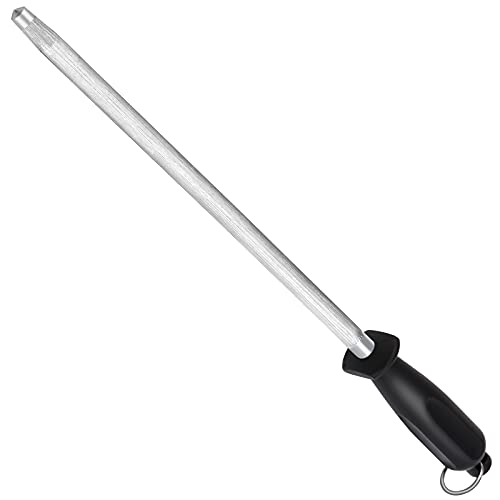
- TAR Score9.0
TAR Score is a ranking system developed by TopAppliancesReviews.com. TAR score has no relationship or impact from any manufacturers or sales agent websites. Learn more
- BrandAcoWELL
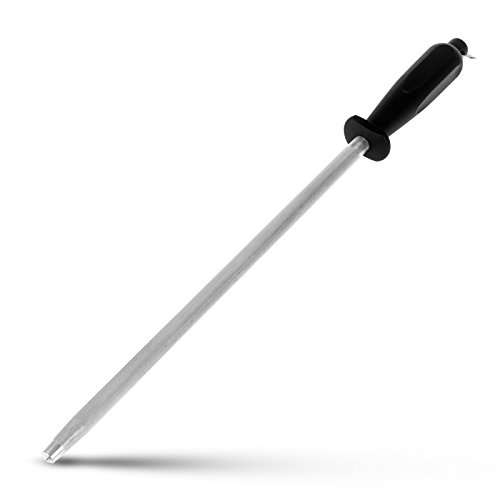
- TAR Score9.0
TAR Score is a ranking system developed by TopAppliancesReviews.com. TAR score has no relationship or impact from any manufacturers or sales agent websites. Learn more
- BrandALLWIN-HOUSEWARE W

- TAR Score8.8
TAR Score is a ranking system developed by TopAppliancesReviews.com. TAR score has no relationship or impact from any manufacturers or sales agent websites. Learn more
- BrandFANERFUN
- TAR Score8.8
TAR Score is a ranking system developed by TopAppliancesReviews.com. TAR score has no relationship or impact from any manufacturers or sales agent websites. Learn more
- BrandKota Japan

- TAR Score8.6
TAR Score is a ranking system developed by TopAppliancesReviews.com. TAR score has no relationship or impact from any manufacturers or sales agent websites. Learn more
- BrandMaclia
Last update on 2026-10-29 / Affiliate links / Images, Product Titles, and Product Highlights from Amazon Product Advertising API
FAQs
How often should you use a knife sharpening rod?
Use your honing rod every two to three cooking sessions, or as soon as you notice your knife sliding on onion skins or ripe tomatoes. Regular light honing keeps the edge straight so you rarely need to grind away metal on a stone. If you cook daily, a quick touch-up before heavy prep keeps your cutlery in top condition.
Can a honing rod scratch the sides of my knife?
A rod will only scratch the blade face if you hold the knife too flat against the steel. If your angle drops below 10 degrees, the wide side of the knife rubs across the rod. Keeping a steady 15 to 20 degree tilt ensures only the cutting bevel makes contact.
Do steel sharpening rods ever wear out?
Plain steel honing rods do not wear out because they straighten metal rather than grinding it away. However, food oils and tiny steel shavings can fill the fine grooves over time, making the rod slick. Scrubbing the rod with warm soapy water and a nylon brush cleans the grooves, followed by thorough drying to prevent rust.
Why does my knife still feel dull right after using the rod?
If your knife does not cut well after honing, the blade has either worn down completely or your angle was uneven. A rod cannot fix a blade whose cutting edge has rounded off from heavy use. Pressing too hard can also bend the edge too far to one side, leaving it blunt.
Related guides: how to sharpen a knife with a sharpening rod.


Top Best Quiet Portable Generator Electric Start 2026 - (2026 Updated)

The 10 Best Portable Power Station For Tailgating 2026

10 Best Washing Machine For King Size Comforter of 2026 For Bulky Bedding

11 Best Semi Automatic Washing Machine Under 10000 of 2026 For Apartments and RVs

The Best Concrete Floor Buffer 2026 - Top Choices

Best Cooling Fan with HEPA Filter: Our 2026 Top Picks for Cleaner Air

Best poulan chainsaw 2026 - Reviews & Buying Guides

Value Picks: 10 Vitamix 5300 Best Price of 2026




