
How to Sharpen a Knife with a Sharpening Rod Safely

Place the rod tip-down on a cutting board and pull the knife downward at a 15 to 20 degree angle using light pressure. Anchoring the rod vertically prevents dangerous slips and lets you guide the blade from the heel (the back near the handle) to the tip with complete control. A few even strokes on each side realign a curled edge so your knife slices cleanly again without swinging steel in mid-air.
The exact technique depends on the rod and blade in your kitchen. Traditional steel rods only straighten a bent edge, whereas ceramic or diamond rods grind away tiny amounts of metal to sharpen a truly blunt blade. Blade style also plays a role, since Japanese knives take a 15-degree tilt, while thicker Western knives need 20 degrees. Deep chips will need a flat sharpening stone instead. Here is how to check your tools, set the right angle, and restore a keen edge safely.
Anchoring the Sharpening Rod for Total Hand Safety
You have probably seen television chefs wave a steel rod in the air and flick a blade back and forth at lightning speed. It looks impressive on camera, but swinging a sharp knife toward your chest in mid-air is dangerous. If the blade slips off the rounded rod, it travels directly toward your fingers, wrist, or forearm. That mid-air method also makes it almost impossible to maintain a consistent angle, which can roll the blade edge worse than before.
The safest and most reliable way to use a sharpening rod is to anchor it vertically against your countertop. Placing the tip down turns your cutting board into a stable brace. Your free hand stays safely at the top behind the handle guard, well clear of the falling blade, and gravity helps you guide each stroke with even control.
Many beginners rush through the movement or bang the blade against the rod like a stage sword fight. Striking the rod violently can dent or chip the brittle edge, especially on higher-end kitchen cutlery. Slow down and focus on control rather than speed.
To set up your workstation safely, follow these steps:
- Place a damp kitchen towel flat on a stable cutting board or counter so the surface cannot slide.
- Set the tip of the sharpening rod directly on the center of the towel so the steel stands upright.
- Grip the rod handle firmly with your non-dominant hand, keeping all fingers tucked behind the safety guard.
- Stand balanced with your feet shoulder-width apart and your elbow relaxed.
By keeping the rod anchored to the counter, you eliminate the risk of a slip toward your body. If the blade slides off, it simply taps the cutting board below, saving your fingers from injury.
Finding the Correct Angle and Executing the Sweeping Stroke
Once the rod is anchored, you need to set the blade at the correct tilt. Knives cut because their sides slope inward toward a paper-thin point called the bevel (the slanted cutting edge). If you lay the blade too flat against the rod, you rub the sides of the knife without touching the edge. If you tilt the blade out too wide, you scrape right into the delicate apex and blunt it instantly.
Most kitchen knives need an angle between 15 and 20 degrees per side. You can find this angle in seconds using a simple visual trick:
Hold the knife so the flat side of the blade rests against the vertical rod at zero degrees. Pull the spine back until the blade sits completely sideways at a 90-degree right angle. Cut that space in half by tilting the blade inward to 45 degrees. Then cut that remaining space in half one more time to reach about 22 degrees. Nudge the blade just a touch closer to the rod, and you are resting right at 20 degrees.
This 20-degree angle works best for sturdy, heavy-duty blades such as German high-carbon steel knife sets, which use tougher steel built for chopping. Delicate Asian blades, such as high-carbon Japanese chef knives, are ground much steeper from the factory. For those knives, drop the angle closer to 15 degrees, keeping the steel slightly closer to the vertical rod.
Now you are ready for the downward stroke. Your goal is to sweep the entire cutting edge across the steel from the heel (the back end of the blade near the handle) out to the tip.
Follow these steps for each pass:
- Place the heel of the blade against the top of the rod just below the guard, angled at 15 to 20 degrees.
- Pull the knife downward toward the board while drawing the handle gently toward your chest.
- Curve your stroke smoothly so the middle of the blade rides down the rod and the tip finishes at the bottom.
- Lift the knife away cleanly and repeat the motion on the opposite side of the rod at the same angle.
Keep your wrist locked throughout the stroke. Dropping or flicking your wrist at the end of the pass rolls the tip of the blade over the steel, rounding the very point you are trying to keep sharp. Let your shoulder and elbow do the work while your wrist stays firm.
Use very light pressure throughout. The weight of the blade plus a gentle nudge, similar to slicing a ripe tomato, is plenty. Pushing hard will warp the steel or grind it unevenly. Four to six alternating passes per side are usually enough to realign the cutting edge.
Straightening a Rolled Edge Versus Sharpening Dull Steel
Many people call every rod in a knife block a sharpener, but there is a major difference between honing and sharpening. Knowing which one you are doing keeps you from wasting effort on a blade that will not cut.
Honing means straightening a bent cutting edge without removing blade metal. When you chop on a cutting board, the microscopic edge takes repeated hits. The thin metal does not break right away; it curls over like a folded sheet of paper. The knife feels dull because this rolled edge pushes against food. A traditional steel honing rod pushes that curled metal back into a straight line in less than a minute.
Sharpening, by contrast, shaves away old steel to create a brand new bevel. If a knife has gone unsharpened for years, the cutting edge is worn flat or chipped. A smooth steel rod cannot fix a flat edge because it does not grind metal. To sharpen a truly dull blade, you need a rod coated in diamond dust or ceramic. These abrasive surfaces act like fine sandpaper, grinding away dull metal to expose fresh steel.
During sharpening, you might produce a burr (the microscopic wire of bent steel on the edge). You can clear this tiny wire by finishing with two light, alternating strokes on each side.
Always wipe your blade clean with a soft kitchen towel before cutting any food. Even a smooth honing steel can dislodge microscopic metal particles, and an abrasive diamond rod creates a fine gray dust of shaved steel that you do not want in your dinner.
Use this quick checklist to confirm your knife is ready:
- The paper slicing check: Hold a loose sheet of printer paper by one corner. Place the heel of the knife on the top edge and slice downward without sawing. A sharp edge cuts cleanly with a soft hiss, while a rolled edge catches or tears the paper.
- The tomato skin check: Rest the blade on a ripe tomato without pressing down. Pull backward gently. A sharp blade pierces the slick skin under its own weight without sliding off.
- The overhead light check: Look straight down at the cutting edge under a bright light. A sharp edge is microscopic and reflects no light. If you see shiny white spots or glints along the edge, those are flat or bent areas that still need work.
If the knife fails these checks after eight strokes per side, the edge is worn flat or chipped. A honing rod cannot restore it, and the knife needs a flat whetstone or a visit to a professional sharpener.
Choosing the Right Maintenance Rod for Your Kitchen Knives
If your current rod is too short or slippery, getting the right tool makes knife care quick and painless. When looking for a maintenance rod, keep three practical factors in mind.
First, check the rod length. The rod should be at least two inches longer than your longest knife blade. If you use an eight-inch chef knife, pick a ten-inch or twelve-inch rod. A rod that is too short stops your stroke early, preventing a smooth sweep from heel to tip.
Second, pick the right surface material for your cutlery. For regular upkeep on good kitchen knives, a high-carbon steel rod with nickel-chrome plating is ideal. It straightens edges without wearing down the blade. If your knives are already blunt or made from exceptionally hard steel, choose an oval diamond-coated rod or ceramic stick to shave away metal and restore the bevel.
Third, prioritize grip safety. Look for a sturdy polypropylene handle with a wide safety guard that blocks the blade if your hand slips. Some steel rods also feature magnetized metal that traps tiny metal filings, preventing loose steel dust from settling on your board.
Look for a rod with an integrated hanging loop or a slim profile that fits into the existing slot of your wooden knife block. Storing the rod in a dry drawer or hanging it near your prep station protects the surface from moisture and prevents rust.

- TAR Score9.4
TAR Score is a ranking system developed by TopAppliancesReviews.com. TAR score has no relationship or impact from any manufacturers or sales agent websites. Learn more
- Brandwgsajlo

- TAR Score9.2
TAR Score is a ranking system developed by TopAppliancesReviews.com. TAR score has no relationship or impact from any manufacturers or sales agent websites. Learn more
- BrandUtopia Kitchen
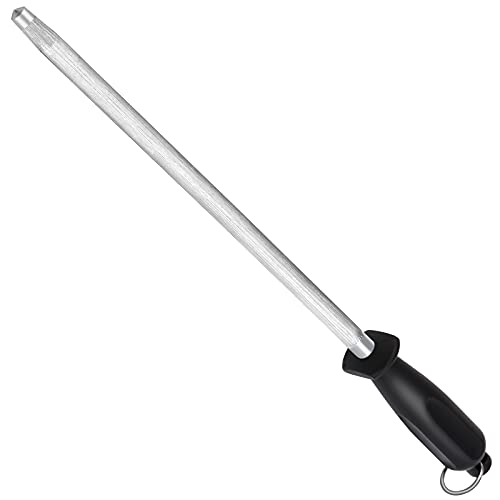
- TAR Score9.0
TAR Score is a ranking system developed by TopAppliancesReviews.com. TAR score has no relationship or impact from any manufacturers or sales agent websites. Learn more
- BrandAcoWELL

- TAR Score9.0
TAR Score is a ranking system developed by TopAppliancesReviews.com. TAR score has no relationship or impact from any manufacturers or sales agent websites. Learn more
- BrandIndependently Published
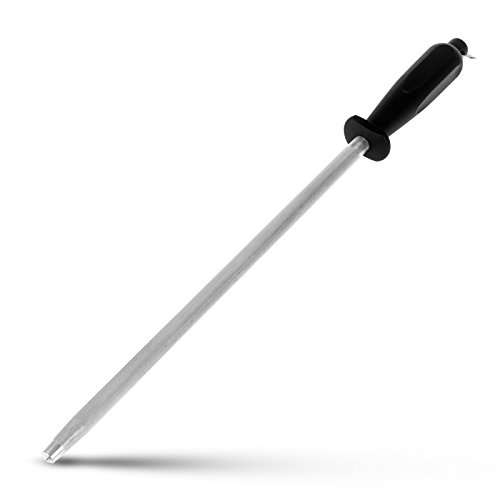
- TAR Score9.0
TAR Score is a ranking system developed by TopAppliancesReviews.com. TAR score has no relationship or impact from any manufacturers or sales agent websites. Learn more
- BrandALLWIN-HOUSEWARE W

- TAR Score8.8
TAR Score is a ranking system developed by TopAppliancesReviews.com. TAR score has no relationship or impact from any manufacturers or sales agent websites. Learn more
- BrandFANERFUN
- TAR Score8.8
TAR Score is a ranking system developed by TopAppliancesReviews.com. TAR score has no relationship or impact from any manufacturers or sales agent websites. Learn more
- BrandKota Japan

- TAR Score7.0
TAR Score is a ranking system developed by TopAppliancesReviews.com. TAR score has no relationship or impact from any manufacturers or sales agent websites. Learn more
- BrandMajosta
Last update on 2026-10-02 / Affiliate links / Images, Product Titles, and Product Highlights from Amazon Product Advertising API
FAQs
How often should I use a sharpening rod on my kitchen knives?
A standard steel honing rod should be used every two or three cooking sessions, or whenever a knife starts mashing food instead of slicing. Since a steel rod straightens bent metal without removing steel, regular use keeps your edge aligned without wearing down the knife. A diamond or ceramic rod removes metal, so you should only use it every few months when daily honing stops working.
Can you ruin a knife by using a sharpening rod incorrectly?
Yes, heavy downward pressure or the wrong angle can roll the delicate edge over or create uneven dips in the steel. Tilting the blade too wide will blunt the sharp edge, while tilting it too flat can scratch the sides of your blade without touching the cutting bevel. Use a light touch, roughly equal to the weight of the knife, and keep your strokes smooth and steady.
Why is my knife still dull after using the honing rod?
A honing rod only straightens bent steel on an edge that still has an existing sharp profile. If a blade has been neglected for months or used on glass cutting boards, the cutting edge is worn completely flat or chipped. A smooth steel rod cannot grind away steel to build a new edge, meaning the knife must be sharpened on a whetstone or by a professional.


Top Rated Best Quality Range Hoods: 2026 Expert Picks

The 12 Best Small Solar Generators 2026

10 Best Quality Semi Automatic Washing Machine of 2026 For Leak-Free Laundry

11 Best Small Washer Machine of 2026 For Everyday Laundry

12 Best Vibration Pads For Washing Machine of 2026 To Stop Walking and Shaking

11 Best Selling Front Load Washing Machine of 2026 For Quiet Odor-Free Laundry

11 Best Washing Machine For King Size Bedding of 2026 To Prevent Cycle Errors

10 Best Small Front Loader Washing Machine of 2026 For Tight Closets






