Topappliancesreviews.com is reader-supported. When you buy through links on our site, we may earn an affiliate commission. Learn more

Best Cookware for Glass Top Electric Range 2026

Best cookware for glass top electric range starts with one simple truth: the pan bottom matters more than the shiny packaging. A glass surface doesn’t forgive warped bases, rough edges, or cookware that slides around like it owns the kitchen. Flat, smooth, and stable pieces help heat move evenly, so eggs don’t scorch at one edge while potatoes sulk in the middle. That sounds basic, sure, but it’s the difference between cooking with confidence and babysitting every burner.

Stainless steel cookware often makes sense because it handles higher heat, resists staining, and usually sits flatter than flimsy nonstick pans. Still, bare stainless can be a bit clingy with delicate food, so a good preheat and enough oil matter. A thick aluminum or copper core helps spread heat across the base instead of leaving hot rings where the burner sits. That’s a small detail on paper, but during weeknight cooking, it saves a lot of muttering.

Hard-anodized nonstick cookware can feel easier for eggs, pancakes, and quick cleanup, though it needs gentler care. Metal utensils and aggressive scrubbing are bad news, especially near a glass cooktop where scratches already feel like a tiny kitchen tragedy. Lightweight pans sound convenient, but too-light cookware can shift when stirred, which gets annoying fast. A moderate weight hits the sweet spot: easy to lift, yet planted enough to stay put.

Cast iron deserves a careful mention because it cooks beautifully but asks for better habits. Dragging it across glass is asking for trouble, and dropping it is even worse. Enameled cast iron is smoother than bare cast iron, yet it still carries real weight. For slow braises, soups, and searing, it’s terrific, but it’s not the pan to shove around during a rushed breakfast.

Induction-compatible cookware can also work well on glass top electric ranges, even without an induction stove. Magnetic stainless bases are usually sturdy, flat, and built for close burner contact. The main thing is matching pan size to burner size, because oversized cookware can heat unevenly while undersized pans waste energy. Good cookware doesn’t need drama; it needs a flat base, sensible weight, and a surface that won’t punish the cooktop.

Weiman Glass Cooktop Cleaner Kit Review

Burned-on residue has a funny way of turning a sleek kitchen into a source of daily irritation. Tiny rings around burners, greasy haze near the controls, and stubborn splatters can make even the best cookware for glass top electric range look less impressive than it should. That's where the Weiman cleaner kit enters the conversation. Built around a non-abrasive cleaning system, this package focuses on restoring the appearance of glass cooktops without introducing the scratching risks that often come with harsher cleaning methods.

Weiman Glass Cooktop Cleaner Kit

Weiman Glass Cooktop Cleaner Kit isn't simply a bottle of cleaner tossed into a box. The package combines a cooktop cream, a scrubbing pad, and a safety-packed razor scraper into a complete maintenance setup. That combination addresses several stages of cleaning, from loosening residue to removing stubborn buildup and polishing the surface afterward.

Glass cooktops demand a different approach than traditional coil or gas ranges. Rough scrubbing tools can leave marks that never truly disappear. Weiman addresses that concern through its non-abrasive cleaning system, allowing users to attack grime without treating the surface like a workshop project.

The overall design feels practical rather than flashy. Nothing here exists purely for appearance. Each component serves a specific purpose, which is refreshing in a category where many products rely heavily on marketing language.

Kitchen maintenance often becomes easier when products reduce the number of separate tools required. Having the cream, scraper, and scrubbing pad packaged together helps simplify the process and reduces the guesswork involved in choosing compatible accessories.

Cleaning Performance On Burnt-On Residue

Burnt-on food remains the biggest challenge for most glass cooktop owners. Sauce spills, melted sugar, and overheated oil can create stains that seem welded to the surface. The inclusion of micro-bead technology in the cooktop cream provides additional cleaning action without introducing harsh abrasives.

Stubborn spots typically require a combination of the cream and the scraper. The scraper isn't intended to gouge surfaces or replace careful cleaning habits. Instead, it helps lift residue that has already been softened by the cleaner. Used correctly, it feels more controlled than attacking stains with excessive pressure.

Grease removal is another strong point. Oily residue tends to spread into a thin film that dulls reflective surfaces. The cleaner cuts through that layer effectively, making the cooktop look noticeably clearer after buffing.

Daily cooking accidents don't always demand an intensive cleaning session. Smaller spills and fresh residue can often be handled with minimal effort, which makes routine maintenance less of a chore.

Streak-Free Appearance And Surface Protection

A spotless cooktop isn't only about removing dirt. Appearance matters too. Many cleaners eliminate grime but leave behind cloudy streaks that become obvious under kitchen lighting. Weiman's streak-free finish helps avoid that problem.

Buffing with a paper towel creates a cleaner shine than many all-purpose household cleaners. Glass surfaces naturally reveal imperfections, so even minor streaking becomes noticeable. The formula does a respectable job of minimizing that issue.

Surface protection is another advantage. While no cleaner can make a cooktop invincible, maintaining a cleaner surface may help reduce the buildup that becomes increasingly difficult to remove over time. Consistent cleaning generally creates fewer opportunities for residue to harden.

The visual difference is often most noticeable around burner outlines where discoloration tends to develop. A restored shine can make an older cooktop appear considerably better maintained.

Ease Of Use In Everyday Kitchens

Complicated cleaning routines rarely survive real-world schedules. The appeal of this kit comes partly from its straightforward process. Apply the cream, work the surface with the pad, use the scraper where necessary, and buff the area afterward.

Easy maintenance becomes particularly valuable during busy weeks. Few people want to spend extended periods scrubbing after dinner. The kit streamlines cleanup without introducing unnecessary steps.

The included razor arrives with the blade reversed for safety. That's a small detail, yet it demonstrates attention to practical handling. Storage feels safer, especially in households where cleaning supplies share space with other kitchen items.

Cleanup after using the product is relatively simple. The cream doesn't leave behind a heavy residue that demands multiple rinse cycles, which helps reduce overall effort.

Compatibility With Glass And Ceramic Cooktops

Cooktop compatibility often determines whether a cleaner becomes a long-term purchase or a one-time experiment. Weiman states compatibility with major manufacturers including GE, Whirlpool, Frigidaire, and Thermador, covering many popular kitchen setups.

Glass, ceramic, and induction surfaces share similar concerns regarding scratches and visible residue. The cleaner is designed specifically around those needs rather than trying to function as a universal cleaner for every household surface.

Owners of smooth-top electric ranges will likely appreciate the specialized approach. Generic cleaners can sometimes leave films or fail to remove heat stains effectively. Dedicated cooktop formulas generally perform better in these situations.

The ability to use the product across multiple smooth-top surfaces also adds convenience for households with more than one compatible appliance.

Pros And Cons

Pros:

  • Non-abrasive formula helps reduce scratching concerns.
  • Includes cleaner, scraper, and scrubbing pad in one package.
  • Removes grease and burnt-on residue effectively.
  • Leaves a cleaner, more polished appearance with minimal streaking.
  • Compatible with many major glass and ceramic cooktop brands.
  • Simple application process suitable for regular maintenance.

Cons:

  • Very old, heavily carbonized buildup may require multiple cleaning sessions.
  • The scraper still requires careful handling despite its safety packaging.
  • Not intended for rough scrubbing shortcuts, so patience is occasionally necessary.
  • Focused primarily on smooth-top surfaces rather than broad household cleaning tasks.

Real-World Value For Glass Top Range Owners

Glass cooktops often represent a significant investment in the kitchen. Protecting that surface becomes part of protecting the appliance itself. Weiman Glass Cooktop Cleaner Kit focuses directly on that responsibility rather than attempting to be an all-purpose cleaner.

Households that cook frequently tend to encounter recurring grease splatter, water spots, and burner discoloration. Those issues rarely disappear on their own. A specialized maintenance product can make the process less frustrating and more consistent.

One example worth noting is appliance cleaning reference, though the topic differs substantially from cooktop care. The comparison highlights how specialized cleaning products often outperform general-purpose alternatives within their intended environments.

Practical kitchen upkeep remains the strongest argument for this kit. It addresses common glass cooktop problems without relying on aggressive abrasives, making it a sensible companion for anyone trying to keep a smooth-top range looking cleaner between deeper maintenance sessions.

YUHFERA Stove Top Cover For Electric Stove

Counter space disappears fast during meal prep. A cutting board lands on one side, a bowl of vegetables claims another corner, and suddenly the kitchen feels smaller than it actually is. That daily squeeze explains why accessories connected to the best cookware for glass top electric range often focus on protection and space management just as much as cooking performance. YUHFERA takes that idea and turns an unused cooktop surface into something more practical.

YUHFERA Stove Top Cover

YUHFERA Stove Top Cover approaches kitchen organization from a surprisingly simple angle. Instead of adding another gadget to the countertop, it transforms an existing surface into usable workspace. The large 28 x 20-inch footprint covers a substantial portion of most glass-top electric stoves, creating an extra preparation area when the burners aren't in use.

Silicone mats aren't new, yet the execution here feels thoughtful. The material remains flexible enough for storage while still maintaining enough structure to lie flat across the cooking surface. That balance matters because a cover that constantly curls at the edges becomes annoying in a hurry.

Surface protection is clearly one of the main priorities. Scratches, dust, water spots, and accidental spills can make a glass cooktop look older than it is. Covering the surface when it's idle helps reduce those everyday cosmetic issues.

The visual appearance also contributes something useful. The black finish blends naturally into many kitchen designs without drawing unnecessary attention to itself.

Extra Workspace Without Remodeling

Kitchen renovations cost serious money. Countertop extensions aren't exactly quick weekend projects either. That's where the practical side of this cover becomes easy to appreciate. By converting the stove into a temporary work surface, the mat effectively expands food prep space without changing the layout.

Expandable workspace becomes particularly valuable during larger cooking sessions. Chopping vegetables, organizing ingredients, or staging baking supplies feels less cramped when another flat surface becomes available. Small kitchens benefit the most from this approach, though larger kitchens can appreciate the flexibility too.

Meal preparation often involves multiple bowls, cutting boards, and utensils competing for room. The cover provides a convenient landing zone for those items while helping keep the surrounding counters less cluttered.

Some kitchen accessories solve problems that rarely exist. This one addresses a limitation many households encounter several times each week.

Protection For Glass Top Surfaces

Glass cooktops look sleek, but they're magnets for scratches, stains, and accidental impacts. A dropped utensil or a heavy mixing bowl can create the kind of moment nobody enjoys. While no cover can guarantee complete protection against every accident, adding a protective layer certainly helps reduce daily wear.

The silicone construction cushions the surface from common kitchen mishaps. Grocery bags, cookware lids, serving dishes, and countertop appliances all occasionally land where they probably shouldn't. The mat creates a buffer between those objects and the cooktop glass.

Scratch prevention may actually be one of its strongest qualities. Tiny marks accumulate gradually, and many people don't notice them until sunlight catches the surface from a certain angle. Preventing that gradual wear can help maintain a cleaner appearance over time.

The cover also works beyond the stove. Tables, washer-dryer tops, and other flat surfaces can benefit from the same protective design, giving the product more flexibility than its name initially suggests.

Drying Mat Functionality

Multi-purpose products often promise everything and deliver very little. Surprisingly, the drying mat function feels genuinely useful here. The raised ridges encourage airflow underneath dishes while helping water collect away from plates and glasses.

Ventilation channels built into the design help moisture evaporate more efficiently. That detail matters because trapped water tends to create puddles that spread across countertops. The raised pattern gives water somewhere to go instead of allowing it to sit directly beneath dishes.

Freshly washed produce benefits from the same setup. Fruits and vegetables can drain without sitting in pooled water, which helps keep prep areas cleaner during cooking sessions.

The waterproof base contributes another practical advantage. Countertops stay drier, reducing the need for constant wiping after dishwashing tasks.

Heat Resistance In Daily Use

Heat resistance up to 400°F adds another layer of functionality. The mat can serve as a resting place for hot cookware, reducing the need to search for separate trivets while juggling multiple dishes.

Raised ridges help create separation between hot cookware and underlying surfaces. That gap allows heat to dissipate more effectively while reducing direct contact. Small details like this often determine whether a kitchen accessory becomes genuinely useful or simply occupies drawer space.

There's an important limitation worth mentioning. The cover should never sit on an active electric cooktop. YUHFERA clearly warns against that scenario because direct exposure to an operating burner can damage the mat.

Heat protection works best after cookware leaves the stove, not while cooking is actively taking place. Understanding that distinction helps avoid misuse.

Cleaning And Storage Experience

Kitchen accessories quickly lose their appeal if they're difficult to clean. Fortunately, maintenance feels straightforward here. Most spills can be wiped away with minimal effort, making routine cleanup surprisingly painless.

Dishwasher-safe construction simplifies deeper cleaning sessions. Instead of scrubbing stubborn residue by hand, the mat can be rinsed, brushed, or placed directly into the dishwasher. That flexibility makes long-term ownership more convenient.

The silicone material folds and rolls without much resistance. Storage becomes simple because the mat doesn't require a dedicated shelf or oversized cabinet space. Fold it, tuck it away, and reclaim the area whenever the stove returns to cooking duty.

A related household reference appears in appliance stability solutions, highlighting how protective accessories often focus on preserving surfaces rather than changing appliance performance.

Practical Strengths And Tradeoffs

Versatility stands out immediately. The combination of stove cover, drying mat, counter protector, and heat-resistant surface allows the product to serve several purposes without feeling scattered.

Storage flexibility deserves recognition as well. Bulky accessories often become permanent countertop residents because they're too inconvenient to put away. This mat avoids that problem through its foldable design.

Tradeoffs exist, of course. The cover requires removing before cooking begins, which adds a small step to the routine. Households that constantly use the stovetop throughout the day may find themselves moving it more frequently than expected.

The large dimensions create substantial workspace, though measuring the stove surface beforehand remains wise. Not every cooktop layout is identical, and proper fit contributes significantly to the overall experience.

Silicone XXL Stove Top Cover Review

Small kitchens have a sneaky way of turning dinner prep into a juggling act. One bowl sits near the sink, a cutting board crowds the counter, and the glass stove suddenly looks like wasted space. That is where a silicone cover like this starts to make sense, especially around the best cookware for glass top electric range setup where protecting the cooktop matters just as much as using the right pans. This Stove Top Cover for Electric Stove aims to guard the surface, catch everyday mess, and turn a flat range into temporary prep space without adding another bulky kitchen fixture.

Silicone XXL Stove Top Cover

Silicone XXL Stove Top Cover keeps its promise fairly simple: cover the glass top, protect it from daily scuffs, and give the kitchen another usable surface. The 28 x 20-inch size makes it large enough for many electric stove tops, RV flat ranges, countertops, tables, and even washer-dryer tops. That broad footprint is helpful because glass cooktops often sit idle outside cooking hours. Instead of leaving that space unused, the mat gives it a second job.

The design leans practical rather than decorative. Its black silicone surface has a low-key look that doesn't scream for attention, which suits kitchens where appliances already dominate the room. The mat can help shield against scratches, spills, stains, scrapes, and dirt, all of which tend to show up fast on smooth glass. A clean cooktop looks sharp, but keeping it that way takes more than wishful thinking.

The main appeal is the way it supports daily movement in the kitchen. Mixing bowls, produce, dishes, and light prep tools can sit on the covered surface while the stove is off. That detail matters in tight layouts where every inch earns its keep. The cover doesn't replace proper counters, but it does soften that cramped feeling during busy prep.

Still, the product asks for common sense. It should not be placed on the electric range while the cooktop is on. That warning isn't a small footnote, because silicone protection only helps when it's used away from active heat sources.

Surface Protection And Everyday Space

Glass cooktop protection is the headline feature, and honestly, it is the reason this type of mat exists. Smooth electric ranges look polished, but they can also pick up hairline marks from rough cookware bottoms, sliding dishes, gritty crumbs, or careless storage habits. A silicone layer creates a buffer during non-cooking moments. That buffer can make the stove area feel less fragile during a normal kitchen day.

The cover is also useful for food preparation. A flat cooktop can become an extra station for sorting vegetables, resting utensils, or lining up ingredients before cooking. Not glamorous, sure, but practical kitchen tools rarely need a spotlight. They just need to reduce friction at the right moment.

The extra-large 28 x 20-inch size helps this mat feel more like a working surface than a small accessory. Smaller mats can leave edges exposed or feel awkward under larger trays. This one covers enough area to support bigger dishes and prep items while keeping the protected zone more consistent. That makes it especially handy when the kitchen counter is already crowded.

A limitation shows up with fit. Stove sizes and control layouts vary, so measuring first is smart. A mat that overlaps knobs, vents, or raised trim may feel less tidy than expected. The product gives generous coverage, but generous doesn't automatically mean universal.

Drying Mat Design With Raised Ridges

The drying mat function gives the product more value than a plain flat cover. Its wide raised line ridges help increase airflow under dishes, glasses, fruits, and vegetables. That matters because wet items sitting flat against a surface can trap moisture and leave puddles behind. The ridged design gives water somewhere to move.

Dishes can rest on the mat after washing without soaking the counter underneath. The high edges and waterproof bottom are meant to keep water contained instead of letting it creep across the kitchen surface. That is especially useful near sinks where stray drips seem to multiply. A countertop that stays drier is easier to keep under control.

Produce prep benefits from the same layout. Washed berries, herbs, cucumbers, or leafy greens can drain while other cooking tasks continue nearby. The mat doesn't turn into a professional drying rack, and it shouldn't be treated like one with towering stacks of heavy dishes. But for light daily drying, the setup feels sensible.

The ridges also add texture, which helps items sit with a bit more separation. Smooth mats can become slippery when wet, so the raised channels are a meaningful detail. Air circulation and drip control work together here, giving the cover a second life beyond stove protection.

Heat Resistance And Safe Use

Heat resistance up to 400°F gives this mat some flexibility around hot cookware. It can work as a silicone trivet mat for hot pots and pans after they leave the burner. The raised ridges help separate the hot base from the table or countertop. That separation can reduce direct heat contact with more delicate kitchen surfaces.

The important catch is clear: it should not sit on the electric cooktop while the range is on. That point deserves plain language because misuse can damage the mat and possibly create a bigger kitchen problem. Silicone heat resistance does not mean active burner safety. There is a big difference between resting a hot pan on a mat and placing the mat over an operating stove.

Used correctly, the mat can make serving and cooking transitions calmer. A hot lid, pan, or baking dish needs a safe landing zone, and this cover can handle that role within its stated heat range. That helps reduce the scramble for a trivet during busy meals. Little conveniences add up fast when several dishes are moving at once.

The mat's heat use is best viewed as supportive, not central. Its strongest purpose remains surface protection and workspace expansion. The trivet function is a helpful bonus, but careful handling still matters.

Cleaning, Storage, And Maintenance

Kitchen accessories live or die by cleanup. This cover scores well because spills and water droplets can usually be wiped away without much fuss. Sticky residue may need a rinse or light brushing, but the silicone surface keeps maintenance fairly straightforward. That is a relief because a protective mat shouldn't become another thing that needs protecting.

The dishwasher-safe detail adds convenience for deeper cleaning. Being able to rinse, brush, or place it in the dishwasher gives more flexibility after messy prep sessions. Easy cleaning matters more than fancy packaging in real kitchens. If a mat is hard to clean, it eventually gets shoved into a cabinet and forgotten.

Storage is another plus. The flexible silicone can roll or fold, so it doesn't demand a wide drawer or permanent counter space. That makes it easier to move before cooking and put away afterward. A rigid cover might look neater at first, but flexible storage wins in smaller homes and RV kitchens.

There is one tradeoff with flexibility. A softer mat may need to be placed carefully so it sits flat and doesn't bunch near the edges. That is not a dealbreaker, but it is part of the real ownership experience. Foldable silicone is convenient, yet it still needs a quick adjustment now and then.

Strengths, Weaknesses, And Best Use Cases

Strengths show up in the product's multi-role design. It protects glass cooktops, expands prep space, catches drips, and works as a heat-resistant landing mat within the stated limit. That mix gives it more purpose than a basic stove cover. It feels especially useful in kitchens where counter space disappears quickly.

The product also fits well around careful glass-top habits. Owners of smooth electric ranges often avoid dragging pans, dropping utensils, or setting rough items directly on the surface. This mat adds a protective pause between the stove and the clutter of everyday cooking. For anyone using the best cookware for glass top electric range, that extra layer helps preserve the clean look around the cookware routine.

Weaknesses are mostly tied to safe handling and fit. It must be removed before turning on the stove, and that extra step may annoy anyone who cooks several times a day. The large size is useful, but it may not suit every stove layout. Control placement, burner outlines, and nearby backsplash clearance can affect how neatly it sits.

A neutral household reference can sit alongside related appliance-care topics without forcing the connection, as seen in front load appliance notes. The broader idea is simple: protective accessories work best when they match the surface, the routine, and the kind of wear that happens every week.

The most realistic use case is between cooking sessions. The mat keeps the stovetop covered while dishes dry, vegetables drain, or prep items need a temporary landing spot. It is not cookware, and it won't improve heating performance, but it supports the space around cooking. That distinction keeps expectations grounded and makes the product easier to judge fairly.

Kitchen Academy 12-Piece Cookware Set

A smooth glass stove can make weak cookware feel obvious fast. Thin pans slide, hot spots show up in the eggs, and a warped base turns dinner into a tiny guessing game. That’s why the best cookware for glass top electric range conversation often comes back to stable bases, even heating, and surfaces that don’t demand a sink full of soaking. Kitchen Academy’s 12-piece granite black set aims for that practical middle ground: enough pieces for everyday meals, a nonstick coating for easier cooking, and a stainless steel base built to work across major cooktop types.

Kitchen Academy Cookware Set

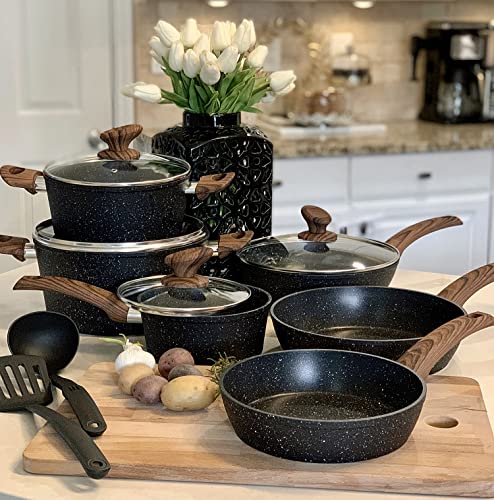
Kitchen Academy Cookware Set is built around a 12-piece layout that covers the usual daily jobs without stuffing the cabinet with oddball extras. The set includes an 8-inch fry pan, an 11-inch fry pan, a 9.7-inch deep fry pan with lid, a 1.5-quart saucepan with lid, a 3-quart casserole with lid, a 5-quart casserole with lid, and two silicone utensils. That mix feels useful for breakfast, quick lunches, pasta nights, soups, and one-pan dinners. Nothing about the lineup feels especially fussy, which is a plus.

The granite black look gives the set a modern, low-profile appearance. More importantly, the graniteware nonstick coating is described as helping prevent food from sticking, which can make weekday cooking less tense. Eggs, pancakes, sauces, and delicate pieces of fish are the kinds of foods that punish cookware with grabby surfaces. A smoother release means less scraping, less oil, and fewer burnt bits clinging to the pan.

The set also includes lids for the deeper pieces, which matters more than people sometimes admit. Covered simmering helps with rice, soups, stews, vegetables, and sauces that need controlled moisture. The different pot sizes give some breathing room between small tasks and larger family-style batches. A tiny saucepan can handle quick reheating, while the 5-quart casserole gives more room for heavier meals.

Hand washing is recommended, and that’s worth taking seriously. Nonstick cookware tends to last longer when it avoids dishwasher heat, harsh detergents, and rough contact with other items. The included silicone utensils also fit that care routine because they’re gentler on the cooking surface than metal tools. Treat the coating kindly, and it has a better shot at staying pleasant to cook with.

Glass Stove Compatibility And Base Design

Glass top electric ranges reward cookware that sits flat and transfers heat evenly. Kitchen Academy notes that this set uses a larger high magnetic conductive stainless steel base, which supports induction compatibility and makes it suitable for glass stoves. A stable base matters because glass cooktops need close contact to move heat efficiently. Poor contact can leave meals cooking unevenly even when the burner looks perfectly centered.

The cookware is also described as working on all major cooktop types. That flexibility is useful in real homes where appliances change over time, or where cookware moves between a main kitchen, rental space, or secondary setup. It’s not just about induction. A cookware set that doesn’t box itself into one stove style can stay useful longer.

The aluminum core gives the pans another practical advantage. Aluminum is valued in cookware because it heats quickly and helps distribute heat across the pan surface. On glass electric ranges, where temperature changes can feel slower than gas, responsive cookware can make sautéing and simmering less frustrating. The goal isn’t drama, just fewer cold patches and fewer scorched edges.

The glass-stove fit also depends on handling habits. Even compatible cookware should be lifted instead of dragged across a smooth top. Granite-style nonstick pans may feel lighter than heavy stainless or cast iron, but sliding any cookware can still mark a glass surface over time. Cooktop-safe behavior matters just as much as cooktop-compatible construction.

Nonstick Cooking Feel And Food Release

Nonstick performance is the set’s biggest everyday selling point. The provided details describe the graniteware coating as helping prevent food from sticking, which directly speaks to messy breakfasts, sticky sauces, and quick meals made with less oil. That can make cooking feel less like a negotiation with the pan. Nobody wants scrambled eggs that need a chisel.

The coating also makes sense for acidic or strong-smelling ingredients, based on the product description. Tomato sauce is specifically mentioned as safe to cook in this granite cookware without changing the taste or smell of the food. That matters for home meals where sauces, garlic, onions, and marinades show up often. A pan that doesn’t hold onto yesterday’s dinner is easier to trust.

Less oil can be used because of the food-release surface, according to the details provided. That doesn’t mean oil disappears from cooking altogether, and it shouldn’t be treated as magic. A little fat still helps flavor, browning, and texture. Still, needing less oil for basic release can be a nice shift for lighter weekday meals.

The nonstick surface does come with a tradeoff. It asks for gentle utensils, moderate heat, and hand washing. Cranking the burner too high or scraping with metal tools can shorten the useful life of the coating. Good nonstick cookware often feels easy, but it isn’t careless-proof.

Piece Selection For Daily Cooking

The set’s 12-piece arrangement covers a lot of common kitchen moves without feeling bloated. The 8-inch fry pan suits smaller portions, quick eggs, or reheating a single serving. The 11-inch fry pan gives more room for sautéing vegetables, browning proteins, or cooking pancakes without crowding the surface. That size difference makes the set more flexible than a single skillet setup.

The 9.7-inch deep fry pan with lid fills an especially useful role. A deeper pan can handle saucy meals, stir-fry style dishes, shallow frying, or skillet dinners that need room to toss ingredients. The lid adds control for steaming, simmering, or finishing food gently. It’s the kind of pan that can quietly become the weekday favorite.

The saucepan and casseroles round out the set for liquids and larger portions. The 1.5-quart saucepan handles small sauces, oatmeal, instant noodles, or warming leftovers. The 3-quart and 5-quart casseroles make more sense for soups, pasta, stews, boiled vegetables, and family-sized cooking. Having both sizes helps avoid using a giant pot for a small job or cramming too much into a smaller one.

The two silicone utensils are a helpful inclusion, not a throwaway detail. Since the cookware uses a nonstick surface, silicone tools support better care from day one. They reduce the chance of scratching during stirring, flipping, or serving. That small pairing makes the set feel more complete for someone starting fresh or replacing worn-out pans.

Materials, Safety Notes, And Handles

Toxin-free cookware claims are part of the product’s appeal. The details state that the set is lead-free, PFOS-free, and PFOA-free. Those are specific claims provided in the description, and they matter for anyone trying to avoid certain chemicals in cookware. Still, smart use matters too, especially with nonstick surfaces that generally prefer moderate heat.

The Bakelite handles bring another practical detail into the review. Bakelite is described as heat-resistant and an electrical insulator, with the handles safe up to 350°F for a limited time. That helps during normal stovetop cooking, where handles should stay more manageable than bare metal. The darker handle color also makes stains less obvious.

That said, handle heat limits deserve respect. A 350°F limit for a limited time means this isn’t a set to treat casually under high oven heat. The description focuses on stovetop cooking, and that’s where the handles make the most sense. Pushing beyond the stated range would be asking the wrong thing from the material.

The overall material story is practical: aluminum core for heat spread, stainless steel base for broader cooktop compatibility, granite-style nonstick coating for release, and Bakelite handles for easier handling. Each part supports a real kitchen need. The set doesn’t need fancy language to explain itself.

Pros, Cons, And Realistic Fit

Pros start with the set’s useful range of pan and pot sizes. It gives enough variety for everyday meals without forcing the kitchen into clutter overload. The induction-compatible base is especially relevant for smooth cooktops, and the aluminum core supports quicker, more even heating. For a best cookware for glass top electric range setup, those details count.

The nonstick surface is another clear strength. Easier food release can reduce scrubbing, lower oil needs, and make simple meals less annoying. The ability to cook tomato sauce without changing taste or smell, as stated in the description, adds confidence for saucy dishes. A related home-care reference can sit separately here without forcing a kitchen connection, as seen in traffic pollution air purifier.

Cons mostly come from the normal care needs of nonstick cookware. Hand washing is recommended, which may disappoint anyone who wants every kitchen item to go straight into the dishwasher. The coating also needs silicone, wood, or other gentle utensils to help avoid surface damage. High heat habits can be rough on this kind of cookware, even when the pan feels sturdy.

The set may also feel unnecessary for kitchens that already have specialty pieces. Someone with a beloved stainless sauté pan, a cast iron skillet, and a heavy stockpot may not need a full 12-piece refresh. But for a kitchen that needs a practical reset around glass-stove cooking, this set covers the basics with a sensible blend of nonstick convenience, cooktop flexibility, and everyday sizing. The best fit is routine cooking where easy release, manageable cleanup, and smooth-top compatibility matter more than professional-style searing.

SENSARTE Ceramic Nonstick Stock Pot

Soup night can go sideways over the smallest cookware flaws. A thin bottom scorches tomato sauce, a sticky interior turns noodles into a clump, and a cloudy lid makes it harder to judge whether the pot is bubbling gently or boiling like a tiny volcano. That’s why a stock pot matters even in a kitchen built around the best cookware for glass top electric range. SENSARTE’s ceramic nonstick stock pot is made for steady stovetop work, cleaner food release, and that sweet spot where a pot feels useful without acting precious.

SENSARTE Ceramic Stock Pot

SENSARTE Ceramic Stock Pot has a cleaner, calmer personality than the usual heavy stew pot. The white ceramic nonstick interior gives it a bright look, but the real point is practical: food should release more easily, and cleanup shouldn’t become an after-dinner punishment. The pot comes in multiple size options, including 2.6, 4.5, 6.6, and 8.5 quarts. That range lets the same product line cover quick sauces, pasta, soups, stews, and larger simmered meals.

The product details describe the pot as SGS approved and free of PTFE, PFAS, PFOA, PFOS, lead, cadmium, and other toxic substances that can leach into food. Those claims speak directly to cookware concerns that have become harder to ignore. A pot used for long simmering, boiling, and saucy meals spends a lot of time in contact with food. Having a ceramic surface designed around non-toxic cooking gives this pot a reassuring angle.

The construction combines a ceramic nonstick surface with die-cast aluminum and a thick stainless steel bottom. That mix aims to solve two common problems at once: food sticking inside and uneven heat underneath. On a smooth electric range, cookware needs steady contact and dependable heat transfer. A pot that heats unevenly can turn gentle cooking into constant stirring.

The wood-grain bakelite handles add a softer, warmer look than plain black handles. More importantly, they’re shaped for easier handling, especially with a pot that may be full of water, soup, or pasta. The glass lid helps prevent splashing while letting the cooking process stay visible. A visible simmer is underrated, honestly.

Ceramic Nonstick Cooking Feel

Ceramic nonstick material is the main reason this pot stands apart from standard stainless stock pots. Stainless can be excellent for durability, but starchy pasta water, rice-based soups, and thick sauces often cling if heat control slips. This SENSARTE pot is designed for easier release, which helps with everyday meals that need stirring but shouldn’t require scraping. Less sticking means fewer browned patches on the bottom.

The product description says only less oil is needed for cooking, which suits lighter soups, sautéed aromatics, and sauce bases. That doesn’t mean oil disappears from the recipe, because onions, garlic, and spices still benefit from fat. But a slicker surface can reduce the need to overdo it just to keep ingredients moving. That’s a practical benefit, not a flashy one.

Scratch resistance is also noted in the details, though smart utensil choices still matter. Ceramic nonstick cookware usually performs best with silicone, wood, or nylon tools. Metal utensils can be a bad habit, even if the surface feels tough at first. A little care keeps the cooking surface more pleasant over time.

The ceramic coating also makes the pot appealing for sauces and stews that tend to leave residue. Creamy soups, tomato bases, and pasta starch can all create cleanup headaches. With better food release, the pot feels less intimidating after a long simmer. That’s the kind of small kitchen relief people remember.

Glass Top Range Compatibility

Induction compatibility matters here because it usually signals a base designed for broader stovetop use. SENSARTE lists a 4.8mm thick stainless steel pan bottom, making the pot suitable for all stovetops. For glass top electric ranges, that thick bottom is especially relevant. Flat, stable contact helps heat move more predictably through the pot.

The die-cast aluminum construction helps the pot heat quickly and evenly. On an electric glass stove, where burner response can feel slower than gas, that evenness can make simmering less fussy. Soup should roll gently, sauces should thicken without hot patches, and pasta water should recover heat without the pot feeling sluggish. Consistency is the quiet luxury here.

The product details also mention no warping and durable construction. Warping can be a real nuisance on glass cooktops because even slight wobbling affects heat contact. A pot that stays flat feels safer and more stable during stirring. It also reduces that irritating rocking motion that makes cookware feel cheap.

Still, glass stove habits matter. Even a compatible pot should be lifted, not dragged, across the surface. The best cookware for glass top electric range depends on both construction and handling. A thick base helps, but a gritty cooktop or careless sliding can still leave marks.

Size Options And Daily Cooking Range

Multiple size choices make this stock pot line more flexible than a single fixed-size pot. The 2.6-quart option suits smaller meals, sauces, oatmeal, noodles, and quick reheating. The 4.5-quart size works nicely for everyday soup, pasta, and vegetable blanching. Bigger 6.6 and 8.5-quart versions make more sense for stews, larger batches, and meal prep.

That range helps because stock pots can be awkward when the size is wrong. Too small, and pasta water foams too close to the rim. Too large, and a quick soup feels like it’s swimming in empty space. Having different options means the pot can match the real task instead of forcing every meal into one size.

The product details list stewing, boiling, braising, frying, blanching, pasta, and sauces among the intended uses. That’s a broad cooking lane, but it makes sense for a deep pot with a nonstick interior. Saucy dishes and liquid-heavy meals are its comfort zone. Shallow searing, on the other hand, isn’t really the main reason to pick this shape.

The pot’s large cooking surface and depth can also help reduce splatter during simmering. A deeper vessel keeps sauce bubbles more contained than a low skillet. The glass lid adds another layer of control for foods that need moisture retention. That combination is handy for beans, stews, brothy noodles, and slow-cooked vegetables.

Handles, Lid, And Kitchen Handling

Wood-grain bakelite handles give the pot a more finished look while keeping the handling experience comfortable. A full stock pot can get heavy fast, especially with pasta water or stew inside. Ergonomic handles matter because awkward grip points can make draining or moving the pot feel sketchy. The shape helps create a steadier hold.

The explosion-proof glass lid is meant to reduce splashing and maintain visibility. Being able to see inside the pot without lifting the lid can help keep simmering steady. Every time a lid comes off, heat escapes. For soups and braises, that little bit of control can make cooking feel smoother.

Maximum visibility also helps prevent boil-overs. Pasta, potatoes, and starchy soups can climb fast once they get going. A clear lid gives a quick visual cue before the stovetop turns into a mess. That’s especially welcome on glass ranges, where burned spills can become a cleaning project.

The lid and handles don’t turn the pot into something overly technical. They simply make normal cooking tasks easier to manage. That’s the right kind of design for a pot that may live on the stove several nights a week.

Cleaning, Care, And Long-Term Expectations

Easy cleaning is one of the pot’s biggest practical strengths. The description says it can be wiped with a paper towel or rinsed with water, with hand washing recommended. That lines up with how ceramic nonstick cookware is usually best treated. Gentle cleanup protects the coating better than rough pads and harsh dishwasher cycles.

Hand washing may sound like a drawback for some kitchens, but it’s often the price of keeping nonstick cookware in better shape. The good news is that easier food release can make hand washing less annoying. If residue lifts quickly, the sink routine doesn’t feel like a chore. A soft sponge and mild soap are usually the right mood.

Care habits should stay realistic. Avoid sudden temperature shocks, let the pot cool before rinsing, and skip metal tools. Ceramic coatings can feel tough, but they still reward patience. Treating the pot like cast iron or bare stainless would miss the point.

A related kitchen-appliance reference can sit separately without pretending to be the same topic, as seen in budget coffee machine notes. The shared thread is practical daily use: tools that handle routine kitchen tasks cleanly, without overcomplicating the counter.

Strengths, Tradeoffs, And Practical Fit

Strengths start with the healthier ceramic positioning, broad stovetop compatibility, and thick stainless steel bottom. The pot offers a smoother cooking surface for soups, sauces, pasta, and stews while still working with induction and glass electric ranges. Its die-cast aluminum body supports quick, even heating. That combination makes it feel more balanced than a basic lightweight pot.

The size variety is another real advantage. A smaller kitchen might lean toward the 2.6 or 4.5-quart version for daily meals, while bigger batch cooking calls for 6.6 or 8.5 quarts. Having options helps avoid the classic mistake of buying one oversized pot that feels clumsy for everything. Right-sized cooking makes a difference.

Tradeoffs mostly come from ceramic nonstick care. Hand washing is recommended, and gentler utensils should be part of the routine. The pot is not the obvious pick for aggressive browning or metal-tool cooking. Anyone who wants cookware that tolerates rough treatment may prefer stainless steel instead.

The best fit is liquid-heavy, steady cooking where easy release and even heating matter more than rugged abuse. Pasta, soup, stew, sauces, blanching, and braising all make sense here. For a kitchen built around the best cookware for glass top electric range, this SENSARTE stock pot fills the deep-pot role with a smooth interior, a stable base, and a lid that keeps the cook in the loop.

5
1 ratings
Mildred Xiong
WRITTEN BY
Mildred Xiong
Mildred Xiong is a passionate home appliances editor with over 10 years of experience. She is known for her in-depth reviews and guides on everything from refrigerators to vacuum cleaners.