
What Are the Pros and Cons of a Twin Tub Washing Machine?

Check where the nearest drain sits before deciding on a two-basin washer. That single spot dictates daily routine, because these compact units finish loads quickly and cut utility bills, but they also require someone to manually lift dripping clothes from the wash basin over into the spin basket. Anyone hoping for a modern push-button machine to start and walk away from will find the process exhausting.
The right choice comes down to three practical details. Floor space is the first hurdle, since side-by-side tubs take up more width than a single tall drum. Drainage is next, because models without an electric drain pump rely on gravity and must sit higher than the floor drain or tub they empty into. Physical effort matters just as much, as pulling sodden blankets or jeans out of soapy water takes real strength. Here is what daily use actually looks like, along with the trade-offs to weigh before bringing one home.
How Does a Twin Tub Washing Machine Actually Work?
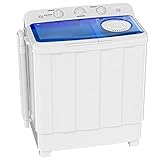
A twin tub washing machine splits laundry duty between two side-by-side compartments under separate lids. On one side sits the wash tub where clothes soak and agitate in soapy water. Right next to it sits the separate spin basket that spins damp-dry at high speeds. Unlike a standard household washer, these two basins do not pass laundry between themselves. You handle every transition with your own hands.
You begin by filling the wash basin with water. Most people hook a thin rubber fill hose directly to a nearby sink faucet using an adapter, while others simply pour water straight in with a bucket or a detachable shower head. Once the water reaches your desired level, you add low-suds HE (High Efficiency) detergent and turn the mechanical wash timer dial to start the cycle. Inside, a flat bottom wash plate (impeller) that moves laundry using water currents spins back and forth to loosen dirt from the fabric fibers.
When the wash timer dings, the machine stops completely. You then open the drain valve to let dirty water flow out, or you leave the water in the tub if you plan to wash another load of clothes in the same suds. Next comes the physical step: you reach in, grab the heavy, soaking wet laundry, and lift it over the divider into the spin basket.
Before closing the spinner lid, you must place a flat plastic safety disc directly on top of the laundry pile and press down firmly. This disc keeps socks and shirts from climbing up the walls and flying out of the spinning drum. You turn the spin dial for two to three minutes to extract the dirty wash water. To rinse, you can either pour clean water directly into the spin basket while it rotates, or move the clothes back into the wash tub with clean water for a dedicated rinse cycle before giving them one final spin.
What Are the Best Perks of Using a Twin Tub?
The biggest appeal of a twin tub machine is total control over your wash day. You decide exactly how much water goes into every load, how long clothes agitate, and how many times they get rinsed. For renters dealing with shared laundry rooms or RV travelers living on tight water tanks, this control translates into substantial savings on monthly utility bills.
These two-basin units also allow you to run wash and spin cycles at the exact same time. While your first batch of shirts spins damp-dry in the spin extractor, a second batch of towels can agitate in the main wash basin. If you need to cut laundry time without waiting on an automatic machine to finish its fixed stages, this parallel processing lets you power through three or four small loads in well under an hour.
Water recycling is another standout advantage that automatic washers simply cannot match. Because the wash water stays put until you physically turn the drain switch, you can wash lightly soiled whites first, pull them out, and drop dirty denim or work clothes into that exact same warm, soapy water. You only drain the tub when the water gets visibly dirty, which cuts water use down to a fraction of what standard washers consume.
The separate spin basket also wrings water out far more aggressively than standard top-load washers. Because the spin drum is narrow, it spins at high revolutions per minute without wobbling apart, using centrifugal force to pull out nearly all surface moisture. Clothes come out feeling barely damp rather than wet, meaning shirts and light fabrics can hang dry on a drying rack inside your apartment in just a couple of hours.
Finally, these machines are lightweight and run on simple mechanical timers rather than delicate computer circuit boards. They plug directly into a standard 120-volt 3-prong grounded wall outlet and draw very low electrical wattage. You can easily roll or carry the entire machine into a closet, an RV shower stall, or a bathroom corner when laundry day is done.
What Are the Biggest Drawbacks and Daily Frustrations?
The most obvious downside is the physical labor required for every single load. A twin tub is semi-automatic, meaning it will never wash, rinse, and spin your clothes while you sleep or watch television. You have to stand right next to the unit, monitor the water levels, turn dials, and physically transfer heavy, waterlogged fabric from one tub to the other.
That transfer step creates a messy routine if you are not careful. Pulling wet towels out of the wash tub inevitably leads to drips across your floor, requiring you to keep a floor towel or mop handy. If you suffer from lower back pain, bending over a low plastic tub to lift dripping jeans repeatedly can quickly turn laundry into a painful chore.
Balancing the spin basket is another daily hassle that tests your patience. The high-speed spinner demands near-perfect weight distribution. If you toss clothes in unevenly or let a pair of jeans settle on one side, the basket will violently bang against the outer housing the second it speeds up. When that happens, the machine can shake loudly, rattle violently, and walk across your bathroom floor until you rush over, turn the dial off, and repack the garments flat by hand.
Capacity limits also catch many buyers off guard. A machine might list a total capacity of twenty pounds, but that number is usually split between the two tubs. For instance, the wash side might hold fourteen pounds of dry clothes, while the spin side only holds eight pounds. That means every single wash load has to be split into two separate spin cycles, doubling your time spent standing over the machine.
Twin tubs also demand considerable horizontal floor space. Because the basins sit side by side, a twin tub is noticeably wider than a standard compact single-drum washer. In micro-apartments or narrow camper hallways, finding two to three feet of flat floor width close to both a faucet and an electrical outlet can prove tricky.
How Does Draining Work in Small Spaces and RVs?
Drainage is where most first-time twin tub owners run into serious trouble. Twin tub washers rely on one of two drainage systems: a simple gravity drain or an active electric drain pump. Knowing which system your machine uses determines where you can place it and how you must run your laundry routine.
A gravity drain hose relies entirely on natural downward slope to empty the tubs. For this setup to work, the corrugated plastic hose must lie completely flat on the floor, dumping directly into a floor drain, an open shower pan, or a ground-level drain pipe. If you try to lift a gravity drain hose up over the edge of a standard bathtub or hook it into a bathroom sink, the water will simply refuse to exit. It will back up into the tub, leaving your clean clothes floating in stagnant suds.
If you live in an apartment without a floor drain, you must choose a unit equipped with a built-in drain pump that pushes water up into a kitchen sink or standpipe. A drain pump uses a small electric motor to lift dirty water three to four feet off the floor through the drain hose. This allows you to set the washer on your kitchen or bathroom floor and hook the curved discharge neck securely over the rim of your sink.
Even with a built-in pump, drainage mistakes can cause messy floor puddles. You must always confirm the drain dial is turned back to the wash position before running fresh water into the tub, or the water will pour straight out the bottom hose as fast as you add it. Always verify that the drain hose has no sharp kinks along its length, and clear the removable lint screen inside the wash tub every few loads so loose fibers do not choke the drain pump impeller.
Should You Choose a Twin Tub or a Fully Automatic?
Choosing between a twin tub and a fully automatic compact washer comes down to how much physical effort you are willing to trade for lower costs and faster wash speeds. A fully automatic portable washer uses a single stainless steel clothes tub for washing, rinsing, and spinning. You connect it to your faucet with a quick-connect sink adapter that clicks onto your kitchen or bathroom faucet, press a button, and walk away until the cycle finishes.
An automatic machine fits busy lifestyles because it requires zero babysitting. However, those automated cycles often take forty-five to sixty minutes per load, and you cannot reuse the water for subsequent garments. Automatic portable machines are also significantly heavier, making them harder to pick up and store in a closet between uses.
A twin tub washer works best for people who do not mind active, hands-on chores. If you live off-grid, camp in an RV, or want to wash multiple loads back-to-back while managing every drop of water, a twin tub gives you unmatched flexibility. You can wash a batch of delicates, spin them out in three minutes, and have them on a drying line while your second load is already agitating in the same soapy water.
Maintenance is also different between the two styles. While fully automatic machines sometimes need dedicated cycles or specialized upkeep to stop musty odors from growing behind closed drum baffles, twin tubs are made of smooth plastic that airs out very quickly. As long as you leave both tub lids propped open after your laundry day to let moisture evaporate, a twin tub rarely develops sour smells.
What Features Should You Look For Before Buying?
When shopping for a portable laundry machine to solve tight-space washing, verify your hookup setup and physical floor space before focusing on anything else. Start by measuring the spot where the machine will sit during use, remembering to leave 4 to 6 inches of rear clearance for the water inlet lines and the drain hose.
Pay close attention to how the machine empties water. If your bathroom only has an elevated sink or a standard bathtub with a high sidewall, look strictly for models that feature a built-in electric drain pump. Choosing a gravity drain model when you lack a floor-level drain will force you to hoist the entire heavy washer onto a sturdy bench or table just to get it to drain properly.
Check the listed weight capacities for both the wash tub and the spin basket. Look for models where the spinner capacity is close to the washer capacity so you do not have to split single wash loads into multiple spin runs. Make sure the unit includes an accessible, snap-out lint filter inside the wash wall, durable turn dials that click firmly into place, and a heavy plastic spin disc that fits snugly inside the spin basket to keep your clothes safely balanced during high-speed extraction.

- TAR Score9.4
TAR Score is a ranking system developed by TopAppliancesReviews.com. TAR score has no relationship or impact from any manufacturers or sales agent websites. Learn more
- BrandYMXA

- TAR Score8.9
TAR Score is a ranking system developed by TopAppliancesReviews.com. TAR score has no relationship or impact from any manufacturers or sales agent websites. Learn more
- BrandGIANTEX

- TAR Score7.9
TAR Score is a ranking system developed by TopAppliancesReviews.com. TAR score has no relationship or impact from any manufacturers or sales agent websites. Learn more
- BrandWinado

- TAR Score7.8
TAR Score is a ranking system developed by TopAppliancesReviews.com. TAR score has no relationship or impact from any manufacturers or sales agent websites. Learn more
- BrandROVSUN
- TAR Score7.2
TAR Score is a ranking system developed by TopAppliancesReviews.com. TAR score has no relationship or impact from any manufacturers or sales agent websites. Learn more
- BrandAuertech
Last update on 2026-10-27 / Affiliate links / Images, Product Titles, and Product Highlights from Amazon Product Advertising API
FAQs
How long does a full twin tub wash load take?
A single wash, rinse, and spin cycle in a twin tub usually takes fifteen to twenty minutes from start to finish. Because you control the dials, you can run a quick wash for five minutes, spin for two minutes, and complete a clean rinse in under five minutes. If you run both tubs simultaneously, you can finish three full loads in less than an hour.
Can you leave a twin tub washer running unattended?
No, you should never leave a twin tub washer running while you leave the house or step away for long periods. You must manually turn the water faucet off once the tub fills to avoid overflowing your space, and you must be present to switch dials between cycles. If the spin basket becomes unbalanced, you need to be nearby to turn it off before it shakes violently.
How dry do clothes get in the spin basket?
Clothes emerge from the spin extractor damp-dry, with far less moisture than garments pulled from a standard top-load washing machine. The narrow spinner drum rotates at very high speeds, pulling water out of fabric fibers so effectively that lightweight items like t-shirts and athletic wear can hang dry on a folding rack in two to three hours.
Can you wash heavy blankets in a twin tub?
Twin tubs handle lightweight fleece blankets, twin sheets, and thin throws with ease, but they cannot handle thick comforters or heavy queen- and king-size bedding. Bulky bedding absorbs massive amounts of water, which overloads the wash plate and prevents the tub from circulating laundry properly. Heavy items also prove nearly impossible to balance safely inside the narrow spin basket.
Related guides: advantages of washing machine.


10 Best Washing Machine For King Size Comforter of 2026 For Bulky Bedding

11 Best Semi Automatic Washing Machine Under 10000 of 2026 For Apartments and RVs

9 Best Compact Refrigerator For Beer Bottles of 2026 For Upright Bottle Fit

10 Best Quality Semi Automatic Washing Machine of 2026 For Leak-Free Laundry

11 Best Small Washer Machine of 2026 For Everyday Laundry

12 Best Vibration Pads For Washing Machine of 2026 To Stop Walking and Shaking

11 Best Selling Front Load Washing Machine of 2026 For Quiet Odor-Free Laundry

11 Best Washing Machine For King Size Bedding of 2026 To Prevent Cycle Errors





