
What Are the Advantages of Owning a Washing Machine?

Most people assume that buying a dedicated washer is just an expensive luxury for chores easily handled at a neighborhood laundromat. That belief usually fades after hauling the first heavy basket through bad weather, because an automatic machine gives back hours of personal time every week. Beyond skipping the travel, a washer cleans fabrics and wrings out dirty water far more thoroughly than hand washing, protecting garments with minimal physical effort.
Still, whether bringing one home makes sense depends on your physical space and daily routine. You need a secure water connection, a safe drain path into a sink or standpipe, and a standard electrical outlet nearby. Your typical weekly pile of clothes also matters, since the savings add up faster when you wash often. Here is how an in-home machine changes your daily chores, along with the honest trade-offs to check first.
You Reclaim Hours Every Week From Laundromats And Scrubbing
Hand washing laundry takes a heavy toll on your body. Bending over a deep bathtub or leaning across a bathroom sink strains your lower back within minutes. Scrubbing coarse denim or thick cotton fabric against your knuckles leaves skin raw, while wringing out heavy bath sheets puts intense twisting pressure on your wrists and elbows. What starts as a simple chore quickly turns into an exhausting physical workout that drains your energy for the rest of the day.
Using a commercial laundromat saves some elbow grease, but it steals hours of personal time every week. You have to sort clothes into bulky baskets, lug heavy bags down stairwells, load them into a car or haul them down city sidewalks, and travel across town. Once you arrive, you often find yourself pacing around waiting for open machines during crowded weekend hours. You sit on uncomfortable plastic chairs for two hours guarding your clothes, fold laundry on crowded tables, and haul everything back home before putting it away.
An automatic washing machine gives you that time and energy back. You simply place your clothes inside the wash basket, add a cap of detergent, shut the lid, and press a button. The machine fills, washes, drains, rinses, and spins your laundry entirely on its own. While the cycle runs, you can cook dinner, help your children with homework, study, or sleep. Laundry shifts from a dreaded half-day event into a quiet background task that fits smoothly into your normal routine.
High Speed Spinning Cleans Better And Dries Clothes Faster
Washing clothes by hand rarely cleans as evenly as an electric appliance. Human hands tend to scrub the front of a shirt or the knees of pants while leaving the rest of the fabric barely rinsed. Detergent often stays trapped inside thick fibers because hand pressing cannot push clean rinse water through heavy cloth. Over time, trapped soap residue attracts fresh dirt, leaving clothes stiff, faded, and slightly dingy.
Automatic washers use steady mechanical action to clean fabrics evenly from edge to edge. Traditional top-load machines rely on the center agitator post that twists clothes through the water to loosen deep grime. High-efficiency top loaders and front loaders use the flat bottom wash plate (impeller) that moves laundry using water currents to tumble garments gently. Both styles circulate soapy water through every seam hundreds of times during a single wash, lifting body oils and stubborn dirt without tearing the fabric. For heavily soiled work pants or muddy sports gear, pairing that mechanical movement with a washing machine with a dedicated soak cycle loosens dried mud before the main wash even starts.
The biggest difference between manual washing and machine washing happens during the spin cycle. The spin cycle is the fast spinning basket that wrings water out of clothes using centrifugal force. As the stainless steel clothes tub spins at high speeds, water gets pushed out through tiny holes in the drum and pumped away. Squeezing a wet towel by hand leaves it heavy and dripping wet, which means it can take two full days to air dry on a clothesline or folding rack. That prolonged dampness invites sour, stagnant smells. A machine spins garments until they are merely damp to the touch, allowing them to finish drying on a rack in just a couple of hours.
Home Washing Eliminates Expensive Weekly Laundromat Fees Over Time
Washing clothes away from home carries a steady, rising financial cost. A single wash cycle at a public laundromat often costs several dollars, and drying costs just as much. When you add up three or four loads every week for a small household, the ongoing price reaches fifty to eighty dollars a month. That figure does not even account for the cost of driving, bus fares, lost quarters in jammed coin slots, or purchasing single-use detergent boxes at marked-up vending machines.
Running a machine at home costs surprisingly little per load. A residential washing machine plugs into a standard 120-volt 3-prong grounded wall outlet and uses modest electrical power during a typical wash cycle. The municipal water needed for a wash and rinse cycle costs pennies per load in most communities. Even when you run several loads a week, your monthly utility bills rise by only a small fraction of what you would feed into a commercial coin-operated laundry machine.
Because your operating costs stay so low, an in-home washer steadily pays for itself. Rather than spending hundreds of dollars every year on commercial machines you will never own, that money stays in your bank account. Within one or two years of regular use, the savings from skipped laundromat trips typically balances out the initial purchase price of the appliance, leaving you with a durable household tool that continues saving money for years to come.
You Can Wash Urgent Stains Immediately On Your Schedule
Spills, sweat, and stains do not wait for your scheduled laundry day. A toddler spills grape juice across a clean shirt, a pet has an accident on a blanket, or you drop coffee on your favorite work trousers on a Tuesday morning. If you depend on a laundromat, that stained garment sits in a laundry hamper for several days until you have enough dirty clothes to justify making the trip. During those days, the stain cures deep into the cloth fibers, making it nearly impossible to wash out later.
Having a washer inside your home lets you address spills immediately. You can treat the fabric with a stain remover and drop it straight into the wash tub before the liquid dries into the weave. Running an immediate wash preserves your wardrobe and keeps you from having to throw away expensive garments ruined by set-in marks.
Immediate access also frees you from having to maintain a huge wardrobe just to make it between laundromat runs. You do not need to buy two weeks worth of socks, workout clothes, or school uniforms. When you run low on clean clothes, you can run a load in the evening and have everything fresh by morning. If you find yourself in a rush before an event, running a preset quick wash cycle cleans and spins lightly soiled clothes in roughly twenty minutes, giving you a fresh outfit right when you need it.
Check Plumbing Safety, Floor Space, And Maintenance Trade-Offs First
While an in-home washer delivers great convenience, owning one comes with physical requirements and practical trade-offs. Ignoring these factors can lead to water leaks, floor damage, or landlord conflicts. Before deciding to bring a machine into your living space, walk through these essential checks:
- Measure your physical footprint: Measure the width, depth, and height of your floor space. Always add 4 to 6 inches of rear clearance behind the unit for the hot and cold water supply hoses and the drain path. Check your hallway doors and narrow stairwells to confirm the machine can pass through without scraping drywall.
- Check your electrical power: A residential washer must plug straight into an accessible standard 120-volt 3-prong grounded wall outlet. Never plug a washing machine into an ungrounded two-prong outlet using an adapter, and never run it through a lightweight extension cord, which can overheat under heavy motor loads.
- Identify your drain path: Determine how waste water will leave your home. Washers equipped with a built-in drain pump push water up into a kitchen sink or standpipe, while models with a gravity drain hose must lie flat across a floor drain so water drains naturally. If your drain hose discharges into a utility sink, secure it firmly with a clamp or strap so high water pressure does not knock the hose loose onto your floor.
- Inspect your water connections: Portable washers use a quick-connect sink adapter that clicks onto your kitchen or bathroom faucet. Check that your faucet spout features standard round screw threads; pull-out spray faucets or designer square spouts often will not accept standard quick-connect fittings. For permanent hookups, turn the water shutoff valves to confirm they close tightly without dripping.
- Stabilize the leveling legs: Uneven floors cause high-speed spin cycles to shake violently, bang against walls, or creep across the floor. Adjust the threaded leveling legs on the bottom of the machine until the cabinet sits flat and solid. Modern units include an off-balance safety sensor that pauses spinning and beeps when bulky towels or blankets bunch up on one side, protecting the motor from damage.
- Prevent odors with basic upkeep: Always choose low-suds HE (High Efficiency) detergent. Regular high-suds soap creates excess foam that traps dirt, clogs drain pumps, and leaves sticky residue on clothes. Clean the tub lint screen or lower pump filter catch every few weeks, leave the washer lid open between loads to let moisture evaporate, and run an empty hot cycle or a self-cleaning tub cycle to prevent stagnant mildew odors.
Compact And Portable Washers Bring Full Cleaning To Small Spaces
You do not need a dedicated laundry room or heavy utility hookups to enjoy the benefits of an automatic washing machine. Renters, college students, and apartment dwellers living in tight quarters can choose compact and portable washers designed specifically for smaller spaces. These appliances feature smaller footprints, lightweight cabinets, and versatile hookup options that work directly with standard household sinks.
If you want a simple routine with minimal effort, fully automatic compact washers provide the exact same hands-free operation as full-sized machines. They feature a single stainless steel clothes tub that washes, rinses, and spins your clothes automatically. These units connect to your sink faucet using a quick-connect hose and use an internal pump to push wastewater safely down the sink drain, letting you complete entire loads without touching the laundry between cycles.
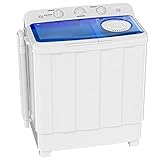
Another option for tight living quarters is a twin-tub semi-automatic washer. These machines feature two separate compartments side by side: the wash tub where clothes soak and agitate, and the separate spin basket that spins damp-dry. Twin-tub machines require you to lift wet clothes from the wash side to the spin side by hand, but they cost less, use very little water, and allow you to wash a second load while the first load is spinning. Very small spaces or camping setups can even use compact folding washers, which collapse down for storage in a closet and handle light items like socks, underwear, and baby clothes.
Before selecting any compact washing machine, look closely at tub capacity, which indicates the maximum dry weight of laundry the machine can wash safely. Match that weight capacity against your household's typical dirty clothes volume to make sure the unit can handle your everyday needs.

- TAR Score9.4
TAR Score is a ranking system developed by TopAppliancesReviews.com. TAR score has no relationship or impact from any manufacturers or sales agent websites. Learn more
- BrandYMXA

- TAR Score8.9
TAR Score is a ranking system developed by TopAppliancesReviews.com. TAR score has no relationship or impact from any manufacturers or sales agent websites. Learn more
- BrandGIANTEX

- TAR Score7.9
TAR Score is a ranking system developed by TopAppliancesReviews.com. TAR score has no relationship or impact from any manufacturers or sales agent websites. Learn more
- BrandWinado

- TAR Score7.8
TAR Score is a ranking system developed by TopAppliancesReviews.com. TAR score has no relationship or impact from any manufacturers or sales agent websites. Learn more
- BrandROVSUN
- TAR Score7.2
TAR Score is a ranking system developed by TopAppliancesReviews.com. TAR score has no relationship or impact from any manufacturers or sales agent websites. Learn more
- BrandAuertech
Last update on 2026-10-27 / Affiliate links / Images, Product Titles, and Product Highlights from Amazon Product Advertising API


10 Best Washing Machine For King Size Comforter of 2026 For Bulky Bedding

11 Best Semi Automatic Washing Machine Under 10000 of 2026 For Apartments and RVs

9 Best Compact Refrigerator For Beer Bottles of 2026 For Upright Bottle Fit

10 Best Quality Semi Automatic Washing Machine of 2026 For Leak-Free Laundry

11 Best Small Washer Machine of 2026 For Everyday Laundry

12 Best Vibration Pads For Washing Machine of 2026 To Stop Walking and Shaking

11 Best Selling Front Load Washing Machine of 2026 For Quiet Odor-Free Laundry

11 Best Washing Machine For King Size Bedding of 2026 To Prevent Cycle Errors





