
What Washer Is Best for Your Space and Laundry Routine?

Many people assume one washer is best for every home, but that isn’t true. The best choice depends on your space, water and drain setup, and laundry routine. A regular washer may suit a home with the right connections, while a portable washer may work better where space is tight or standard connections aren’t available.
Start by checking where the washer would go, how it would get water, and where used water could drain safely. Then think about how much laundry you wash at once and whether you’re comfortable moving clothes between separate wash and spin tubs. Those details will help you compare the two types and avoid a washer that doesn’t fit your home or routine.
No washer type works best in every home
The right washer has to fit your room, water supply, drain, and laundry habits. A machine that looks convenient can become a daily hassle if its hose cannot reach a safe drain or its tub is too small for the loads you wash.
A regular home washer usually suits people who have a dedicated laundry area and want to put clothes in, choose a cycle, and come back when the load is done. A portable washer can suit a smaller home or a space without a standard washer setup, but some models need more hands-on steps.
Think about an ordinary laundry day before you choose. If you wash several full loads and want to do other things while the washer runs, an automatic washer may fit your routine better. If you wash smaller loads and can stay nearby to manage water and clothes, a portable twin-tub washer may be worth considering.
Neither renting nor living in a small home automatically means you need a portable washer. Check what connections and space your home actually has. A regular washer may still work if the room and hookups are suitable, while a portable model may not work with every sink or drain.
Regular and portable washers fit different setups
A regular washer is designed for a fixed laundry spot with water connections and a drain. It generally handles the wash cycle without you moving clothes between separate tubs. Before buying one, confirm that the washer fits the available space and that the water connections, drain, and power outlet match the machine's instructions.
A portable washer is easier to move or store than a fixed laundry appliance, but portable does not mean it can connect to every faucet or drain. Some models use a sink adapter for water, and some drain water through a hose. Read the exact product instructions to see how that model fills and empties.
Look at your faucet before choosing a portable model. A standard faucet may accept a quick-connect adapter, but pull-out spray faucets often need a different fitting. If the product instructions do not clearly name an adapter that fits your faucet, ask the manufacturer before buying rather than assuming the parts will connect.
Then trace where the water will go. The drain hose must reach a suitable drain and stay in place while water flows out. A sink can work only if the hose arrangement is allowed by the washer instructions and the sink can safely handle the draining water. Never leave a hose balanced loosely where it could slip out and spill water across the floor.
Space includes more than the spot where the washer sits. Leave room to open lids, connect hoses, load clothes, and reach the faucet or drain. Check the product's listed measurements and required clearances, then compare them with the actual space, including corners, doors, and cabinets that may get in the way.
If you are comparing regular machines within a set spending limit, you can also browse washing machines listed under a budget limit. Still, confirm the washer's size and hookup needs before deciding. A lower-cost machine is not a good fit if you cannot connect or drain it safely.
Twin tubs require separate wash and spin steps
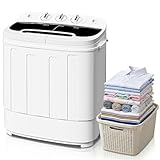
A twin-tub washer has a wash tub where clothes soak and move through soapy water, plus a separate spin basket that spins water out of the clothes. These are two different spaces in the same machine. The wash tub cleans the load; the spin basket removes some water, but it does not dry clothes completely.
With a twin-tub model, you usually add water and detergent, place clothes in the wash tub, and start the wash. When that step is finished, you drain the wash water. You then move the clothes by hand into the spin basket and run the spin step. Follow the machine's own instructions, since filling, draining, and cycle controls vary.
That transfer is the main trade-off. You need to stay close enough to drain the water and move the clothes instead of leaving the whole wash to run automatically. If you are doing laundry while caring for children, cooking, or working, consider whether you can reliably return for each step.
Some twin-tub washers can wash one load while spinning another, but this does not remove the need to move clothes between tubs. It means the two tubs can be used at the same time when the machine's instructions allow it. You still handle the transfer and manage the wash water.
Check the drain method carefully. A gravity drain means water flows out through a hose without a pump. The hose must be positioned so water can flow to the drain naturally, and the drain needs to be lower than the washer outlet as the manual directs. If your only drain is higher than the washer or far away, a gravity-drain model may not suit your home.
Do not assume a sink adapter solves every water or drain issue. The adapter deals with filling from a faucet, while the drain hose deals with used water leaving the machine. Confirm both arrangements separately, and stop if water leaks near an outlet or electrical cord. Keep the area dry and contact a qualified repair person or electrician if water has reached electrical parts.
Check water, drain, and space before buying
A few checks can prevent the common frustration of bringing home a washer that cannot be connected. Use the model's instructions and listed measurements, not a guess based on its name or photo.
- Check the water source. Identify the faucet or water connections you plan to use. For a portable washer, confirm that the included or required adapter fits that exact faucet, especially if it has a pull-out spray head.
- Check the drain route. Follow the hose path from the washer to the drain. Make sure the hose can reach without stretching, kinking, or sitting where it could come loose. Confirm whether the washer needs a floor-level drain, a sink, or another arrangement.
- Check the floor and nearby area. Look for a level, stable place where the machine can sit without blocking a doorway or creating a trip hazard. Keep the washer away from standing water and follow the manual's directions for its power connection.
- Measure the space. Measure the height, width, and depth available. Include room for the lid, hoses, faucet access, and any clearance the manufacturer requires. Check the route through doorways too if you will need to move the washer into the room.
- Check home rules. If you rent, live in a dorm, or share a laundry area, ask the property manager whether a portable washer is allowed. A suitable faucet and drain do not automatically mean the building permits the setup.
If you cannot tell whether a drain can handle the washer or whether a water connection is suitable, ask the property manager or a qualified plumber before connecting it. Do not improvise a hose connection or force a fitting that does not match. A small leak can damage floors or cabinets before you notice it.
Match the washer to your load and routine
Start with the amount of laundry you usually wash at one time. A compact washer may be convenient for a few everyday items, but it can mean more separate loads if you often wash towels, bedding, or clothes for several people. Check the listed capacity and how the maker describes it, then compare that with your usual load size.
Do not judge capacity by the outside size alone. The listed capacity and the kind of items you wash matter. Bulky bedding takes up more room than a similar weight of smaller clothes. If you routinely wash large items, confirm in the manual that the washer can handle them before buying.
Next, decide how much attention you want to give each load. If you want to add clothes and detergent, choose a cycle, and return later, look for a washer that handles the wash and spin steps automatically. If you can manage filling, draining, and moving clothes yourself, a twin-tub model may suit a smaller space.
Think through a full load from start to finish, not just the wash. Ask yourself where you will put the clothes after washing, where used water will drain, and whether you can move wet clothes comfortably. If any step has no practical place in your home, choose a different washer style or confirm another setup first.
A portable twin-tub washer may help when space is limited and a standard washer setup is not practical, but it still needs a suitable water source and drain. Before buying, verify the faucet fit, drain arrangement, listed load capacity, and amount of hands-on work in the product instructions. If you want to avoid transferring clothes between separate tubs, choose a washer designed to complete those steps automatically.

- TAR Score8.6
TAR Score is a ranking system developed by TopAppliancesReviews.com. TAR score has no relationship or impact from any manufacturers or sales agent websites. Learn more
- BrandOmelaza
- TAR Score8.1
TAR Score is a ranking system developed by TopAppliancesReviews.com. TAR score has no relationship or impact from any manufacturers or sales agent websites. Learn more
- BrandSUPER DEAL
Last update on 2026-11-09 / Affiliate links / Images, Product Titles, and Product Highlights from Amazon Product Advertising API


10 Best Washing Machine For King Size Comforter of 2026 For Bulky Bedding

11 Best Semi Automatic Washing Machine Under 10000 of 2026 For Apartments and RVs

9 Best Compact Refrigerator For Beer Bottles of 2026 For Upright Bottle Fit

10 Best Quality Semi Automatic Washing Machine of 2026 For Leak-Free Laundry

11 Best Small Washer Machine of 2026 For Everyday Laundry

12 Best Vibration Pads For Washing Machine of 2026 To Stop Walking and Shaking

11 Best Selling Front Load Washing Machine of 2026 For Quiet Odor-Free Laundry

11 Best Washing Machine For King Size Bedding of 2026 To Prevent Cycle Errors





