
What Size Washer Do You Need for a King Comforter?

A king comforter isn’t automatically too much for a home washer, so there’s no need to worry before checking. A machine with about 4.5 cubic feet of space or more is a reasonable starting point, but that size alone can’t guarantee your comforter will fit well.
The answer depends on how thick and fluffy the comforter is, what it’s filled with, and what the washer’s instructions say about bulky bedding. The comforter’s care label matters too. It should sit loosely in the washer, with room to move, not be packed in like a full hamper. Here’s how to check the labels and judge the fit before you start a wash.
Why a King Comforter Needs More Than a Capacity Number
A washer’s capacity describes how much laundry it can hold, but it doesn’t guarantee that every king comforter will fit. A thin comforter may sit loosely in a washer that can’t handle a thick, fluffy one. The fill matters too: down, synthetic fill, and other materials can puff up or bunch differently when damp.
Cubic feet is a measure of the space inside the washer. Think of the drum as a basket: the comforter needs room not only to go in, but also to shift as water and the wash motion move it around. A comforter wedged tightly against the walls may not get clean or rinsed well.
Around 4.5 cubic feet is a reasonable place to start looking for a washer for a king comforter. Treat that as a starting point, not a promise. A lofty comforter may need more usable room, while a less bulky one may fit in a smaller washer if its maker allows machine washing and it can move freely.
The machine’s shape and wash motion can affect how much room the bedding has. A center post that twists clothes through the water can take up space in the middle of some washers. Other washers use a flat bottom wash plate that moves laundry with water currents. Capacity alone doesn’t tell you how your particular comforter will sit in either style.
A washer that is too full can also struggle to move the comforter evenly. That can leave patches that weren’t washed or rinsed well, or cause the load to bunch to one side during spinning. Don’t force the comforter down just because you can close the lid or door.
Check the Washer Instructions and the Comforter Label
Before you put the comforter in, check both the washer instructions and the care label sewn onto the comforter. The washer manual may give guidance for bedding or bulky items, while the care label tells you whether the comforter can go in a home washing machine and what wash conditions to use. If the two sets of instructions conflict, follow the more restrictive direction.
Look in the washer manual’s section on bulky bedding, blankets, or comforters. If the manual says not to wash bedding of that size or type, don’t assume the capacity number overrides that warning. If you no longer have the printed manual, search the manufacturer’s support page using the washer’s model information from its label.
Then read the comforter’s care label. Look for instructions about machine washing, water temperature, and drying. A label that says dry-clean only, or that rules out machine washing, means the washer’s size does not make home machine washing suitable.
- Washer: Find the maker’s guidance for bulky bedding and note any limits.
- Comforter: Confirm that the care label allows machine washing.
- Fit: Consider how thick and fluffy the comforter is, not just its king-size label.
- Cycle: Follow the washer and comforter instructions for the wash setting and detergent.
Don’t guess at a cycle just because it sounds stronger. A heavy-duty cycle may not be right for a delicate comforter, and a gentle cycle won’t make an oversized comforter fit. The care label and washer manual are the best guides for the materials and machine you have.
Check Whether the Comforter Has Room to Move
Use these steps to judge the fit before starting a wash. The goal is a loose load, not a tightly packed bundle.
- Place the comforter in the empty washer. Don’t push it down or twist it into a hard lump. Spread it around the inside as evenly as you can.
- Look for open space. The comforter shouldn’t be wedged firmly against the top or packed so tightly that there’s no room for it to shift. If it fills nearly the whole space before water is added, it’s likely too bulky for that washer.
- Check the center and sides. If your washer has a center agitator post, don’t wrap the comforter tightly around it. If it has a flat bottom wash plate, keep the comforter arranged loosely rather than pressed into a dense pile at the bottom.
- Move the load gently by hand. You should be able to loosen and reposition it without forcing it. If it springs back into a tight wad or feels jammed, take it out and use a larger machine.
- Consider what happens when it gets wet. A thick, lofty comforter can become heavier and harder to move once damp. If the fit is already close when dry, don’t count on the washer to manage it well after water enters the fabric.
There isn’t a single hand-space rule that works for every washer. Use the washer maker’s bedding guidance along with what you can see in the drum. The comforter should have room to shift, and the washer should be able to carry out the cycle the manual recommends.
Stop if the washer starts to shake violently, move across the floor, or make an unusual sound during the cycle. If it pauses or beeps because the load has shifted, follow the manual’s directions for rearranging the bedding. Don’t keep restarting a washer that is straining or moving dangerously. If the problem continues with a load that the manual says is suitable, stop using the machine and contact the manufacturer or a qualified appliance repair professional.
Use a Larger Washer When the Comforter Is Too Bulky
If the comforter won’t sit loosely, a larger-capacity laundromat washer is usually a better choice than cramming it into your home machine. A laundromat may have a washer with more usable room for bulky bedding, but the machine’s posted instructions still matter. Check that the comforter’s care label permits machine washing and that the laundromat washer allows comforters before you begin.
Home washing can be convenient when the comforter fits with room to move and both sets of instructions allow it. You can use the cycle and wash products that suit your comforter, then handle drying according to its care label. But a home washer that barely holds the dry comforter may not wash it evenly, and a crowded load can strain the machine.
A larger laundromat washer can provide more room for a bulky comforter. It may be the sensible option when your home washer is compact or the comforter is thick and lofty. Still, don’t treat a larger drum as permission to ignore care instructions. If the comforter is not machine-washable, a bigger washer won’t change that.
If the label rules out machine washing, or you can’t confirm that the comforter can be washed safely, take these steps instead:
- Read the full care label. Check for directions to dry-clean or spot-clean rather than machine-wash.
- Contact the comforter maker. Ask what cleaning method is suitable for that specific fill and fabric.
- Ask a cleaner before bringing it in. Tell them the comforter’s material and the care-label instructions.
- Don’t soak or scrub it without guidance. Water or rough handling may damage some fills or fabrics.
If you’re buying a washer partly to handle bulky bedding, compare the listed capacity with the manufacturer’s guidance for comforters. A washer listing with a stated capacity around 4.5 cubic feet can be a starting point, but check whether its maker permits the kind of bedding you own. Also compare the comforter’s care instructions and thickness with the washer’s guidance before you buy; neither the capacity label nor the king-size label settles the fit by itself.

- TAR Score8.9
TAR Score is a ranking system developed by TopAppliancesReviews.com. TAR score has no relationship or impact from any manufacturers or sales agent websites. Learn more
- BrandGIANTEX

- TAR Score8.6
TAR Score is a ranking system developed by TopAppliancesReviews.com. TAR score has no relationship or impact from any manufacturers or sales agent websites. Learn more
- BrandGIANTEX

- TAR Score7.9
TAR Score is a ranking system developed by TopAppliancesReviews.com. TAR score has no relationship or impact from any manufacturers or sales agent websites. Learn more
- BrandWinado
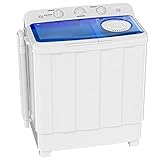
- TAR Score7.2
TAR Score is a ranking system developed by TopAppliancesReviews.com. TAR score has no relationship or impact from any manufacturers or sales agent websites. Learn more
- BrandAuertech

- TAR Score7.1
TAR Score is a ranking system developed by TopAppliancesReviews.com. TAR score has no relationship or impact from any manufacturers or sales agent websites. Learn more
- BrandGeneric
Last update on 2026-11-10 / Affiliate links / Images, Product Titles, and Product Highlights from Amazon Product Advertising API
FAQs
Can I wash a thick or down-filled king comforter at home?
Only if the comforter’s care label allows machine washing and your washer’s manual allows that kind of bulky bedding. A thick or fluffy comforter can take up most of the drum, even when it is dry. If it cannot sit loosely or the washer instructions rule it out, use another cleaning option recommended by the comforter maker.
Can I wash a king comforter in a compact washer?
Don’t decide from the word “king” or the washer’s capacity alone. Check the manual’s bedding guidance, then see whether the comforter fits loosely without being pushed into a tight bundle. If it fills the washer or cannot shift, use a larger suitable washer rather than forcing it in.
What if my comforter fits but the washer struggles during the cycle?
Stop the cycle if the washer shakes violently, walks across the floor, or makes an unusual sound. Follow the manual’s instructions if the load has shifted, but don’t keep running a washer that continues to strain. Contact the washer maker or a qualified repair professional if the problem persists with a load the manual permits.
Related guides: best washing machine for king size comforter and what size washer for king size comforter.


10 Best Washing Machine For King Size Comforter of 2026 For Bulky Bedding

11 Best Semi Automatic Washing Machine Under 10000 of 2026 For Apartments and RVs

9 Best Compact Refrigerator For Beer Bottles of 2026 For Upright Bottle Fit

10 Best Quality Semi Automatic Washing Machine of 2026 For Leak-Free Laundry

11 Best Small Washer Machine of 2026 For Everyday Laundry

12 Best Vibration Pads For Washing Machine of 2026 To Stop Walking and Shaking

11 Best Selling Front Load Washing Machine of 2026 For Quiet Odor-Free Laundry

11 Best Washing Machine For King Size Bedding of 2026 To Prevent Cycle Errors





