
What Size Washer Do You Need for a King Comforter?

Many people assume any washer labeled for a king comforter will handle one. A washer around 4.5 cubic feet or larger is a practical starting point, but size alone doesn’t settle it: the comforter needs room to move freely inside the tub, not just squeeze in.
The comforter’s thickness and filling can make it much bulkier than it looks folded, and some washers have less usable room than their capacity suggests. Check the care label to make sure machine washing is allowed, then check the washer manual for guidance on king comforters. The steps below can help you spot a tight fit before you start a wash.
Capacity alone does not tell you if it fits
A washer around 4.5 cubic feet or larger is a practical starting point for many king-size comforters. Cubic feet describe how much room the washer’s inside tub holds, but the number does not guarantee that every comforter will fit or wash well.
A thin comforter may fit where a thick, lofty one does not. Down, synthetic filling, and other materials can also change how much space the comforter takes up. A comforter can look small when dry, then become heavier and bulkier after it absorbs water.
The comforter needs open space around it so water and detergent can move through the fabric. If you have to push it down, wedge it under the rim, or pack it tightly around the center, the load is too bulky. It may not get clean or rinse properly, and the washer may struggle to spin it evenly.
That can leave you with a comforter that is still soapy or very wet. It can also bunch to one side and make the washer pause during spinning. Don’t treat “it fits inside” as the same thing as “it can wash properly.”
Check both labels before washing
The comforter’s care label and your washer’s manual answer different questions. The label tells you whether the comforter can go in a washing machine and what care it needs. The manual tells you whether the washer can handle bulky bedding and which cycle to use.
- Read the comforter label. Look for washing instructions and any warning against machine washing. If the label says to dry clean or gives care instructions that your washer cannot follow, don’t put it in the machine.
- Look up bedding guidance in the washer manual. Check whether it mentions king-size comforters, bulky items, or bedding. Follow its directions for the washer’s cycle and loading method.
- Compare the two sets of instructions. If the comforter label permits machine washing but the manual says the washer cannot handle bulky bedding, use a larger washer instead. If either set of instructions rules out the load, don’t wash it in that machine.
- Check the cycle names and limits. Use the cycle the manual recommends for bedding. Don’t assume a heavy-duty cycle can make an oversized comforter safe to wash in a small tub.
If you no longer have the paper manual, look for the washer’s model information and find the maker’s instructions for that machine. Don’t rely on a general capacity claim alone. Guidance can vary from one washer to another, even when their listed capacity looks similar.
Make sure the comforter can move freely
Before adding detergent, place the dry comforter loosely in the washer. Don’t fold it into a tight bundle or press it down just to close the lid. The dry-load check is a quick way to spot a poor fit, though the washer manual still has the final say.
- Look at the top of the load. The comforter should sit inside the tub without being squeezed against the lid or rim. If it bulges upward or you need to force the lid shut, take it out.
- Check for space around the comforter. It should not be wedged tightly against every side of the tub. If there is no room for it to shift and loosen as the washer fills, choose a larger machine.
- Notice whether it forms a solid lump. A comforter packed into a dense ball may not let water move through all of its layers. Loosely place it as the manual directs, but don’t keep rearranging it to make an unsuitable washer work.
- Watch and listen during the wash and spin. If the washer repeatedly pauses, makes heavy banging sounds, or cannot spin the load, stop and follow the manual’s directions. The comforter may be too bulky or unevenly gathered.
Some washers pause when a bulky load gathers on one side. If the manual permits, you may be able to stop the cycle and spread the comforter more evenly. But repeated pauses or a load that remains tightly packed are signs to move the comforter to a larger washer, not to keep restarting the same cycle.
Don’t keep running a washer that is banging hard or moving across the floor. Stop the cycle and follow the maker’s instructions. If the washer continues to shake with ordinary loads, or you see a leak, stop using it and contact the manufacturer or a qualified repair professional.
Portable washers need a closer fit check
A portable washer’s listed load weight does not tell you how much room a king comforter needs. Weight describes how much dry laundry the machine is meant to handle. A bulky comforter can take up too much space even when it does not exceed that weight.
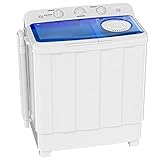
Compact portable washers have less room inside than many full-size home washers. Some portable machines are fully automatic, while twin-tub styles have one tub for washing and a separate basket for spinning. Either style may be too small for a king comforter, so check the machine’s instructions for bedding guidance and the actual usable space.
For a portable washer, check whether the maker specifically allows king-size comforters. Then compare the comforter’s bulk with the machine’s inside tub. If the comforter fills the tub, needs to be pushed down, or cannot move freely, don’t rely on the listed pounds to make the load suitable.
A machine with a separate spin basket may create another limit: the comforter must also fit in that basket if you expect the machine to spin it. Don’t assume that a comforter that fits in the wash tub will fit in the spin basket. Follow the maker’s directions for both parts of the cycle.
If your portable washer’s instructions don’t clearly allow a king comforter, contact the maker before washing it there. If you can’t confirm that the washer can handle the comforter, use a larger machine. A compact washer can still be useful for smaller laundry, but that doesn’t mean it can manage bulky bedding.
Use a laundromat if the load is cramped
Choose a larger laundromat washer if your home washer’s manual rules out king comforters, the comforter cannot move freely, or the washer repeatedly struggles to spin it. This is also the safer choice when a thick comforter fills the tub before the wash even starts.
Check the laundromat washer’s instructions or ask staff which machine is suitable for a king comforter. The same basic rules still apply: the comforter’s care label must allow machine washing, and the load should have room to move. A larger washer is not permission to ignore care instructions.
Follow the laundromat machine’s directions for loading and cycle selection. Don’t add extra bedding just because the comforter seems to fit. A second bulky item can leave too little room for water to move through the load.
After the cycle, check that the comforter has rinsed and spun as expected. If it is still very wet, don’t force it into a home dryer that is too small. Follow the comforter’s drying instructions and the dryer maker’s guidance, or ask laundromat staff what to do next.
Choose a washer with room for bulky bedding
If you wash a king comforter at home regularly, look for a washer with enough usable tub space and clear maker guidance for bulky bedding. A listed capacity around the starting point above may help narrow your search, but the manual should specifically allow the type of comforter you plan to wash.
Before buying, check the washer’s bedding instructions, how the maker describes its usable space, and whether your comforter’s care label permits machine washing. For a portable washer, confirm that the comforter can fit and move in the wash tub, and in the spin basket if the machine has one. You can also compare other ownership factors in this guide to what to look for in a reliable washing machine.

- TAR Score8.9
TAR Score is a ranking system developed by TopAppliancesReviews.com. TAR score has no relationship or impact from any manufacturers or sales agent websites. Learn more
- BrandGIANTEX

- TAR Score8.6
TAR Score is a ranking system developed by TopAppliancesReviews.com. TAR score has no relationship or impact from any manufacturers or sales agent websites. Learn more
- BrandGIANTEX

- TAR Score7.9
TAR Score is a ranking system developed by TopAppliancesReviews.com. TAR score has no relationship or impact from any manufacturers or sales agent websites. Learn more
- BrandWinado
- TAR Score7.2
TAR Score is a ranking system developed by TopAppliancesReviews.com. TAR score has no relationship or impact from any manufacturers or sales agent websites. Learn more
- BrandAuertech

- TAR Score7.1
TAR Score is a ranking system developed by TopAppliancesReviews.com. TAR score has no relationship or impact from any manufacturers or sales agent websites. Learn more
- BrandGeneric
Last update on 2026-11-10 / Affiliate links / Images, Product Titles, and Product Highlights from Amazon Product Advertising API
Related guides: can you wash a down comforter in the washing machine.


10 Best Washing Machine For King Size Comforter of 2026 For Bulky Bedding

11 Best Semi Automatic Washing Machine Under 10000 of 2026 For Apartments and RVs

9 Best Compact Refrigerator For Beer Bottles of 2026 For Upright Bottle Fit

10 Best Quality Semi Automatic Washing Machine of 2026 For Leak-Free Laundry

11 Best Small Washer Machine of 2026 For Everyday Laundry

12 Best Vibration Pads For Washing Machine of 2026 To Stop Walking and Shaking

11 Best Selling Front Load Washing Machine of 2026 For Quiet Odor-Free Laundry

11 Best Washing Machine For King Size Bedding of 2026 To Prevent Cycle Errors





