
What Is the Quietest Washing Machine in 2026?

A noisy laundry space is nothing to stress over. The quietest setup you can buy is a front-loading washer with a direct-drive motor. These models tumble garments smoothly across built-in shock absorbers instead of slapping water with a central churn post. Because the motor connects straight to the drum, there are no loose belts to whistle, stretch, or groan during high-speed spins.
How peaceful that wash cycle actually sounds in your hallway depends on where the machine stands. Firm concrete floors absorb vibrations right away, but flexible wood subfloors can amplify every small thump into nearby rooms. Getting the cabinet perfectly flat on the ground and resting the feet on thick rubber pads makes an enormous difference in everyday sound. Here is how quiet washing machines work and what features keep your living space calm.
The Mechanics of a Quiet Washer: Direct Drives and Inverter Motors
The quietest washing machines rely on a fundamentally different mechanical setup than older, louder laundry units. Most noise in a laundry room comes from two sources: the electric motor spinning up to high speeds, and the mechanical connection that transfers power from that motor to the clothes tub. In traditional washers, an electric motor sits off to the side, spinning a rubber belt wrapped around a set of pulleys. Over time, that belt stretches, slips, and produces a high-pitched squeal or mechanical whine every time the drum shifts direction or accelerates.
Modern quiet machines eliminate the belt entirely through a direct drive system. A direct drive is a motor attached right to the drum without a rubber belt or intermediate gears. Because the motor rotates the drum directly on a single shaft, there are fewer moving components to rattle, wear out, or squeak. The motor rotor connects straight to the back of the stainless steel clothes tub, delivering instant rotation with almost zero mechanical drag.
Pairing that direct connection with an inverter motor is what truly quiets the laundry cycle. An inverter motor is a smooth motor that changes speed electronically without clicking relays or groaning under heavy loads. Standard appliance motors operate in a crude on-and-off fashion, drawing maximum electric power every time they start and groaning loudly as they fight the inertia of wet fabric. An inverter motor uses digital controls to ramp up speed gradually. It delivers only the exact power needed for the wash load, eliminating harsh motor hums during delicate wash pulses and keeping spin speeds buttery smooth.
Finally, quiet machines control internal vibration through heavy-duty suspension dampers. Suspension dampers are shock absorbers that stop the drum from banging against the frame. While cheap washers use simple steel springs that bounce continuously when agitated, quiet front-loading drums sit on hydraulic or friction-damped struts. These dampers absorb the lateral movement of wet laundry, channeling mechanical energy downward into the machine base instead of letting it shake the outer metal cabinet.
Front-Load Versus Top-Load: How Tumbling Beats Agitator Splashing
When you listen to a traditional top-load washer, you hear constant, aggressive sloshing. That sound is created by the center agitator post that twists clothes through the water. The agitator sits in the middle of a deep, water-filled tub, jerking clockwise and counterclockwise several dozen times per minute. Every twist slaps clothes against standing water, forcing mechanical gears under the tub to click and clunk with every change in direction. Even models that swap the post for a flat bottom wash plate (impeller) that moves laundry using water currents still generate considerable noise as water swirls and churns against the tub walls.
Front-loading washers take an entirely different approach by using gravity rather than mechanical force. A front-load machine rotates its drum on a horizontal axis, picking clothes up along internal baffles and letting them drop gently into a shallow pool of water at the bottom of the tub. This tumbling motion creates far less liquid splashing and eliminates the back-and-forth gear clatter of vertical-axis washers. The continuous rolling motion is gentle on your ears, producing a rhythmic, low-frequency hum that rarely penetrates through closed interior doors.
The differences become even starker during high-speed spin cycles. Top-load tubs are suspended from the top corners of the machine frame like a pendulum. When a heavy blanket shifts to one side of the tub, the basket wobbles wildly, frequently tripping the off-balance safety sensor that pauses spinning and beeps when bulky towels or blankets bunch up on one side. If the sensor fails, the inner tub hammers directly against the outer steel casing.
Front-load machines manage spin forces using heavy internal ballast blocks, usually made of cast concrete or dense composite materials, bolted directly to the outer tub. These heavy weights counteract centrifugal force as the basket spins up to 1,200 revolutions per minute or higher. Instead of dangling and swaying, the drum remains firmly planted on its lower shock dampers, keeping high-speed extraction remarkably stable and quiet.
What to Look for on the Specification Sheet
Appliance marketing terms can make every machine sound whisper quiet. To find a truly peaceful washer, you need to read past the glossy labels and check the hardware details on the manufacturer spec sheet. Look for these specific design features before bringing a unit home:
- Direct-drive brushless motor: Confirm the motor connects straight to the shaft without pulleys. Brushless designs eliminate internal carbon brushes that produce friction noise and electrical crackling.
- Internal vibration reduction systems: Look for internal counterweights and dynamic balance sensors. Advanced machines use specialized internal rings filled with steel ball bearings or liquid to automatically balance eccentric loads. You can also look for models with dedicated load sensing technology that recalculates drum rotation before accelerating into a fast spin cycle.
- Decibel ratings for both wash and spin: Decibels are numbers that measure how loud a sound is. A rating between 45 and 50 decibels during the wash cycle sounds like a quiet conversation in a library. Spin cycles are louder, but a quiet machine should remain under 70 decibels, which matches normal background conversation.
- Short and gentle wash programs: Running a long, heavy cycle late at night increases the chances of floor rumbling. Machines offering a quiet wash profile or a short quick wash cycle spin for fewer minutes, keeping disruptive hums to an absolute minimum.
- Reinforced cabinet construction: Lightweight, stamped-sheet metal cabinets act like speaker cones, amplifying motor sound. Premium quiet washers feature sound-dampening insulation pads glued directly to the inside of the cabinet panels.
Steps to Silence Washer Rattles and Shaking in Any Space
Even the quietest machine will shake the floorboards if it is installed improperly or overloaded. If your current washer sounds like a freight train, walk through these practical adjustments in order to stop cabinet movement and isolate mechanical vibration.
-
Level the cabinet using all four leveling legs and a carpenter level.
Place a bubble level across the top edge of the washer from front to back, and then from side to side. Use an open-end wrench to raise or lower the threaded leveling legs at the base until the bubble sits dead center, then tighten the locking nut against the frame. An uneven foot forces the entire machine weight onto two or three corners, turning spin cycles into violent floor thuds.
-
Place heavy-duty anti-vibration rubber pads under each foot.
Slip molded rubber cups or a dense equipment pad under the four machine corners. Rubber absorbs high-frequency vibrations and mechanical energy before it can transfer into wood floor joists and reverberate through nearby living rooms.
-
Confirm that all rear shipping bolts were completely removed.
Look at the rear panel of your front-load machine to verify that the three to five steel transport rods were pulled out after delivery. Leaving steel shipping rods bolted to the drum locks the internal suspension rigid, transferring every motor jerk straight to your flooring and walls.
-
Separate dense fabrics from light garments before loading.
Wash heavy cotton bath towels, bathmats, and thick jeans in their own separate loads rather than mixing them with t-shirts or underwear. Mixing dense, water-logged items with light clothing causes laundry to clump into a single heavy ball, knocking the inner basket off balance during extraction.
-
Leave a gap of at least one to two inches around the entire cabinet.
Slide the machine far enough away from adjacent walls, countertops, and your clothes dryer so it does not make direct contact. Providing adequate clearance prevents normal cabinet movement from banging loudly against drywall or adjacent metal appliances.
-
Clean out the lower pump filter catch and coin trap.
Open the small access door at the bottom front of the machine, twist open the pump filter plug over a shallow baking dish, and rinse away collected lint, hairpins, and loose change. Trapped hard objects rattle furiously against plastic pump impellers during every drain phase.
Choosing a Peaceful Washer for Compact Spaces and Apartments
If you live in a rented apartment, a mobile home, or a dorm room without dedicated laundry hookups, full-size front-loading machines are usually out of the question. You can still maintain a peaceful living area by selecting the right style of compact or portable washing machine. These smaller units operate on a fraction of the power of full-sized appliances and plug into a standard 120-volt 3-prong grounded wall outlet.
Fully automatic compact washers feature a single stainless steel clothes tub that washes, rinses, and spins laundry automatically. Because these units use gentle wash pulses and smaller electric motors, their running sound is often low enough to allow normal conversation in the same room. They connect directly to your kitchen or bathroom faucet with a quick-connect sink adapter that clicks onto your faucet spout, draining through a built-in drain pump that pushes water up into a kitchen sink or standpipe.
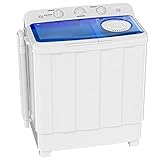
Semi-automatic twin-tub washers use two separate compartments: a wash tub where clothes soak and agitate, and a separate spin basket that spins damp-dry. Twin-tub machines lack the heavy counterweights of front loaders, meaning you must manually pack wet clothes evenly into the spin cylinder to prevent knocking. For the tightest spaces, small countertop or foldable mini washers handle small items like baby clothes and socks. These miniature units produce virtually zero motor rumble, making them an excellent choice when keeping the peace in close quarters is your top priority.

- TAR Score9.4
TAR Score is a ranking system developed by TopAppliancesReviews.com. TAR score has no relationship or impact from any manufacturers or sales agent websites. Learn more
- BrandYMXA

- TAR Score8.9
TAR Score is a ranking system developed by TopAppliancesReviews.com. TAR score has no relationship or impact from any manufacturers or sales agent websites. Learn more
- BrandGIANTEX

- TAR Score7.9
TAR Score is a ranking system developed by TopAppliancesReviews.com. TAR score has no relationship or impact from any manufacturers or sales agent websites. Learn more
- BrandWinado

- TAR Score7.8
TAR Score is a ranking system developed by TopAppliancesReviews.com. TAR score has no relationship or impact from any manufacturers or sales agent websites. Learn more
- BrandROVSUN
- TAR Score7.2
TAR Score is a ranking system developed by TopAppliancesReviews.com. TAR score has no relationship or impact from any manufacturers or sales agent websites. Learn more
- BrandAuertech
Last update on 2026-11-19 / Affiliate links / Images, Product Titles, and Product Highlights from Amazon Product Advertising API
FAQs
What decibel level counts as truly quiet for a washing machine?
A washing machine is considered exceptionally quiet if it operates below 50 decibels during the wash portion of the cycle. During the high-speed spin cycle, when the motor runs at maximum speed to extract water, a quiet washer should stay under 70 decibels. Anything above 75 decibels will sound like a loud vacuum cleaner and will easily carry through shared walls.
Why does my washer bang violently only during the final spin cycle?
Violent banging during the spin cycle almost always indicates an off-balance load or an unlevel cabinet. When wet clothes bunch up into a clump on one side of the tub, centrifugal force pulls the basket off center, causing it to strike the cabinet. This shaking also happens if one of the leveling feet has vibrated loose, allowing the corner to bounce against the subfloor.
Can a rubber floor mat stop washer noise from traveling downstairs?
Yes, a thick, high-density rubber mat or individual anti-vibration rubber isolation pads will significantly cut down on noise transfer. Wood floor joists in multi-story homes act like natural acoustic amplifiers for mechanical thumps. Placing dense rubber under the feet breaks the mechanical bridge between the metal legs and the floor, keeping the vibration contained.
Does the amount of laundry detergent affect machine noise?
Using excessive soap can indirectly cause loud operational noises. Traditional high-suds detergents create a thick foam cushion that confuses internal sensors, strains the motor, and forces the drain pump to churn air bubbles alongside water. Always stick to low-suds HE (High Efficiency) detergent in measured amounts to keep the pump running quietly and prevent error codes.


10 Best Washing Machine For King Size Comforter of 2026 For Bulky Bedding

11 Best Semi Automatic Washing Machine Under 10000 of 2026 For Apartments and RVs

9 Best Compact Refrigerator For Beer Bottles of 2026 For Upright Bottle Fit

10 Best Quality Semi Automatic Washing Machine of 2026 For Leak-Free Laundry

11 Best Small Washer Machine of 2026 For Everyday Laundry

12 Best Vibration Pads For Washing Machine of 2026 To Stop Walking and Shaking

11 Best Selling Front Load Washing Machine of 2026 For Quiet Odor-Free Laundry

11 Best Washing Machine For King Size Bedding of 2026 To Prevent Cycle Errors





