
What Is the Best Washing Machine Brand for Your Home?

There’s no single best brand for every home. The right choice depends on the washer you need and the help available for that exact model. A name you recognize can’t tell you whether a machine will fit your laundry space or be easy to repair.
Start by deciding whether you need a full-size washer or a compact portable one. Then consider your space, water hookup, drain, and electrical supply, along with how much washing you want to do by hand. Repair options and warranty terms can also differ from one model to another. A few simple checks can show whether a washer suits your home and what support you can expect.
A brand name can give you a starting point, but it cannot tell you whether a washer will fit your laundry space, connect to your water supply, or be easy to repair. Compare the specific machine you are considering with your home and your laundry routine. A familiar name is no substitute for checking the details that matter after delivery, too.
Why one washing machine brand cannot suit every home
Standard washers and portable washers solve different problems. A standard washer may suit a household with a dedicated laundry area and the right water and drain hookups. A compact portable machine may be more practical in an apartment, dorm, or RV, but it can involve a different setup and more hands-on steps.
Even within one brand, models can differ in how they connect, drain, handle a load, and get repaired. A machine that works well in a laundry room might be awkward beside a kitchen sink. A small washer that fits under a counter may not suit someone who wants to wash a full household load without moving laundry between tubs.
So, compare the exact model rather than relying on a company’s name or reputation. Look for information that answers practical questions: Will it fit? Can you hook it up safely? Who can repair it nearby? What does its warranty cover?
How to choose a brand for your home
Use these checks in order. They help narrow the choice before a brand’s advertising or familiar name starts to sway you.
- Decide whether you need a standard or portable washer. Start with the space and hookups you actually have. A standard washer is meant for a regular laundry setup, while a portable model may work where a permanent washer cannot fit, but its hookup and draining needs still have to match your home.
- Write down how you do laundry. Think about what you wash, how often, and whether you can manage extra steps. A fully automatic compact washer handles more of the wash cycle itself; a twin-tub machine may require you to move clothes from the wash tub to a separate spin basket.
- Check the space and every connection. Measure the spot, including room for doors or lids to open and hoses to sit without being crushed. Confirm the water supply, drain route, and electrical outlet the model requires before ordering.
- Look up repair help for that exact model. Check whether the manufacturer explains how to request service and whether repair providers serve your area. If you rent, ask your landlord before changing or adding hookups.
- Read the warranty terms, not just the headline. Find out what parts and labor are covered, how long each type of coverage lasts, and what conditions could affect coverage. Keep the warranty information and purchase record where you can find them.
- Compare only features you will use. A cycle or setting matters if it solves a real need, such as washing delicate clothes or refreshing a small load. Extra settings do not make a washer a better match if its size, hookup, or repair support is wrong.
- Make a short list of the remaining trade-offs. For example, you might accept moving clothes by hand if that lets you use a compact washer. Or you may prefer a standard machine because you want fewer steps per load. Choose the model whose compromises fit your daily routine.
If keeping the purchase within a set budget is part of your decision, compare the features and support on models in the same price range, rather than assuming a low price means poor reliability. The page on washing machines under $300 can help you explore that narrower choice.
Standard and portable washers solve different problems
A standard washer generally makes the most sense when your home has a laundry area with suitable water, drain, and electrical connections. Before choosing one, confirm the machine’s listed dimensions and hookup requirements on its product page. Leave enough room for the door or lid to open and for the hoses to connect without sharp bends.
Portable washers are designed for tighter spaces, but “portable” does not mean “works with every sink.” Some models connect to a faucet; others may need a different water source or a particular way to drain. Check the manufacturer’s instructions for the exact model instead of assuming that a nearby kitchen or bathroom faucet will work.
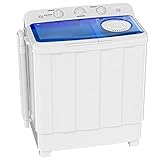
Consider the amount of effort each style asks of you. A fully automatic compact washer runs its wash, rinse, and spin steps as part of an automated cycle. A twin-tub washer has one tub for washing and a separate basket for spinning damp clothes, so you may need to transfer laundry yourself. That arrangement can be manageable for smaller loads, but it is not as hands-off.
Compact machines may also be a poor fit if you regularly wash bulky items or need to handle a lot of laundry in one go. Check the model’s stated capacity and the manufacturer’s guidance about suitable loads. Do not assume that a small machine can handle a comforter just because it fits inside the tub.
Confirm portable washer hookups before choosing
Before buying a compact washer, check the water supply, drain path, and space in the spot where you plan to use it. These checks can prevent a machine from arriving only to sit unused beside a faucet it cannot connect to.
- Look at the faucet. Check the washer instructions for the kind of sink connection it accepts. A pull-out spray faucet may need a specialized adapter, or you may need access to a suitable utility sink tap; do not assume a standard connection will fit.
- Trace where the water will go. Confirm that the drain hose can reach the drain point as the instructions require. A built-in pump may push water through a hose, while a gravity-drain model relies on the hose’s position to let water flow naturally.
- Check the floor and nearby surfaces. Make sure the washer can sit level and that the hose will not spill water onto a floor or cabinet if it comes loose. Use the setup described in the manual, and keep the machine away from places where a leak could damage belongings.
- Confirm the electrical connection. Follow the product instructions for the outlet and avoid using an extension cord unless the manufacturer specifically permits it. If the outlet or wiring looks damaged, stop and ask a qualified electrician before connecting the washer.
- Plan each load, not just the hookup. Decide where clothes will go if you need to transfer them between wash and spin tubs. Check whether you have room to set the washer up and put it away without blocking a walkway or exit.
If you cannot confirm a safe water connection and drainage route, do not improvise with adapters or leave a hose unsecured. Ask the manufacturer whether your setup is supported, or choose a washer designed for the connections you already have. Stop using a machine that leaks, gives off a burning smell, or repeatedly trips an outlet, and get qualified help.
Compare repair help and warranty terms, not just the name
A familiar brand is not automatically the safer choice. A company name alone cannot tell you whether the specific model has repair help where you live, or whether the warranty covers the problem you might face. Support can differ by model and by location.
Before buying, find the manufacturer’s support page for the exact model. Look for clear instructions on how to ask for service, whether parts or repair providers are available in your area, and what information you will need if the washer stops working. If those details are difficult to find, contact the manufacturer before you commit.
Read warranty terms carefully. A warranty may treat different parts or types of repair differently, and coverage can have conditions. Check what the owner must do, whether service must be arranged through a particular provider, and whether the warranty excludes certain costs. Do not assume “warranty included” means every repair and visit is covered.
Reliability is difficult to judge from a brand name alone. A more useful comparison is whether the exact washer suits your routine, has support you can reach, and comes with terms you understand. If two models look similar, clear repair instructions and a warranty you can explain back in plain words are useful signs of a more informed choice, not a promise that either machine will never need repair.
Keep the product page, manual, and warranty details after purchase. If the washer develops a problem, follow the manufacturer’s instructions and stop using it if water is leaking near an electrical outlet or the machine shows signs of electrical trouble. A qualified repair provider can help with a machine fault; an electrician should handle unsafe wiring or outlets.
Compact washer options for a tight laundry space
A compact washer may help if a standard machine will not fit or your home lacks a dedicated laundry area. Before choosing one, confirm that its water connection, drain method, power needs, and stated capacity match your setup and the loads you wash. Then decide whether you want an automatic cycle or can comfortably handle manual transfers between tubs.
Do not choose a portable model based on its size or brand alone. Read the instructions for your faucet and drain, check the space where the machine will sit, and confirm who can help if it needs repair. Those details matter more than a familiar name when the washer has to work in a particular apartment, dorm, or RV.

- TAR Score8.9
TAR Score is a ranking system developed by TopAppliancesReviews.com. TAR score has no relationship or impact from any manufacturers or sales agent websites. Learn more
- BrandGIANTEX

- TAR Score8.6
TAR Score is a ranking system developed by TopAppliancesReviews.com. TAR score has no relationship or impact from any manufacturers or sales agent websites. Learn more
- BrandGIANTEX

- TAR Score7.9
TAR Score is a ranking system developed by TopAppliancesReviews.com. TAR score has no relationship or impact from any manufacturers or sales agent websites. Learn more
- BrandWinado
- TAR Score7.2
TAR Score is a ranking system developed by TopAppliancesReviews.com. TAR score has no relationship or impact from any manufacturers or sales agent websites. Learn more
- BrandAuertech

- TAR Score7.1
TAR Score is a ranking system developed by TopAppliancesReviews.com. TAR score has no relationship or impact from any manufacturers or sales agent websites. Learn more
- BrandGeneric
Last update on 2026-11-08 / Affiliate links / Images, Product Titles, and Product Highlights from Amazon Product Advertising API
FAQs
Which washing machine brand is most reliable?
There is no single brand name that proves a washer will be reliable for every home. Compare the exact model’s repair support, warranty terms, fit, and connection requirements. A machine that fits your setup and has reachable support is a more practical choice than one selected by name alone.
Is a well-known brand always the safer choice?
No. A well-known name does not guarantee that a particular washer will fit your space or connect to your faucet and drain. Check the model’s instructions and support information before deciding.
Can a portable washer connect to any kitchen faucet?
No. The connection depends on the faucet and the washer’s instructions. Pull-out spray faucets may need a specialized adapter or may not suit the connection provided, so confirm compatibility with the manufacturer before buying.
What should I check in a washing machine warranty?
Check what parts and labor are covered, how coverage differs across parts, and what conditions apply. Also confirm how to request service and whether repair help is available in your area. Keep the warranty details and purchase record in case you need them later.


10 Best Washing Machine For King Size Comforter of 2026 For Bulky Bedding

11 Best Semi Automatic Washing Machine Under 10000 of 2026 For Apartments and RVs

9 Best Compact Refrigerator For Beer Bottles of 2026 For Upright Bottle Fit

10 Best Quality Semi Automatic Washing Machine of 2026 For Leak-Free Laundry

11 Best Small Washer Machine of 2026 For Everyday Laundry

12 Best Vibration Pads For Washing Machine of 2026 To Stop Walking and Shaking

11 Best Selling Front Load Washing Machine of 2026 For Quiet Odor-Free Laundry

11 Best Washing Machine For King Size Bedding of 2026 To Prevent Cycle Errors





