
What Is the Best Washer Brand for Your Home?

At the laundry aisle, someone pauses over familiar names and wonders which one will last. There’s no single best washer brand for every home; the right choice depends on the washer type and the help you can get if it needs repair.
A standard washer may suit a household that does frequent loads and has the right water and drain connections. A portable washer can fit a tighter space, but it still needs a workable way to fill and empty water. Before settling on a name, think about your laundry routine, measure the space, check the connections, and find out whether local repair help and parts are available. Here’s how to compare those details before choosing.
What “Best Washer Brand” Means for Your Home
A washer brand is only a good fit if you can install the machine, use it comfortably, and get help if it needs repair. A familiar name won’t solve a mismatch between the washer and your space. A full-size washer may be awkward in a small apartment, while a compact portable washer may mean more loads and more hands-on work than you want.
Start by deciding what kind of washer your home can support. Then compare the brands you are considering by their local repair options, parts availability, and the instructions for the specific model. The brand name matters, but it should come after the practical details that determine whether laundry fits your routine.
Think about an ordinary laundry day. If you wash bulky bedding often, a small washer may require several loads or may not suit the items you need to clean. If you live in a rental with limited space and no dedicated washer hookups, a portable machine may be more workable, provided its water connection and drain setup suit your home.
Reliability is hard to judge from a brand name alone. The same company can sell different washer styles, and each model can have different care instructions and repair needs. Check the exact model’s manual and ask local repair shops whether they service it and can get its parts.
Choose Between a Standard and Portable Washer
A standard washer is usually the more convenient choice when your home has a laundry area with suitable water and drain connections. It can stay in place, so you don’t have to connect it to a faucet and move its drain hose each time you wash. Confirm the space, connections, and installation needs for the model before buying.
A portable washer may suit an apartment, dorm, or other home where a full-size machine won’t fit or cannot be permanently connected. Some portable models use a quick-connect sink adapter, which attaches to a compatible faucet. A pull-out spray faucet may need a special adapter, and some setups work better with a separate utility sink tap. Check the washer’s manual and your faucet before you count on this option.
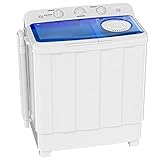
Portable washers vary in how much work they ask of you. A fully automatic compact washer handles its wash, rinse, and spin steps for you. A twin-tub washer has one tub for washing and a separate basket for spinning damp clothes, so you move laundry between them. A semi-automatic washer requires you to handle some steps yourself. That can be manageable for small, frequent loads, but it may feel like a chore if you have a large family’s laundry to get through.
Also check how the used water leaves the machine. A built-in drain pump pushes water through a hose into an appropriate sink or drain. A gravity drain hose relies on the hose sitting in the right position so water can flow naturally. The manual explains which setup the washer needs; don’t assume every portable washer can drain the same way.
Make a realistic list of what you wash. A few everyday items and delicate clothes call for different capacity and effort than regular loads of towels, jeans, or bedding. If the laundry piles up between wash days, a compact machine may leave you doing several small loads. If you wash as you go and have room to set up the machine, a portable option may fit your routine.
Check the Brand’s Repair Help and Your Home Setup
Before settling on a brand, find out who can repair the specific washer near you. Contact the manufacturer or a local appliance repair shop and ask whether they service that brand and model, whether parts can be ordered, and how to arrange help if the washer stops working. Don’t assume nearby service exists just because the brand is well known.
Read the manual before buying, not only after delivery. Look for the connection instructions, the required drain arrangement, and any limits on the faucet or sink setup. If the manual is unclear about your home’s plumbing, ask the manufacturer or a qualified installer before placing an order.
- Repair help: Can a repair shop serving your area work on this washer?
- Parts: Can the shop or manufacturer obtain the parts for this exact model?
- Water supply: Does the washer connect to your existing hot and cold water supply hoses, or does it need a faucet adapter?
- Drain: Can the hose reach a suitable drain in the way the manual requires?
- Routine: Does the washer’s capacity and level of hands-on work suit the loads you do?
Then measure the place where the washer will sit. Check the width, depth, and height of the space, and leave room for the hoses and for opening the lid or door. Measure the route into the room too, including doorways and tight turns. Use the model’s listed dimensions and installation instructions rather than judging by a product photo.
Look at the water shutoff valves and drain connection where the washer will go. If a standard washer requires connections your home does not have, ask a qualified plumber or installer about what changes are possible before you buy. For a portable machine, check that the faucet adapter fits the faucet and that the drain hose can reach a suitable place without creating a spill risk.
Think through where the clothes will go after washing. A twin-tub washer requires you to transfer items from the wash tub to the separate spin basket. If you’ll be doing laundry in a cramped bathroom or moving wet clothes across the room, that extra step may matter more than a brand’s familiar name.
Common Mistakes and Compact Washer Options
Choosing by brand name alone is an easy mistake. A well-known brand’s full-size model may not suit a home without the right connections, and a portable model from a different brand may better match a small space. Compare the exact washer and the support available for it, rather than assuming all models from one company work the same way.
Don’t assume portable washers share one setup. Some need a faucet connection; others may have different water and drain requirements. Some do the full wash process automatically, while others ask you to move clothes between tubs or handle parts of the cycle. Read the manual for the exact model and check each step you would need to do during a normal load.
Don’t overlook the everyday workload. A washer that fits the corner but leaves you splitting ordinary laundry into many small loads may become frustrating. On the other hand, choosing a larger standard washer without checking the route, hookups, and installation space can create problems before you wash the first load.
If a compact portable washer is the right type for your home, compare how much work it takes with how much laundry you usually do. Confirm its listed capacity, dimensions, faucet connection, drain arrangement, and cycle instructions on the product page and in the manual. For a broader look at lower-cost full-size options, see our washing machine options under $300, but still check that any model suits your space and connections.
For a standard washer, verify that your laundry area supports the model’s water and drain connections and that the machine will fit through the delivery route. For a portable washer, confirm the faucet and drain setup before you buy. If you cannot tell whether a connection is suitable, pause and ask the manufacturer or a qualified plumber instead of forcing a fitting or improvising a drain.

- TAR Score8.9
TAR Score is a ranking system developed by TopAppliancesReviews.com. TAR score has no relationship or impact from any manufacturers or sales agent websites. Learn more
- BrandGIANTEX

- TAR Score8.6
TAR Score is a ranking system developed by TopAppliancesReviews.com. TAR score has no relationship or impact from any manufacturers or sales agent websites. Learn more
- BrandGIANTEX

- TAR Score7.9
TAR Score is a ranking system developed by TopAppliancesReviews.com. TAR score has no relationship or impact from any manufacturers or sales agent websites. Learn more
- BrandWinado
- TAR Score7.2
TAR Score is a ranking system developed by TopAppliancesReviews.com. TAR score has no relationship or impact from any manufacturers or sales agent websites. Learn more
- BrandAuertech

- TAR Score7.1
TAR Score is a ranking system developed by TopAppliancesReviews.com. TAR score has no relationship or impact from any manufacturers or sales agent websites. Learn more
- BrandGeneric
Last update on 2026-11-08 / Affiliate links / Images, Product Titles, and Product Highlights from Amazon Product Advertising API
FAQs
Do I need a regular washer or a portable one?
Choose a standard washer if your home has a suitable laundry space and the water and drain connections the model requires. Consider a portable washer if space or permanent hookups are limited and its faucet and drain setup work for your home. Your usual load size and willingness to connect the machine or move clothes between tubs should guide the decision.
How can I tell whether a washer will fit my hookups?
Read the installation instructions for the exact model and compare them with the water supply, faucet, and drain in your home. Measure the space and delivery route, then confirm that the hoses can reach their connections without being stretched or kinked. If the instructions don’t clearly match your setup, contact the manufacturer or a qualified installer before buying.
What should I do if no local repair shop services the brand?
Ask the manufacturer how service is arranged where you live and whether parts for the exact model can be supplied. If repair help would be difficult to reach, consider another washer whose brand has service and parts support in your area. A convenient purchase can become a poor fit if a needed repair leaves you without a usable washer.
Related guides: washer brand comparison.


10 Best Washing Machine For King Size Comforter of 2026 For Bulky Bedding

11 Best Semi Automatic Washing Machine Under 10000 of 2026 For Apartments and RVs

9 Best Compact Refrigerator For Beer Bottles of 2026 For Upright Bottle Fit

10 Best Quality Semi Automatic Washing Machine of 2026 For Leak-Free Laundry

11 Best Small Washer Machine of 2026 For Everyday Laundry

12 Best Vibration Pads For Washing Machine of 2026 To Stop Walking and Shaking

11 Best Selling Front Load Washing Machine of 2026 For Quiet Odor-Free Laundry

11 Best Washing Machine For King Size Bedding of 2026 To Prevent Cycle Errors





