
Which Front-Load Washer Is Right For Your Space?

Grab a tape measure and check the depth of the laundry space before browsing any special features. Front-load units need extra room behind for water hoses and plenty of swing clearance for the door. The best front loader fits your exact floor depth, handles your household wash routine, and has an accessible rubber door seal that keeps mildew away.
The right choice depends on where the machine will sit and how much laundry gets done. Upper-floor installations need solid flooring and good balance so fast spinning speeds do not shake the whole house. A small hallway closet may call for a compact drum size, while a large home needs a deep tub to handle heavy bedding. Here is how to measure your space, quiet down floor vibrations, and keep your clothes clean and fresh.
The Short Version
- Measure total depth first: Front loaders need at least 4 to 6 inches of clearance behind the frame for hot and cold water supply hoses and the drain standpipe, plus 20 to 25 inches in front so the door can swing wide open.
- Superior cleaning with less water: Front loaders tumble laundry through a small pool of water using gravity instead of twisting clothes around a center agitator post, which protects fabric fibers and cuts water use by more than half.
- Vibration depends on your subfloor: Fast spinning speeds extract extra moisture to slash dryer time, but upper-level wood floors can rattle unless all four leveling legs sit completely flat and locked against the floor.
- Daily airflow stops mildew: Odors come from trapped moisture and soap buildup inside the rubber door seal, which you can easily prevent by wiping the seal dry and leaving the door cracked open after every wash day.
What Makes a Front-Loading Washer Worth Choosing
Front-load washing machines clean your laundry using natural gravity. Inside the machine, a stainless steel clothes tub rotates horizontally. As the tub spins, small raised plastic paddles lift your shirts, pants, and towels up toward the top of the drum before letting them tumble back down into a shallow pool of wash water. This tumbling action mimics the gentle back-and-forth rubbing of traditional hand washing.
Top-loading machines with a tall center agitator post pull fabric through deep water with sudden, jerking twists. That aggressive motion can stretch delicate sweater seams, twist shirt sleeves into knots, and wear down cotton fibers over time. Front loaders avoid that friction entirely. Because the drum relies on lifting and dropping, your clothes slide against each other gently, helping your favorite garments last longer without fraying.
You also save an enormous volume of water and electricity with a front-loading design. A traditional top loader fills the entire inner wash basket to submerge your clothes, often burning through 30 to 40 gallons of water for a single cycle. A front loader only fills the very bottom edge of the drum, using roughly 10 to 15 gallons for the same amount of laundry. Using less water means your water heater draws far less energy to warm up warm or hot wash cycles.
Spinning power is the other major benefit. Front loaders reach a very fast spinning speed that pulls out water using strong centrifugal force. By pressing wet laundry firmly against the outer walls of the wash basket, the machine forces moisture through tiny drum perforations before the cycle ends. Clothes emerge lightly damp rather than dripping wet, which cuts down your electric or gas dryer time by 15 to 30 minutes per load.
Measuring Depth, Height, and Door Clearances
Fitting a front loader into a laundry closet or small utility room requires more than measuring outer cabinet dimensions. A washer might look like it fits your floor plan on paper, but hookups and opening doors quickly swallow up extra inches. Use this quick checklist before selecting any machine:
- Measure the full pathway: Check the narrowest width of every front entrance door, hallway corner, and basement stairway. A standard 27-inch machine or a 24-inch compact unit must clear these openings without scratching drywall or door frames.
- Add 4 to 6 inches behind the unit: Never push a front loader flush against the back wall. You need dedicated rear clearance for the rigid drain pipe, hot and cold water supply hoses, and the electrical cord plugged into a standard 120-volt 3-prong grounded wall outlet. Bending water hoses too tightly causes kinks that restrict water flow or trigger hose leaks.
- Check the forward door swing: Front-load doors swing outward on a side hinge, demanding 20 to 25 inches of open space in front of the cabinet. Confirm that the open door will not bang into an opposite wall, hit a laundry basket, or block the pathway into your hallway or garage.
- Verify the hinge direction: Most front loader doors hinge on the left and swing open to the left. Unlike dryer doors, washer doors usually cannot be reversed because the watertight door lock and electrical wiring are built into the right side of the frame. Make sure your laundry room setup lets you transfer wet clothes easily into your dryer without walking around a swinging door barrier.
- Allow for closet door clearance: If your washer lives behind folding louvered doors, make sure the machine sits far enough back that you can latch the closet shut while keeping the washer door cracked open by two inches between cycles.
Floor Strength and Spin-Speed Balance
The violent shaking that some homeowners experience during the final spin cycle is rarely a mechanical defect. Instead, it usually comes down to the floor structure beneath the machine. Front-load wash drums rotate at high speeds on a horizontal axis, creating sideways and vertical momentum. On a solid concrete basement slab, that motion gets absorbed directly into the ground without any noticeable noise.
When you install a machine on a second-floor laundry room or over an older wood-joist subfloor, the floorboards act like a flexible wooden springboard. If the wooden floor joists flex under the heavy weight of water and wet clothes, the machine begins to bounce. That bouncing motion vibrates through floorboards, rattling interior walls, shaking framed wall photos, and creating a loud thumping noise downstairs.
Leveling the cabinet is the most effective way to eliminate that shaking. Set a bubble level across the top of the washer, checking both front-to-back and side-to-side. Use an adjustable wrench to raise or lower the threaded leveling legs at each corner until the bubble sits perfectly centered. Lean your weight against opposite diagonal corners of the washer; if you feel the machine rock even a fraction of an inch, adjust that leg downward until all four rubber feet press firmly against the flooring, then tighten the metal lock nuts against the frame.
Load balance also plays a huge role in stabilizing fast spinning cycles. Washing a single heavy bath sheet with three lightweight nylon athletic shirts creates an uneven clump inside the drum. Modern machines feature an off-balance safety sensor that pauses spinning and beeps when bulky towels or blankets bunch up on one side. Choosing appliances designed for balanced spin cycles helps the drum detect weight distribution early, tumbling clothes repeatedly to spread the load evenly across the drum walls before ramping up to top speed. For upstairs laundry closets, you can also select a medium spin speed on the control panel to protect wood joists while still pulling out plenty of water.
Routine Habits That Stop Rubber Seal Mildew
The dark, musty smell that ruins some front loaders comes from a simple biological cause: mold spores thrive in dark, warm, humid spaces with trapped soap film. Front loaders require a flexible, watertight rubber door seal (often called a gasket) to stop water from spilling onto your floor while the drum tumbles. When dirty water and excess soap settle into the bottom folds of that seal, mildew starts to grow within days. Follow these five everyday habits to keep your machine smelling clean:
- Wipe the rubber door seal dry: Keep an old cotton rag or microfiber towel on top of your washer. At the end of every wash day, peel back the soft rubber fold at the bottom of the door opening. Wipe away any standing puddles, stray coins, pet hair, or slimy detergent film caught in the drainage slots.
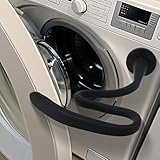
- Leave the door cracked open: Never latch the washer door shut between laundry days. Leaving the door open two to three inches allows dry household air to circulate inside the stainless steel clothes tub, evaporating trapped moisture before mildew spores can establish a colony. If your door tends to swing shut on its own, a magnetic door prop holds the door safely ajar.
- Measure low-suds HE detergent carefully: Front-load machines require low-suds HE (High Efficiency) detergent. Regular laundry soap creates thick suds that do not rinse away in low-water drums, coating the outer plastic tub in a sticky, sour film. Never fill the detergent cup to the brim; two tablespoons of liquid detergent are plenty for an average dirty load.
- Empty the lower drain pump filter catch: Every front loader features a small access door near the lower front corner. Behind that door sits a drain pump filter designed to catch buttons, lint, hair, and small debris before they clog the pump impeller. Place a shallow baking tray and a towel on the floor, unscrew the plastic plug, let the trapped water drain, and pull out any slimy buildup once every two months.
- Run a hot sanitizing cycle monthly: Once a month, clean the internal plumbing by running an empty tub cleaning cycle on the hottest water setting. For households tackling stubborn odors or pet bedding, running a deep cleaning tablet or exploring front-load washers that fight mold and musty odors ensures that detergent residue inside hidden hoses breaks down before it can sour your clean clothes. If your machine features a dedicated self-cleaning tub cycle, run it regularly without clothes to flush the outer tub surface clean.
Compact Versus Full-Size Wash Drum Capacity
Tub capacity in front loaders is measured in cubic feet, which describes the usable volume inside the stainless steel clothes tub. Standard full-size front loaders range from 4.5 to 5.2 cubic feet, while compact models measure roughly 2.2 to 2.5 cubic feet. Matching drum volume to your household routine prevents the frustration of running endless small loads or overcrowding your drum.
A compact 2.2-cubic-foot washer is roughly 24 inches wide and around 24 to 26 inches deep, matching the dimensions of standard kitchen base cabinetry. These compact washers hold around 12 to 15 pounds of dry clothing, which translates to four or five pairs of adult jeans, several t-shirts, and everyday undergarments. They easily wash a complete queen-size sheet set with pillowcases, but they cannot handle thick king-size winter comforters. Compact machines are the ideal fit for small urban apartments, mobile homes, guest suites, or narrow laundry closets where a 27-inch full-size unit simply cannot open.
Full-size 4.5 to 5.0-cubic-foot washers require roughly 27 inches of cabinet width and 30 to 34 inches of depth before adding hose clearance. These family-sized drums easily swallow 20 to 25 pounds of dry laundry at once, letting you wash heavy king duvets, bulky sleeping bags, or ten thick bath sheets in a single go. If you have three or more family members, run sports uniforms several times a week, or prefer tackling all your laundry in one weekend marathon, a full-size drum saves you several hours of loading and unloading.
What to Look for in a Front-Load Setup
When selecting a front-loading washer for your living space, start by examining the physical access points on the machine. Look for models with an easily reachable front drain pump filter door located near the floor, which saves you from pulling the heavy appliance away from the wall during routine maintenance. Clear, simple cycle knobs combined with bright digital displays make it easy to drop down spin speeds or select extra rinse cycles without scrolling through complicated submenus.
Inspect the door hinge and latch design on the front frame. Models equipped with magnetic door stoppers or passive vent systems make it easy to keep the wash basket fresh without leaving the door swinging into your hallway traffic path. If your floor plan requires stacking your laundry appliances vertically to free up floor space, verify that the manufacturer offers a dedicated stacking bracket kit designed specifically for that cabinet frame.
Finally, check your utility hookups before making a final commitment. Your home needs dedicated hot and cold water shutoff valves, a vertical standpipe drain capable of handling rapid pump discharge, and a standard 120-volt 3-prong grounded wall outlet on a dedicated circuit. Taking honest measurements of your floor depth, door swing paths, and ceiling heights ensures your new setup operates smoothly and quietly from day one.
- TAR Score9.5
TAR Score is a ranking system developed by TopAppliancesReviews.com. TAR score has no relationship or impact from any manufacturers or sales agent websites. Learn more
- BrandPink Cross

- TAR Score8.4
TAR Score is a ranking system developed by TopAppliancesReviews.com. TAR score has no relationship or impact from any manufacturers or sales agent websites. Learn more
- BrandWest Bend

- TAR Score7.5
TAR Score is a ranking system developed by TopAppliancesReviews.com. TAR score has no relationship or impact from any manufacturers or sales agent websites. Learn more
- BrandTrue Fresh

- TAR Score7.4
TAR Score is a ranking system developed by TopAppliancesReviews.com. TAR score has no relationship or impact from any manufacturers or sales agent websites. Learn more
- BrandPink Cross
Last update on 2026-11-15 / Affiliate links / Images, Product Titles, and Product Highlights from Amazon Product Advertising API
FAQs
Do front loaders clean clothes better than top loaders?
Yes, front loaders clean clothes more thoroughly by tumbling fabric through shallow water and relying on gravity to work stains free. This gentle lifting and dropping motion removes dirt more evenly than a center agitator post without twisting, stretching, or tearing fabric seams. The faster spin speeds also flush out detergent residue and dirty water more completely during rinse cycles.
Can I stack any front-load washer and dryer together?
No, you can only stack a dryer on top of a front-load washer if both units are designed to be paired together and use a manufacturer-approved stacking bracket kit. The bracket secures the dryer feet directly to the washer top panel so high-speed spin vibrations do not walk the dryer off the edge. You must never place a washer on top of a dryer, because the heavy water weight and spinning motion will crush the dryer cabinet.
Why does my front-load washer take longer to finish a cycle?
Front-load wash cycles often run between 50 and 80 minutes because they use small amounts of water rather than submerging the entire load. The machine relies on longer tumbling times and multiple spray rinses to lift soil safely. However, because the fast spin cycle removes far more water from your clothes, you save that time right back during the drying cycle.
How do I get rid of an existing musty smell in my washer?
To clear out deep-seated odors, start by manually cleaning the rubber door seal with a soft sponge soaked in warm water and mild soap, paying special attention to the bottom folds. Next, open the lower drain pump filter catch to empty any trapped water, hair, and rotting lint. Finish by running an empty maintenance cycle on the hottest water setting using an active enzyme washing machine cleaner tablet, then leave the door cracked open to dry.


10 Best Washing Machine For King Size Comforter of 2026 For Bulky Bedding

11 Best Semi Automatic Washing Machine Under 10000 of 2026 For Apartments and RVs

9 Best Compact Refrigerator For Beer Bottles of 2026 For Upright Bottle Fit

10 Best Quality Semi Automatic Washing Machine of 2026 For Leak-Free Laundry

11 Best Small Washer Machine of 2026 For Everyday Laundry

12 Best Vibration Pads For Washing Machine of 2026 To Stop Walking and Shaking

11 Best Selling Front Load Washing Machine of 2026 For Quiet Odor-Free Laundry

11 Best Washing Machine For King Size Bedding of 2026 To Prevent Cycle Errors





