
What Is a Good Washer and Dryer to Buy? Check Fit and Hookups

Start by measuring the spot where the machines will go, including room for doors to open and space for hookups. A good washer and dryer are a pair that fits your home, connects to what you have, and handles your usual laundry.
The right setup depends on how much space you have, what water, drain, and dryer connections are available, and how you like to do laundry. Separate machines can run at the same time, while an all-in-one washes and dries in one machine but may keep you waiting between loads. A compact set can help in a tight space, but check its load size and connections. Start with the space, then compare the setups against your laundry routine.
Should you buy separate machines or one combo?
Separate machines let you wash another load while the first one dries. That can help a busy household get through laundry faster, but the pair needs enough floor space and the right connections for both machines.
An all-in-one washer and dryer washes and dries clothes in one machine. You don't have to move wet clothes to a second machine, which can be useful in a tight space. But you can't wash one load while that machine dries another, and you should confirm how the unit dries clothes and what connections it needs.
A compact set can fit where a full-size pair won't, but compact machines usually have less room for laundry. Some small sets are fully automatic, while others need you to move clothes from a wash tub into a separate spin basket. That extra work matters if you do several loads each week.
Think about an ordinary laundry day before settling on a style. If you wash towels while another load dries, separate machines may suit your routine. If floor space is scarce and you can wait for one load to finish before starting the next, an all-in-one may be a better fit.
Will the machines fit in your laundry space?
Measure the spot where the machines will sit, then check the path from the entrance to that spot. A washer that fits between two walls may still be too wide to pass through a doorway, around a corner, or up a stairwell.
Use a tape measure to check the available width, depth, and height. Measure from the wall to the front edge of the space, and note anything that sticks out, such as a shelf, pipe, or door handle. Compare those measurements with the dimensions listed on the product page, not just the machine's appearance in a photo.
Allow room for doors and lids to open fully. Check whether a front door would hit a wall or block a walkway, and whether you can comfortably reach inside. If you plan to stack the machines, confirm that the exact models can be stacked and whether a separate stacking part is required.
Leave room behind the washer for hoses. The space needed varies by machine and the way its hoses bend, so check the manufacturer's clearance instructions. As a planning guide, allow about four to six inches behind the machines for hoses, then confirm the actual requirement in the product details.
Before ordering, walk the delivery route with a tape measure. Include doorways, hallways, turns, stairs, and any narrow passage between the entrance and laundry area. Check whether doors can be removed safely if needed, and ask the retailer or manufacturer what delivery access they require.
- Measure the space: Write down the available width, depth, and height.
- Check what gets in the way: Include pipes, shelves, trim, doors, and nearby cabinets.
- Check opening room: Make sure the washer lid or door and dryer door can open without hitting anything.
- Check delivery access: Measure the narrowest doorway and tightest turn on the route.
- Confirm installation clearance: Follow the clearance instructions for the exact machine.
Do your hookups match the machines?
Check your water, drain, and dryer connections before buying. A machine may fit the room but still be a poor choice if its hoses, drain, or power needs don't match what's already there. If you're unsure what a connection is, take a clear photo and ask the manufacturer or a qualified installer before ordering.
For the washer, look for hot and cold water supply hoses and water shutoff valves. Check whether the water connections are easy to reach and whether the product requires both hot and cold water. The product instructions will say what the washer needs.
Check where the drain hose must go. Some washers use a built-in drain pump that pushes water into a sink or standpipe. Others drain by gravity, which means the hose needs to lie in the position the manufacturer specifies and drain into an appropriate floor drain. Don't assume a small washer can drain into your sink just because it is portable.
For the dryer, find out whether it needs a vent that carries warm, damp air outside or is designed to dry without that kind of vent. Then check the required power connection. Dryer power needs vary by model, so read the product page and installation instructions rather than assuming an existing outlet will work.
Don't use an extension cord or an ungrounded outlet to make a machine reach. If the outlet, water valves, drain, or dryer vent needs work, stop and ask a qualified professional what changes are needed. A professional can help you avoid a poor fit or an unsafe connection before delivery.
- Washer water: Confirm the needed hot and cold water supply hoses and accessible shutoff valves.
- Washer drain: Check where the drain hose can empty and whether the machine pumps water or relies on gravity.
- Dryer vent: Confirm whether the dryer needs an opening to the outside.
- Power: Match the required outlet and power supply to the label and installation instructions.
- Unclear connections: Ask the manufacturer or a qualified installer before placing the order.
How much laundry do you wash at once?
Capacity means how much laundry fits in one load. A larger household, frequent towel loads, or bulky bedding may need more room than a person washing a few everyday items. But don't choose by capacity alone: the washer and dryer both need enough room for the loads you actually plan to wash and dry.
Think about your usual load, not the biggest load you wash once in a while. Picture a full basket of clothes, a set of towels, or the bedding you wash regularly. Check the capacity listed for each machine, and look for the manufacturer's guidance on bulky items. A load that fits in the washer may not be a comfortable fit in the dryer.
With separate machines, you can start a second wash while the first load dries. That can reduce waiting, especially when you do several loads in a row. With an all-in-one, washing and drying happen in the same machine, so one load must finish before another can use it.
Check whether a compact washer is automatic or semi-automatic. A fully automatic compact washer handles its wash, rinse, and spin steps for you. A twin-tub semi-automatic machine has one tub for washing and another for spinning clothes damp-dry, so you move clothes between them by hand. Some twin-tub machines let you wash one load while another spins, but they require more attention.
That manual transfer may be manageable if you wash small loads and are nearby. It can become a nuisance if you tend to start laundry and leave the room, or if you need to do several loads back-to-back. Decide honestly how much hands-on work you want, including moving clothes and managing each cycle.
When comparing styles, consider these tradeoffs:
- Separate washer and dryer: Useful when you want to wash and dry different loads at the same time. You need room and compatible connections for both machines.
- All-in-one: Helpful when one machine is easier to fit. You won't move wet clothes, but you can't run a separate wash and dry at once.
- Compact set: May fit a smaller laundry area. Check the load size, connections, and whether clothes need to be moved by hand.
What should you confirm before ordering?
Read the product page for the exact model, then compare its requirements with the measurements and connections in your home. If a detail is missing or unclear, contact the manufacturer or seller and ask before ordering. A quick confirmation can prevent a delivery that cannot be installed.
- Dimensions: Confirm the machine's width, depth, and height, plus the clearance needed for hoses and open doors.
- Delivery route: Confirm that the machine can pass through your doors and hallways and reach its final spot.
- Installation: Check whether the machine can stand alone, must be stacked with a matching machine, or needs a separate stacking part.
- Water and drain: Confirm the hose connections, shutoff valves, and drain location the washer requires.
- Dryer setup: Confirm the vent and power needs for the exact dryer.
- Load size and routine: Check how much laundry fits and whether the machines require you to move clothes between tubs.
- Included parts: Ask whether needed hoses, cords, adapters, or other installation parts are included or sold separately.
- Help with installation: If your home needs new wiring, a vent, water connections, or drain work, ask a qualified professional what is needed before delivery.
If reliability is a major concern, compare the manufacturer's support and warranty details for the specific models. You can also read our guide to what to look for in a reliable washing machine, then check each machine's warranty terms with the manufacturer. A general reliability claim can't tell you whether the machine will fit your home or connect to your hookups.
What kind of washer helps in a tight space?
A compact washer and dryer set may suit a small laundry area, while an all-in-one can avoid the need to place two machines side by side. Either option still needs room to operate, the right water and drain setup, and the power and vent connections its instructions call for.
Before choosing one, confirm the listed dimensions, the amount of laundry it handles, and whether you must move clothes by hand. Check the exact product details and ask the manufacturer about any unclear connection or installation requirement. If no compact option fits your space and hookups, don't force the purchase; ask a qualified installer whether the room can be adapted.

- TAR Score9.7
TAR Score is a ranking system developed by TopAppliancesReviews.com. TAR score has no relationship or impact from any manufacturers or sales agent websites. Learn more
- BrandPataku

- TAR Score9.6
TAR Score is a ranking system developed by TopAppliancesReviews.com. TAR score has no relationship or impact from any manufacturers or sales agent websites. Learn more
- BrandHamilton Beach

- TAR Score9.4
TAR Score is a ranking system developed by TopAppliancesReviews.com. TAR score has no relationship or impact from any manufacturers or sales agent websites. Learn more
- BrandROVSUN

- TAR Score8.4
TAR Score is a ranking system developed by TopAppliancesReviews.com. TAR score has no relationship or impact from any manufacturers or sales agent websites. Learn more
- BrandAuertech
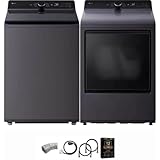
- TAR Score8.0
TAR Score is a ranking system developed by TopAppliancesReviews.com. TAR score has no relationship or impact from any manufacturers or sales agent websites. Learn more
- BrandLG
Last update on 2026-11-10 / Affiliate links / Images, Product Titles, and Product Highlights from Amazon Product Advertising API
FAQs
Can you put a washer and dryer in a closet?
Possibly, if the machines fit, their doors can open, and the closet meets the installation instructions for airflow and clearances. Measure the opening and the full space, including the room needed behind the machines for hoses. Confirm the requirements for the exact models before ordering.
Can a compact washer handle towels and bedding?
It depends on the machine's capacity and the load guidance from its manufacturer. Check the product details for the amount of laundry it holds and any limits on bulky items. Don't assume that a small washer can handle a large blanket or a full towel load.
Do you need a dryer vent?
Some dryers need a vent that carries warm, damp air outside, while others are designed to dry without that type of vent. The product page and installation instructions will say which setup the dryer needs. Confirm that your home can provide it before ordering.
Should you get help with installation?
Ask a qualified professional if your home needs changes to its water lines, drain, power supply, or dryer vent, or if you're unsure whether the connections are safe and suitable. Don't plug a machine into an unsuitable outlet or improvise a water or drain connection. Have the requirements checked before delivery.


10 Best Washing Machine For King Size Comforter of 2026 For Bulky Bedding

11 Best Semi Automatic Washing Machine Under 10000 of 2026 For Apartments and RVs

9 Best Compact Refrigerator For Beer Bottles of 2026 For Upright Bottle Fit

10 Best Quality Semi Automatic Washing Machine of 2026 For Leak-Free Laundry

11 Best Small Washer Machine of 2026 For Everyday Laundry

12 Best Vibration Pads For Washing Machine of 2026 To Stop Walking and Shaking

11 Best Selling Front Load Washing Machine of 2026 For Quiet Odor-Free Laundry

11 Best Washing Machine For King Size Bedding of 2026 To Prevent Cycle Errors





