
What Is a Bunka Knife Used for in the Kitchen?

A cook unboxes a new Japanese blade and pauses at the sharp, clipped triangular tip that looks like an angular mini sword. That profile belongs to a bunka, an all-purpose kitchen knife designed for chopping vegetables, slicing boneless meats, and prepping fish. The tall blade guides smooth cuts against the board, while the pointed nose gives you precise control for scoring shallots and mincing garlic.
How this knife handles daily cooking depends on the ingredients and your cutting style. The thin edge glides through tender produce and raw fillets, but hard bones, thick squash rinds, or frozen foods will chip the steel. It also prefers a straight push-cut or pull-slice over the heavy rocking motion common with Western chef knives. Knowing what it cuts best helps you work faster while keeping the blade completely safe.
What Everyday Kitchen Prep Tasks Does It Handle Best?
A bunka knife is an all-purpose Japanese prep blade. It handles three main kitchen jobs with ease: vegetables, boneless meat, and skinless fish. If you cook fresh meals from scratch, this knife manages nearly everything on your prep board.
Vegetable chopping is where the knife feels most natural. The wide, flat profile lets you push straight through crisp produce without wedging or splitting it. You can slice bell peppers, dice yellow onions, and cross-cut celery stalks without crushing their juices. The wide blade face also works as a handy spatula to scoop chopped ingredients off the board and move them into a hot pan.
For boneless meats, the thin edge glides through protein instead of tearing it. You can trim fat caps from pork loins, slice raw chicken breasts into thin cutlets, or portion flank steak across the grain. Clean cuts keep the savory juices sealed inside the meat rather than squeezing them out onto your board.
Fish preparation also benefits from this profile. While it is not a flexible fillet blade, it slices cleanly through salmon fillets, portions tuna steaks, and separates fish skin with steady control. Fresh herbs and scallions respond well too. You can shred fresh basil or slice green onions paper-thin without bruising the leaves.
Why Does The Blade Have A Pointed Triangular Tip?
The defining feature of a bunka knife is its pointed triangular tip, often called a K-tip. Japanese swordsmiths adapted this shape from traditional slicing swords to bring specialized utility to home cooking. This sharp angle is not just for appearance. It gives you immediate access to fine detail work that rounder blades struggle to handle.
This pointed triangular tip sits low to the cutting board, aligning directly with your wrist and forearm. When you pinch the spine of the blade, you can feel the exact location of the tip without looking closely. That alignment makes delicate scoring easy. You can score duck skin in a crosshatch pattern without cutting into the breast meat beneath. You can also make tight horizontal cuts into shallots without slicing through the root end that holds them together.
Mincing small aromatics becomes much faster with this geometry. When cutting garlic cloves, fresh ginger, or small peppers, you do not need to switch to a small paring knife. You simply guide the point down and let the tip do the micro-dicing. The fine point pierces tough tomato skins or slippery pepper skins on contact without sliding off.
This pointed tip also demands sensible handling. The steel at the very point is thin and hard, which makes it delicate. If you drop the knife into a stainless steel sink, bang it against hard stone, or use the tip to pry open containers, the tip can snap off. Treat the point like a precision tool rather than a lever.
How Does It Compare To A Santoku Or Gyuto?
Cooks often wonder how a bunka compares to other common Japanese knives, especially the santoku and the gyuto. A santoku is a three-virtue general knife made for meat, fish, and vegetables. A gyuto is a Japanese chef knife built on a longer frame similar to Western knives. While all three handle daily prep, their shapes change how they move across your board.
The santoku shares a similar blade height and flat cutting edge with the bunka. The main difference sits at the front. A santoku features a rounded nose that curves downward gently. This rounded front makes the santoku forgiving for hurried cooks because there is no sharp top corner to catch on food. But the bunka offers better piercing and scoring control because its pointed triangular tip can slip into small ingredients where a rounded nose might slide over them.
The gyuto is usually longer, measuring 8 to 10 inches, while a bunka typically measures 5.5 to 7 inches. A gyuto has a curved belly that arches upward toward the tip, allowing for gentle rocking cuts on large cabbages or whole roasts. In contrast, the bunka has a much flatter cutting edge. It feels faster on compact cutting boards and in kitchens with limited counter space. If you want to compare different kitchen profiles, looking into Japanese chef knife options shows how these blade shapes complement each other.
Compared to a heavy Western chef knife, a bunka feels light and nimble. Western knives use softer steel with a thick spine and a wide, durable 20-degree utility edge per side. A bunka uses harder steel ground to a steep 15-degree slicing edge per side for delicate Japanese kitchen prep. This makes the bunka sharper and far more agile, but less tolerant of rough chopping.
What Foods Will Chip Or Damage The Delicate Edge?
Because a bunka knife uses thin, hardened steel, it cannot handle heavy impact or twisting forces. Using this blade on dense or woody textures can result in chipped edges, cracked steel, or a broken tip. Protect your blade by keeping it away from these common items:
- Animal bones: Never chop through chicken wings, beef bones, pork ribs, or thick fish spines. Hard bone will chip the thin edge immediately.
- Frozen foods: Never slice frozen meat, rock-hard frozen fruit, or solid blocks of stock. Ice crystals create sideways resistance that snaps hard steel.
- Hard rinds and woody squashes: Avoid hacking into raw butternut squash, acorn squash, dry coconut shells, or woody stalks. The dense skin binds the blade and twists the edge.
- Hard pits and shells: Keep the blade away from avocado pits, peach stones, lobster shells, and crab claws. Use a sturdy utility knife or kitchen shears instead.
- Crusty artisan bread: Hard sourdough crusts can deflect a delicate edge, causing micro-chips along the thin cutting bevel.
- Dense cheese wheels: Very firm blocks of cheese create strong suction against wide blades, forcing you to twist the knife to finish the cut.
The main enemy of a Japanese knife edge is sideways twisting. Hard steel handles up-and-down pressure easily, but it cannot bend sideways. If the blade ever feels stuck inside an ingredient, do not wiggle or pry the handle sideways. Lift the blade straight out and start the cut again.
How Should You Cut And Care For This Blade?
Getting clean results from a bunka knife requires a simple adjustment to your cutting stroke. Many home cooks rely on a rocking motion, where the tip stays planted on the cutting board while the back of the knife rocks up and down. Doing that with a bunka can dull or chip the edge because the flat profile does not roll easily, and dragging the edge across the board twists the hard steel.
Instead, use push-cutting. Push-cutting means slicing forward and down in one smooth stroke. You lift the blade slightly off the board, rest it against the food, and push forward and downward together. The sharp edge glides cleanly through the item, meeting the cutting board flatly. For boneless raw meats, use a pull-slice instead, drawing the blade backward toward you to make clean cuts in a single pass.
Your cutting board surface matters just as much as your slicing technique. Never cut on glass, granite, marble, ceramic, or hard composite surfaces. These materials are harder than the steel and will dull or chip the edge in minutes. Use a thick wooden cutting board, such as end-grain wood, or a soft rubber prep board. These materials cushion the edge as it lands.
Proper cleaning and storage keep the steel sharp and stain-free. Hand-wash your knife with warm water and mild dish soap right after preparing a meal. Never leave it soaking in a sink where other utensils can strike the edge, and never place it in a dishwasher where heat and harsh detergents ruin the handle. Dry the blade completely with a towel immediately. Storing the blade on magnetic knife blocks protects the fine point from bumping into loose tools inside kitchen drawers.
What Features Should You Look For Before Buying One?
When choosing a bunka knife, focus on blade length, steel composition, and handle construction to match your cooking style. Blade lengths typically span 5.5 to 7 inches. A 5.5-inch model offers exceptional nimbleness for small cutting boards and rapid garlic or shallot prep. A 7-inch model provides extra blade length to slice through heads of lettuce, large onions, and long strips of boneless meat in a single sweep.
The steel type determines how much maintenance the knife demands. Stainless steel options use rust-resistant, easy-to-clean metal that tolerates moisture and acidic foods like citrus and tomatoes without staining. High-carbon steel options offer harder metal that holds a razor edge longer, but they require dry wiping during prep and a light coat of food-grade oil to prevent rust spots. If you prefer simple maintenance, stainless steel is the practical path.
Handle design affects how the knife feels in your hand. Western-style handles feature a full tang, meaning one solid piece of blade steel extends all the way through the handle, secured with rivets. This provides a familiar weight and rear balance. A traditional Japanese handle uses a partial tang, where the blade metal narrows inside a lightweight wooden grip. This design shifts the balance point forward onto the blade, giving you great control during push-cutting.

- TAR Score9.8
TAR Score is a ranking system developed by TopAppliancesReviews.com. TAR score has no relationship or impact from any manufacturers or sales agent websites. Learn more
- BrandEnso

- TAR Score9.6
TAR Score is a ranking system developed by TopAppliancesReviews.com. TAR score has no relationship or impact from any manufacturers or sales agent websites. Learn more
- BrandBabish
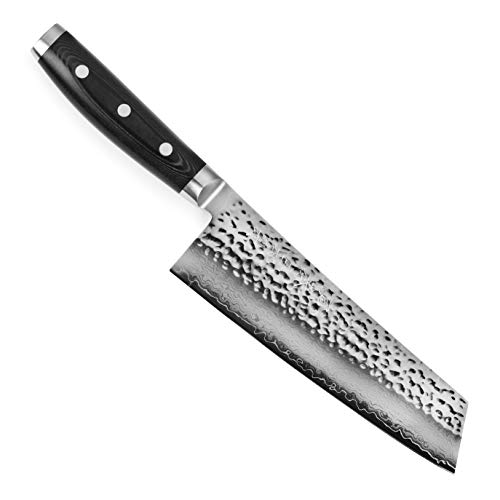
- TAR Score9.6
TAR Score is a ranking system developed by TopAppliancesReviews.com. TAR score has no relationship or impact from any manufacturers or sales agent websites. Learn more
- BrandEnso

- TAR Score9.4
TAR Score is a ranking system developed by TopAppliancesReviews.com. TAR score has no relationship or impact from any manufacturers or sales agent websites. Learn more
- BrandKAWAHIRO

- TAR Score9.4
TAR Score is a ranking system developed by TopAppliancesReviews.com. TAR score has no relationship or impact from any manufacturers or sales agent websites. Learn more
- BrandKiwi

- TAR Score9.2
TAR Score is a ranking system developed by TopAppliancesReviews.com. TAR score has no relationship or impact from any manufacturers or sales agent websites. Learn more
- BrandKOTAI

- TAR Score9.2
TAR Score is a ranking system developed by TopAppliancesReviews.com. TAR score has no relationship or impact from any manufacturers or sales agent websites. Learn more
- BrandMITSUMOTO SAKARI
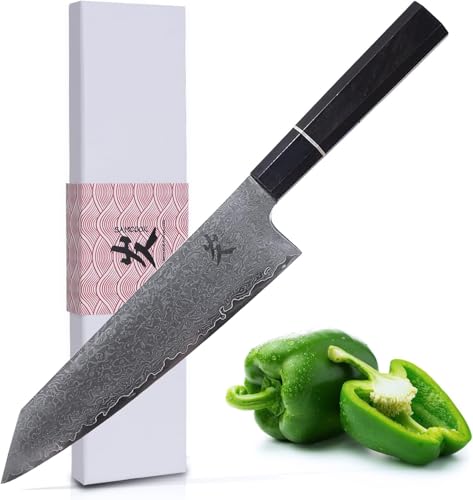
- TAR Score8.6
TAR Score is a ranking system developed by TopAppliancesReviews.com. TAR score has no relationship or impact from any manufacturers or sales agent websites. Learn more
- BrandSAMCOOK
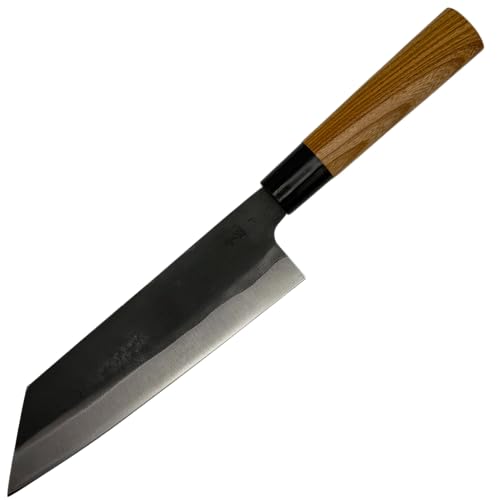
- TAR Score6.0
TAR Score is a ranking system developed by TopAppliancesReviews.com. TAR score has no relationship or impact from any manufacturers or sales agent websites. Learn more
- BrandGrumpy Dad CO
Last update on 2026-09-30 / Affiliate links / Images, Product Titles, and Product Highlights from Amazon Product Advertising API
FAQs
Can a bunka knife replace a standard chef knife?
A bunka knife can easily handle about 90 percent of daily kitchen prep, including dicing vegetables, mincing herbs, and portioning boneless meat. But it cannot replace a heavy chef knife for rough tasks like splitting whole chickens, cracking joints, or hacking through hard squash.
Is a bunka knife comfortable for left-handed cooks?
Most modern bunka knives feature a double-bevel edge ground evenly on both sides, making them ambidextrous. If the knife has a symmetrical oval or octagonal handle, it feels identical in either hand. Only avoid knives with asymmetrical right-handed grips or single-bevel edges.
How often does a Japanese bunka knife need sharpening?
With regular home cooking on a soft wooden board, a bunka knife usually needs whetstone sharpening once or twice a year. You can keep the edge straight between sharpening sessions by using a smooth ceramic honing rod or a leather strop once a month.
What does the word bunka mean in Japanese cutlery?
The word bunka translates to culture in Japanese. These knives gained popularity during Japan's mid-century modernization as home cooks began preparing Western meats and produce alongside traditional foods. The knife was created as a versatile tool capable of handling all three ingredients on one board.


Top Rated Best Quality Range Hoods: 2026 Expert Picks

The 12 Best Small Solar Generators 2026

10 Best Quality Semi Automatic Washing Machine of 2026 For Leak-Free Laundry

11 Best Small Washer Machine of 2026 For Everyday Laundry

12 Best Vibration Pads For Washing Machine of 2026 To Stop Walking and Shaking

11 Best Selling Front Load Washing Machine of 2026 For Quiet Odor-Free Laundry

11 Best Washing Machine For King Size Bedding of 2026 To Prevent Cycle Errors

10 Best Small Front Loader Washing Machine of 2026 For Tight Closets






