
Which Top-Load Washer Fits Your Space and Laundry Needs?

A washer with a tall center post to scrub heavy grime works best for tough work clothes, while a model with a flat wash plate at the bottom is better for bulky bedding and delicate fabrics. Daily laundry habits change which drum design makes the most sense.
Available hookups and room layout also decide the right fit. Standard laundry closets connect directly to wall pipes, but tight living spaces often need a portable setup that attaches to a sink faucet and uses a built-in pump to lift water out. Load size plays an equally large role, because washing a thick quilt without loud banging during the spin cycle takes far more drum space than everyday shirts. Checking these three details prevents tangled fabrics, violent shaking, and surprise puddles before bringing a new machine home.
Center Agitator vs. Flat Wash Plate: How Drum Design Changes Your Wash
Top-load washing machines clean your laundry using one of two internal designs: a center agitator post or a flat wash plate. Choosing between them determines how gently your clothes are handled, how much water the machine uses, and how clean heavy mud or grease gets during a wash cycle.
A center agitator post is a tall plastic spindle with fins that sits right in the middle of the stainless steel clothes tub. During the cycle, it twists back and forth, physically forcing clothes down into the water and back up again. This aggressive scrubbing works wonders on tough grime, heavily soiled work pants, and muddy sports uniforms. But that same scrubbing action can stretch knit sweaters, pull threads on delicate shirts, and twist long sleeves into tight knots.
A flat wash plate, often called an impeller, sits low against the bottom of the inner wash basket. Instead of grabbing the clothes directly, this grooved plate spins quickly to create strong water currents that pull garments through the wash water. Laundry rubs gently against other laundry rather than grinding against a hard plastic column. This gentler friction protects delicate fabrics and extends the life of everyday garments.
Impeller machines also leave the center of the tub completely open. That open space makes it much easier to load bulky blankets and comforters without wrestling them around a center spindle. Because an impeller relies purely on water motion and fabric friction, deeply set stains or heavy clay mud may need pre-treating to come completely clean.
Matching Tub Capacity to Your Everyday Laundry Loads
Tub capacity determines how many pounds of dry clothes you can wash at once and whether your bedding will actually get clean. If you pick a tub that is too small, you will find yourself running multiple loads every day or heading to a laundromat for your bedspread. If you pick a tub that is too large, you pay for extra water and electrical capacity you rarely use.
Manufacturer numbers can feel confusing because full-size machines use cubic feet while compact and portable washers often list dry laundry weight in pounds. A standard full-size washer typically ranges from 3.5 to over 5.0 cubic feet. Compact and portable machines generally offer between 0.9 and 3.0 cubic feet, which equals roughly 8 to 25 pounds of dry laundry.
Use this quick capacity checklist to match your living situation to the right drum volume:
- Compact (0.9 to 2.0 cu. ft. / 8 to 15 lbs): Best for solo renters, RVs, or dorms. Handles several light shirts, underwear, and a set of twin sheets.
- Mid-Size and Portable (2.1 to 3.2 cu. ft. / 16 to 25 lbs): Fits couples or small apartments. Easily washes full daily outfits, several bath towels, and queen sheets.
- Full-Size Standard (3.5 to 4.2 cu. ft.): Great for families of three or four. Holds thick jeans, heavy towels, and queen comforters without crowding.
- Large Capacity (4.3 cu. ft. and up): Built for busy households. Handles king comforters, bulky winter blankets, and large piles of sports gear at once.
Bulky bedding requires special attention. A king-size comforter needs at least 4.0 cubic feet of tub space without a center agitator to move freely. When you stuff a thick duvet into a tub that is too small, the fabric packs tight against the walls. Water and low-suds HE (High Efficiency) detergent cannot reach the center of the bundle, leaving dry spots and soap streaks on your bedding.
Drainage and Faucet Hookups: Understanding Pumps and Gravity Drains
Before you select a top-load washer, you must confirm how dirty water leaves the drum and how fresh water enters it. Overlooking drainage and water supply is the fastest way to ruin a floor or burn out a washer motor.
The biggest mechanical difference among compact and portable washers is how they drain. Some basic models use a gravity drain hose. A gravity drain has no electric pump; it relies entirely on a natural downward slope to empty the tub. The drain hose must lie completely flat along the floor, leading straight into a floor drain or a very low shower pan. If you lift that hose up to hang it over a sink edge, water stays trapped in the tub or spills out across your floor.
Most full-size units and better portable washers include a built-in drain pump. An electric pump motor actively pushes dirty water up through a discharge hose. This pump allows you to hook the drain hose securely over a kitchen sink basin, a utility tub, or a standard wall standpipe located three to four feet off the floor. Always verify your washer includes a built-in drain pump if your drain connection sits higher than the base of the machine.
Fresh water connections also depend on where you place the appliance. Full-size washers require standard threaded hot and cold water shutoff valves in a dedicated laundry closet. Portable washers typically include a quick-connect sink adapter that clicks directly onto the threads of a standard kitchen or bathroom faucet aerator.
Pull-out sprayer faucets usually do not have standard threads and will not accept quick-connect sink adapters. If your kitchen faucet has a flexible pull-out wand, you must connect the washer to a utility sink or install a dedicated supply valve under your cabinet. Always tighten threaded fittings by hand before using pliers to turn them a quarter-turn further to ensure a watertight seal.
How to Load a Top-Loader to Prevent Violent Shaking and Off-Balance Errors
Every top-load owner has heard the frantic banging of an unbalanced spin cycle. When wet clothes bunch up on one side of the tub, the spinning drum acts like an off-center weight. The machine thumps violently, walks across the floor, and triggers the off-balance safety sensor that pauses spinning and beeps until you intervene.
Top-load washers spin at high speeds to pull moisture from fabrics, and an uneven load strains the suspension rods that cushion the tub. Consistently unbalanced spinning wears out drive belts, damages motor bearings, and can crack the outer tub. Modern washers engineered for balanced spin cycles use internal sensors to detect uneven weight distribution, but proper loading technique remains your best defense against drum banging.
- Sort fabrics by weight and bulk: Wash heavy items like bath towels and denim jeans separately from lightweight shirts and delicates. Mixing heavy towels with thin tops makes the tub tip sideways during fast spins.
- Load items loosely in a ring: Drop clothing loosely around the perimeter of the inner wash basket, keeping the center clear. Never wrap sheets or towels around the center agitator post like a rope, as this pulls the spindle off its axis.
- Balance bulky items evenly: When washing heavy blankets or large jackets, add two items of similar weight on opposite sides of the tub rather than washing a single bulky piece alone.
- Leave room at the top: Keep laundry below the plastic balance ring at the top of the stainless steel clothes tub so fabrics have room to float and tumble freely.
- Adjust and lock the leveling legs: Place a bubble level on top of the washer. Turn the adjustable screw feet at the base until the machine sits flat without rocking when you press on opposite corners.
If your machine ever stops mid-cycle with an off-balance error code, unlock the lid and gently redistribute the wet clothes evenly across the bottom of the tub. Close the lid and restart the spin-only setting to finish draining the water safely.
Choosing the Right Top-Load Setup for Your Living Space
Finding the right top-load washing machine comes down to matching the physical design of the machine to your room. Before you browse specific models, take a close look at your available square footage, door openings, and power outlets.
Start by checking your overhead clearance. Because top-load doors hinge upward, you need enough vertical space above the machine to open the glass or metal lid completely. Measure the distance from the top edge of your machine to the underside of any hanging shelves or wall-mounted cabinets. Make sure you have at least 20 to 24 inches of clearance above the closed unit so the lid can stay open on its own while you load laundry.
Next, verify your depth and wall spacing. Always add 4 to 6 inches behind the washer to accommodate hot and cold water supply hoses, the curved drain hose, and the electrical plug. Pushing a washing machine completely flush against the drywall pinches the drain hose, restricts water flow, and causes annoying rattling noises during high-speed spinning.
Power requirements are straightforward but vital for safety. Top-load washing machines require a standard 120-volt 3-prong grounded wall outlet connected to a dedicated circuit breaker. Never plug a washing machine into a lightweight extension cord, a two-prong adapter, or a multi-outlet power strip. Washers draw heavy electrical currents when starting their spin motors, and undersized cords create severe electrical fire hazards.
Finally, factor in long-term upkeep. While top-loaders trap less water around door seals than front-load washers, damp lint screens and leftover detergent can still cause sour odors inside the tub. Choosing a unit that supports running a regular self-cleaning tub cycle and leaving the top lid propped open between laundry days keeps the drum completely dry and fresh.
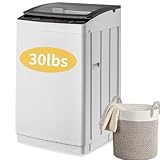
- TAR Score8.9
TAR Score is a ranking system developed by TopAppliancesReviews.com. TAR score has no relationship or impact from any manufacturers or sales agent websites. Learn more
- BrandGODECOR
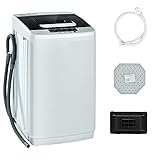
- TAR Score8.7
TAR Score is a ranking system developed by TopAppliancesReviews.com. TAR score has no relationship or impact from any manufacturers or sales agent websites. Learn more
- BrandCOSTWAY

- TAR Score7.7
TAR Score is a ranking system developed by TopAppliancesReviews.com. TAR score has no relationship or impact from any manufacturers or sales agent websites. Learn more
- BrandBLACK+DECKER

- TAR Score7.1
TAR Score is a ranking system developed by TopAppliancesReviews.com. TAR score has no relationship or impact from any manufacturers or sales agent websites. Learn more
- BrandBonnlo
Last update on 2026-11-17 / Affiliate links / Images, Product Titles, and Product Highlights from Amazon Product Advertising API
FAQs
Will a portable top-load washer clean clothes as thoroughly as a full-size machine?
A portable top-load washer cleans everyday laundry just as effectively as a full-size unit when loaded correctly. Because compact wash tubs hold smaller volumes, water and detergent circulate thoroughly around each fabric. The main tradeoff is capacity rather than cleaning power, meaning you must wash smaller batches and avoid heavy, oversized comforters.
Can you wash a king-size comforter in a top-load washer?
You can wash a king-size comforter in a top-load washer only if the tub offers at least 4.0 cubic feet of capacity and uses a flat wash plate instead of a center agitator. Center posts take up vital tub volume and tear thick duvet stitching during the cycle. If your washer is smaller than 4.0 cubic feet, take bulky bedding to a laundromat with commercial-capacity drums.
Why does my top-load washer leave white detergent marks on dark clothes?
White marks occur when cold wash water fails to dissolve powdered soap, when you use too much detergent, or when the tub is overfilled. Excess soap creates thick suds that become trapped in fabric folds during brief rinse cycles. Switching to a low-suds HE (High Efficiency) liquid detergent and leaving enough space in the drum allows rinse water to wash away residue completely.
Related guides: best top load washing machines.


10 Best Washing Machine For King Size Comforter of 2026 For Bulky Bedding

11 Best Semi Automatic Washing Machine Under 10000 of 2026 For Apartments and RVs

9 Best Compact Refrigerator For Beer Bottles of 2026 For Upright Bottle Fit

10 Best Quality Semi Automatic Washing Machine of 2026 For Leak-Free Laundry

11 Best Small Washer Machine of 2026 For Everyday Laundry

12 Best Vibration Pads For Washing Machine of 2026 To Stop Walking and Shaking

11 Best Selling Front Load Washing Machine of 2026 For Quiet Odor-Free Laundry

11 Best Washing Machine For King Size Bedding of 2026 To Prevent Cycle Errors







