
Why Is Your Washer Shaking When Washing Blankets?

Hit the pause button right away to stop the cycle. A soaking wet blanket absorbs gallons of water and rolls into a heavy clump on one side, which throws the high-speed spin off-kilter and slams the tub against the cabinet. Opening the door to spread the heavy fabric evenly around the drum is the quickest way to stop the violent banging before it damages the internal springs or cracks the outer tub.
A few things change how often this happens. Top-loading machines with a center post tend to twist wide fabric into a tight knot, while front-loaders often struggle when one large quilt rolls into an uneven ball. Loose leveling legs under the corners will also turn normal movement into an aggressive rattle across the floor. Here is exactly what to do step by step to tame the shaking and wash bulky bedding without trouble.
What should you do right now to stop the banging?
When your washer sounds like a jackhammer or starts creeping across the laundry room floor, do not wait for the cycle to finish. Running a violent, off-balance spin can crack the outer tub, pull water hoses loose, or burn out the drive motor in minutes. Take these exact steps right now to protect your machine and your home:
- Hit the Pause or Cancel button immediately: Press the pause button on your control panel to cut power to the drive motor. If the buttons do not respond or the machine is bouncing violently, pull the power cord straight out of the wall outlet.
- Wait for the automatic lid lock to release: Modern washing machines keep the lid or door locked until the inner wash basket comes to a complete standstill. Let the drum wind down on its own so you do not snap the plastic lock switch.
- Open the door and look for the clump of wet fabric: Look inside the stainless steel clothes tub. In almost every case, you will see your heavy blanket wadded up tightly against one wall or wrapped around the center post.
- Untangle and spread the weight evenly: Pull the wet blanket completely free with your hands. Lay it loosely along the bottom perimeter of the tub, keeping the weight spread out in a balanced ring rather than a single tight knot.
- Add dry towels if the load is lopsided: If you are washing one large fleece throw or heavy comforter that will not balance on its own, tuck two clean bath towels on the opposite side of the tub to act as a counterweight.
- Close the lid and select a low spin speed: Choose a delicate or gentle cycle, or select a spin-only setting at low speed. This lets the pump drain the remaining water safely before ramping up to normal speeds.
Once the water drains out, you can run a standard spin to extract the rest of the moisture. Staying by the machine for the first two minutes of the new spin ensures the load stays settled.
Why does a wet blanket make your washer shake?
A regular load of shirts and socks naturally separates as the clothes tub spins. Water escapes evenly through the drainage holes, and the clothes spread themselves evenly across the outer wall of the drum. A blanket behaves in the exact opposite way.
Heavy fabrics like fleece, wool, flannel, and thick cotton quilts soak up an immense amount of water. A dry comforter that weighs 8 pounds on your bed can easily absorb 3 to 4 gallons of water during the wash cycle, suddenly weighing over 35 pounds when fully soaked.
As the wash tub drains and begins its high-speed spin cycle, that soaking wet blanket balls up into a dense mass. Centrifugal force pins that 35-pound clump of wet fabric against one specific spot on the inner wash basket.
When the clothes basket spins at high speed, that single wet clump acts like an off-center bowling ball. Every rotation throws thousands of pounds of kinetic force against the tub suspension. The off-balance safety sensor that pauses spinning and beeps when bulky towels or blankets bunch up on one side might try to correct it, but older or less sensitive machines will simply shudder, thump, and walk across your floor.
How should you load blankets into your washing machine?
The way you load heavy bedding depends directly on whether your appliance opens from the top or the front. Knowing which is better, a top or front load washing machine for bulky laundry comes down to how each drum handles balance during the spin.
If you have a top-load washer with a center agitator post that twists clothes through the water, never wrap the blanket around that center post like a twisted snake. That winding habit forces all the wet fabric to bunch into a tight rope during the spin cycle, pulling the post sideways. Instead, fold the blanket loosely into accordion pleats and lay it around the post in a loose donut shape.
If your top-loader has a flat bottom wash plate (impeller) that moves laundry using water currents, do not just drop the comforter straight down in the middle. Place the blanket evenly along the outer edges of the stainless steel clothes tub, leaving the center clear so water and clothes can circulate freely without tangling into a ball.
Front-load machines work on gravity, lifting fabrics up and dropping them into the wash water. When washing a single large blanket in a front-loader, the drum often struggles to spread the wet fabric around the circle. Here are the core loading rules that keep both styles smooth:
- Never pack the drum beyond two-thirds full: A blanket needs plenty of room to unfold, soak, and tumble. If you have to push down hard on the dry fabric just to get the door to shut, the blanket is simply too large for your tub capacity in cubic feet.
- Pair large blankets with balancing items: Washing one single thick blanket alone almost always triggers an unbalanced spin. Add two or three large bath towels to give the drum an opposing weight it can throw to the other side.
- Select the bedding or bulky cycle: These specialized cycles automatically lower the spin speed and add extra water to prevent dry spots and sudden weight shifts. Advanced washing machines with balanced spin cycles use internal sensors to monitor drum speed and adjust water levels before high-speed spinning begins.
- Use low-suds HE (High Efficiency) detergent: Excess soap bubbles act as a cushion that traps water inside dense blanket fibers, making them heavier and harder for the pump to drain quickly.
What machine parts should you check if shaking continues?
If your washer continues to slam and shudder even after you balance the blanket, your machine might have a mechanical issue or an uneven footing. You can check several hardware parts yourself without calling a repair shop:
- The leveling legs under the corners: Place your hands firmly on opposite diagonal corners of the washer cabinet and try to rock it back and forth. If the washer wobbles even a quarter of an inch, the adjustable screw legs under the corners are not sitting flat on your floor. Turn the threaded feet clockwise or counterclockwise until all four corners press firmly into the floor, then tighten the metal lock nuts securely against the cabinet frame with a wrench.
- Shock-absorbing suspension rods: Inside top-load washers, four shock-absorbing springs holding the tub keep the clothes basket suspended and dampen vibration. Over years of heavy use, the dampening fluid inside these rods dries up or the springs stretch out. Open the lid and push the inner wash basket down hard with both hands, then release it quickly. A healthy suspension will pop straight back up and stop immediately; if the tub bounces up and down several times like a broken car shock absorber, the suspension rods need replacement.
- Front-load shock absorbers and counterweights: Front-load washers use heavy concrete blocks attached to the outer tub and piston-style dampers at the base. If a damper leaks oil or a mounting bracket cracks, the machine will bang violently against the outer metal casing during every spin cycle.
- Shipping bolts left in the back: If this is a newly installed washer, inspect the rear panel. Brand new front-loaders ship with metal transit rods that lock the drum in place during delivery. If the installer forgot to remove these bolts, the machine cannot absorb normal drum movement and will bounce violently across the floor on its very first spin cycle.
If you discover broken suspension springs, loose concrete counterweights, or cracked plastic tub parts, shut off the water shutoff valves, unplug the power cord, and contact a certified appliance repair technician.
Can anti-vibration pads stop your washer from walking?
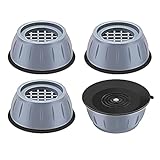
Even when you balance your blankets properly and level the feet, laundry appliances installed on slick tile, vinyl, or second-story wood-joist subfloors can still rumble and drift. Thick, heavy-duty anti-vibration rubber support pads sit directly under the four leveling legs to cushion the machine.
These rubber pads work by breaking the physical connection between the vibrating metal cabinet and the rigid floor joists underneath. The dense rubber material absorbs high-frequency vibrations that would otherwise echo through your baseboards and shake picture frames in adjacent rooms.
They also feature textured grip bottoms that keep the feet locked in place, stopping the machine from walking across slick laundry room floors. However, rubber pads are designed to dampen normal spinning resonance, not fix an out-of-balance 35-pound clump of wet laundry. Always distribute your blankets properly inside the stainless steel clothes tub before relying on floor pads to quiet the cycle.
- TAR Score9.3
TAR Score is a ranking system developed by TopAppliancesReviews.com. TAR score has no relationship or impact from any manufacturers or sales agent websites. Learn more
- Branddadop
Last update on 2026-10-28 / Affiliate links / Images, Product Titles, and Product Highlights from Amazon Product Advertising API
FAQs
Can violent shaking permanently ruin your washing machine?
Yes, violent thumping can cause severe internal damage in just a few minutes. When a heavy blanket throws the clothes basket off-center, the force bends the drive shaft, strips drum bearings, and cracks the plastic outer tub. In severe cases, the drum can slam into the cabinet frame with enough force to disconnect water supply hoses and flood your laundry space.
Should you wash blankets on the delicate or heavy-duty cycle?
Most appliance makers recommend using the dedicated bedding or bulky cycle rather than a heavy-duty setting. The bedding cycle uses extra water to soak thick fabrics evenly and automatically caps the spin speed at a moderate rate. This keeps the wet blanket from slamming against the drum walls while still removing enough water for the dryer.
Is it better to wash one blanket or two together?
Washing two medium blankets together is often much easier on your washer than washing a single blanket by itself. When two blankets tumble together, they naturally spread out on opposite sides of the clothes tub during the spin cycle. A single blanket has no natural counterweight, which often leads to a lopsided wad of wet fabric on one side.
Why does your washer shake even with nothing inside?
If your empty washing machine wobbles or rumbles during an empty spin cycle, the problem is mechanical rather than a load balance issue. Check the adjustable screw legs under the corners with a bubble level to ensure all four legs make firm, flat contact with the floor. If the legs are solid, worn tub suspension springs or worn drive bearings are the most likely cause.


10 Best Washing Machine For King Size Comforter of 2026 For Bulky Bedding

11 Best Semi Automatic Washing Machine Under 10000 of 2026 For Apartments and RVs

9 Best Compact Refrigerator For Beer Bottles of 2026 For Upright Bottle Fit

10 Best Quality Semi Automatic Washing Machine of 2026 For Leak-Free Laundry

11 Best Small Washer Machine of 2026 For Everyday Laundry

12 Best Vibration Pads For Washing Machine of 2026 To Stop Walking and Shaking

11 Best Selling Front Load Washing Machine of 2026 For Quiet Odor-Free Laundry

11 Best Washing Machine For King Size Bedding of 2026 To Prevent Cycle Errors





