
Why Your Washer Smells Like Sewage and How to Fix It

Sewer gas is escaping into the room. That foul rotten-egg odor usually means sewer gas is bypassing the curved drain pipe behind the wall or rotting sludge is trapped inside the machine. In most homes, a small pool of resting water inside the wall pipe blocks foul plumbing fumes. When that water barrier dries out, or when the flexible hose pushes too deep into the pipe, those odors seep right out.
The right fix depends on where the smell actually starts. An idle appliance often just needs water to refill an empty pipe, while a stench coming straight from the drum points to decomposing hair and detergent stuck in the lower drain filter. A hose pushed too far into the wall can also siphon dirty waste back inward. Simple checks will pinpoint the problem and clear the air right away.
Is the smell coming from the drum or the wall?
Before you take anything apart or buy cleaning products, you need to find the exact source of the odor. A sewer smell usually comes from one of two spots: the laundry machine itself or the plumbing pipes hidden behind the wall. Pinpointing the location takes less than a minute and prevents you from fixing the wrong problem.
Start by opening the washer door or lid and sticking your head close to the stainless steel clothes tub. Take a gentle sniff. If the rotten egg smell hits you directly in the face, the source is inside the cabinet, sitting in the tub, the rubber gasket, or the lower pump. If the drum smells clean or only slightly stale, step behind the appliance.
Lean down near the standpipe (the open vertical pipe behind the wall that takes drain water). If the foul air blows out of that open pipe, your problem is in the home plumbing system. Sewer gas carries hydrogen sulfide, which creates that unmistakable stench of rotten eggs or raw sewage. Mildew smells like damp towels or an old basement, but sewage gas smells sharp, sulfuric, and oily.
Keep in mind that plumbing smells can also drift into the wash tub. If your drain setup pulls dirty waste water backward, known as siphoning, sewer water and gas will settle straight into the clothes basket. Take note of whether the odor gets stronger when the machine drains or when it sits idle for several days.
How do you fix the drain hose and pipe trap?
When the smell comes from behind the washer, the plumbing barrier that blocks sewer gas has failed. Your home plumbing relies on a P-trap (a curved pipe under the drain that holds water to block gas). If that curved section loses its water barrier, toxic gas from city sewer lines or your septic tank vents straight into your laundry room. Here is how to inspect and fix the pipe connection step by step.
- Check the depth of the drain hose. Pull the corrugated plastic drain hose up out of the standpipe and measure how far down it was resting. The hose should only extend 4 to 7 inches into the pipe. If someone shoved 12 or 18 inches of hose down into the wall, the end of the hose pushes straight through the standing water in the P-trap, siphoning the water away and opening a direct path for sewer fumes.
- Install a hose guide bracket. Use the rigid, hooked plastic guide that came with your washing machine to secure the hose at the top of the standpipe. This clip keeps the hose bent in a clean arc and stops it from slipping too deep into the pipe over time. Fasten the hose to the standpipe or laundry box with a zip tie so the force of pumped water cannot knock it loose.
- Refill a dry P-trap. If the washing machine was left unused for several weeks, or if you recently returned from a trip, the water inside the curved pipe trap may have evaporated. Take a pitcher filled with about a gallon of plain tap water and pour it slowly into the open standpipe. This immediately restores the liquid barrier and blocks sewer fumes from rising.
- Inspect the pipe seal and air gap. The connection between the drain hose and the standpipe needs an air gap so water can flow freely without creating a vacuum. Never wrap duct tape tightly around the hose and pipe opening. Taping the pipe shut creates a siphon that sucks water out of the trap, while leaving a huge open gap lets gas blow into the room if the trap runs dry.
- Run a test spin. Turn the machine to a spin-only setting or a quick wash cycle to let the pump discharge fresh water. Watch the top of the standpipe to verify that the water drains quickly without bubbling up or releasing a puff of sewer gas.
How do you clean the drain pump filter?
If the smell comes directly from inside the drum, the culprit is often the coin trap or drain filter (a small catch basket at the bottom that traps lint and debris). When pet fur, human hair, coins, and clumps of wet lint collect in this basket, they trap liquid detergent and fabric softener. Bacteria feast on this damp organic sludge in the dark, creating a rotten stench that smells identical to a broken sewer line.
Front-load washers almost always have an access door for this filter on the lower front panel. Many top-load machines use self-cleaning pumps, but some compact and semi-automatic units also include accessible cleanout traps. If you are comparing machine styles, looking into the disadvantages of a top load washing machine can help you understand how different tub designs manage lint and water drainage. Follow these steps to clean the filter safely.
- Cut the power. Unplug the washer power cord from the standard 120-volt 3-prong grounded wall outlet. Working around standing water with an appliance plugged in is a shock hazard.
- Prepare your workspace. Open the small access door at the bottom front of the cabinet. Place an old towel and a shallow baking pan or rimmed plate directly beneath the door, because trapped water will spill out as soon as you open the housing.
- Drain the standing water. Locate the small flexible rubber emergency drain hose next to the round filter handle. Unclip the hose, pull the plastic stopper out over your shallow bowl, and let all the stagnant, gray water drain out. Reinsert the stopper firmly and clip the hose back in place.
- Unscrew the filter. Twist the large round filter cap counterclockwise. Pull the plastic basket straight out of the housing. Be ready for a small splash of leftover water to hit the towel.
- Scrub the sludge. Pull the slimy clump of hair, lint, and pocket debris out of the basket and throw it into the trash. Wash the filter under hot running water in a utility sink, using an old toothbrush and mild dish soap to scrub away sticky detergent buildup.
- Check the pump chamber. Shine a flashlight into the empty opening inside the washer. Look for stuck coins, baby socks, or bobby pins. Reach a gloved finger inside to ensure the small plastic pump impeller (the propeller blades) can spin freely without caught threads.
- Reassemble and verify. Slide the clean filter back into the chamber, turning it clockwise until it locks tightly into place. Close the access panel, restore power, and run a short rinse cycle to verify there are no leaks around the filter cap. If you ever experience control glitches after cleaning your machine, learning how to troubleshoot and reset an Amana washing machine or similar brands can help reset the control board quickly.
What is the best way to clean the drum?
Once the drain filter is clean, you must kill any sulfur-producing bacteria living behind the wash basket. Cold water washes and thick liquid fabric softeners leave behind a waxy film that coats the outer wall of the tub. Over time, anaerobic bacteria colonize this film and produce hydrogen sulfide gas. Use this maintenance checklist to sanitize the inner drum and remove bacteria.
- Peel back the rubber door boot: On front-load washers, inspect the folds of the thick rubber gasket around the door opening. Pull the rubber folds back with your fingers to expose trapped water, hair, and black slime. Wipe the folds clean with a rag soaked in warm water and white vinegar.
- Scrub the dispenser drawer: Press the release tab inside the detergent dispenser drawer and pull the whole tray out. Soak it in warm water to dissolve crusted soap residue, scrub the underside with a brush, and wipe out the hollow housing inside the machine.
- Run a hot sanitizing cycle: Place a dedicated washing machine cleaner tablet directly into the empty clothes tub. If you do not have tablets, pour two cups of liquid chlorine bleach directly into the wash tub. Set the washer to its clean washer cycle, sanitizing cycle, or heavy-duty cycle using the hottest water setting available.
- Run an extra rinse: Once the hot cycle finishes, run a quick wash or rinse-and-spin cycle with plain water. This flushes away any loosened residue, floating slime, and leftover chemical bleach.
- Dry the interior: Wipe the inside of the door glass and the rubber gasket with a clean dry towel. Always leave the washer door or top lid cracked open a few inches between laundry loads so moisture evaporates instead of breeding bacteria.
When is the smell a plumbing emergency?
Sometimes the odor has nothing to do with the washing machine. Because the laundry standpipe is often one of the lowest open pipe fixtures in a home, it is usually the first place to show signs of a main sewer line clog or a blocked plumbing vent. Use this checklist to determine if you need to turn off the water and call a licensed plumber.
- Gurgling fixtures: If your nearby toilet bubbles, your bathroom sink makes sucking sounds, or the shower drain gurgles whenever the washing machine drains, your plumbing vent stack on the roof is likely clogged. When the vent pipe is blocked by leaves, debris, or ice, the draining washer pulls air through your fixture traps, sucking their water dry and letting sewer gas flood the room.
- Dirty water backing up: If waste water pushes up into your shower pan, bathtub, or floor drain while the washer drains, your home main sewer line is partially blocked. Continuing to run water can cause raw sewage to overflow across your floors.
- Sewage spilling from the standpipe: If water foams or surges out of the open vertical pipe behind the washer during the drain cycle, the pipe line downstream is clogged with lint, grease, or roots.
- Rotten egg smell across the house: If you smell sewer gas in multiple rooms, near floor drains, or outside near your foundation, the issue is not isolated to your laundry closet.
- Physical warning signs: If you or your family members experience sudden headaches, nausea, dizziness, or irritated eyes, leave the area immediately. High levels of sewer gas contain toxic methane and hydrogen sulfide, which displace oxygen and pose serious health and fire risks.
What should you look for in a drain hose seal?
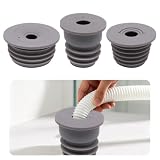
If your drain hose is placed at the proper depth and the P-trap is full, but you still smell faint drafts of sewer air, you can install a physical barrier. A washing machine drain hose seal is a flexible silicone plug that caps the top of the open standpipe while letting the drain hose pass through the center. This blocks sewer gas from escaping into the living room while still allowing dirty wash water to pump away freely.
Before buying a silicone pipe cover plug, measure the inside diameter of your wall standpipe. Most home drain pipes are between 1.5 inches and 2 inches wide. Look for a seal that offers multiple tiered rings or flexible rubber ribs that compress tightly against the inside walls of your specific pipe.
Check the center opening of the seal as well. It should grip your machine corrugated drain hose snugly without pinching or crushing the plastic. Look for durable, heat-resistant silicone that will not crack or stiffen when exposed to hot wash cycles, laundry bleach, and standard household detergents.
- TAR Score8.4
TAR Score is a ranking system developed by TopAppliancesReviews.com. TAR score has no relationship or impact from any manufacturers or sales agent websites. Learn more
- BrandBENLIUDH

- TAR Score7.2
TAR Score is a ranking system developed by TopAppliancesReviews.com. TAR score has no relationship or impact from any manufacturers or sales agent websites. Learn more
- BrandHekouJiub
Last update on 2026-11-02 / Affiliate links / Images, Product Titles, and Product Highlights from Amazon Product Advertising API
FAQs
Why does my washer smell like rotten eggs instead of mildew?
A rotten egg smell is caused by hydrogen sulfide gas, which comes from raw sewage or sulfur-producing bacteria. Mildew produces an earthy, musty smell caused by mold feeding on wet surfaces. If you smell rotten eggs, sewer gas is leaking past an unsealed pipe trap, or thick organic hair and detergent sludge are decaying inside your lower pump filter.
How far down should the drain hose go into the wall pipe?
The drain hose should only extend 4 to 7 inches down into the open standpipe. If you push the hose deeper, it can break through the water barrier in the curved P-trap or create a siphon that pulls waste water back into your clean clothes. Always use a rigid plastic U-hook bracket to hold the hose at the right depth.
Can sewer gas from a washer make you sick?
Yes, breathing sewer gas over prolonged periods can cause headaches, nausea, fatigue, and irritated eyes or throats. Sewer gas contains toxic compounds like hydrogen sulfide and combustible gases like methane. If refilling the pipe trap and cleaning the appliance does not eliminate the smell, air out your home and contact a licensed plumber right away.
Will pouring bleach down the drain stop the smell?
Pouring bleach down the standpipe only provides temporary relief if the real issue is an empty trap or an improper hose connection. Bleach kills surface bacteria, but it will not fix a dry P-trap, a blocked roof vent, or decomposing hair trapped in the machine pump. You must restore the physical water barrier in the pipe and clean out the pump filter to solve the issue permanently.


10 Best Washing Machine For King Size Comforter of 2026 For Bulky Bedding

11 Best Semi Automatic Washing Machine Under 10000 of 2026 For Apartments and RVs

9 Best Compact Refrigerator For Beer Bottles of 2026 For Upright Bottle Fit

10 Best Quality Semi Automatic Washing Machine of 2026 For Leak-Free Laundry

11 Best Small Washer Machine of 2026 For Everyday Laundry

12 Best Vibration Pads For Washing Machine of 2026 To Stop Walking and Shaking

11 Best Selling Front Load Washing Machine of 2026 For Quiet Odor-Free Laundry

11 Best Washing Machine For King Size Bedding of 2026 To Prevent Cycle Errors





