
How to Choose the Right Washer for Your Space and Hookups

Plumbing hookups decide which machine fits. A compact laundry setup only works when water feeds cleanly from your supply and waste water empties without risking a flood. Buying a model that clashes with your setup can leave dirty water pooled around your baseboards. The key is matching the washer to your drain height and faucet style before thinking about cycle settings.
A few room details shape the right choice. Washers with an internal drain pump can push dirty water up over a sink rim, while simple gravity systems need a low drain on the floor. Your sink spout also dictates whether a screw-on adapter will attach cleanly without spraying. From there, it comes down to how much manual effort you prefer, such as choosing between a hands-free automatic cycle and shifting wet clothes between twin tubs. Checking your space this way prevents messy surprises on wash day.
Different Washer Types Fit Different Everyday Habits
Choosing a washing machine for a compact living space starts with deciding how much manual work you want to do on laundry day. Small-space washers fall into three distinct styles: fully automatic compact machines, semi-automatic twin-tub units, and mini folding washers. Each style handles water, agitation, and drying prep in a completely different way.
A fully automatic compact washer works just like a standard residential machine, but in a smaller footprint. You connect the water hose, drop in your clothes with detergent, select your cycle, and walk away. The machine fills, washes, drains, rinses, and spins damp-dry inside a single tub. Inside the wash basket, clothes move via a center agitator post that twists clothes through the water or a flat bottom wash plate (impeller) that moves laundry using water currents. If you are weighing whether an agitator post or a wash plate fits your fabric care needs, reading about what is the difference between agitator and impeller washers can help you decide between deep scrubbing and gentler fabric handling.
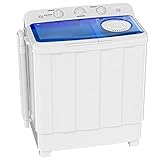
A semi-automatic twin-tub washer splits the job between two separate side-by-side chambers under one lightweight plastic body. You get the wash tub where clothes soak and agitate, and a separate spin basket that spins damp-dry at high speed. These units require hands-on effort because you must physically lift heavy, soaking-wet laundry out of the wash tub and place it into the spin basket by hand. The benefit is control and speed. You can wash a second load of colored shirts in the wash tub while your white towels are spinning in the dry chamber, saving both time and water.
Mini folding washers sit on a tabletop or counter and usually hold around 20 liters of water or less. These collapsible silicone units run gentle wash pulses for small, delicate items like baby bibs, undergarments, workout headbands, or reusable cleaning rags. They do not have the power or mechanical room to clean heavy denim jeans, bulky bath towels, or bed linens. They serve best as portable helpers for camping trips, dorm rooms, or quick daily refreshes between real laundry runs.
Drain Height Decides If You Need a Pump
How dirty water leaves your machine is the most critical mechanical choice you will make. If the drain style does not match where you discharge the water, your washer will either refuse to drain, leave standing water in the bottom of the clothes, or flood your floor. Washers get rid of waste water using either a built-in drain pump or a simple gravity drain hose.
A built-in drain pump uses an electric motor to actively push waste water upward through the discharge hose. This pump gives you the mechanical pressure needed to lift dirty water up into a kitchen sink basin, a bathroom bathtub, or a dedicated wall standpipe located three or four feet above floor level. If you live in a rented apartment or an RV where the only place to send waste water is into an elevated sink, a built-in pump is mandatory. Without that powered lift, water cannot climb over the edge of the sink rim.
A gravity drain hose relies entirely on natural downward slope and has no internal motor pushing the water. The hose must lie flat across the floor and empty into a low drain opening, such as a ground-level floor drain, a walk-in shower stall pan, or an outdoor runoff grate. If you attempt to hook a gravity drain hose over the edge of a standard counter sink, the water will stay trapped in the tub. The machine will stall mid-cycle, your laundry will sit in murky water, and the control board will throw an error code.
Using the wrong drainage setup also creates sanitation risks. When a pump-less machine cannot push water out, dirty rinse water can back up into the tub, depositing lint and soap scum right back into your clean clothes. If you must empty waste water anywhere higher than the bottom base of the washer, always choose a unit with an internal electric drain pump.
Your Faucet Shape Determines How Water Connects Safely
Most small-space washers draw fresh water directly from an existing sink faucet rather than plumbed-in utility wall valves. Making this connection work without messy leaks requires the right adapter hardware and an understanding of your faucet spout design.
The standard way to feed water into a portable washer is through a quick-connect sink adapter that clicks onto your kitchen or bathroom faucet. This adapter replaces your faucet aerator (the small mesh screen screwed into the tip of the spout). Once you screw the adapter into place, the washer supply hose clicks onto the fitting with a spring-loaded collar, allowing you to attach and remove the hose in seconds without tools.
Before buying an adapter kit, look closely at your sink faucet hardware:
- Standard threaded spouts: Stationary metal spouts with visible round aerator rings accept sink adapters easily. You simply unscrew the factory aerator ring and twist in the adapter threads.
- Pull-out spray wands: Faucets with flexible, pull-out vegetable spray wands or decorative square heads rarely accept quick-connect adapters. Their spray mechanisms lack standard interior threads, making a watertight seal almost impossible.
- Dedicated utility taps: Deep laundry room basins or outdoor utility sinks usually have heavy-duty, threaded bibs that accept standard threaded garden-hose fittings directly.
- Bathroom sink spouts: Many modern bathroom sinks use hidden or micro-sized aerators that require special plastic keys to remove, requiring custom thread adapters before a hose will latch.
Securing your water hose properly protects your home from water damage. City water pipes deliver steady water pressure that can blow a loose hose right off a faucet tip. Always press the quick-connect collar firmly upward until you hear an audible click, then pull downward gently to verify the teeth have locked. When securing the drain line, fasten the curved drain hook firmly to the sink rim with a clamp or suction strap. The sudden burst of water from a high-speed drain pump can kick an unsecured hose out of the basin, sending gallons of dirty water rushing across your kitchen floor.
Turn off the sink faucet handles as soon as your laundry cycle finishes. Leaving rubber or flexible plastic hoses under constant pressure while the sink tap stays open stresses the fittings. Over time, that continuous pressure can cause the hose walls to bulge or split at the crimped metal collar, leading to quiet leaks behind your counters.
Pound Ratings Tell You How Much Fits Safely
Compact washing machines list their capacity in two different ways on packaging: cubic feet of internal tub space, or maximum dry laundry weight measured in pounds. Understanding what these numbers mean in real life prevents you from overloading the motor or underfilling the drum.
Fully automatic compact machines are usually measured between 1.0 cu. ft. and 2.5 cu. ft. of drum volume, which corresponds roughly to 8 lbs to 25 lbs of dry laundry. A smaller 1.0 cu. ft. tub holds around 8.8 lbs of dry items, which equals three adult t-shirts, a pair of work trousers, and light socks. A medium tub holding 15.6 lbs easily handles two pairs of heavy denim jeans, multiple shirts, and a set of bed sheets. Larger compact tubs rated around 25 lbs provide enough clearance to wash thick bath towels or light queen-sized fleece blankets without choking the center post.
Twin-tub semi-automatic washers often show a combined rating on the box, such as 28 lbs total capacity. Read these labels carefully. That combined number usually means an 18-lb wash tub paired with a 10-lb spin basket. Because the spin basket is smaller than the wash tub, you cannot spin your entire wash load all at once. You must divide an 18-lb wash into two separate 9-lb spin cycles, or your clothes will not balance properly inside the spin chamber.
Overloading a compact washer causes mechanical failure quickly. Small washers use sensitive suspension springs to keep the inner tub centered during high-speed extraction. When you cram too many heavy, waterlogged bath towels into the tub, the load clumps into a solid mass on one side. During the spin cycle, the off-balance safety sensor pauses spinning and beeps when bulky towels or blankets bunch up on one side. If the safety switch fails to stop the cycle, the washer tub will bang violently against the outer cabinet walls, shaking the entire machine across the floor and loosening internal hose clamps.
To avoid balance errors, never pack dry clothes down with your hands. Drop items in loosely around the perimeter of the tub, leaving at least three to four inches of clear space below the top rim of the stainless steel clothes tub. This open space lets water circulate through fabrics freely so soap rinses clean.
Five Physical Checks Keep Your Home and Floor Safe
Bringing a washing machine into an apartment, camper van, or small utility closet requires checking your floor, electrical lines, and doorway clearances ahead of time. Complete these five practical checks before setting up your machine.
- Measure doorways and hallway pinch points: Compact washers generally measure between 16 and 24 inches wide, but bathroom door jambs and narrow camper corridors are often tighter than you think. Measure the narrowest opening along your delivery path, including room door frames and hallway turns, to confirm the machine will pass through easily. If you are comparing narrow machines against wider residential layouts, exploring whether is a front-load or top-load washing machine better will help clarify the door swing clearance each style demands.
- Allow rear clearance for plumbing: Never measure only the depth of your floor footprint. You must add 4 to 6 inches of rear clearance behind the unit to give hot and cold water supply hoses and the drain line room to curve. Pushing a washer tight against the wall pinches the corrugated plastic drain hose, preventing the pump from clearing water and triggering drainage failure alarms.
- Verify your 120-volt grounded outlet: Portable and compact washing machines designed for standard homes require a standard 120-volt 3-prong grounded wall outlet. Never plug your washer into an ungrounded two-prong wall socket using a bypass cheater plug, and never run the machine through a thin household extension cord. Motors draw brief bursts of high amperage when starting the spin cycle; light cords can overheat and pose a fire hazard.
- Level the legs to prevent violent walking: Place the machine on a firm, solid floor surface rather than thick carpeting or squishy foam mats. Adjust the threaded leveling legs on the bottom corners until the cabinet sits dead flat with zero wobble when you push on opposite corners. An unlevel machine rattles loudly, vibrates against nearby cabinets, and strains the inner drive belt.
- Locate emergency water shutoff valves: Know exactly where your under-sink water shutoff valves are located before turning on the tap. If a supply hose slips loose or an aerator adapter cracks under water hammer pressure, being able to reach under the sink and twist the oval shutoff valve closed within seconds will save your floors and security deposit from water damage.
The Right Compact Washer Solves Daily Laundry Headaches
A compact washing machine frees you from shared laundromats and lost quarters by fitting real cleaning power into small living quarters. Finding the right match comes down to being realistic about your physical plumbing setup, your available floor space, and how much hands-on effort you want to spend on chore day.
Before making your final choice, verify that the machine includes a durable stainless steel clothes tub, a built-in electric drain pump if your sink rim is elevated, and a clear quick-connect adapter kit that matches your faucet style. Look for versatile cycle selections like a delicate or gentle cycle for lightweight garments, a heavy-duty cycle for denim, and a standalone spin-only setting to wring out hand-washed items. Pair your machine with low-suds HE (High Efficiency) detergent to prevent soap suds from overflowing onto your floor, and always leave the washer lid open between loads to allow air circulation and stop stagnant mildew odors from forming.

- TAR Score9.4
TAR Score is a ranking system developed by TopAppliancesReviews.com. TAR score has no relationship or impact from any manufacturers or sales agent websites. Learn more
- BrandYMXA

- TAR Score8.9
TAR Score is a ranking system developed by TopAppliancesReviews.com. TAR score has no relationship or impact from any manufacturers or sales agent websites. Learn more
- BrandGIANTEX

- TAR Score7.9
TAR Score is a ranking system developed by TopAppliancesReviews.com. TAR score has no relationship or impact from any manufacturers or sales agent websites. Learn more
- BrandWinado

- TAR Score7.8
TAR Score is a ranking system developed by TopAppliancesReviews.com. TAR score has no relationship or impact from any manufacturers or sales agent websites. Learn more
- BrandROVSUN
- TAR Score7.2
TAR Score is a ranking system developed by TopAppliancesReviews.com. TAR score has no relationship or impact from any manufacturers or sales agent websites. Learn more
- BrandAuertech
Last update on 2026-11-01 / Affiliate links / Images, Product Titles, and Product Highlights from Amazon Product Advertising API
Related guides: washer temperature guide.


10 Best Washing Machine For King Size Comforter of 2026 For Bulky Bedding

11 Best Semi Automatic Washing Machine Under 10000 of 2026 For Apartments and RVs

9 Best Compact Refrigerator For Beer Bottles of 2026 For Upright Bottle Fit

10 Best Quality Semi Automatic Washing Machine of 2026 For Leak-Free Laundry

11 Best Small Washer Machine of 2026 For Everyday Laundry

12 Best Vibration Pads For Washing Machine of 2026 To Stop Walking and Shaking

11 Best Selling Front Load Washing Machine of 2026 For Quiet Odor-Free Laundry

11 Best Washing Machine For King Size Bedding of 2026 To Prevent Cycle Errors





