
Should You Buy an Electric or Gas Pressure Washer?

Electric pressure washers are the better choice for everyday household chores like washing cars, rinsing patio furniture, and refreshing house siding. That recommendation shifts to gas only when tackling massive concrete driveways or peeling paint, where brute water force cuts hours off a chore. Electric models offer instant push-button starts without the noise, exhaust fumes, or engine upkeep.
The right decision hinges on property size, the grime level, and comfort with mechanical maintenance. Gas machines provide the freedom to work anywhere without an extension cord, but they need fresh fuel, motor oil, and a strong pull start. Plug-in units keep things quiet and clean, making them far easier to grab and store for quick cleanups. Looking at how both options handle real outdoor jobs makes the right match clear.
Match Your Power Source to Your Actual Cleaning Chores
The right pressure washer depends on the surfaces you plan to clean around your home. Electric and gas machines deliver different levels of power, and matching that power to your actual chores prevents damaged surfaces and wasted time. Using too much water force on delicate items can ruin them, while using too little on hard stone turns an afternoon job into an all-day chore.
Electric pressure washers work best for routine home upkeep. They are ideal for washing family cars, mountain bikes, plastic patio chairs, wooden outdoor dining sets, and vinyl siding. These surfaces require moderate pressure combined with soap to lift road film and surface dust without stripping clear coat or splintering soft cedar. An electric unit lets you walk outside, plug into an outlet, and wash your patio in minutes without disturbing your neighbors.
Gas pressure washers belong on large, tough jobs where grime has settled deep into porous surfaces. If your main project is a long concrete driveway coated in ground-in oil, a sprawling brick patio covered in black algae, or an old wooden fence you want to strip down for fresh stain, gas power makes a dramatic difference. The extra force cuts through thick mold, peeling paint, and baked-on mud in a fraction of the time an electric unit requires.
Think about how often you plan to pull the machine out of your garage. Homeowners who wash a car every weekend and rinse their back deck twice a summer usually prefer the quiet convenience of electric power. Property owners with large yards, long sidewalks, retaining walls, and utility trailers get far more value from the heavy muscle of a gas engine.
Look at Water Spray Force and Flow Speed to Understand Cleaning Time
Understanding pressure washer performance comes down to two simple measurements: water spray force and water flow speed. Water spray force is measured in PSI, which stands for pounds per square inch. This tells you how hard the water punches against the surface to break dirt loose. Water flow speed is measured in GPM, which stands for gallons per minute. This tells you how much water the machine delivers to carry that loosened dirt away.
Many first-time buyers focus entirely on spray force, but water flow speed is what actually dictates how fast you finish a job. Think of water spray force as a sharp scraper that chips away grime, while water flow speed is the broom that sweeps the debris off your driveway. If a machine produces high pressure but low water volume, you end up cleaning in pencil-thin lines, which forces you to make dozens of slow overlapping passes across your concrete.
Electric models deliver between 1,500 and 3,000 PSI of water spray force, paired with a water flow speed of roughly 1.2 to 2.0 GPM. This combination is balanced well for residential tasks. It gives you plenty of punch to scrub patio stones without blowing out the sand between the joints, and it keeps the water stream gentle enough to rinse automobile paint safely when you use a wide fan nozzle.
Gas pressure washers push water spray force from 3,000 to 4,000 PSI and water flow speed between 2.3 and 3.5 GPM or higher. That higher water volume lets you use wider spray nozzles without losing cleaning impact. A gas unit can push a wide fan spray that cleans a twelve-inch path across concrete in a single pass, whereas an electric unit may only clear a four-inch path at the same walking pace.
High water spray force demands careful nozzle selection to prevent permanent damage to your property. Pressure washers use colored nozzle tips to change the width of the water fan. The red zero-degree nozzle shoots a pin-point jet that can slice through rubber tires, etch permanent gouges into cured concrete, and strip paint down to bare metal. The green twenty-five-degree nozzle and white forty-degree nozzle disperse the spray into a wide, safe sheet of water that lifts dirt without harming decks or vehicles.
Weigh the Setup Effort Before Dealing With Cords or Fuel Cans
The daily experience of using a pressure washer comes down to how much work is required before the first drop of water hits your siding. If a machine feels difficult or heavy to set up, you are far less likely to use it for quick cleanup chores.
Getting an electric pressure washer running takes four basic steps:
- Wheel the lightweight unit out of your garage and attach your garden hose to the water inlet fitting.
- Plug the power cord directly into a standard 120-volt grounded outdoor wall outlet.
- Turn on your outdoor water spigot and squeeze the spray gun trigger to bleed trapped air pockets out of the pump until a steady stream flows.
- Flip the power switch to the on position.
Most electric models feature a total stop system. When you let go of the spray trigger, the electric motor shuts off completely. The machine stays completely silent while you move lawn furniture, re-park your car, or spray cleaner from a foam bottle. The moment you squeeze the trigger again, the motor hums instantly back to life.
Setting up a gas pressure washer involves mechanical preparation similar to starting a lawn mower:
- Roll the heavy steel cart to your work area and place it on level ground outdoors away from open windows.
- Pull the engine dipstick to inspect the oil level and verify that the crankcase is full of clean motor oil.
- Inspect the fuel tank and add fresh, ethanol-free gasoline.
- Connect your garden hose, turn on the spigot fully, and squeeze the spray trigger to purge air from the internal pump chambers.
- Move the engine choke lever to the cold start position and switch the ignition toggle to on.
- Brace your foot against the wheel and pull the recoil starter rope firmly until the engine fires.
Always hold the spray gun trigger open with one hand while pulling the starter rope on a gas pressure washer. Trapped water pressure inside the pump builds up behind the valves, creating hydraulic resistance that can rip the pull rope out of your grip and hurt your fingers. Once running, a gas engine idles continuously, producing steady noise and exhaust fumes even when you are not actively spraying water.
Plan for Engine Maintenance and Off-Season Storage Needs
Maintenance requirements draw a sharp line between electric and gas ownership. Knowing how much mechanical upkeep you are willing to handle will keep you from ending up with a broken machine after one winter in the shed.
Gas pressure washers rely on a four-stroke internal combustion engine that requires regular mechanical attention. You must change the engine oil after the initial five hours of operation to flush away tiny metal shavings from the factory manufacturing process, and then change it once every season after that. You also need to clean the foam air filter when working in dusty driveways, inspect the spark plug for carbon buildup, and check the pump oil sight glass on models with professional-grade pumps.
Fuel care is the biggest challenge with gas machines. Modern gasoline contains ethanol, which attracts moisture from the air. If ethanol fuel sits inside a small carburetor for more than thirty days, it breaks down into a sticky varnish that clogs tiny fuel jets, leaving the engine unable to start the following spring. You must either run your gas machine dry before storing it or treat every can of fuel with a quality fuel stabilizer.
Electric pressure washers eliminate all engine-related maintenance. There are no crankcase oil levels to check, no fuel filters to swap, and no spark plugs to gap. You never have to keep a gas can in your garage or worry about fuel spills on your driveway. After finishing a job, you simply disconnect your garden hose, unplug the cord, and coil both lines loosely onto the storage hooks.
If your electric unit cuts out unexpectedly, inspect the reset switch on the plug or check your home circuit breaker. Outdoor circuits often trip under heavy loads, much like the steps you take to fix a washer with no power or lights in a laundry room. Most electric motors also contain built-in thermal protection that pauses operation when the unit gets too warm. This safety pause behaves similarly to how to reset a washing machine after a motor stall, restarting automatically once internal temperatures cool down.
Both electric and gas machines share one critical winter maintenance requirement: pump protection. Water left inside a pressure washer pump will freeze during winter, expand, and crack the internal brass or aluminum manifold. Before freezing temperatures arrive, screw a bottle of pump protector lubricant into the water inlet and pulse the trigger until the liquid foams out of the outlet. This lubricant coats the internal rubber seals, prevents corrosion, and keeps moving valves from sticking over the winter months.
Choose the Machine That Fits Your Yard Layout and Physical Comfort
Working range and machine weight dictate how comfortable you will feel using your pressure washer across your property. The physical layout of your home often determines which power source is practical.
Electric pressure washers keep you tied to an electrical outlet. These machines come with a 35-foot power cord equipped with a built-in ground-fault circuit interrupter plug. You should never power an electric washer through a lightweight household extension cord. Long, thin cords cause a drop in electrical voltage that causes the motor to overheat and burn out its windings. Your working radius is strictly limited to your 35-foot cord plus your 25-foot high-pressure water hose. This works fine for suburban homes where every driveway and patio sits close to an exterior outlet, but it creates headaches on larger properties.
Gas pressure washers offer complete outdoor freedom. Because they generate their own power, you can wheel a gas machine hundreds of feet away from your house to clean a wooden boat dock, wash a tractor in a distant pasture, or blast mud off an RV parked on gravel. Your only tether is the garden hose supplying the water spigot.
Weight and storage footprint also play a major role in user satisfaction. Compact electric pressure washers weigh between 15 and 35 pounds. Many models feature compact carry handles, allowing you to lift them with one hand onto a sturdy garage shelf or pack them neatly into a car trunk. They produce zero fumes, making them safe to store inside a utility closet, basement, or attached garage.
Gas pressure washers are built on heavy tubular steel frames with wide rubber tires and weigh anywhere from 55 to 90 pounds. Rolling a gas machine across flat concrete is easy enough, but dragging it up steep grass hills or lifting it into the bed of a pickup truck takes real physical strength. Gas machines also give off residual gasoline vapors, so they must be stored in a well-ventilated shed or detached garage away from water heaters or pilot lights.
Inspect Motor Types and Wand Connections Before Buying
When selecting a power washing machine, look closely at internal motor designs and hose hardware to ensure your investment lasts for years of steady use. Choosing quality materials up front prevents broken plastic fittings and unexpected pump failures down the road.
On electric models, check the listed motor construction. Budget units frequently use lightweight universal motors that scream at high pitch and wear out after fifty to one hundred hours of total runtime. Look instead for a machine featuring an induction motor (a brushless electric motor built for longer life and quieter running). Brushless motors run cooler, produce less mechanical friction, and operate with a deep, quiet hum that makes long cleaning sessions far more pleasant.
Examine the pump construction and hose connectors on both gas and electric models. High-pressure connections made from solid brass or stainless steel resist stripping and corrosion far better than molded plastic threads. Look for a machine that uses a standard quick-connect spray wand with interchangeable metal nozzle tips rather than an all-in-one plastic wand with a twistable dial. Standard fittings allow you to attach helpful accessories later, such as dedicated foam cannons for washing cars, extension wands for two-story siding, or rotating surface cleaners that glide across flat concrete driveways like a floor buffer.

- TAR Score9.7
TAR Score is a ranking system developed by TopAppliancesReviews.com. TAR score has no relationship or impact from any manufacturers or sales agent websites. Learn more
- BrandGreenworks

- TAR Score8.5
TAR Score is a ranking system developed by TopAppliancesReviews.com. TAR score has no relationship or impact from any manufacturers or sales agent websites. Learn more
- BrandDEWALT

- TAR Score8.3
TAR Score is a ranking system developed by TopAppliancesReviews.com. TAR score has no relationship or impact from any manufacturers or sales agent websites. Learn more
- BrandWestinghouse
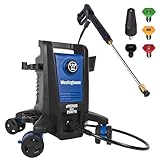
- TAR Score7.2
TAR Score is a ranking system developed by TopAppliancesReviews.com. TAR score has no relationship or impact from any manufacturers or sales agent websites. Learn more
- BrandWestinghouse
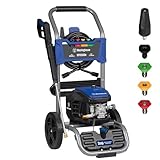
- TAR Score7.1
TAR Score is a ranking system developed by TopAppliancesReviews.com. TAR score has no relationship or impact from any manufacturers or sales agent websites. Learn more
- BrandWestinghouse
Last update on 2026-11-02 / Affiliate links / Images, Product Titles, and Product Highlights from Amazon Product Advertising API
FAQs
Is an electric pressure washer strong enough to clean dirty concrete?
Yes, an electric pressure washer can clean dirty concrete, but it takes more time and patience than a gas machine. Because electric units produce lower water volume, you must hold the nozzle closer to the ground and move at a slower walking pace to lift deep algae and set-in dirt. Pairing an electric machine with a rotating turbo nozzle helps concentrate the spray force to clean flat concrete faster.
Can a gas pressure washer damage car paint or wooden decks?
A gas pressure washer can easily gouge soft wood and peel automotive clear coat if you use the wrong nozzle or stand too close. The high water spray force of a gas machine requires a wide forty-degree white nozzle tip held at least eighteen inches away from car panels. For wood decks, use a twenty-five-degree nozzle and sweep along the grain of the boards rather than across it to prevent splintering.
How often do you need to change the oil in a gas pressure washer?
Most gas pressure washer manufacturers recommend changing the engine oil after the first five hours of initial runtime to clear out factory break-in debris. After that initial change, replace the engine oil once every fifty hours of operation or at least once per season before winter storage. Always verify the specific oil viscosity and service intervals listed in your operator manual.
Can you use an extension cord with an electric pressure washer?
You should avoid using a standard extension cord with an electric pressure washer because it causes a severe drop in electrical voltage. Running a high-draw motor on a thin extension cord can melt the plug, trip your home circuit breaker, or burn out the machine motor entirely. If you need extra reach, keep the washer plugged directly into the wall and connect a longer high-pressure water hose instead.
Related guides: sun joe electric pressure washer spx3000.


10 Best Washing Machine For King Size Comforter of 2026 For Bulky Bedding

11 Best Semi Automatic Washing Machine Under 10000 of 2026 For Apartments and RVs

9 Best Compact Refrigerator For Beer Bottles of 2026 For Upright Bottle Fit

10 Best Quality Semi Automatic Washing Machine of 2026 For Leak-Free Laundry

11 Best Small Washer Machine of 2026 For Everyday Laundry

12 Best Vibration Pads For Washing Machine of 2026 To Stop Walking and Shaking

11 Best Selling Front Load Washing Machine of 2026 For Quiet Odor-Free Laundry

11 Best Washing Machine For King Size Bedding of 2026 To Prevent Cycle Errors





