
Should You Buy a Single Tub or Twin Tub Washing Machine?

Soiled towels crowd a small kitchen counter while an apartment renter stares at two unfamiliar appliance designs on a phone screen. The main difference is simple: a single tub runs automatically from start to finish in one drum, while a twin tub requires moving dripping clothes by hand into a separate spin chamber.
Which style fits best depends on your routine, your space, and how the washer drains. Single tubs operate hands-free and usually include electric pumps to push water up into a sink, but they take longer to run. Twin tubs wash much faster and fit better in wide, shallow spots, yet they often rely on gravity to drain flat across a shower floor. Knowing how each machine behaves on wash day will keep you from getting stuck with an appliance that floods your floor or demands hours of babysitting.
Decide How Much Physical Effort You Want to Spend on Wash Day
A single tub portable washer works as a fully automatic compact washer. You drop your clothes into the inner wash basket, pour in low-suds HE (High Efficiency) detergent, and attach the inlet hose using a quick-connect sink adapter that clicks onto your kitchen or bathroom faucet. Choose a cycle, like a delicate or heavy-duty cycle, and press start. The machine manages everything inside that single stainless steel clothes tub. Water fills, and either a center agitator post that twists clothes through the water or a flat bottom wash plate (impeller) that moves laundry using water currents cleans your load. The machine drains, spins, refills for a deep rinse, and finishes with a high-speed spin. An off-balance safety sensor pauses spinning and beeps when bulky towels bunch up on one side, keeping the unit stable while you work or relax.
A twin-tub semi-automatic washer requires moving clothes by hand through each stage. Under separate lids, you have the wash tub where clothes soak and agitate, and the separate spin basket that spins damp-dry. Wash day with a twin tub demands your active presence. You fill the wash tub with a hose or bucket, add soap, and turn a mechanical wash timer, typically set up to 15 minutes. Once the timer stops, the machine sits idle in soapy water until you manually turn the drain knob to empty the tub.
Next comes the manual transfer. You reach into the wash tub, lift heavy, waterlogged clothes, and pack them by hand into the separate spin basket. Because the spin basket is compact, you must balance wet garments evenly around the center. Place the flat plastic safety disc directly on top of the laundry to stop socks from flying out during spinning. If you load clothes unevenly, the spin basket will bang violently against the outer plastic housing. To rinse, you move clothes back to the wash tub with clean water or run a spray rinse through the spin basket. It requires constant supervision, but it gives you total control over your water and wash time.
Check Your Sink and Drain Setup Before Choosing a Drainage Style
Drainage causes more indoor leaks than almost any other portable washer issue. Compact washers remove dirty water using either a gravity drain hose that must lie flat across a floor drain so water drains naturally, or a built-in drain pump that pushes water up into a kitchen sink or standpipe.
A gravity drain relies entirely on gravity. When you open the drain valve, water empties naturally through the hose. If you lift that hose over a standard 30-inch kitchen sink or bathtub edge, water cannot climb upward. It backs up inside the tub or leaks past internal seals onto your floor. Gravity drain machines belong strictly in spaces with ground-level drainage, like a walk-in shower stall, an RV shower pan, or a floor drain.
A built-in drain pump uses an electric motor to push water upward through the discharge hose. This pump lifts waste water 3 to 4 feet into the air, allowing you to hang the drain hose over a kitchen sink, bathroom vanity basin, or utility standpipe. Single tub portable washers almost always include an electric drain pump. Basic twin tubs use gravity drainage to minimize cost and weight, while upgraded twin tubs include an internal drain pump. Always confirm your drainage route before purchasing.
Water supply and electrical hookups also differ. Single tub units use an inlet hose with a quick-connect sink adapter that clicks onto standard threaded faucet spouts. However, it will not attach to pull-out spray faucets with flexible pull-down heads or rectangular spouts. Twin tubs include a rubber hose that slips over basic faucet nozzles, but you can also fill the wash tub manually using a handheld shower wand or bucket. For electrical power, both styles require a standard 120-volt 3-prong grounded wall outlet. Never plug your washer into an ungrounded two-prong outlet or use a lightweight extension cord near wet utility floors.
Compare Cycle Times and Water Re-Use to Match Your Daily Routine
Twin tub washers finish loads far faster than single tub units. A typical wash cycle takes 10 to 15 minutes, followed by a 3 to 5 minute spin. Because the two tubs use independent electric motors, you can wash and spin simultaneously. While your first load spins damp-dry in the spin basket, a second load can agitate in the wash tub. Running both tubs together cleans, rinses, and spins three loads in under 45 minutes.
Single tub automatic washers require more patience because their electronic cycles are automated. A full wash-rinse-spin sequence generally runs between 35 and 55 minutes. The machine fills, agitates, drains, spins, refills for a deep rinse, drains, and finishes with a high-speed extraction. You can look for machines that feature a quick wash setting to cut laundry time, but automated washing takes longer than manual timing. In exchange, you gain complete freedom from monitoring the machine.
Water conservation is another area where twin tubs excel. In a single tub washer, every load uses fresh water that automatically pumps down your drain after rinsing. With a twin tub, dirty water stays in the wash tub until you open the drain valve, allowing you to reuse soapy wash water across multiple batches of clothes.
To reuse water, wash lightly soiled white garments or bedding first. Once agitation finishes, move those items into the spin basket, leaving the soapy water in the wash tub. Then, place darker shirts or work pants into that same soapy water and run another wash timer. You only need fresh water for rinsing. For RV travelers, campers, or anyone living off-grid, this water recycling feature saves dozens of gallons of fresh water every week.
Spin extraction speed differs between the two designs. The compact spin basket in a twin tub spins at high rotations, pulling moisture out of fabrics so effectively that clothes hung on a rack often dry within a few hours. However, twin tub spin baskets are smaller than the wash tub. An 18-pound capacity wash tub may pair with a 10-pound spin basket, meaning you must split one wash load into two separate spin runs. A single tub machine washes and spins the exact same drum capacity in one continuous run without dividing clothes.
Match Machine Dimensions to Your Living Space and Storage Habits
Physical dimensions and empty machine weights determine how comfortably each style integrates into your living space. Twin tub washers have a wide, horizontal footprint because the wash tub and spin basket sit side by side. They require wider floor space, which can crowd narrow hallways or small bathrooms. But because twin tubs are constructed from lightweight molded plastic without heavy internal counterweights, they usually weigh only 20 to 30 pounds. This lightweight build makes it easy to lift a twin tub into a bathtub for laundry sessions and store it inside a closet or RV storage bay when dry.
Single tub washers feature a squarer, taller footprint that slides neatly into small apartment corners or beside a bathroom vanity. However, single tub units are much heavier. Internal counterbalance weights and steel parts keep the drum stable during rapid spin extraction, pushing empty weights between 45 and 70 pounds. You cannot easily lift a single tub into a bathtub. Look for models with built-in rear caster wheels so you can roll the unit to your faucet. Leave 4 to 6 inches of rear clearance so drain lines and inlet hoses do not kink against walls.
Review this quick checklist to match each washer to your living habits:
- Choose a single tub washer if: you want automated hands-free cycles, your drain discharges upward into a raised kitchen sink, you have narrow floor space, or you want to wash and spin a full load without splitting items.
- Choose a twin tub washer if: you have a shower stall or floor drain that accommodates gravity draining, you want to wash and spin separate batches simultaneously, you want to reuse soapy water, or you need a lightweight unit you can lift into storage.
Look for the Right Compact Machine Features for Your Home
Finding the right compact washer comes down to checking key hardware specifications before you buy. Start by verifying the drainage style. If your waste water must drain upward into a raised kitchen sink, confirm that the model includes a built-in drain pump rather than relying on gravity.
Next, examine the water hookup hardware. Check whether the faucet adapter matches your sink aerator threads, especially if you have a kitchen faucet without standard external threading. For single tub units, check for an internal balance sensor that stabilizes spin cycles alongside adjustable leveling legs to prevent violent machine shaking and walking across slick tile. For twin tubs, confirm that the spin chamber includes a fitted plastic safety disc to hold damp clothes flat against the spin plate.
Finally, inspect routine maintenance access. Both washer types require a removable lint filter inside the tub that you can easily pop out and rinse under running water. After finishing your laundry for the day, leave the lids open for several hours. Circulating fresh air through the empty drums dries out residual moisture, helping to stop musty laundry odors and prevent mold growth inside your machine.

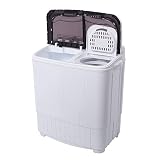
- TAR Score9.2
TAR Score is a ranking system developed by TopAppliancesReviews.com. TAR score has no relationship or impact from any manufacturers or sales agent websites. Learn more
- BrandCOSTWAY
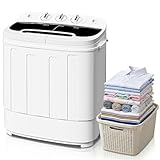
- TAR Score8.4
TAR Score is a ranking system developed by TopAppliancesReviews.com. TAR score has no relationship or impact from any manufacturers or sales agent websites. Learn more
- BrandGeneric
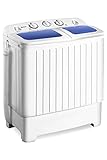
- TAR Score8.1
TAR Score is a ranking system developed by TopAppliancesReviews.com. TAR score has no relationship or impact from any manufacturers or sales agent websites. Learn more
- BrandSUPER DEAL
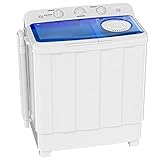
- TAR Score7.8
TAR Score is a ranking system developed by TopAppliancesReviews.com. TAR score has no relationship or impact from any manufacturers or sales agent websites. Learn more
- BrandGIANTEX
- TAR Score7.2
TAR Score is a ranking system developed by TopAppliancesReviews.com. TAR score has no relationship or impact from any manufacturers or sales agent websites. Learn more
- BrandAuertech
Last update on 2026-10-27 / Affiliate links / Images, Product Titles, and Product Highlights from Amazon Product Advertising API
FAQs
Do twin tub washing machines require a sink connection?
No, twin tub washing machines do not require a direct sink connection. While they include an inlet hose designed to slip over a faucet spout, you can fill the wash tub manually using a handheld shower wand or utility bucket. This manual flexibility makes twin tubs popular for camper vans, off-grid cabins, and bathrooms with non-standard faucets.
Can a twin tub washing machine wash and spin at the exact same time?
Yes, twin tub washers feature separate electric motors for the wash tub and the spin basket, allowing both sides to run simultaneously. You can place your first load into the spin basket to extract water while agitating a fresh load of dirty clothes in the wash tub. Running both tubs together cuts down your total laundry time significantly.
Why is my portable washer shaking violently during the spin cycle?
Violent shaking happens when wet clothing is distributed unevenly around the spin basket. In a twin tub, stop the machine, untangle your clothes, distribute them evenly around the drum, and press the plastic safety disc firmly on top. In a single tub, pause the cycle, redistribute heavy items evenly around the wash plate, and adjust the leveling legs so the cabinet sits flat on the floor.
What kind of detergent works best in compact single tub and twin tub washers?
Use a small amount of low-suds HE (High Efficiency) liquid detergent in both compact single tub and twin tub machines. Because portable washers use less water than full-sized residential appliances, standard detergents and oversized laundry pods create excessive suds. Excess foam can cause water leaks, trigger drain errors, and leave a stiff soap film on your clean clothes.


10 Best Washing Machine For King Size Comforter of 2026 For Bulky Bedding

11 Best Semi Automatic Washing Machine Under 10000 of 2026 For Apartments and RVs

9 Best Compact Refrigerator For Beer Bottles of 2026 For Upright Bottle Fit

10 Best Quality Semi Automatic Washing Machine of 2026 For Leak-Free Laundry

11 Best Small Washer Machine of 2026 For Everyday Laundry

12 Best Vibration Pads For Washing Machine of 2026 To Stop Walking and Shaking

11 Best Selling Front Load Washing Machine of 2026 For Quiet Odor-Free Laundry

11 Best Washing Machine For King Size Bedding of 2026 To Prevent Cycle Errors





