
Signs It's Time for a New Washing Machine

Major part failures mean buying a replacement. It is time for a new machine when a critical piece breaks down, like the motor or the drum bearing (the metal ring that lets the basket spin smoothly). Sinking money into a dying appliance rarely makes sense, especially when repairs cost over half the price of getting a fresh setup.
Every situation still hinges on a few clear details. Age matters first, because most laundry appliances only run reliably for eight to twelve years. A sudden puddle might just come from a loose rubber hose, while clothes coming out soaked often point to a simple drain clog rather than a burned-out pump. Here is how to tell a quick weekend fix from a dangerous breakdown before spending a single dollar.
Loud roaring and cracked tubs mean the machine is done
A failing washing machine usually gives clear warnings before it quits completely. The most definitive warning is a loud, deafening roar during the final spin cycle. If your machine sounds like a jet engine taking off or a freight train barreling through your laundry room, the drum bearing is failing. The drum bearing is the metal ring with small steel balls that lets the clothes basket spin smoothly. Over years of use, the rubber water seal around the bearing dries out, cracks, and lets water seep inside. That water washes away the lubricating grease and rusts the metal balls. Once rust sets in, the bearing grinds itself to pieces.
You can check for a bad drum bearing in thirty seconds without any tools. Turn off the washer, open the door or lid, and reach your hand inside the empty machine. Push the top edge of the inner metal wash basket upward. If the basket lifts independently of the outer plastic tub and clunks, the bearing is ruined. Next, spin the basket quickly by hand. A healthy basket glides quietly with minimal friction. A damaged bearing will sound like rolling rocks across concrete and will feel rough under your fingers. Replacing a drum bearing requires tearing the entire machine down to its bare frame, and the labor cost alone almost always exceeds the price of buying a brand-new appliance.
A cracked outer tub is another catastrophic failure that means your washer is finished. The outer tub holds all the water while the inner basket spins. Heavy unbalanced loads, broken suspension springs, or stray metal objects can crack this thick plastic shell. If you notice a steady puddle spreading across the floor right beneath the center of the machine during the wash cycle, inspect the tub from underneath. A hairline crack cannot be glued, taped, or caulked because the intense vibration and water pressure will break the seal open during the very next cycle. Replacing a tub requires ordering a massive, expensive molded assembly that rarely makes financial sense.
Sharp burning smells also signal terminal danger. A strong burning rubber smell often points to a drive belt slipping against a locked pulley or a friction clutch melting down. An acrid, chemical burning odor usually means the electric drive motor is overheating or the main computer control board is frying its internal circuits. When a drive motor burns out, the tub stops turning entirely. You will hear the machine hum or buzz as it tries to agitate, but the basket sits motionless, leaving your clothes sitting in a pool of soapy, stagnant water.
If your laundry comes out soaking wet at the end of a full cycle, the problem could be a mechanical breakdown or a simple drainage failure. When the motor or transmission gears strip out, the washer cannot reach the high spin speeds needed to pull moisture out of the fabric. The clothes stay drenched because the machine never truly spun them. Before you condemn the washer, however, verify whether the tub actually drained the water away first. If water is still standing in the bottom, the spin cycle cannot do its job.
Simple clogs and uneven feet are easy false alarms
Not every noisy or misbehaving washer belongs in the landfill. Many alarming symptoms stem from basic maintenance issues that you can solve in a few minutes without hiring a repair service. Before you write off your washer as dead, run through these common false alarms:
- The machine violently shakes or walks across the floor: Modern spin cycles rotate at high speeds, and loose leveling legs will cause the cabinet to bang against your walls. Grab the washer with both hands and try to rock it back and forth diagonally. If it wobbles, loosen the lock nuts on the leveling legs at the bottom corners. Turn the threaded rubber feet clockwise or counterclockwise until all four legs press firmly against the floor, then tighten the lock nuts against the frame with a wrench.
- The cycle stops and beeps with soaking clothes inside: Bulky items like heavy bath towels, bed sheets, or a dense comforter frequently bunch up on one side of the wash basket. The off-balance safety sensor detects the violent wobble, automatically halts the spin cycle, and pauses the machine to prevent damage. Open the lid, redistribute the wet laundry evenly around the perimeter of the basket, and restart the cycle on a spin-only setting.
- Water refuses to drain out of the tub: A washer that will not drain usually has an obstruction in the lower pump filter catch. Small pocket items like coins, hairpins, screws, baby socks, and thick lint collect in the filter right before the drain pump. The drain pump is the small electric motor that pushes dirty wash water out of the machine. Unclip the small access door at the bottom front of your washer, place a shallow baking tray and a towel on the floor, and unscrew the filter plug counterclockwise. Clear out the trapped debris, rinse the plastic screen under a faucet, and screw it back in tightly.
- A kinked or flattened drain hose: If your washing machine was recently pushed closer to the wall, the flexible plastic drain hose behind it might be pinched flat against the baseboard. Pull the washer forward two inches and confirm that the corrugated hose has a smooth, open curve into your wall drain standpipe or sink basin.
- Thick soap foam spilling onto the floor: Excess suds will cause leaks around door gaskets and trigger drainage error codes. If someone used standard dish soap or excessive amounts of traditional laundry detergent, the suds will fool the machine's water level pressure sensor. Switch strictly to low-suds HE (High Efficiency) detergent and use only two tablespoons per standard load.
- Frozen electronic controls: Washers with digital screens and computer boards can experience temporary software freezes after a power surge or an electrical flicker. Try resetting the machine after an error code by unplugging the power cord from the wall outlet for ten full minutes to clear the stored memory before assuming the control board is dead.
The fifty percent rule decides between repair and replacement
Most residential washing machines have an average working lifespan of 8 to 12 years. If your washer is eight years old or older, its mechanical components have completed thousands of grueling wash and spin cycles. The metal parts have experienced years of water exposure, friction, and heat. Pouring serious repair money into an aging appliance is often a losing gamble because fixing one worn part does not stop the next part from failing a few months later.
Appliance technicians rely on the fifty percent rule to give homeowners an honest assessment. The rule is simple: if a repair quote costs more than 50 percent of the price of a brand-new comparable washing machine, you should replace the machine rather than fix it. Furthermore, you must factor in the age of the appliance. You can multiply the age of your washer in years by the repair estimate in dollars. If that number is larger than the original cost of the machine or the price of a new replacement, buying new is the mathematically sound choice.
Consider the real math behind professional repair work. A technician will charge between $80 and $150 just to knock on your door, inspect the problem, and give you an estimate. Labor rates typically run from $75 to $130 per hour after that. If an eight-year-old machine needs a new transmission, main control board, or inner tub, the parts and labor will easily total $400 to $600. Spending $500 on an old washer that is only worth $100 on the open market makes little sense when a brand-new reliable washer costs $600 to $800 and comes with a fresh factory warranty.
Minor repairs on younger appliances are still worth doing. If your machine is only three or four years old and needs a $50 water inlet valve, a $30 drive belt, a new lid switch, or a $75 drain pump, pay for the fix. Those components are simple wear items that do not indicate structural failure. But if you have already repaired the machine twice in the past year, or if rust is eating through the cabinet seams, stop pouring money into it. When shopping for an upgrade, evaluating front-load versus top-load washing machines will help you select a dependable design that matches your family's daily laundry routine and physical space.
Leaking water and scorched cords demand immediate shutoff
A malfunctioning washing machine can quickly turn from an everyday inconvenience into a serious home safety hazard. When high-voltage electricity and pressurized water meet in an enclosed metal cabinet, you must treat the situation with immediate caution to protect your home from electrical fires, severe shocks, and catastrophic floor damage.
Take these safety steps immediately if your washer exhibits critical hazard signs:
- Standing water near electrical connections: If you walk into your laundry area and see water pooling around the power cord or the wall outlet, never step into the puddle to pull the plug. Water conducts electricity readily. Walk directly to your home's main electrical breaker panel and switch off the breaker labeled for the laundry room. Only after the circuit is completely dead should you safely step in to unplug the machine.
- Charred plugs or sizzling sounds: Washing machines draw substantial electrical current during the agitation and high-speed spin cycles. They must always connect directly to a dedicated standard 120-volt 3-prong grounded wall outlet. If the plug feels hot to the touch, smells of burnt plastic, or shows black scorch marks around the prongs, cut the power at the breaker box immediately. Never run a washing machine through an ungrounded two-prong adapter or a lightweight household extension cord.
- Blistering or bulging water supply hoses: Inspect the hot and cold water supply hoses that connect your home's wall valves to the back of the washer. If you see a bubbled blister on a black rubber hose, that hose is about to burst under pressure. Turn the brass water shutoff valves on your wall clockwise until they stop turning to shut off the water supply. A ruptured water hose can pump several hundred gallons of water into your home in less than an hour, destroying floorboards and ceilings below. Replace old rubber hoses with braided stainless steel hoses that resist bursting.
- Rust eating through the bottom base pan: Surface scratches on the paint are harmless, but bubbling rust that penetrates the structural base frame is dangerous. The heavy suspension rods (the internal springs that hang the wash tub and absorb shaking) anchor directly into the frame. If rust rots the metal anchor points, the spinning tub can break loose from the cabinet at full speed, causing severe structural damage and potential personal injury.
If you see sparks jumping from beneath the washer cabinet, or if the machine repeatedly trips your household circuit breaker the moment the motor engages, stop using the appliance. A short circuit inside the motor windings or an internal water leak dripping onto bare wiring creates an active fire risk that requires a licensed professional or immediate machine replacement.
Compact washers offer affordable replacements for small spaces
When repairing an old, heavy washing machine makes no sense, you do not necessarily need to spend thousands of dollars on a massive full-sized laundry set. If you live in an apartment, a rental home, an older house with narrow hallways, a recreational vehicle, or a dorm, compact and portable washers provide a budget-friendly way to handle laundry at home without visiting a laundromat.
Before purchasing a compact replacement machine, understand the primary styles available and how they function:
- Fully automatic compact washers: These machines operate just like traditional laundry appliances but feature a narrower footprint. You load your dirty clothes into a single stainless steel clothes tub, add low-suds detergent, select a cycle, and walk away. The machine manages the wash, rinse, and spin cycles automatically. You can choose models with a traditional center agitator post that twists clothes through the water or a flat bottom wash plate (impeller) that moves laundry using water currents, leaving more open space for larger garments.
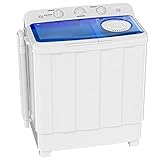
- Twin-tub semi-automatic washers: These units split the laundry process into two separate compartments built side by side inside one lightweight cabinet. You place dirty clothes into the wash tub where clothes soak and agitate, let the cycle run, and then manually lift the wet laundry over into the separate spin basket that spins damp-dry. While they require manual effort to transfer clothes between tubs, twin-tub machines are extremely affordable, use minimal electricity, and allow you to wash a second load while the first load is spinning dry.
- Foldable and countertop mini washers: These ultra-small units hold only a few pounds of lightweight items. They work best for baby clothes, underwear, athletic socks, or small camping gear where floor space is entirely nonexistent.
Always verify three mechanical requirements before purchasing any replacement machine. First, check the drainage type. A machine with a built-in drain pump that pushes water up into a kitchen sink or standpipe can discharge water above floor level. In contrast, a gravity drain hose must lie completely flat across a ground-level floor drain so water drains naturally; trying to hook a gravity hose to a raised sink will leave dirty water trapped inside the tub. Second, confirm the water hookups. Check whether the washer includes a quick-connect sink adapter that clicks onto your kitchen or bathroom faucet, and ensure your faucet has standard screw threads rather than a non-standard pull-out sprayer. Finally, measure your available floor space and always add 4 to 6 inches of rear clearance for hoses and electrical cords so connections are never crimped against the wall.

- TAR Score9.4
TAR Score is a ranking system developed by TopAppliancesReviews.com. TAR score has no relationship or impact from any manufacturers or sales agent websites. Learn more
- BrandYMXA

- TAR Score8.9
TAR Score is a ranking system developed by TopAppliancesReviews.com. TAR score has no relationship or impact from any manufacturers or sales agent websites. Learn more
- BrandGIANTEX

- TAR Score7.9
TAR Score is a ranking system developed by TopAppliancesReviews.com. TAR score has no relationship or impact from any manufacturers or sales agent websites. Learn more
- BrandWinado

- TAR Score7.8
TAR Score is a ranking system developed by TopAppliancesReviews.com. TAR score has no relationship or impact from any manufacturers or sales agent websites. Learn more
- BrandROVSUN
- TAR Score7.2
TAR Score is a ranking system developed by TopAppliancesReviews.com. TAR score has no relationship or impact from any manufacturers or sales agent websites. Learn more
- BrandAuertech
Last update on 2026-11-02 / Affiliate links / Images, Product Titles, and Product Highlights from Amazon Product Advertising API
Related guides: washing machine mistakes that could be shortening its lifespan.


10 Best Washing Machine For King Size Comforter of 2026 For Bulky Bedding

11 Best Semi Automatic Washing Machine Under 10000 of 2026 For Apartments and RVs

9 Best Compact Refrigerator For Beer Bottles of 2026 For Upright Bottle Fit

10 Best Quality Semi Automatic Washing Machine of 2026 For Leak-Free Laundry

11 Best Small Washer Machine of 2026 For Everyday Laundry

12 Best Vibration Pads For Washing Machine of 2026 To Stop Walking and Shaking

11 Best Selling Front Load Washing Machine of 2026 For Quiet Odor-Free Laundry

11 Best Washing Machine For King Size Bedding of 2026 To Prevent Cycle Errors





