
Why Is Your Portable Washing Machine Not Working?

Start by pressing the reset button on the wall outlet and checking that the top lid is snapped firmly shut. Most sudden shutdowns happen because an unlatched lid switch, a tripped outlet, or an off-balance laundry load forces the machine into an automatic safety pause to prevent motor damage or flooding. Straightening out a twisted hose or shifting heavy towels often gets the motor moving again right away.
Finding the right solution depends on what the unit does when you press start. A washer that stays completely dark points to a power issue, whereas a drum that hums without draining usually faces a clog or an uneven bundle of clothes. Your specific model also makes a difference, especially if it relies on a flat gravity drain line rather than an internal electric pump. Follow the steps below to pinpoint the problem and safely empty any trapped water without making a mess.
Checking the Power Source and Wall Outlet
When a portable washing machine shows zero signs of life, the problem usually sits between the wall plug and the control board. These machines draw a steady electrical current, and their built-in safety features will shut everything down if the power supply fluctuates. Before you assume the internal wiring is ruined, work through this quick power checklist to confirm electricity is reaching the appliance.
- Check the GFCI outlet: A GFCI outlet is a wall outlet with push-to-reset buttons, commonly installed near kitchen sinks and bathroom counters. If moisture or a sudden power spike trips this outlet, it cuts off power completely. Press the red or black reset button firmly until you hear a solid click, then check if the washer display lights up.
- Plug directly into a standard wall outlet: Always plug the machine into a standard 120-volt 3-prong grounded wall outlet. Avoid lightweight extension cords or multi-plug power strips. Thin extension cords overheat quickly, drop the operating voltage, and cause the washer to turn off mid-cycle to protect its internal motor.
- Inspect the household breaker panel: Go to your home electrical panel and check for a tripped circuit breaker. A portable washer sharing a circuit with a microwave, toaster, or space heater can easily trip the main switch. Flip the breaker all the way to the off position and then back to the on position.
- Examine the power cord and plug prongs: Look along the entire length of the power cable for pinches, flattened spots, or chew marks from household pets. Check the metal prongs on the plug to ensure they are straight, clean, and fit tightly into the wall socket without wobbling loose.
- Allow the thermal overload protector to cool: If you ran two or three heavy loads back-to-back, the wash motor may have overheated. Most portable washers contain an automatic heat sensor that cuts power before the motor windings melt. Unplug the machine and let it sit undisturbed for 45 minutes so the thermal switch can cool and reset itself.
Why the Lid Switch Stops the Washer Mid-Cycle
If your portable washer turns on, fills with water, and washes fine, but suddenly halts before the rinse or spin stage, the lid switch is the most common culprit. The lid switch is a small safety tab or magnetic sensor along the top rim of the cabinet. It tells the electronic control board that the plastic cover is completely shut. Portable washers spin at high speeds to pull water out of damp fabrics. If the machine thinks the door is open, it instantly halts the inner clothes tub to protect your hands.
Mechanical wear and simple alignment mistakes trigger most lid sensor errors. Over time, opening and shutting the lid can bend the small plastic push-tab underneath the door hinge. If that plastic tab fails to press down into the matching slot on the machine body, the washer refuses to spin. Sometimes, lint, powdered soap scum, or hard water scale crusts over the contact point, blocking the connection. You might hear a quiet humming sound coming from the cabinet while the machine sits frozen. That hum is the water drain pump or motor waiting for the safety switch to close.
To resolve this, open the door and look closely at the hinge area and the front edge of the cabinet. Wipe away any caked detergent or dirt around the latch opening with a damp washcloth. Check that the plastic finger on the lid is not snapped off or bent sideways. When you close the lid, make sure bulky items like thick towels or bath mats are not resting against the top rim and keeping the door cracked open by a fraction of an inch. Press down gently on the lid above the latch. If the cycle suddenly starts spinning again when you apply light pressure, the door latch simply needs realignment or a replacement magnet.
Steps to Clear Drain Clogs and Correct Hose Height
Water trapped in the stainless steel clothes tub is frustrating, but drainage failures on compact laundry units are almost always easy to fix. Follow these five sequential checks to clear obstructions and get dirty water flowing out of your washer properly.
- Confirm your machine drain style: Check whether your washer uses a built-in drain pump that pushes water up into a kitchen sink or standpipe, or a gravity drain hose that must lie flat across a floor drain so water drains naturally.
Reason: Gravity drain washers cannot lift water even a few inches off the floor, so hanging a gravity hose over a sink ledge causes drainage to stop completely. - Straighten and inspect the flexible drain hose: Pull the washer forward to inspect the ribbed plastic discharge hose for sharp bends, flat spots, or twists.
Reason: Portable washers sit close to walls and cabinets, and a crushed or kinked line restricts the water flow just like a pinched garden hose, causing the cycle timer to freeze. - Set the drain line to the correct discharge height: For pump-equipped models, adjust the drain hose hook so the top curve sits between 30 and 40 inches above the floor, and verify that the gravity line lies flat on the floor for non-pump models.
Reason: Setting a pump hose too high overtaxes the small electric pump, while hanging a gravity hose above the tub base stops all water drainage through simple physics. - Clean out the tub lint filter and lower pump catch: Pull out the small plastic mesh lint filter clipped inside the inner wash basket, brush it clean under warm tap water, and unscrew the lower clean-out cap near the base if your model includes one.
Reason: Loose threads, pet hair, coins, and stray tissues get sucked into the drainage port during wash cycles, creating thick clumps that jam the spinning drain impeller disc. - Verify that the sink or standpipe flows freely: Run the faucet in your sink or inspect your utility drain to confirm that the household plumbing is accepting water quickly without backing up.
Reason: A portable washer cannot pump dirty water out if the sink basin is already full of water due to a clogged kitchen trap.
Fixing Off-Balance Loads and Violent Shaking
Portable washing machines weigh much less than standard household appliances. Because their frames are light and compact, an uneven laundry load can send the machine wobbling violently across the floor. When the cabinet shakes past a safe limit, the off-balance safety sensor halts the spin cycle and sounds an alarm beep to keep the machine from tipping over or damaging its suspension springs.
Heavy textiles like bath sheets, denim jeans, and thick hoodies tend to clump together into a heavy ball during the wash cycle. If your washer uses a flat bottom wash plate (impeller) that moves laundry using water currents, items can bunch up on one side of the tub instead of distributing evenly. Understanding what is the difference between agitator and impeller washers makes it clear why loading patterns matter. An impeller needs laundry placed loosely around the outer perimeter in balanced layers. If one soaked blanket sits on the left side of the inner wash basket while the right side holds only light t-shirts, the spinning basket will slam into the outer casing.
When the machine stops with an off-balance alert, open the lid and manually untangle the wet clothes. Distribute the heavy fabrics evenly around the center of the tub to create an even ring of weight. Never attempt to wash a single heavy item, such as a heavy throw rug, by itself. Always add two or three smaller towels to balance out the rotation. After rearranging the clothing, place a small bubble level across the top lid and turn the adjustable leveling legs under the front corners until the machine sits rock solid without rocking on uneven apartment floorboards.
How to Safely Drain Trapped Water and Check the Motor
If your portable washer refuses to complete its cycle and leaves wet laundry soaking in standing water, you must empty the tub manually before you can inspect the drive system. Trapped water quickly turns sour, and moving a full machine risks flooding your floors.
- Disconnect the electrical supply immediately: Unplug the 3-prong power cord from the wall outlet before touching standing water inside the machine.
Reason: Working around standing water with an appliance connected to live electrical power creates a severe shock risk. - Remove the wet clothes and bail out the surface water: Lift your soaked garments into a plastic laundry hamper or bathtub, then use a small plastic pitcher or kitchen bowl to scoop out the top layer of standing water.
Reason: Removing the heavy wet laundry reduces pressure on the tub suspension and prevents clothes from choking the lower drainage hole while you work. - Lower the drain line into a flat pan or bucket: Place a low-profile baking sheet or shallow bucket beside the machine, drop the open end of the drain hose down to floor level, and let gravity pull the remaining water out.
Reason: Most wash tubs sit several inches above the base of the cabinet, allowing water to flow out naturally through the lower hose as long as the exit point stays below the tub level. - Turn the inner wash basket by hand: Reach inside the empty stainless steel clothes tub and rotate it clockwise and counterclockwise with your hand.
Reason: The basket should glide smoothly with minimal resistance; if it grinds, screeches, or refuses to budge, a small sock, coin, or bra underwire is wedged underneath the wash plate. - Check for signs of a burned-out drive motor: Plug the empty washer back in, select a short spin-only setting, and listen carefully to the sounds coming from the bottom of the cabinet.
Reason: A healthy motor produces a steady, quiet whirring sound. A strong electrical burning smell, a loud buzzing without movement, or an immediate breaker trip means the drive motor windings have failed or the main drive belt has snapped.
When Buying a New Portable Washer Makes More Sense
Compact washing machines are built with lightweight components designed for small apartments, dorm rooms, and RV setups. While clearing a kinked hose, leveling the feet, or untangling laundry takes only a few minutes, major mechanical breakdowns are a different story. If your drive motor has burned out, the electronic main board is dead, or the transmission gearbox is grinding, replacement parts and labor can quickly exceed the value of the machine. Deciding whether to repair or replace often comes down to comparing styles, just as homeowners weigh whether a front-load or top-load washing machine is better for their space.
When shopping for a replacement, focus on which machine configuration fits your living space and plumbing setup:
Fully automatic compact washers offer hands-free convenience. These units run complete wash, rinse, and spin cycles in a single stainless steel tub without requiring you to move wet clothes midway through. If you choose an automatic washer, check that it includes a built-in electric drain pump so you can route the water straight up into a standard sink basin. Confirm that the intake matches a quick-connect sink adapter that clicks directly onto your kitchen or bathroom faucet.
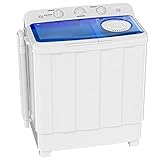
Twin-tub semi-automatic washers cost less and separate the laundry process into two compartments. You wash clothes in the larger tub where garments soak and agitate, then manually lift them into the separate high-speed spin basket to extract water. These units use simple mechanical timer dials rather than delicate digital circuit boards, making them durable and easy to maintain. However, many twin-tub models use gravity drains, which means they must sit directly over a walk-in shower pan or floor drain to empty properly.
For tight quarters or camping, mini folding washers offer a lightweight alternative. These collapsible tubs handle delicate items, baby clothes, and socks using very little water and power, though they cannot wash heavy fabrics like jeans or bedding. Before buying any new portable washer, measure your storage closet and faucet connections carefully, leaving 4 to 6 inches of rear clearance for your water supply and discharge hoses.

- TAR Score9.4
TAR Score is a ranking system developed by TopAppliancesReviews.com. TAR score has no relationship or impact from any manufacturers or sales agent websites. Learn more
- BrandYMXA

- TAR Score8.9
TAR Score is a ranking system developed by TopAppliancesReviews.com. TAR score has no relationship or impact from any manufacturers or sales agent websites. Learn more
- BrandGIANTEX

- TAR Score7.9
TAR Score is a ranking system developed by TopAppliancesReviews.com. TAR score has no relationship or impact from any manufacturers or sales agent websites. Learn more
- BrandWinado

- TAR Score7.8
TAR Score is a ranking system developed by TopAppliancesReviews.com. TAR score has no relationship or impact from any manufacturers or sales agent websites. Learn more
- BrandROVSUN
- TAR Score7.2
TAR Score is a ranking system developed by TopAppliancesReviews.com. TAR score has no relationship or impact from any manufacturers or sales agent websites. Learn more
- BrandAuertech
Last update on 2026-10-31 / Affiliate links / Images, Product Titles, and Product Highlights from Amazon Product Advertising API
Frequently Asked Questions
Why does my portable washer keep beeping during the spin cycle?
A portable washer beeps during the spin cycle when its safety sensors detect an open lid or an unbalanced load. Heavy wet clothes often bunch up against one side of the tub, causing the machine to shake and hit the cabinet wall. Open the door, spread the wet laundry evenly around the bottom wash plate, and make sure the lid latches completely flat before restarting the spin cycle.
Can I plug my portable washing machine into an extension cord?
You should never plug a portable washing machine into an extension cord or multi-outlet power strip. Wash motors draw significant electrical power during agitation and high-speed spin cycles, which can overheat thin extension cords and cause a fire hazard. Always plug the machine directly into a standard 120-volt 3-prong grounded wall outlet or a GFCI outlet.
How do I reset my portable washing machine after an error code?
To perform a hard reset, unplug the power cord from the wall outlet and leave it disconnected for five to ten minutes. While the unit is unplugged, press and hold the power button for five seconds to discharge any leftover energy stored in the electronic display board. Plug the cord back into the wall outlet, open and close the lid firmly six times within twelve seconds, and start a fresh quick wash cycle.
Why is water leaking from underneath my portable washing machine?
Bottom leaks usually occur due to loose hose clamps, an unseated drain line, or excessive soap suds overflowing the outer tub. Using standard high-foaming laundry soap fills the compact cabinet with thick bubbles that spill over the rim and pool on your floor. Switch to a low-suds HE (High Efficiency) detergent, use no more than one or two tablespoons per load, and verify that the quick-connect water supply hose is screwed tightly onto the water inlet valve.


10 Best Washing Machine For King Size Comforter of 2026 For Bulky Bedding

11 Best Semi Automatic Washing Machine Under 10000 of 2026 For Apartments and RVs

9 Best Compact Refrigerator For Beer Bottles of 2026 For Upright Bottle Fit

10 Best Quality Semi Automatic Washing Machine of 2026 For Leak-Free Laundry

11 Best Small Washer Machine of 2026 For Everyday Laundry

12 Best Vibration Pads For Washing Machine of 2026 To Stop Walking and Shaking

11 Best Selling Front Load Washing Machine of 2026 For Quiet Odor-Free Laundry

11 Best Washing Machine For King Size Bedding of 2026 To Prevent Cycle Errors





