
Which Electric Pressure Washer Is Most Powerful for Your Yard?

A thick layer of slick green moss coats the garden stones after a wet winter, refusing to budge with a regular garden hose. The most capable home electric washers produce around 2,500 pounds of spray pressure alongside steady water flow, giving enough cleaning force to strip grime without the noise or fumes of a gas engine.
True cleaning muscle depends on more than just high pressure numbers printed on a box. Water volume does the real work of rinsing loosened dirt away, while your outdoor electrical outlet caps how much power any motor can draw without tripping the breaker. The spray tip you click onto the wand also controls the actual impact on your fences and pavers. Here is how to pick the strongest setup for your yard without damaging your property or blowing a household fuse.
Comparing the Strongest Electric Pressure Washers for Yard Work
When you look at electric pressure washers for outdoor cleaning, the numbers on the box tell an important story. Spray pressure, measured in PSI, tells you how hard the water hits the surface to break dirt loose. Water flow speed, measured in GPM, tells you how much water comes out each minute to rinse that loose dirt away. If you want the most cleaning muscle available in a standard residential machine, you need a unit that pushes both numbers as high as a household wall plug allows.
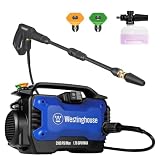
Among the models available for residential yards, the Westinghouse ePX3500 sits at the top of the power scale. It delivers up to 2500 max PSI of spray pressure alongside 1.76 max GPM of water flow speed. That extra punch makes a visible difference when you strip dark mildew off concrete walkways, clean caked mud from landscape pavers, or scrub weather-stained garden retaining walls. It also comes equipped with an onboard soap tank, anti-tipping technology to keep the unit upright when you yank the hose, a pro-style steel wand, and a set of five quick-connect nozzles.
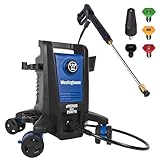
Stepping down slightly in peak force, you find several models rated at 2100 max PSI and 1.76 max GPM. The Westinghouse ePX3100v features a pro-style steel wand, a four-nozzle set, a built-in carry handle, and a detachable foam cannon for applying thick detergent suds. The Westinghouse ePX3100s delivers that same 2100 max PSI and 1.76 max GPM rating, but includes a turbo nozzle (a rotating spray tip for deep grime) along with its foam cannon. The Westinghouse ePX3050 offers that matching 2100 max PSI and 1.76 max GPM output with a foam cannon in a compact footprint. For lighter yard duties, such as rinsing patio chairs or washing pollen off siding, a model like the Greenworks 1700 PSI unit provides 1.2 GPM of water flow speed, which handles everyday dust while using less water.
The difference between 2500 max PSI and 2100 max PSI comes down to how fast you finish tough jobs. Both output levels share the same 1.76 max GPM water volume, so both rinse away lifted dirt at an identical pace. However, the higher spray pressure of the 2500 max PSI model cuts through baked-on algae, tire marks on driveways, and grease spots near backyard grills with fewer passes of the spray wand.
Why Spray Pressure and Water Flow Speed Must Work Together
Many homeowners assume that finding the most powerful electric cleaner simply means picking the highest PSI number listed on the box. That mistake often leads to frustration. Spray pressure only represents half of the cleaning equation. Water flow speed is just as critical for getting your patio and fence chores done before your weekend runs out.
Think of spray pressure as a sharp chisel and water flow speed as a wide push broom. High spray pressure breaks the physical bond holding dirt, moss, or dried mud against brick, stone, or wood. But if your machine only produces a thin trickle of water, that loosened dirt sits right where it fell. You have to creep along an inch at a time, nudging puddles of sludge across your patio stones. A higher water flow speed carries that loosened grime away in a steady wave, clearing a wide path so you can keep walking forward.
Electric pressure washers face strict limits because they pull their energy from standard home electrical wiring. Gas-powered machines can use larger pumps and larger engines to produce massive flow rates, but they bring engine exhaust, oil changes, and loud motors into your backyard. A well-designed electric unit balances its motor output to give you strong spray pressure without sacrificing the water flow speed needed for effective rinsing.
When you clean a long cedar privacy fence or a wide brick driveway, this balance saves you hours of labor. A unit running at 1.76 max GPM clears dirt roughly forty percent faster than an entry-level machine pushing only 1.2 GPM. The higher flow keeps the surface wet, dissolves detergent evenly, and carries grime straight off the edge of the patio into your lawn.
Household Circuit Limits and Safe Electrical Setup
A high-power electric pressure washer pulls a heavy electrical load from your wall plug, often reaching right up to the limit of a standard household outlet. The motor requires substantial electrical current, measured in amps, to spin the high-pressure pump continuously. If your outdoor electrical setup is not prepared, the motor will starve for power, run hot, or repeatedly trip your breaker panel.
Standard household outdoor outlets provide 120 volts on either a 15-amp or 20-amp circuit. A powerful electric washer will demand almost the full capacity of a 15-amp circuit while the spray wand trigger is squeezed. If an outdoor patio freezer, garage refrigerator, or string of landscape floodlights shares that exact same circuit, the breaker will switch off within seconds of you pulling the trigger. To avoid interruptions, plug your washer into a dedicated outdoor outlet that is not running other heavy appliances.
Before you plug in your machine and start washing outdoor surfaces, run through this quick electrical and water setup checklist:
- Check that your outdoor outlet is a grounded 120-volt three-prong receptacle protected by a weatherproof cover.
- Inspect the built-in ground fault circuit interrupter (a safety switch built directly into the power cord plug) and press the reset button until you hear a solid click.
- Plug the power cord directly into the wall outlet whenever possible, avoiding thin household extension cords that drop electrical voltage and cause the motor to overheat.
- Connect your garden hose to the machine inlet and turn the outdoor spigot all the way on before flipping the power switch, ensuring water fills the pump chambers first.
- Squeeze the spray wand trigger with the power switch off to bleed trapped air out of the garden hose until a smooth stream of water flows from the nozzle.
If your machine suddenly cuts out mid-spray and will not turn back on, do not assume the motor burned out. Most sudden power losses happen because the outlet safety switch tripped or the circuit breaker in your home panel clicked off. You can troubleshoot the issue just like you would troubleshoot a washer with no power or lights in a laundry room by checking the wall outlet for incoming power, resetting the breaker switch, and confirming no other devices overloaded the line.
Matching Spray Pressure and Nozzle Tips to Yard Surfaces
The strongest electric pressure washer can quickly damage yard surfaces if you choose the wrong spray nozzle or hold the wand too close. Water striking a surface at 2500 max PSI behaves like an abrasive blade. It can easily gouge soft cedar deck boards, strip protective clear coats, chip mortar out of brick walkways, or shred outdoor window screens.
Pressure washer nozzles use standardized color-coded spray angles to control how wide the water spreads as it leaves the wand tip. A red 0-degree nozzle shoots a pinpoint stream of water with maximum force, which should never be used on wood, painted surfaces, or siding because it cuts into materials instantly. A yellow 15-degree nozzle provides a narrow, aggressive fan suitable for scraping stubborn paint or clearing concrete expansion joints. A green 25-degree nozzle spreads the spray wider, making it ideal for general sweeping on driveways, stone steps, and brick patios. A white 40-degree nozzle provides a gentle, wide fan that safely washes painted fences, deck railings, patio furniture, and vehicles without lifting finishes.
For stubborn outdoor grime, a turbo nozzle (a rotating spray tip for deep grime) gives you the concentrated cleaning impact of a narrow jet while spinning in a circular pattern. This circular action covers a wide cleaning path across hard surfaces like concrete sidewalks, flagstone paths, and unpainted brick walls, lifting black algae spots without leaving zebra-stripe streaks behind.
To clean your yard surfaces safely and efficiently, follow these simple operational steps:
- Inspect the surface for loose boards, crumbling mortar, or flaking paint before spraying any water.
- Click a wide nozzle, such as a 25-degree or 40-degree tip, into the quick-connect collar at the end of the steel wand.
- Hold the spray nozzle at least twelve to eighteen inches away from the target surface before you squeeze the trigger.
- Pull the trigger and move the wand across the surface in smooth, sweeping strokes, keeping the tip moving continuously so water never concentrates on one spot.
- Inspect the cleaned patch, and only step closer or switch to a narrower nozzle if deep stains remain on durable stone or concrete.
What to Look for in an Electric Outdoor Washer
When selecting an electric cleaner for yard and garden maintenance, raw pressure ratings are only part of what makes a machine practical. You also need a design that handles the physical challenges of moving across lawns, flower beds, and uneven stone paths without constant annoyance.
Pay close attention to the balance and wheel design of the machine frame. High-pressure hoses are stiff and heavy, and pulling the hose toward the far corner of a deck can easily pull a top-heavy machine over onto its side. Look for models featuring a wide stance, a low center of gravity, or dedicated anti-tipping frame geometry. Large, rugged wheels make rolling over thick grass, mulch, and patio steps much smoother than tiny plastic casters that get stuck in lawn turf.
Examine the hose and wand construction before making your choice. A pro-style steel wand with brass quick-connect fittings stands up to repeated nozzle changes and resists cracking when set down on rough concrete. Flexible high-pressure hoses that resist kinking save you from constantly walking back to the cart to untwist loops. Built-in storage brackets for your spray tips, cord wraps for the heavy electrical lead, and onboard detergent tanks or detachable foam cannons streamline seasonal yard chores so you can clean your property quickly and store the machine neatly away.
- TAR Score9.0
TAR Score is a ranking system developed by TopAppliancesReviews.com. TAR score has no relationship or impact from any manufacturers or sales agent websites. Learn more
- BrandWestinghouse

- TAR Score8.8
TAR Score is a ranking system developed by TopAppliancesReviews.com. TAR score has no relationship or impact from any manufacturers or sales agent websites. Learn more
- BrandWestinghouse

- TAR Score8.0
TAR Score is a ranking system developed by TopAppliancesReviews.com. TAR score has no relationship or impact from any manufacturers or sales agent websites. Learn more
- BrandGreenworks

- TAR Score7.8
TAR Score is a ranking system developed by TopAppliancesReviews.com. TAR score has no relationship or impact from any manufacturers or sales agent websites. Learn more
- BrandWestinghouse
- TAR Score7.2
TAR Score is a ranking system developed by TopAppliancesReviews.com. TAR score has no relationship or impact from any manufacturers or sales agent websites. Learn more
- BrandWestinghouse
Last update on 2026-11-03 / Affiliate links / Images, Product Titles, and Product Highlights from Amazon Product Advertising API
FAQs
Can an electric pressure washer damage a wooden deck or fence?
Yes, an electric pressure washer can gouge wood, raise the wood grain, or strip protective stain if you use too narrow of a spray nozzle or hold the wand too close. Always use a wide 40-degree fan nozzle or apply deck cleaner through a low-pressure soap tip first. Keep the wand tip at least twelve to sixteen inches away from the wood, and sweep along the length of the boards rather than across the grain.
Can I use an extension cord with a high-power electric pressure washer?
Most manufacturers recommend plugging the machine directly into a grounded outdoor wall outlet because standard household extension cords drop electrical voltage. Running a high-draw motor on a long or thin extension cord causes the motor to overheat, reduces pump pressure, and frequently trips household breakers. If an extension cord is unavoidable, verify that it is an outdoor-rated, heavy-duty cord with at least 12-gauge wiring, kept as short as possible.
Why does an electric pressure washer pulse or lose pressure during use?
Pulsing usually happens when the machine cannot draw enough water from your garden spigot or when air gets trapped inside the pump chambers. Make sure your outdoor water faucet is opened completely, and check that your garden hose is free of kinks or flat spots. You can also turn off the power switch, remove the spray nozzle, and squeeze the trigger for thirty seconds to flush out trapped air bubbles and clear tiny debris from the nozzle tip.


10 Best Washing Machine For King Size Comforter of 2026 For Bulky Bedding

11 Best Semi Automatic Washing Machine Under 10000 of 2026 For Apartments and RVs

9 Best Compact Refrigerator For Beer Bottles of 2026 For Upright Bottle Fit

10 Best Quality Semi Automatic Washing Machine of 2026 For Leak-Free Laundry

11 Best Small Washer Machine of 2026 For Everyday Laundry

12 Best Vibration Pads For Washing Machine of 2026 To Stop Walking and Shaking

11 Best Selling Front Load Washing Machine of 2026 For Quiet Odor-Free Laundry

11 Best Washing Machine For King Size Bedding of 2026 To Prevent Cycle Errors





