
Is Water Pressure Mandatory for a Fully Automatic Washer?

Check the water flow coming out of the laundry tap before connecting the appliance. A fully automatic clothes washer strictly requires steady water pressure to push open its electric intake valves and start a cycle. Without enough incoming force, the tub fills too slowly, causing the internal timer to stop the wash and flash a warning code.
The exact force needed depends on the manufacturer rating, which usually calls for at least 14 to 50 PSI (a common water pressure measurement). Adding a small water pressure pump to your supply line can easily solve weak flow from an overhead gravity tank. Anyone without reliable plumbing can also switch to a semi-automatic twin-tub model that allows manual bucket filling. Understanding what happens inside the machine helps you protect your laundry and keep every load moving.
Why do fully automatic washers need water pressure?
Fully automatic washing machines run on automated software and electric hardware designed to manage laundry without your help. When you push start, the machine controls filling, washing, draining, and spinning. That automation makes water pressure mandatory.
Inside the back of your washer sits an electric water valve (solenoid valve). Unlike a manual sink faucet, this valve uses an electromagnetic coil and a flexible rubber diaphragm. Incoming water pressure holds that diaphragm sealed shut when the machine rests, and water pressure helps snap it open when the control board sends an electrical signal. If water pressure is too weak, the valve cannot open properly, leaving you with a trickle or a dry tub.
Water pressure also drives the washer's internal safety clock. Every automatic washer has a preprogrammed fill timer that expects water to reach a set depth within six to ten minutes. If plumbing pressure drops below the required threshold (typically between 14 and 50 PSI, or pounds per square inch), the tub fills too slowly. Once that timer expires, the computer assumes there is a leak, halts the cycle, and locks the controls.
Can you just pour water in with a bucket?
When faced with weak tap flow, people often attempt pouring buckets of water directly into the tub. It seems sensible: if the clothes are wet and soapy, the machine should wash them. But with a fully automatic washer, manual bucket filling fails.
Fully automatic washers rely on a water level sensor (pressure switch) connected to a thin plastic air tube. As water rises in the inner wash basket, it compresses air inside that tube. The sensor reads that air pressure to tell the computer when to start the center agitator post or bottom wash plate. While bucket water might satisfy the sensor for the initial wash, the machine will not complete the rest of the cycle.
A standard cycle requires multiple fresh fills. After washing, the built-in drain pump empties the dirty water. The machine spins and starts rinsing, energizing the electric water valve again. If water pressure is missing from your supply hoses, the machine stops immediately. Modern machines also lock the lid during fills and spins for safety, making manual pouring impossible mid-cycle.
What happens when your water pressure is too low?
Running an automatic washer on weak water pressure creates laundry problems and can damage internal parts. Watch for these common warning signs:
- Cycle error codes and shutdowns: Modern washers display digital error codes (such as 4E, IE, LF, or F8 E1) when water enters too slowly. These signify a long fill time error. The washer beeps, drains whatever water entered, and cancels the cycle to protect itself.
- Caked detergent in the dispenser: Washers rely on pressurized water streams to flush detergent and fabric softener from the dispenser tray into the wash basket. Weak pressure trickles under the tray, leaving thick, gummy detergent caked along the plastic channels.
- Overheating electric water valves: When water pressure is too low to satisfy the water level sensor, the computer keeps the electric water valve powered continuously. The electrical coil inside can overheat from running continuously, emitting a loud buzzing sound and eventually burning out.
- Poor rinsing and stiff clothes: Low water pressure prevents the washer from spraying clean rinse water through fabrics during spin cycles. Clothes come out stiff and smelling of soap residue. If you use a preset quick wash cycle to save time, low pressure stretches that cycle out or stalls it completely.
How do you check your water pressure at home?
You do not need special tools to check if your water supply is strong enough for an automatic washer. You can perform a quick flow check using a bucket and your phone timer:
- Shut off the water tap: Turn the cold water shutoff valve behind your washer clockwise until it stops completely.
- Disconnect the supply hose: Place a small towel under the connection behind the washer. Unscrew the cold water supply hose from the machine and point the free end into an empty 5-gallon bucket.
- Time the flow for one minute: Turn the shutoff valve fully open while starting a one-minute timer on your phone. Let the water run into the bucket at full force. When sixty seconds pass, shut the valve off immediately.
- Measure the water volume: A healthy supply line should deliver at least two to three gallons per minute (GPM). If your bucket contains less than one and a half gallons, your water pressure is too low for an automatic washer.
- Inspect the inlet filter screen: Look inside the threaded water port on the back of the washer. If the small mesh screen is packed with rust flakes, silt, or mineral scale, it restricts flow even if your household plumbing has strong pressure.
How can you fix low water pressure issues?
If your water flow check failed or your washer halts with fill errors, practical fixes can restore normal flow. Start with simple checks before buying extra equipment.
First, clean the inlet filter screens on the back of the machine. Turn off your water shutoff valves and unscrew both supply hoses. Use needle-nose pliers to gently pull the small mesh filter baskets out of the threaded inlet ports. Soak the screens in warm water and white vinegar to dissolve mineral scale, scrub them with an old toothbrush, and rinse them clean. Slide them back in, reattach the hoses firmly by hand, and turn the water back on.
Second, check supply lines for kinks. Pull the washer forward and inspect both hoses. If a hose is pinched flat against the wall or sharply bent, water cannot pass freely. Maintain at least four to six inches of rear clearance behind the washer, and replace old rubber hoses with braided stainless steel hoses that resist kinking.
Third, if your home has permanently low pressure or relies on a low-elevation gravity tank, install a small inline booster pump (an auxiliary water pressure pump). These compact 120-volt pumps install directly between your shutoff valve and the washer's supply hose. When the washer calls for water, the pump automatically switches on to boost line pressure to a stable 35 to 45 PSI.
Finally, check if the issue affects your entire house. If faucets and showers also run weak, your main pressure-reducing valve may be set too low or failing. That is the time to call a licensed plumber to inspect your main plumbing lines safely.
Should you switch to a semi-automatic twin tub?
If you live in an apartment where you cannot alter plumbing, or if your water comes from an off-grid gravity tank, switching washer styles is often smarter than fighting low water pressure. This is where semi-automatic twin-tub washers excel.
A fully automatic washer is built for hands-free convenience, relying on continuous tap pressure to complete automated wash, rinse, and spin cycles. If the pressure drops, the cycle dies.
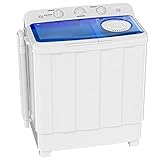
A semi-automatic twin-tub washer divides laundry between two compartments: the wash tub where clothes soak and agitate, and the separate spin basket that spins damp-dry. Twin-tub machines use mechanical dial timers and gravity drains rather than computer-controlled electric inlet valves. Because there are no electronic pressure sensors or fill clocks to satisfy, water pressure is completely optional.
With a twin tub, you can connect a quick-connect sink adapter to a regular kitchen faucet, or simply fill the tub with a garden hose or bucket. Once the wash finishes, you manually move clothes to the spin basket and turn the dial. While twin tubs require hands-on work, they never trigger error codes and run reliably under zero water pressure.
Which washing machine works best with low water pressure?
When shopping for a washer with weak or unpredictable tap flow, look for a machine that either tolerates low pressure or bypasses tap pressure entirely.
If your plumbing pressure fluctuates but stays above 15 PSI, consider a compact fully automatic portable washer. These units feature smaller wash tubs that need less water per cycle than full-size machines. Verify the manufacturer's minimum operating pressure in the product manual before buying. Choose models with a built-in drain pump that pushes water up into a sink, and confirm the unit uses a standard 120-volt 3-prong grounded wall outlet so you can safely plug in a small inline booster pump if needed. Leaving the washer lid open between loads also aids in preventing mold and stagnant moisture in the tub when cycles run slowly.
If your water supply has zero pressure, such as a low-elevation gravity barrel or bucket system, choose a portable semi-automatic twin-tub washer. Look for a unit with a rust-resistant plastic body, separate wash and spin timers, and a lightweight build. Twin-tub machines eliminate pressure worries completely because you control how water enters the tub.

- TAR Score9.4
TAR Score is a ranking system developed by TopAppliancesReviews.com. TAR score has no relationship or impact from any manufacturers or sales agent websites. Learn more
- BrandYMXA

- TAR Score8.9
TAR Score is a ranking system developed by TopAppliancesReviews.com. TAR score has no relationship or impact from any manufacturers or sales agent websites. Learn more
- BrandGIANTEX

- TAR Score7.9
TAR Score is a ranking system developed by TopAppliancesReviews.com. TAR score has no relationship or impact from any manufacturers or sales agent websites. Learn more
- BrandWinado

- TAR Score7.8
TAR Score is a ranking system developed by TopAppliancesReviews.com. TAR score has no relationship or impact from any manufacturers or sales agent websites. Learn more
- BrandROVSUN
- TAR Score7.2
TAR Score is a ranking system developed by TopAppliancesReviews.com. TAR score has no relationship or impact from any manufacturers or sales agent websites. Learn more
- BrandAuertech
Last update on 2026-10-28 / Affiliate links / Images, Product Titles, and Product Highlights from Amazon Product Advertising API
FAQs
Can an overhead gravity water tank run an automatic washer?
An overhead gravity tank can only run an automatic washer if it sits high enough to create sufficient pressure. Every 2.31 feet of vertical elevation produces one PSI of water pressure. To reach the 15 to 20 PSI required by most automatic washers, the tank must sit 35 to 45 feet above the machine. If your tank sits on a standard roof just a few feet higher, you must add an inline booster pump.
Will low water pressure damage the electric water valve?
Yes, running an automatic washer continuously with low water pressure can damage the electric water valve over time. The electromagnetic coil inside is designed for brief bursts. When water barely trickles, the valve stays energized for extended periods trying to fill the tub, which creates excess heat that can burn out the coil or warp internal seals.
Why does my washer hum without filling with water?
A humming sound without water entering the drum usually means the electric water valve is receiving power, but water cannot pass through. This happens when the water shutoff valves are closed, the supply hoses are kinked flat, or the mesh filter screens inside the inlet ports are packed with sediment. Turn off the taps and clean the filter screens before replacing any parts.
Does a portable washing machine need the same water pressure?
Most fully automatic portable washing machines still require pressurized water to operate their electric valves and fill sensors, usually between 14 and 40 PSI. However, their smaller wash tubs fill faster with less total volume. If you need a machine that runs with zero water pressure, choose a semi-automatic twin-tub washer instead of an automatic unit.


10 Best Washing Machine For King Size Comforter of 2026 For Bulky Bedding

11 Best Semi Automatic Washing Machine Under 10000 of 2026 For Apartments and RVs

9 Best Compact Refrigerator For Beer Bottles of 2026 For Upright Bottle Fit

10 Best Quality Semi Automatic Washing Machine of 2026 For Leak-Free Laundry

11 Best Small Washer Machine of 2026 For Everyday Laundry

12 Best Vibration Pads For Washing Machine of 2026 To Stop Walking and Shaking

11 Best Selling Front Load Washing Machine of 2026 For Quiet Odor-Free Laundry

11 Best Washing Machine For King Size Bedding of 2026 To Prevent Cycle Errors





