
Is a Top-Load or Front-Load Washer Better for You?

Start by checking how much room you have and whether reaching down to a low washer feels comfortable. Neither style is better for everyone: a front-load washer often suits people who want to use less water or wash delicate clothes gently, while a top-load washer can be easier to load and may feel simpler day to day.
Your choice also depends on the space around the washer and the water and drain connections available. A front-load door needs room to swing open, while a top-load washer needs space above it. In a small apartment or RV, a portable washer may be an option, but its drain and setup still need to work in your space. Here’s how to weigh those details against the way you do laundry.
Judge cleaning by the washer and cycle, not the door position
A front-load washer and a top-load washer can both clean everyday laundry well. Loading direction alone does not tell you which one will remove a stain better. The washer’s design, chosen cycle, detergent, load size, and care instructions all matter.
For a grass mark, food spill, or muddy clothes, use a cycle suited to the fabric and soil level. A longer or heavier cycle may help with sturdy items, while delicate clothes need gentler handling. Follow the garment label and washer manual, and avoid packing the basket so tightly that clothes cannot move.
Top-load washers come in different designs. Some have a center agitator post that twists clothes through the water. Others use a flat bottom wash plate, also called an impeller, to move laundry with water currents. Front-load washers tumble clothes as the drum turns. These differences affect how clothes move, but they do not guarantee that every washer of one style will clean better.
Compare the cycle names and instructions for the specific washers you are considering. If you often wash bedding, work clothes, or delicate items, look for cycles that match those loads. A washer with the right options for your routine may be a better fit than a style chosen only by its name.
Choose a front loader if lower water use is a priority
Front-load washers generally use less water than many top-load washers because they tumble clothes through a lower level of water instead of filling the basket around them. The amount varies by washer and cycle, so check the manufacturer’s information if water use is a major concern.
That lower-water wash can be a practical reason to choose a front loader, especially if you do laundry often or want to limit water use at home. Use the detergent and amount stated in the manual. Too much soap can leave residue, and detergent made for high-efficiency washers is often labeled “HE.” Follow the washer’s directions rather than adding extra detergent because a load looks dirty.
Some top-load washers use more water, but the amount depends on the model and setting. A top loader may let you choose a water level or load size, while other designs manage water automatically. Check the controls and manual to see what options the specific machine offers.
Do not assume that a shorter cycle always saves water, or that a longer cycle always uses more. Cycle time and water use vary by washer and setting. If the label or product information does not make water use clear, ask the manufacturer before buying.
Pick the washer that matches your clothes and daily routine
Front-load washers are often gentler on clothes because they tumble laundry rather than pulling it around a center post. That can matter if you wash delicate fabrics, clothes with straps, or items that snag easily. A gentle cycle and a suitable laundry bag can also help protect delicate pieces in either style.
A top loader with a center agitator may move clothes more forcefully than a flat-bottom wash plate design. If you prefer a center post, check the manual for load guidance and fabric-care advice. Do not wrap long items tightly around the post, and avoid overfilling the basket.
Think about what you wash most. A household with lots of sturdy towels and everyday clothes may value a simple top-load routine. Someone who regularly washes delicate pieces may prefer the gentler tumbling action often associated with front loaders. In both cases, use the cycle that fits the clothes rather than treating one setting as right for every load.
Also consider the routine around the wash. Front-load washers have a door at the front, so you load and unload from the side. Their door seal and the area around the opening can stay damp after a cycle. Wiping the seal when needed and leaving the door open between loads can help the inside air out. Check the manual for cleaning steps.
Top-load washers open from above, which can make adding clothes or reaching into the basket feel more direct. The trade-off is that you need room above the washer to lift the lid. Some designs lock the lid during part of a cycle, so check the manual if pausing to add an item matters to you.
Check your reach before choosing a loading style
A top loader may be easier if you prefer not to bend down to load and unload clothes. But a deep basket can still make it hard to reach small items at the bottom, especially if you are shorter or have limited shoulder movement. If possible, stand where the washer will go and think through how you would lift a wet towel from the bottom.
A front loader puts the opening lower, so loading and unloading usually involve bending or crouching. You may be able to raise the washer on a compatible base, but the added height can change how it fits and whether you can reach the controls. Confirm that any base is approved for the washer before planning to use one.
Picture a regular laundry day, not just an empty machine in a store. If bending is uncomfortable, a low front opening could become a daily nuisance. If reaching into a deep basket is uncomfortable, a top loader may be just as awkward. Choose the opening and basket height that let you handle a wet, heavy load without straining.
Measure the space and confirm the hookups before buying
A washer that fits its opening may still be difficult to use if its door, lid, or hoses have nowhere to go. Before buying, measure the available width, depth, and height, then compare those measurements with the washer’s listed dimensions. Leave room for the hoses and any clearance the manufacturer requires.
- Check the door or lid: A front loader needs room for its door to swing open. A top loader needs open space above the lid. Make sure neither one blocks a walkway, cabinet, sink, or other appliance.
- Check the route into the room: Measure narrow doors, hallways, and turns along the delivery path. Confirm the washer can get through before arranging delivery.
- Check the water connections: Confirm that the washer’s required hot and cold water hoses can connect to the supply valves where it will sit. Do not assume the existing connections suit every washer.
- Check the drain: Find out where the drain hose must connect and whether that setup is available in your home. The hose carries used water away, so an unsuitable drain arrangement can prevent normal installation.
- Check power: Read the washer’s installation instructions and confirm that the outlet matches its requirements. Do not use a lightweight extension cord or an outlet that does not meet the instructions.
Renters should ask the landlord or property manager before changing hookups or adding a drain connection. RV owners should confirm that the washer’s water supply, drain arrangement, power needs, and available space match the vehicle. If you are unsure whether a connection is suitable, ask a qualified installer before buying or connecting the washer.
Choose by the problem you most want to avoid
Use your main priority to narrow the choice, then confirm the fit and setup. Neither style is automatically right for every home.
- Choose a front loader if lower water use and gentler handling are high priorities, and you are comfortable bending to reach the drum. Make sure the door has enough room to open.
- Choose a top loader if loading from above feels easier and the space has enough room for the lid. Check whether the washer has a center agitator or a flat wash plate, then decide which style better suits your clothes and routine.
- Choose based on access if bending, reaching, or lifting wet laundry is a concern. Consider the actual opening height and basket depth, not just whether the washer loads from the front or top.
- Pause before buying if you have not checked the measurements, water connections, drain location, power requirements, and door or lid clearance. A washer that cannot be installed properly is not a practical fit, even if its wash style sounds appealing.
If cost is part of the decision, compare the washer’s listed features and setup needs with your budget rather than choosing by price alone. You can also compare options in this guide to washing machines under $300, but verify each washer’s type, dimensions, and installation details before deciding.
Consider a portable washer for a small space or RV
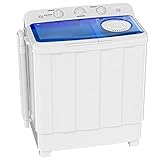
A portable washer can suit a dorm, apartment, or RV when a full-size machine will not fit or cannot use the available laundry setup. Portable models are not all alike. Some are fully automatic, while others have separate wash and spin tubs and need more attention during a load.
With a fully automatic portable washer, the machine handles its wash steps according to its controls. A twin-tub washer has one wash tub and a separate spin basket. You move clothes from the wash tub to the spin basket yourself, so it is less hands-off, even though washing and spinning may be managed separately.
Before buying, check how the washer gets water, where its drain hose must go, and whether the manufacturer allows your planned setup. Some portable washers drain by gravity, which means used water must flow through a hose positioned for the water to run away naturally. Others have a built-in pump that pushes water toward a suitable drain. Check the exact instructions rather than assuming a kitchen sink or RV drain will work.
Confirm whether the washer connects to your faucet and whether your faucet can accept the required adapter. Pull-out spray faucets may need a different arrangement from a standard faucet. Also check the washer’s size, weight, power requirements, and the space needed to store it. If you cannot provide the stated water and drain setup, choose a washer designed for connections you do have or ask the manufacturer for guidance.
Choose a washer style that fits your space and routine
Portable washers can help when the main obstacle is having no room or hookups for a standard washer, but they do not replace a full comparison of standard front-load and top-load machines. Before buying any washer, verify its listed dimensions, opening clearance, water connections, drain method, and power needs. Then make sure its loading style feels manageable for the person who will use it most.

- TAR Score8.9
TAR Score is a ranking system developed by TopAppliancesReviews.com. TAR score has no relationship or impact from any manufacturers or sales agent websites. Learn more
- BrandGIANTEX

- TAR Score8.6
TAR Score is a ranking system developed by TopAppliancesReviews.com. TAR score has no relationship or impact from any manufacturers or sales agent websites. Learn more
- BrandGIANTEX

- TAR Score7.9
TAR Score is a ranking system developed by TopAppliancesReviews.com. TAR score has no relationship or impact from any manufacturers or sales agent websites. Learn more
- BrandWinado
- TAR Score7.2
TAR Score is a ranking system developed by TopAppliancesReviews.com. TAR score has no relationship or impact from any manufacturers or sales agent websites. Learn more
- BrandAuertech

- TAR Score7.1
TAR Score is a ranking system developed by TopAppliancesReviews.com. TAR score has no relationship or impact from any manufacturers or sales agent websites. Learn more
- BrandGeneric
Last update on 2026-11-09 / Affiliate links / Images, Product Titles, and Product Highlights from Amazon Product Advertising API
FAQs
Does a front-load washer always use less water?
Front-load washers generally use less water than many top-load designs, but the amount depends on the washer and selected cycle. Check the manufacturer’s information for the specific model if water use will decide your purchase.
Is a top-load washer easier to use?
It can be easier if you prefer loading from above and do not want to bend to reach a front opening. A deep basket may still be hard to reach into, and the lid needs clear space above it. Consider your height, movement, and laundry area before choosing.
Which washer is gentler on clothes?
Front-load washers are often gentler because they tumble clothes rather than pulling them around a center post. A top loader’s wash action depends on whether it uses a center agitator or a flat wash plate. Follow the garment label and use a gentle cycle for delicate items.
Can I use a portable washer in an RV or apartment?
Possibly, if the washer fits and your water, drain, and power setup match its instructions. Confirm how it fills and drains, and check whether your faucet can use the needed connection. Ask the property manager before changing an apartment’s hookups.


10 Best Washing Machine For King Size Comforter of 2026 For Bulky Bedding

11 Best Semi Automatic Washing Machine Under 10000 of 2026 For Apartments and RVs

9 Best Compact Refrigerator For Beer Bottles of 2026 For Upright Bottle Fit

10 Best Quality Semi Automatic Washing Machine of 2026 For Leak-Free Laundry

11 Best Small Washer Machine of 2026 For Everyday Laundry

12 Best Vibration Pads For Washing Machine of 2026 To Stop Walking and Shaking

11 Best Selling Front Load Washing Machine of 2026 For Quiet Odor-Free Laundry

11 Best Washing Machine For King Size Bedding of 2026 To Prevent Cycle Errors





