
How to Use a Knife Sharpener Safely

Rest the tool flat on a sturdy counter, place the back of the blade into the slot, and pull the knife smoothly toward you using light downward pressure. Choosing the first slot depends on whether the steel is completely blunt or just needs a quick touch-up. Always draw the blade in one steady motion, and never saw back and forth.
The routine also shifts with the blade style and the tool on your counter. A standard chef knife glides through preset angles, but a jagged bread knife requires a dedicated slot so you do not grind down the teeth. Severely dull metal needs a coarse notch to reshape the edge, while routine care only needs fine ceramic to smooth it out. Handheld models also require a firm grip behind the guard, unlike units with suction bases. Here is how to draw the blade through safely without scratching the steel.
Pulling the blade toward you creates a clean edge
When a knife becomes dull, the razor-thin apex of the blade rolls or wears flat. Pulling the blade toward you through a manual sharpener works because it gives you steady control over speed, angle, and downward force. Drawing the knife backward allows your arm to move in a natural, balanced sweep toward your torso. This motion keeps the steel resting evenly against the internal guides, re-establishing the bevel (the slanted cutting edge of the knife) from heel to tip.
Pushing the knife forward into a sharpening slot creates severe safety risks. A forward push drives the thin cutting edge directly into stationary carbide plates or ceramic rods. If the blade catches on an abrasive surface, the knife suddenly stops. That sudden resistance can cause your hand to slip forward across the housing, risking a deep cut. Pushing forward also digs the delicate tip into the frame, which can bend the point or scratch the blade face.
Drawing the blade backward from the heel (the back end of the blade near the handle) to the tip ensures that both sides of the bevel receive uniform contact. Manual sharpeners use preset angles, usually around 20 degrees per side. Kitchen knives made from stainless steel (rust-resistant, easy-to-clean metal) or high-carbon steel (harder metal that stays sharp longer but requires dry wiping to prevent rust spots) benefit from this even contact. A steady backward pull keeps the blade centered, prevents gouging, and restores a balanced cutting edge.
Follow these five steps to sharpen safely at home
Sharpening a knife on your kitchen counter does not require specialized mechanical skills. Follow these five steps to sharpen your blade safely:
- Anchor the sharpener on a flat surface: Set the sharpener on a clean, dry countertop. Wipe away moisture or crumbs that could make rubber feet slip. Grip the handle firmly with your non-dominant hand, keeping fingers behind the safety guard. If your sharpener uses a suction base, place it on a smooth counter, press the locking lever, and tug gently to confirm it stays firmly in place.
- Position the blade at the heel: Grip the knife handle securely with your dominant hand. Place the blade in the slot, starting at the heel (the back end of the blade near the handle). Hold the knife straight up and down at a 90-degree angle to the table. Never tilt the blade sideways, which grinds the edge unevenly.
- Draw the blade backward with light pressure: Pull the knife smoothly toward you in one continuous motion. Use light downward pressure, roughly two pounds of force, or the resting weight of your hand. As the blade narrows toward the tip, lift the handle slightly to follow the curve. Never push the blade forward inside the slot.
- Repeat three to five times: Maintain a steady pace, taking two to three seconds per stroke. Three passes are enough for a knife that is only slightly dull. Use five strokes for a heavily blunted edge to reshape the bevel without removing excess steel.
- Wipe and clean the blade: Sharpening leaves microscopic steel shavings on the blade. Wipe the knife from spine to edge with a damp towel, keeping the sharp side turned away from your hand. Wash the blade with warm water and soap, then dry it immediately with a clean towel.
Start with coarse carbide and finish on fine ceramic
Multi-stage manual sharpeners provide slots with different abrasives. Knowing the role of each slot prevents you from grinding away more steel than necessary.
The coarse slot contains tungsten carbide plates or diamond rods. Tungsten carbide is an extremely hard material that shaves away metal quickly. This slot reshapes a blunt bevel and removes small nicks. As carbide scrapes the steel, it creates a fresh edge and forms a burr (the microscopic wire edge or curved sliver of metal that forms on the opposite side during sharpening). Because carbide removes metal aggressively, reserve this slot for very dull knives that crush rather than slice food. Using the coarse slot for weekly touch-ups wears down your knives prematurely.
The fine slot contains ceramic rods. Ceramic does not shave away bulk metal. Instead, ceramic rods hone (smooth and realign an edge without grinding away metal). Pulling the blade through ceramic polishes the bevel, removes scratch marks, and strips away the microscopic burr. This finishing step leaves the edge crisp and smooth.
For routine upkeep, bypass the coarse slot entirely. If a knife only feels slightly sluggish, three pulls through fine ceramic will restore keen slicing. Blade thickness also matters. Sturdy cutlery found in German high-carbon steel premium knife block sets usually features a 20-degree utility edge per side, which fits standard sharpeners well. In contrast, thin blades in high-carbon Japanese chef knife sets often use a steeper 15-degree slicing edge per side. Using a standard 20-degree carbide slot on a 15-degree Japanese blade alters the factory bevel, so check that your sharpener matches your blade style.
Avoid heavy pressure and sawing motions to protect steel
Manual sharpeners are easy to use, but bad habits can ruin blade edges or cause slips. Check this list to protect your knives and hands:
- Never saw back and forth: Moving back and forth inside the slot chips the thin apex and risks catching the blade tip. Pull in one direction toward your body, lift the knife out completely, and return to the heel for each stroke.
- Avoid heavy pressure: Pressing down hard flexes the blade, cuts uneven hollows into the bevel, and can cause the sharpener to rock. Let the abrasive materials cut the metal under light, steady pressure.
- Keep the spine vertical: Tilting the spine (the top, blunt edge of the blade) to either side grinds one side of the bevel flat while leaving the other dull. Keep the blade upright at 90 degrees throughout the pull.
- Skip coarse slots for serrated knives: A serrated blade (a blade with jagged teeth, like a bread knife) should never enter carbide slots. Carbide shaves off the pointed teeth, destroying the scalloped edge. If your sharpener supports serrated knives, use only the fine ceramic slot with light pressure to remove burrs from the flat side of the teeth.
- Clean greasy blades first: Cooking grease and dried food coat ceramic rods and carbide plates, clogging the abrasive surfaces. Once coated, the sharpener slides without sharpening. Wash and dry blades before sharpening.
- Watch the counter edge: When sharpening long chef knives, the tip can drag against the table at the end of a pull. Place your sharpener near the counter edge so the tip clears the surface without scratching tables or snapping points.
Slice scrap paper or ripe tomatoes to confirm sharpness
Never test a knife by running your thumb or fingers across the cutting edge. Freshly sharpened steel and thin wire burrs slice skin before you feel pain. You can check the edge safely using two simple household tests that require no finger contact.
The first test is the printer paper test. Hold a sheet of scrap copy paper vertically by the corner. Place the blade heel against the top edge at a 45-degree angle. Draw the blade downward and forward through the sheet using light pressure. A dull blade snags or tears the page. A sharp knife glides through the paper with a soft slicing sound, leaving a clean cut without ragged edges. If the knife cuts cleanly at the heel but snags in the middle, make two more passes through the fine ceramic slot.
The second test is the ripe tomato or grape test. Place a tomato or grape on your cutting board. Rest the blade heel on the skin without pressing down. Draw the knife backward, letting only the weight of the knife apply downward force. A dull knife slides off the skin or squashes the fruit. A sharp knife bites through the skin instantly, cutting a clean slice without squeezing out juices.
After confirming sharpness, store your knives properly. Tossing loose knives into a utensil drawer causes edges to strike other cutlery, dulling freshly honed bevels within days. Store your knives in wooden blocks, on wall-mounted magnetic strips, or inside dedicated magnetic knife block and knife set combos that keep cutting edges suspended and protected.
Choose compact sharpeners with sturdy bases and finger guards
For home cooks who want quick results without learning freehand whetstone work, a manual pull-through sharpener is the simplest, safest option. These tools feature preset angles that eliminate guesswork, restoring kitchen cutlery in two minutes.
When choosing a manual knife sharpener, look for these practical features before buying:
- Base stability: A sharpener must remain firmly planted while you pull a blade toward yourself. Look for wide non-slip rubber feet that grip wet or dry counters. Models with lever-locking suction bases offer great security, sticking tight to smooth surfaces so the tool cannot slip during a pull.
- Safety guards: Your resting hand holds the sharpener steady while your working hand draws the knife. Choose units with an ergonomic handle placed behind a raised barrier. This wall stops the blade from touching your fingers if the knife slips.
- Multi-stage slots: Avoid single-slot sharpeners that only grind or only polish. A two-stage or three-stage design gives you coarse tungsten carbide to reshape dull bevels and fine ceramic to hone the edge and remove burrs.
- Compact size: A small sharpener fits neatly into a standard kitchen drawer, keeping counters uncluttered and making regular touch-ups quick and convenient.

- TAR Score9.4
TAR Score is a ranking system developed by TopAppliancesReviews.com. TAR score has no relationship or impact from any manufacturers or sales agent websites. Learn more
- BrandACCUSHARP

- TAR Score9.4
TAR Score is a ranking system developed by TopAppliancesReviews.com. TAR score has no relationship or impact from any manufacturers or sales agent websites. Learn more
- BrandACCUSHARP

- TAR Score9.4
TAR Score is a ranking system developed by TopAppliancesReviews.com. TAR score has no relationship or impact from any manufacturers or sales agent websites. Learn more
- BrandACCUSHARP
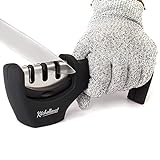
- TAR Score9.0
TAR Score is a ranking system developed by TopAppliancesReviews.com. TAR score has no relationship or impact from any manufacturers or sales agent websites. Learn more
- BrandKITCHELLENCE

- TAR Score8.8
TAR Score is a ranking system developed by TopAppliancesReviews.com. TAR score has no relationship or impact from any manufacturers or sales agent websites. Learn more
- Brandlongzon

- TAR Score8.8
TAR Score is a ranking system developed by TopAppliancesReviews.com. TAR score has no relationship or impact from any manufacturers or sales agent websites. Learn more
- BrandLUFFEXX

- TAR Score8.8
TAR Score is a ranking system developed by TopAppliancesReviews.com. TAR score has no relationship or impact from any manufacturers or sales agent websites. Learn more
- BrandSHARPAL

- TAR Score8.8
TAR Score is a ranking system developed by TopAppliancesReviews.com. TAR score has no relationship or impact from any manufacturers or sales agent websites. Learn more
- BrandKitchenIQ

- TAR Score8.6
TAR Score is a ranking system developed by TopAppliancesReviews.com. TAR score has no relationship or impact from any manufacturers or sales agent websites. Learn more
- BrandHOTEC

- TAR Score8.2
TAR Score is a ranking system developed by TopAppliancesReviews.com. TAR score has no relationship or impact from any manufacturers or sales agent websites. Learn more
- BrandGeneric
Last update on 2026-10-16 / Affiliate links / Images, Product Titles, and Product Highlights from Amazon Product Advertising API


Top Rated Best Quality Range Hoods: 2026 Expert Picks

The 12 Best Small Solar Generators 2026

10 Best Quality Semi Automatic Washing Machine of 2026 For Leak-Free Laundry

11 Best Small Washer Machine of 2026 For Everyday Laundry

12 Best Vibration Pads For Washing Machine of 2026 To Stop Walking and Shaking

11 Best Selling Front Load Washing Machine of 2026 For Quiet Odor-Free Laundry

11 Best Washing Machine For King Size Bedding of 2026 To Prevent Cycle Errors

10 Best Small Front Loader Washing Machine of 2026 For Tight Closets






