
How to Use a Handheld Knife Sharpener Safely

Resting the sharpener flat on a sturdy counter and pulling the blade straight back with light pressure restores a dull knife in just a few strokes. How worn down the cutting edge is determines which slot you need first. Always draw the blade in one smooth motion, moving from the base near the handle out to the tip, and never saw back and forth. Three to five light passes are usually plenty to fix the edge without stripping away excess steel.
A few details will change your approach. Heavily nicked blades require a coarse carbide slot to shave away worn metal, while an everyday touch-up only needs a fine ceramic slot to polish the line. Pocket-sized sharpeners also demand a firmer grip than countertop models with rubber bases, and serrated bread knives require specialized rods rather than standard V-shaped slots. Learning the proper grip and stroke ensures you get a crisp edge without risking a slip.
The Short Version
- Place the sharpener on a flat, dry counter and keep your fingers behind the protective guard.
- Insert the heel (the base of the blade near the handle) into the slot at a 90-degree angle.
- Pull the blade straight back toward you using light pressure, following the curve to the tip.
- Make three to five smooth pulls, using coarse carbide for dull edges and finishing in fine ceramic.
Safe Grip and Counter Setup to Prevent Slips
A handheld knife sharpener needs a solid, stationary work surface. Place the unit on a flat, dry countertop or cutting board. Never hold a sharpener in mid-air or place it on a wet surface where it can slide. When a sharpener shifts during a stroke, the blade can jump out of the slot and cause serious injury.
Grip the handle firmly with your non-dominant hand. Keep your knuckles, fingers, and thumb tucked completely behind the safety barrier or raised guard. If you are using a compact pocket sharpener without an extended handle, press the base firmly against the counter with your thumb and fingers kept well clear of the sharpening slot. Never place your holding hand in front of the slot or along the path of the blade.
Stand square to the counter with your feet set shoulder-width apart. Position the sharpener slightly to the side of your body. Drawing the knife toward the side of your torso ensures that if the blade slips, it moves into open counter space rather than toward your body. Wearing a cut-resistant glove on your holding hand provides an extra layer of protection.
Step-by-Step Pull-Through Technique from Heel to Tip
Proper pull-through technique restores a dull edge without stripping away excess steel. Follow these steps in order:
- Seat the blade at the heel: Place the heel (the base of the blade near the handle) straight into the sharpening slot. Hold the knife at a 90-degree angle to the counter so the bevel (the slanted cutting edge) touches both internal abrasive surfaces evenly.
- Apply light downward pressure: Rest the blade edge against the sharpening stones with minimal downward force. The natural weight of the blade combined with a gentle guiding hand is plenty. Pressing down hard creates deep gouges and a ragged cutting edge.
- Draw the blade backward smoothly: Pull the knife toward you in a slow, steady motion, taking two to three seconds from heel to tip. Keep your pull speed consistent, and never stop moving midway through the stroke.
- Follow the curve to the tip: As you reach the curved belly of the knife, raise your wrist slightly so the edge stays flat against the sharpening surfaces. Lift the blade cleanly out of the slot at the tip without flicking or snapping the point.
- Repeat three to five times: Make three to five identical pulls. Knives made of stainless steel (rust-resistant, easy-to-clean metal) usually sharpen within three strokes. Blades crafted from high-carbon steel (harder metal that stays sharp longer but requires dry wiping and light oiling to prevent rust spots) may need four or five strokes to establish a clean edge.
Choosing the Right Slot: Coarse Carbide vs. Fine Ceramic
Most handheld sharpeners use multiple slots to handle different stages of blade maintenance. Choosing the correct slot prevents unnecessary wear on your knives.
The coarse slot contains carbide (a coarse metal blade that reshapes dull edges) to shave away damaged steel quickly. You only need this slot when a knife is severely dulled, fails to cut through an onion skin, or has visible edge nicks. Overusing the coarse slot strips away too much metal and shortens the lifespan of your knife.
The fine slot contains ceramic (a fine stone that polishes the edge) to refine and align the cutting bevel. Ceramic removes microscopic burrs and smooths out grind marks left by the carbide blades. For regular weekly touch-ups, skip the coarse slot completely and draw the blade through the fine ceramic slot three to four times.
Check your knife angle before sharpening. Handheld pull-through units usually have preset 20-degree angles per side, matching rugged pocket knives and sturdy German high-carbon steel premium knife block sets. However, delicate high-carbon Japanese chef knife sets often feature a steeper 15-degree edge per side. Pulling a 15-degree blade through a standard 20-degree slot thickens the edge and reduces slicing performance.
Standard V-shaped slots are designed strictly for straight-edged blades. Never pull a serrated bread knife through a carbide or ceramic V-slot, as the fixed stones will crush the pointed teeth. Serrated blades require a dedicated round ceramic or diamond rod that fits between the individual scalloped teeth.
Costly Mistakes That Ruin Blade Edges and Cause Slips
Handheld sharpeners are simple tools, but small mistakes can ruin a knife or lead to slips. Avoid these habits:
- Sawing back and forth: Pull-through sharpeners are built strictly for one-way pulling. Pushing the knife forward into the slot jams the blade into the abrasive stones, causing chips, bent tips, and slips.
- Bearing down with heavy force: Pressing down hard creates an uneven, wavy cutting edge and strips away too much metal. Use light, steady pressure and let the abrasives do the work.
- Tilting the blade sideways: Leaning the knife left or right rounds off one side of the bevel and leaves the other blunt. Keep the blade spine pointed straight up at a 90-degree angle to the surface.
- Flicking the knife out at the tip: Snapping the tip out of the slot at the end of a stroke rounds off the delicate point and scratches the sharpener frame. Lift the blade away smoothly.
- Sharpening dirty blades: Food grease and dried juices clog ceramic stones and carbide inserts. Always wash and dry knives completely before sharpening them.
How to Check Sharpness and Clean Away Metal Dust
After finishing your pulls through the fine ceramic slot, verify the edge before putting the knife to work.
The paper slice check offers a simple, reliable way to confirm sharpness. Hold a sheet of standard printer paper vertically by one corner. Place the knife edge against the top edge of the paper and slice downward with a gentle forward motion. A sharp blade glides cleanly through the paper without tearing or catching. If the knife snags, give the blade two more light pulls through the ceramic slot.
Check the blade for a burr (the microscopic wire edge or curved sliver of metal that forms on the edge). Dual-sided ceramic stones usually remove this wire edge, but if you feel rough spots when wiping the blade with a towel, make two ultra-light passes through the ceramic slot to buff it smooth.
Sharpening peels away fine metal dust that clings to the steel and settles inside the sharpener. Wipe the knife clean with a damp cloth, wash it with warm soapy water, and dry it immediately. Leaving metal filings on high-carbon steel causes rust spots within hours. Finally, tap the sharpener upside down over a trash can to dislodge accumulated shavings from the slots.
Choosing the Right Manual Sharpener for Your Knives
Manual knife sharpeners offer preset angles that remove the guesswork of maintaining a bevel freehand. When selecting a handheld unit, prioritize safety and blade compatibility.
Look for a model with a wide, comfortable handle and a non-slip rubber base. The rubber base keeps the sharpener stable on your counter, while a raised hand guard protects your fingers if a blade slips. A two-stage system with coarse carbide and fine ceramic handles regular kitchen cutlery with ease.
Match the sharpener to the blades you carry. If you use an EDC (everyday carry pocket knife), a compact pocket tool with a lanyard hole or fold-out diamond rod provides easy field sharpening. For large kitchen cutlery with a full tang (one solid piece of blade steel extending all the way through the handle), choose a larger countertop unit that offers a steady base for longer pull strokes.

- TAR Score9.4
TAR Score is a ranking system developed by TopAppliancesReviews.com. TAR score has no relationship or impact from any manufacturers or sales agent websites. Learn more
- BrandACCUSHARP

- TAR Score9.4
TAR Score is a ranking system developed by TopAppliancesReviews.com. TAR score has no relationship or impact from any manufacturers or sales agent websites. Learn more
- Brandwgsajlo
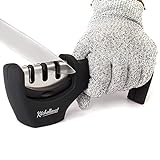
- TAR Score9.0
TAR Score is a ranking system developed by TopAppliancesReviews.com. TAR score has no relationship or impact from any manufacturers or sales agent websites. Learn more
- BrandKITCHELLENCE

- TAR Score9.0
TAR Score is a ranking system developed by TopAppliancesReviews.com. TAR score has no relationship or impact from any manufacturers or sales agent websites. Learn more
- BrandSmith's

- TAR Score8.8
TAR Score is a ranking system developed by TopAppliancesReviews.com. TAR score has no relationship or impact from any manufacturers or sales agent websites. Learn more
- BrandSharp Pebble

- TAR Score8.8
TAR Score is a ranking system developed by TopAppliancesReviews.com. TAR score has no relationship or impact from any manufacturers or sales agent websites. Learn more
- BrandFANERFUN

- TAR Score8.6
TAR Score is a ranking system developed by TopAppliancesReviews.com. TAR score has no relationship or impact from any manufacturers or sales agent websites. Learn more
- Brandlongzon

- TAR Score8.6
TAR Score is a ranking system developed by TopAppliancesReviews.com. TAR score has no relationship or impact from any manufacturers or sales agent websites. Learn more
- Brandlongzon

Knife Sharpener,Jonurphy Kitchen Knife Sharpeners,Rotating Steel Wheel Sharpening Discs,Manual Knife
View on Amazon- TAR Score8.0
TAR Score is a ranking system developed by TopAppliancesReviews.com. TAR score has no relationship or impact from any manufacturers or sales agent websites. Learn more
- BrandJonurphy

- TAR Score8.0
TAR Score is a ranking system developed by TopAppliancesReviews.com. TAR score has no relationship or impact from any manufacturers or sales agent websites. Learn more
- BrandXinjincang
Last update on 2026-10-01 / Affiliate links / Images, Product Titles, and Product Highlights from Amazon Product Advertising API
FAQs
Can you sharpen serrated knives with a handheld sharpener?
Standard V-shaped pull-through slots should not be used on serrated knives because the fixed stones flatten the pointed teeth. Only sharpen serrated blades if your handheld unit includes a dedicated round ceramic or diamond rod. That rod fits into the individual scalloped gullets to sharpen each tooth separately.
How often should you use a handheld knife sharpener?
Use the fine ceramic slot every one to two weeks to keep your kitchen blades aligned and slicing smoothly. Save the coarse carbide slot for rare occasions, roughly once or twice a year, when a knife is noticeably blunt or has small nicks. Overusing the coarse slot removes excess metal and shortens knife life.
Why does my knife feel rough or catch on food after sharpening?
A rough edge usually happens when you press down too hard or skip the fine polishing slot. Heavy force leaves gouges in the metal, while stopping at the coarse carbide stage leaves jagged grinding marks. Make three to four light passes through the fine ceramic slot to smooth away metal burrs.
Can you push the knife forward through the sharpening slot?
Never push a knife forward through a pull-through sharpener. These tools are built strictly for pulling backward from heel to tip. Pushing forward digs the edge into the sharpening stones, which can chip the blade, ruin the tip, or cause the knife to slip and cut your hand.


Top Rated Best Quality Range Hoods: 2026 Expert Picks

The 12 Best Small Solar Generators 2026

10 Best Quality Semi Automatic Washing Machine of 2026 For Leak-Free Laundry

11 Best Small Washer Machine of 2026 For Everyday Laundry

12 Best Vibration Pads For Washing Machine of 2026 To Stop Walking and Shaking

11 Best Selling Front Load Washing Machine of 2026 For Quiet Odor-Free Laundry

11 Best Washing Machine For King Size Bedding of 2026 To Prevent Cycle Errors

10 Best Small Front Loader Washing Machine of 2026 For Tight Closets






