How to Use a DMT Knife Sharpener for a Razor Sharp Edge

Sharpening a blade on a diamond stone means pushing the cutting edge forward across the plate with light pressure, working either completely dry or with a splash of plain water. The exact motion shifts depending on whether the stone rests flat on a worktable or clamps into an angle guide. Heavy downward force actually strips the diamond coating away, so letting the grit (the stone coarseness) do the cutting keeps the surface sharp for years.
Your approach also changes with the shape of the steel and how dull it has become. A nicked utility edge requires a coarse plate to reset the bevel (the angled cutting surface), while a working kitchen knife only needs a few light strokes across a fine plate to bring back its bite. Holding a steady hand angle from heel to tip ensures a crisp edge every time, and learning the rhythm takes only a few practice passes.
Preparing Your Diamond Plate: Why Oil Ruins Diamond Sharpeners
Diamond Machining Technology sharpeners feature industrial diamond crystals bonded to a flat steel plate with nickel plating. Unlike natural water stones or porous oilstones, diamond plates have no internal pores. You never need to soak them in water, and you should never apply honing oil.
Honing oil, mineral oil, and petroleum lubricants cause serious issues on diamond surfaces. Oil mixes with fine metal dust (swarf), which is the gray powdery steel ground off your knife, creating a thick, sticky sludge. This gummy paste packs into the spaces around the diamond crystals. When that happens, the diamonds cannot bite into the blade steel, causing the knife to slide uselessly across the plate. Oil can also weaken the chemical bonding holding the diamonds to the steel plate over time.
Sharpen your blades completely dry or with a splash of clean tap water. Water carries away loose swarf without gumming up the diamond matrix. Adding a drop of liquid dish soap to a spray bottle of water helps the liquid spread evenly across the metal plate instead of beading up. If you sharpen outdoors, working dry is completely safe, provided you wipe the plate clean when finished.
Finding and Holding Your Angle Without Guessing
The bevel is the angled cutting edge of your knife that tapers down to the sharp edge. Achieving a keen edge requires matching the existing factory bevel and holding that angle steady on every stroke. Rolling your wrist rounds off the bevel, leaving the knife duller than when you started.
Factory angles vary by blade style. Sturdy utility knives from best German high-carbon steel premium knife block sets typically use a robust 20-degree angle per side for tough chopping tasks. Delicate kitchen knives, such as those found in best high-carbon Japanese chef knife sets, feature a steeper 15-degree slicing edge per side for precision prep. Pocket knives and hunting tools generally perform best between 20 and 25 degrees.
If you are unsure of your knife angle, use the marker test. Color the entire beveled cutting edge on both sides with a black permanent marker. Place the blade on your diamond plate, estimate the angle, and push the knife forward two times with light pressure.
Inspect the edge under bright light. If marker rubs off only near the knife spine, your angle is too low. If marker rubs off only at the very cutting edge, your angle is too steep. When marker wears away evenly across the entire bevel, your angle matches the factory edge. Lock your wrist to keep that exact position on every pass.
Step-by-Step Sharpening Guide: The Core Motion
Sharpening on diamond plates works best with an edge-leading stroke, pushing the sharp edge forward as if cutting a thin slice off the stone. Follow these steps to sharpen your straight-edge blades cleanly.
- Secure the sharpening plate on a flat surface. Place the stone holder on a damp towel or rubber mat so it cannot shift. Reason: A steady base keeps your hand angles consistent from start to finish.
- Spritz the diamond face with clean water. Splash a few drops of water across the plate to lubricate the cutting surface. Reason: Fluid floats loose metal particles away from the diamond grit so the stone cuts freely.
- Rest the heel of the blade on the stone at your matched angle. Align the cutting edge near the handle against the plate at your target bevel. Reason: Starting at the heel ensures full edge coverage across the entire stroke.
- Lock your wrist and place your guide fingers near the blade edge. Hold the handle firmly with your dominant hand while resting two fingertips of your other hand on the blade face. Reason: Locked wrists prevent rounded edges, while guide fingers maintain even contact.
- Push the blade forward and across the plate in a smooth sweep. Push the knife into the stone from heel to tip in one diagonal motion. Reason: Edge-leading strokes remove steel cleanly without creating an unruly wire edge.
- Lift the blade cleanly when the tip reaches the end. Do not roll your wrist upward as the knife tip finishes the pass. Reason: Raising your wrist rounds off the pointed tip of the blade.
- Use light downward pressure. Let the hard diamond crystals do the cutting rather than bearing down with your arm weight. Reason: Heavy pressure dislodges diamond particles from the plate and ruins the tool.
- Repeat for 6 to 10 strokes on the first side. Keep your speed, pressure, and angle identical on each pass. Reason: Matching passes form an even, flat bevel along the entire blade.
Checking for the Wire Edge and Progressing Through Grits
Do not guess when a knife is sharp. You must check the steel physically to confirm when to flip sides or move to a finer stone coarseness (grit).
As you remove steel along one bevel, metal gathers at the apex and folds over to the opposite side. This ridge is called a burr. A burr is the microscopic wire edge or curved sliver of metal that forms on the opposite side during sharpening. Feeling this rough wire edge proves you have apexed the blade.
To feel for the burr, wipe the blade clean with a cloth. Place your thumb pad on the flat unsharpened side of the knife and sweep gently downward from the spine past the cutting edge. Never slide your thumb along the length of the blade. If you feel a rough, catching lip along the entire edge, that side is finished.
Flip the blade and repeat the same number of passes on the second side until the wire edge flips over. Once a uniform burr appears on both sides, progress through your grits:
Use coarse grit (around 325 mesh or 45 microns) to repair chipped, neglected, or very dull blades. Switch to fine grit (around 600 mesh or 25 microns) to refine the scratch pattern and produce a working edge. Finish on extra-fine grit (around 1200 mesh or 9 microns) to polish the bevel.
To remove the final wire edge, make light, alternating strokes on your finest plate. Make one stroke on the left side, flip the knife, and make one stroke on the right side. Repeat five times with minimal pressure to snap off the wire edge cleanly.
Cleaning Metal Dust and Caring for Your Diamond Plates
Sharpening grinds away fine metal dust called swarf. If left on the plate, moist swarf oxidizes and causes unsightly rust stains across the nickel surface. A quick cleaning routine keeps your sharpener cutting fast and protects your investment.
Follow these simple maintenance practices after each sharpening session:
- Rinse the plate under warm running tap water immediately after sharpening to flush away swarf.
- Scrub the surface with a soft nylon brush and mild dish soap to remove stubborn gray streaks.
- Rub a standard pencil eraser across the plate to lift embedded metal particles from the diamond grit.
- Dry the sharpener thoroughly with a clean cloth before placing it in storage.
- Store the stone in a dry location to prevent moisture buildup inside cases or drawers.
- Avoid wire brushes, brass tools, and scouring pads that could strip diamonds from the steel plate.
What to Look for in a Diamond Knife Sharpener
Selecting the right sharpener style depends on the types of knives you maintain and where you use them. Understanding your sharpening needs helps you choose a tool that produces clean results without unnecessary effort.
Flat bench stones provide a wide, stable surface ideal for kitchen cutlery, large chef knives, and woodworking tools. Their broad surface allows you to sweep long blades from heel to tip comfortably. Look for models with dual-sided grit options, such as coarse on one side and fine on the reverse, which handle both edge reshaping and regular honing on a single plate.
Portable folding sharpeners feature protective handles that fold around the stone, making them lightweight and easy to carry. These compact tools fit into tackle boxes, tool bags, or pockets, making them great choices for folding pocket knives and hunting gear used outdoors.
If you maintain serrated bread knives, choose a tapered diamond rod. Flat stones cannot enter the scalloped curves of a serrated blade, whereas a tapered cone sharpens each individual tooth without damaging the blade profile.

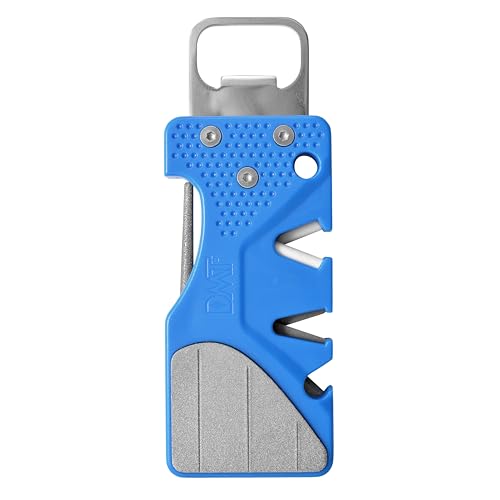
- TAR Score9.2
TAR Score is a ranking system developed by TopAppliancesReviews.com. TAR score has no relationship or impact from any manufacturers or sales agent websites. Learn more
- BrandDMT (Diamond Machining Technology)
- TAR Score9.0
TAR Score is a ranking system developed by TopAppliancesReviews.com. TAR score has no relationship or impact from any manufacturers or sales agent websites. Learn more
- BrandDMT (Diamond Machining Technology)

- TAR Score8.8
TAR Score is a ranking system developed by TopAppliancesReviews.com. TAR score has no relationship or impact from any manufacturers or sales agent websites. Learn more
- BrandWestcott

- TAR Score8.6
TAR Score is a ranking system developed by TopAppliancesReviews.com. TAR score has no relationship or impact from any manufacturers or sales agent websites. Learn more
- BrandDMT (Diamond Machining Technology)

- TAR Score8.6
TAR Score is a ranking system developed by TopAppliancesReviews.com. TAR score has no relationship or impact from any manufacturers or sales agent websites. Learn more
- BrandDMT (Diamond Machining Technology)
- TAR Score8.4
TAR Score is a ranking system developed by TopAppliancesReviews.com. TAR score has no relationship or impact from any manufacturers or sales agent websites. Learn more
- BrandDiamond Machine Technology (DMT)
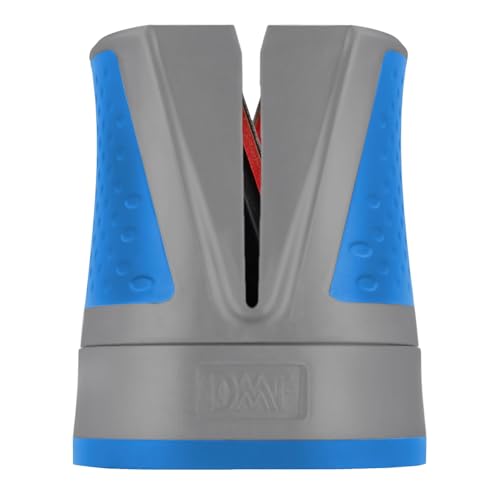
- TAR Score7.6
TAR Score is a ranking system developed by TopAppliancesReviews.com. TAR score has no relationship or impact from any manufacturers or sales agent websites. Learn more
- BrandDMT (Diamond Machining Technology)
Last update on 2026-10-01 / Affiliate links / Images, Product Titles, and Product Highlights from Amazon Product Advertising API
FAQs
Do I need to soak a DMT diamond sharpener before using it?
No, diamond sharpeners never require soaking. Unlike porous water stones that absorb water into their core, diamond plates consist of solid steel coated with industrial diamonds. A few drops of tap water or a light spray on the surface is all you need to float away loose metal particles while sharpening.
Can pushing down hard ruin a diamond knife sharpener?
Yes, heavy downward pressure can permanently damage a diamond sharpener. Pushing hard does not sharpen a knife faster; it simply dislodges diamond particles from the nickel bonding layer, creating smooth, bare spots on the plate. Always let the natural cutting ability of the diamonds do the work using light hand pressure.
How do I sharpen a serrated bread knife with a DMT sharpener?
Never run a serrated edge across a flat bench stone, as this flattens the pointed tips of the scallops. Use a round or tapered diamond rod that matches the curve of each serration. Sharpen each groove individually from the beveled side until you feel a burr, then make one flat pass on the smooth back side to remove the wire edge.
How can I tell when my diamond sharpener is fully broken in?
A brand new diamond sharpener feels rough and aggressive during its first few uses. As you sharpen your first two or three blades, slightly elevated diamond particles break off, leaving a smooth, uniform cutting surface. The broken-in stone feels finer to the touch but continues cutting steel quickly and leaves consistent bevels.


Top Rated Best Quality Range Hoods: 2026 Expert Picks

The 12 Best Small Solar Generators 2026

10 Best Quality Semi Automatic Washing Machine of 2026 For Leak-Free Laundry

11 Best Small Washer Machine of 2026 For Everyday Laundry

12 Best Vibration Pads For Washing Machine of 2026 To Stop Walking and Shaking

11 Best Selling Front Load Washing Machine of 2026 For Quiet Odor-Free Laundry

11 Best Washing Machine For King Size Bedding of 2026 To Prevent Cycle Errors

10 Best Small Front Loader Washing Machine of 2026 For Tight Closets