How to Use a Swiss Army Knife Safely

Always push cutting edges away from yourself. Most pocket knife blades rely on a simple spring hinge that holds the steel open without a mechanical lock. Because there is no latch underneath, pushing backward or stabbing can fold the blade right back onto your knuckles. Keeping your fingers off the open handle channel and opening one tool at a time gives you steady control over every cut.
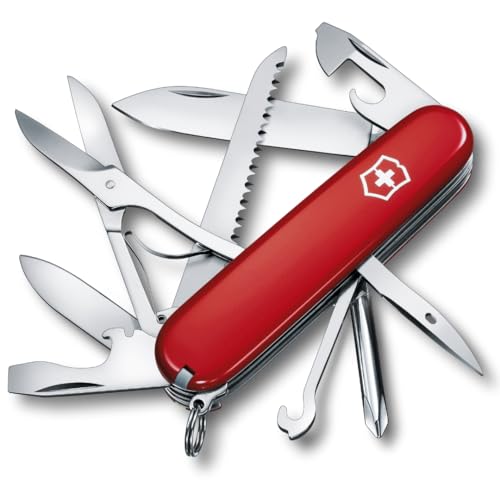
Safe handling also depends on which tool you pull out, since a wood saw cuts on the pull stroke while a can opener walks forward along the rim. Stiff hinges can pinch your thumbs, and certain models feature a lock release that traditional versions lack. Here is how to open, steer, and close each piece without bending your nails or risking a slip.
The Short Version
- Open one tool at a time by sliding the flat of your thumbnail into the nail nick (the small groove cut into the steel) and pulling outward until the spring snaps flat.
- Always cut forward and away from your body because the blade uses a slipjoint (a non-locking spring hinge) that folds shut if you push backward on the spine or stab with the tip.
- Hold the sides of the outer handle covers (called the scales) with your fingers completely clear of the open channel whenever you close any tool.
- Fold tools down slowly in a two-stage motion, pausing halfway to ensure your fingers remain outside the closing path before the spring snaps shut.
How to Open Stiff Tools Without Hurting Your Fingers
Opening a pocket tool should never break your fingernails or leave your fingertips bruised. Stiff tools happen because a strong back spring holds each implement securely inside the handle. Trying to pry a tool open with the soft tip of your finger puts all the pressure on the weakest part of your nail. With the right hand position and leverage, even a brand-new tool will open smoothly.
- Grip the handle securely: Rest the body of the knife flat across the fingers of your non-dominant hand. Wrap your fingers around the sides of the scales (the outer handle covers), leaving the top channel completely open and clear of your fingers.
- Locate the nail nick: Find the nail nick (the small groove cut into the steel for your fingernail). Look closely at which side of the tool the groove faces so you pull in the direction of the hinge arc.
- Use the flat edge of your thumbnail: Position the top edge of your thumbnail flat inside the groove rather than digging in with the tip of an index finger. Your thumbnail is thicker, stiffer, and far less likely to bend or tear under spring resistance.
- Pull in an outward arc: Apply steady, outward pressure away from the handle. Follow the natural curved path of the tool pivot instead of pulling straight up.
- Listen for the spring engagement: Continue pulling until the tool swings out completely and you feel the back spring click flat against the tang. Give the tool a gentle outward push to confirm it is fully seated before shifting your grip.
- Keep other tools seated: Open only the single implement you plan to use. Pulling out multiple tools at the same time weakens your grip on the handle and makes the knife awkward to balance.
If a particular tool feels too stiff to budge, do not force it with a metal screwdriver or fork, which can scratch the polished finish and damage the hinge. Instead, wrap a soft cloth around your thumb for extra padding. You can also open an adjacent, easier tool first to slightly relieve tension on the shared back spring, lift the stiff tool halfway, and then fold the first tool back into place.
Why Non-Locking Blades Fold and How to Stay Safe
The primary safety hazard of a traditional Swiss Army knife is blade collapse. Unlike modern folding knives that feature a mechanical lock to keep the blade rigid, standard pocket knives rely on a slipjoint (a non-locking spring hinge). The flat back spring holds the blade open with constant tension, but it does not physically lock the steel in place. If you put reverse pressure on the unsharpened spine of the blade, the spring yields immediately, swinging the sharp edge right back toward your gripping fingers.
Think of a non-locking blade like a push-door held closed by a heavy spring. If you push it in the intended direction, it stays firm. If you press against the back of it, it swings open right away. Whenever you carve, slice, or whittle, all working pressure must press against the sharp cutting edge, never against the back or tip of the blade.
To avoid sudden folding accidents, keep these safety habits in mind during every cut:
Never stab, poke, or jab the point of the blade into hard surfaces like wood, plastic packaging, or heavy cardboard. When the tip encounters sudden resistance, the knife pivots backward, driving the blade directly down onto your knuckles. If you need to make a pilot hole, use the specialized punching tool built into the knife rather than the knife tip.
Always slice forward, guiding the sharp edge away from your body and away from your supporting hand. Keep your thumb on the handle scales rather than resting it past the pivot pin on the blade spine. While heavy kitchen prep requires thick blades such as those in German high-carbon steel premium knife block sets that feature a full tang (one solid piece of blade steel extending all the way through the handle), a folding multi-tool demands a lighter touch and total awareness of cutting direction.
Cut slowly and let the steel do the work. If you must use heavy force to get through a piece of rope or wood, your blade is likely dull. A dull blade slips off smooth surfaces easily, while a sharp, properly maintained edge bites into the material cleanly with minimal downward effort.
How to Use the Main Tools: Cutting, Sawing, and Opening Cans
Each tool on your pocket knife is engineered for a distinct mechanical job. Using the wrong tool for a task, or using the right tool backward, leads to slipped edges, bent parts, and damaged hinges. Here is how to operate the most common implements with complete control.
- The Large and Small Knife Blades: Use the large blade for slicing food, cutting cordage, or preparing kindling. Use the small blade for detailed wood carving, opening letters, or delicate tasks where close fingertip control matters. Hold the handle firmly with your fingers wrapped around the sides, position the blade at a shallow angle against the item, and push forward smoothly along the full length of the cutting bevel.
- The Wood Saw: The miniature saw blade features two rows of razor-sharp, offset teeth designed to clear wood chips quickly. Hold the branch or dowel firmly with your off-hand placed well behind the cut line. Start the cut with a light backward draw to create a shallow guide groove. Once the groove is established, saw with even, full-length strokes. Let the teeth cut without forcing downward weight, which can bind the thin steel blade in the wood grain.
- The Can Opener: Many people struggle with the pocket can opener because it functions differently than standard household kitchen openers. Place the lower hooked tooth under the outer bottom rim of the metal can. Push the upper beveled cutting edge downward through the top lid until it punctures the tin. Rock the tool forward along the rim, using a continuous push-and-lever motion toward the uncut metal to shear a clean opening.
- The Bottle Opener and Large Screwdriver: Position the flat lower lip of the tool beneath the corrugated edge of a bottle cap. Rest the wide top surface flat across the center of the cap. Lift the handle upward smoothly, using the bottle rim as a fulcrum to pop the cap free without bending the opener tip. The flat tip doubles as a sturdy slotted screwdriver and light prying tool for opening paint cans.
What Those Strange Mystery Tools Actually Do
Most Swiss Army knives include several implements that leave beginners puzzled. These specialized tools save your main blade from unnecessary wear and make everyday household chores much simpler once you understand their purpose.
- The Awl or Reamer: This is the thick, pointed punch tool with a sharpened edge along one side, often found on the back of the handle. It is designed to bore clean holes through tough materials like leather belts, heavy canvas, plastic buckets, or soft wood. Instead of stabbing through the item, press the sharp tip against the mark and twist the tool back and forth. The beveled edge shaves away small spirals of material, creating a smooth, round hole without splitting the workpiece.
- The Multipurpose Parcel Hook: Located on the back spine of multi-layer knives, this folding metal hook was originally created to carry packages tied with abrasive string or wire. You can loop it under rough twine, heavy plastic grocery bags, or metal bucket handles to carry heavy loads without digging into your fingers. It also works well for tightening stubborn tent guy lines, pulling laces through boots, or unhooking hot metal cookware handles over a campfire.
- The Wire Stripper Notch: If you examine the base of the bottle opener blade, you will notice a small, angled v-shaped cut in the steel. This is a built-in wire stripper. To remove insulation from an electrical cord, lightly score the plastic casing using your small knife blade, seat the scored section directly into the notch, press your thumb over the wire, and pull the cord to slide the plastic jacket off cleanly.
- The Toothpick and Tweezers: These small plastic and metal accessories slide directly into custom slots molded into the ends of the handle scales. Use the flat edge of your thumbnail against the raised lip to slide them free. The tweezers are ideal for pulling splinters, ticks, or small thorns, while the plastic toothpick removes food particles or loose lint from inside the knife casing. Always clean them thoroughly before sliding them back into their slots.
How to Close Tools Safely and Keep the Hinges Smooth
Closing a pocket knife causes more cuts than opening one. When you push a tool back into the handle, the tension spring resists at first, then suddenly collapses and snaps the tool shut. If your fingers are wrapped across the handle opening, the blade edge will chop directly down onto your skin. Closing tools safely requires deliberate hand positioning every single time.
- Clear the handle channel: Hold the knife by the flat sides of the handle scales using your non-dominant hand. Keep all fingertips, palms, and knuckles completely clear of the open slots where the tools fold down.
- Place your thumb on the spine: Place the pad of your dominant thumb on the smooth, unsharpened back spine of the tool. Never place any part of your hand near the sharp cutting edge.
- Push past the initial tension: Apply steady downward pressure until the tool overcomes the spring resistance.
- Pause at the halfway point: Move the tool to a 90-degree angle and pause. This deliberate two-stage pause gives you total control, allowing you to double-check that your fingers have not shifted into the closing path.
- Guide the tool flush: Push the tool gently through the remaining distance until it clicks softly into the handle slot. Never let tools snap shut at full speed from an open position, as this can dull blade edges against internal metal dividers over time.
Keeping the internal hinges clean ensures the tools open smoothly and seat firmly without excessive finger strain. Over time, pocket lint, dust, and dried sap collect in the pivot channels. Clean the knife by opening all the tools halfway and swishing the entire handle in a basin of warm, soapy water. Use a wooden toothpick or a soft nylon brush to scrub away grit around the pivots.
Rinse the knife under clean running water, shake out the excess moisture, and dry the tool thoroughly with a clean towel. Although the steel used in standard pocket knives is stainless steel (rust-resistant, easy-to-clean metal), leaving water trapped inside the dark pivot slots can lead to mineral buildup and stiff action. Place a single drop of multi-tool oil or food-safe mineral oil into the base of each hinge spring, open and close each tool several times to work the lubricant into the joint, and wipe away any excess oil with a clean cloth.
Choosing the Right Pocket Knife for Daily Tasks
Selecting the right multi-tool comes down to matching the tools on the knife to the chores you actually encounter every day. Knives with too many layers feel bulky in a pocket, while knives with too few tools leave you searching for a screwdriver or a pair of scissors when you need one.
Consider the handle thickness and weight before deciding on an everyday pocket tool. A compact two-layer or three-layer design sits comfortably in a jeans pocket or small pouch without pulling down your clothing. If you spend time camping, gardening, or doing outdoor maintenance, choosing a slightly wider model that includes a dedicated wood saw and heavy-duty scissors provides practical utility without requiring a full toolbox.
Check the grip and handle balance to ensure the knife fits naturally in your palm. The handle scales should feel secure without sharp corners that dig into your skin during prolonged carving or cutting. While home kitchen prep relies on specialized blades kept organized in magnetic knife blocks and knife set combos, an everyday carry pocket knife is designed for portability, versatility, and quick fixes on the move. Selecting a model with comfortable handle scales and the specific implements you need ensures you can work safely and efficiently wherever you go.
- TAR Score9.6
TAR Score is a ranking system developed by TopAppliancesReviews.com. TAR score has no relationship or impact from any manufacturers or sales agent websites. Learn more
- BrandVictorinox

- TAR Score9.4
TAR Score is a ranking system developed by TopAppliancesReviews.com. TAR score has no relationship or impact from any manufacturers or sales agent websites. Learn more
- BrandFox Chapel Publishing

- TAR Score9.4
TAR Score is a ranking system developed by TopAppliancesReviews.com. TAR score has no relationship or impact from any manufacturers or sales agent websites. Learn more
- BrandFox Chapel Publishing

- TAR Score9.4
TAR Score is a ranking system developed by TopAppliancesReviews.com. TAR score has no relationship or impact from any manufacturers or sales agent websites. Learn more
- BrandVictorinox
- TAR Score9.2
TAR Score is a ranking system developed by TopAppliancesReviews.com. TAR score has no relationship or impact from any manufacturers or sales agent websites. Learn more
- BrandFox Chapel Publishing

- TAR Score9.2
TAR Score is a ranking system developed by TopAppliancesReviews.com. TAR score has no relationship or impact from any manufacturers or sales agent websites. Learn more
- BrandKlein

- TAR Score9.0
TAR Score is a ranking system developed by TopAppliancesReviews.com. TAR score has no relationship or impact from any manufacturers or sales agent websites. Learn more
- BrandFox Chapel Publishing

- TAR Score8.8
TAR Score is a ranking system developed by TopAppliancesReviews.com. TAR score has no relationship or impact from any manufacturers or sales agent websites. Learn more
- BrandPHAETHORNIS GUY
Last update on 2026-10-21 / Affiliate links / Images, Product Titles, and Product Highlights from Amazon Product Advertising API
FAQs
Can I open two tools at the same time?
You should only open one tool at a time. Opening multiple tools spreads the tension across the shared back springs, which can loosen the internal pins over time. It also clutters your grip, leaving sharp edges exposed while you try to work with a different implement.
What should I do if a tool feels too stiff to open?
Never try to pry a stubborn tool with metal cutlery or screwdrivers, which will damage the edges and scratch the handle. Place a drop of mineral oil directly into the pivot hinge and let it soak into the joint for several minutes. Wrap a piece of cloth around your thumb for traction and pull smoothly along the natural hinge arc.
Why does the can opener push forward instead of pulling backward?
The pocket can opener uses a beveled chisel edge positioned above a guide hook. Pushing forward drives the sharp edge straight through the metal using your arm strength and body weight. This forward shearing action produces a clean cut along the inner rim without leaving sharp metal burrs around the can edge.
Can I clean my pocket knife in the dishwasher?
Never put a pocket knife into a dishwasher. The harsh detergents, high water heat, and prolonged moisture can warp the plastic handle scales and wash out the protective hinge lubricants. Always hand-wash your knife in warm water with mild dish soap, dry it thoroughly right away, and apply fresh mineral oil to the pivots.


Top Rated Best Quality Range Hoods: 2026 Expert Picks

The 12 Best Small Solar Generators 2026

10 Best Quality Semi Automatic Washing Machine of 2026 For Leak-Free Laundry

11 Best Small Washer Machine of 2026 For Everyday Laundry

12 Best Vibration Pads For Washing Machine of 2026 To Stop Walking and Shaking

11 Best Selling Front Load Washing Machine of 2026 For Quiet Odor-Free Laundry

11 Best Washing Machine For King Size Bedding of 2026 To Prevent Cycle Errors

10 Best Small Front Loader Washing Machine of 2026 For Tight Closets