
How to Use a Santoku Knife for Clean Cuts

A crisp yellow onion sits on the cutting board, but trying to rock the blade back and forth only crushes the layers and catches against the wood. The knife feels awkward because it is not meant to rock: hold the steel with a pinch grip at the blade base, then slice using a smooth forward-and-down push. That simple adjustment lets the straight edge glide cleanly through vegetables, fish, and boneless meat without tearing the food.
Good results depend on what sits on the board and the cutting surface itself. Because the metal is thin and straight, hard bones or frozen items will chip the delicate edge, keeping this knife focused on produce and boneless meat. Chopping on stone, ceramic, or glass will also dull the blade quickly, so soft wood or plastic boards are essential. Here is how to place your hands, control every stroke, and keep the edge sharp.
How to Grip the Knife and Position Your Guide Hand
Most people who feel clumsy holding a santoku knife are making one common mistake: they grip the handle too far back, like a hammer or a tennis racket. When your whole hand stays behind the bolster, the front of the blade wobbles from side to side. You lose control over the path of the edge, your wrist tenses up, and your cuts end up crooked. Because a santoku knife has a tall, wide blade, holding only the handle turns the knife into a lever that works against your fingers.
The safe way to hold this knife is with a pinch grip, which means holding the blade base between thumb and index finger. By moving your hand forward so your fingers pinch the actual steel, you balance the knife right at its center of gravity. Most quality kitchen knives feature full tang construction, where one solid piece of blade steel extends all the way through the handle. This full tang adds counterweight behind the blade, giving you steady balance the moment your fingers rest on the metal.
- Place your thumb flat against the side of the blade, just ahead of where the steel enters the handle.
- Curl your index finger around the opposite side of the blade base, pinching the metal firmly between your thumb pad and the side of your first knuckle.
- Wrap your middle, ring, and pinky fingers comfortably around the top and sides of the wooden or composite handle.
- Relax your grip tension so your wrist stays loose and responsive rather than rigid.
Once your cutting hand is locked in, you need to set your free hand. Never leave your fingers flat or splayed across the food. Instead, use the guide claw, which means curling your free fingertips back like a claw. This hand position anchors the ingredient against your cutting board and acts as a physical shield for your skin.
- Rest your fingertips on top of the food item, then curl them inward toward your palm so the tips of your fingernails point down into the surface.
- Tuck your thumb behind your curled fingers so it never sticks out toward the cutting line.
- Rest the flat, broad side of the santoku blade against the flat middle knuckles of your curled fingers.
- Slide your guide hand slowly backward across the food as you cut, letting your knuckles measure the exact thickness of every slice.
The Forward Push-Cut Motion and Why Rocking Fails
If you learned kitchen prep with a standard Western chef knife, your hand naturally wants to rock the blade up and down. A Western chef knife features a rounded belly with a deep curve that lets you keep the tip pinned to the cutting board while rocking the heel through vegetables. When you try that exact same motion with a santoku, the knife resists. You might feel the flat belly slam into the board, or the tip might dig straight down into the wood and jam your wrist.
A santoku knife features a mostly flat cutting edge that stays straight until it meets a sheepsfoot tip, where the upper spine curves down to meet the edge. Because the edge lacks a curved belly, it cannot pivot in place. Trying to force a flat blade to rock causes you to twist the steel sideways against the cutting board. Many santoku blades, including those in traditional Japanese chef knife sets, feature a steep 15-degree slicing edge per side. This narrow profile makes the knife razor-sharp, but twisting that fine edge under downward pressure rolls the steel or breaks small chips out of the blade.
Instead of rocking, use a clean push cut, which means pressing down and forward in one smooth slide. This motion takes full advantage of the flat edge, letting the entire length of the blade glide through the food in a single pass.
- Position the food under the knife, resting the back third of the blade lightly on top of the ingredient.
- Push the blade down and forward at an angle of roughly forty-five degrees, letting the sharp edge slide through the food rather than mashing it straight down.
- Allow the flat edge of the blade to make full, flush contact with the cutting board at the end of the stroke.
- Lift the entire blade cleanly off the board, bringing it back through the air to start the next slice.
For delicate items with slippery skins, such as ripe tomatoes or soft fish fillets, you can reverse the direction into a pull cut. Set the tip of the blade on the far edge of the food and draw the knife smoothly backward toward you without bearing down. The razor-sharp edge breaks the skin cleanly without bruising the flesh underneath. Always pair these slicing motions with a soft wooden or food-grade plastic board. Hard surfaces like marble, glass, ceramic, or granite will dull or chip a steep slicing edge on the very first contact.
Everyday Prep Strengths, Tough Foods to Avoid, and the Dimpled Edge
The word santoku translates roughly to "three virtues" or "three uses." In Japanese home kitchens, these virtues refer to the knife's skill at slicing, dicing, and mincing, or its ability to process meat, fish, and vegetables with equal ease. Because the blade is relatively short, usually between 5 inches and 7 inches long, it feels agile and less intimidating on small cutting boards than a long 8-inch or 10-inch chef knife.
A santoku is an absolute workhorse for daily kitchen prep, especially when you need uniform, restaurant-quality cuts on boneless ingredients. Keep this quick checklist in mind when deciding whether to pull your santoku from the block:
- Dicing onions and shallots: The flat profile makes clean, straight horizontal and vertical cuts without tearing the outer layers.
- Slicing boneless proteins: The thin blade glides through raw chicken breast, skirt steak, and pork tenderloin ribbons without dragging.
- Chopping crisp produce: Celery, cucumbers, radishes, and bell peppers separate cleanly under the push stroke without accordion cuts.
- Mincing herbs and aromatics: Garlic cloves, ginger, scallions, and parsley dice into tiny, even pieces when pushed cleanly through the edge.
- Shredding greens: Bunched spinach, kale, and cabbage collapse into fine ribbons under the wide blade surface.
Despite its versatility, a santoku knife is not a heavy-duty cleaver. The thin steel that makes it glide through crisp vegetables also makes it vulnerable to structural chipping when forced against dense obstacles. Never use a santoku to chop through poultry bones, beef ribs, or hard joint cartilage. Avoid splitting hard, unyielding rinds like raw butternut squash or acorn squash, where the blade can bind and twist. Never cut through frozen food, and keep the blade away from hard aged cheese wheels like Parmesan, which can warp or crack a thin edge.
You have likely noticed that many santoku knives feature small oval dimples ground into the lower sides of the blade, often referred to as a Granton edge. When you slice wet, dense vegetables like potatoes, zucchini, or cucumbers with a flat-ground blade, the moisture creates a tight vacuum seal. Slices stick to the metal, ride up the face of the knife, and clutter your workspace. The hollow indentations of a Granton edge trap tiny pockets of air between the steel and the wet vegetable. This air pocket breaks the vacuum suction, allowing every slice to drop away naturally onto the board so you can keep cutting without stopping to clear the blade.
Choosing Knife Covers and Storage to Protect Thin Edges
A santoku knife keeps its fine edge only when it is washed and stored correctly. Never put your knife in the automatic dishwasher. The combination of intense heat, harsh abrasive detergents, and high-pressure water jets will pit the metal, strip moisture from wooden handles, and rattle the delicate cutting edge against other cutlery. Never leave the knife soaking in a sink of soapy water, where hidden blades cause severe hand cuts and water exposure encourages rust. Wash the blade by hand right after you finish cutting using warm water, a soft sponge, and mild dish soap. Dry it completely with a clean kitchen towel before putting it away.
Proper storage is just as vital as careful washing. Tossing a bare santoku knife into an open utensil drawer is a recipe for dull edges, nicked steel, and cut fingers when reaching inside. To protect the blade between prep sessions, look for dedicated storage solutions that isolate the edge from hard surfaces.
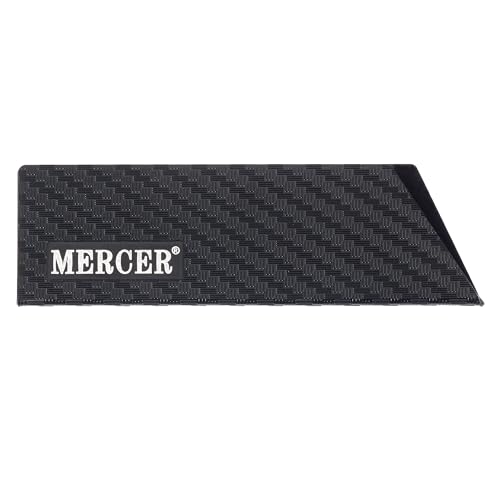
If you store knives in a drawer or carry them on trips, look for individual blade guards or sheaths. The best blade guards use sturdy outer plastic with a soft inner lining, such as felt, which stops the hard outer shell from scratching the polished steel face. Ensure the guard matches the width and length of your blade so the entire cutting edge and tip remain completely covered. Some modern protective covers even include built-in ceramic sharpeners that touch up the utility edge each time the knife slides in or out.
For countertop storage, traditional wooden knife blocks or modern magnetic knife block and knife set combos provide secure homes for wide santoku blades. When choosing a slotted wooden block, verify that the slots are wide enough to accept a tall blade profile without scraping the sides. Horizontal slots are best because they allow the knife to rest on the flat side of the steel rather than bearing its full weight on the sharp edge. If you prefer a magnetic stand, check that the magnetic force holds the blade firmly flat against the wood without requiring excessive pulling force that could jar the knife as you lift it away.

- TAR Score9.6
TAR Score is a ranking system developed by TopAppliancesReviews.com. TAR score has no relationship or impact from any manufacturers or sales agent websites. Learn more
- BrandLamson

- TAR Score9.6
TAR Score is a ranking system developed by TopAppliancesReviews.com. TAR score has no relationship or impact from any manufacturers or sales agent websites. Learn more
- BrandHAUSHOF

- TAR Score9.6
TAR Score is a ranking system developed by TopAppliancesReviews.com. TAR score has no relationship or impact from any manufacturers or sales agent websites. Learn more
- BrandHAUSHOF

- TAR Score9.2
TAR Score is a ranking system developed by TopAppliancesReviews.com. TAR score has no relationship or impact from any manufacturers or sales agent websites. Learn more
- BrandFarberware

- TAR Score9.2
TAR Score is a ranking system developed by TopAppliancesReviews.com. TAR score has no relationship or impact from any manufacturers or sales agent websites. Learn more
- BrandFarberware

- TAR Score9.2
TAR Score is a ranking system developed by TopAppliancesReviews.com. TAR score has no relationship or impact from any manufacturers or sales agent websites. Learn more
- BrandKYOKU
- TAR Score9.2
TAR Score is a ranking system developed by TopAppliancesReviews.com. TAR score has no relationship or impact from any manufacturers or sales agent websites. Learn more
- BrandMercer Culinary

- TAR Score9.2
TAR Score is a ranking system developed by TopAppliancesReviews.com. TAR score has no relationship or impact from any manufacturers or sales agent websites. Learn more
- BrandConinx

- TAR Score9.0
TAR Score is a ranking system developed by TopAppliancesReviews.com. TAR score has no relationship or impact from any manufacturers or sales agent websites. Learn more
- BrandOster

- TAR Score8.4
TAR Score is a ranking system developed by TopAppliancesReviews.com. TAR score has no relationship or impact from any manufacturers or sales agent websites. Learn more
- BrandRynal
Last update on 2026-11-01 / Affiliate links / Images, Product Titles, and Product Highlights from Amazon Product Advertising API
FAQs
Can you rock chop with a santoku knife?
You should not rock chop with a santoku knife because the cutting edge is almost completely flat. Rocking requires a curved blade belly to pivot smoothly on the cutting board. Forcing a flat santoku blade through a rocking motion jams the tip into the board and twists the thin, brittle edge, which can lead to dulling or chipped steel.
How often should you sharpen a santoku knife?
How often you sharpen depends on how frequently you cook and the type of cutting board you use. For a home cook using a soft wood board several times a week, a santoku knife generally needs thorough sharpening on a water stone once or twice a year. You can maintain the edge between sharpenings by lightly realigning it with a ceramic honing rod every few weeks.
Is a santoku knife better for beginners than a chef knife?
A santoku knife is often easier for beginners to manage because it is shorter, lighter, and better balanced than a traditional eight-inch chef knife. The straighter edge makes uniform slicing straightforward without requiring complex rocking techniques. The sheepsfoot tip also lowers the risk of accidental punctures, giving newer cooks greater confidence during everyday vegetable and meat prep.


Top Best Quiet Portable Generator Electric Start 2026 - (2026 Updated)

The 10 Best Portable Power Station For Tailgating 2026

10 Best Washing Machine For King Size Comforter of 2026 For Bulky Bedding

11 Best Semi Automatic Washing Machine Under 10000 of 2026 For Apartments and RVs

The Best Concrete Floor Buffer 2026 - Top Choices

Best Cooling Fan with HEPA Filter: Our 2026 Top Picks for Cleaner Air

Best poulan chainsaw 2026 - Reviews & Buying Guides

Value Picks: 10 Vitamix 5300 Best Price of 2026




