
How to Use a Sabatier Knife Sharpener Without Ruining Blades

Pull the blade backward with gentle pressure. Set the heel, the wide part of the knife nearest the handle, into the notch and draw it toward your body in one smooth motion. Never saw back and forth or push down hard, because heavy force gouges the steel. A light, steady pull from heel to tip resets the edge without chewing up the metal.
Your specific routine depends on the tool design and the condition of the blade. Slide-in protective covers sharpen the knife automatically as you insert or draw the blade straight, whereas countertop units feature coarse slots for worn edges and smooth ceramic slots for daily maintenance. Also, standard straight-edge kitchen knives respond well, but serrated bread blades should stay out completely. Following a few simple steps will keep your knives razor-sharp and protect the steel for years to come.
Sabatier sharpeners come in handheld tools and built-in sheaths
Sabatier makes sharpening gear in two distinct designs: standalone manual pull-through tools and Edgekeeper self-sharpening sheaths or block slots. Knowing which style sits on your counter determines how you handle your knife.
The handheld pull-through sharpener is a portable unit with a grip handle and two V-shaped slots. The first slot holds coarse tungsten carbide cutters. Tungsten carbide is an extremely hard metal alloy shaped into overlapping blades that peel away a tiny ribbon of dull steel to re-establish a blunt edge. The second slot contains fine ceramic rods. These smooth white bars do not shave away visible steel. Instead, they polish the edge and hone the blade, which means they straighten a bent blade edge without removing metal. Home cooks use this handheld unit on a counter when blades start slipping on tomato skins.
The Sabatier Edgekeeper system combines blade protection with daily edge maintenance. Instead of sitting on the counter as a repair station, an Edgekeeper device is built directly into a protective sheath or a knife block slot. Inside the throat, two spring-loaded ceramic honing mechanisms rest against the blade. Every time you draw the knife out or push it back in, the ceramic rods gently rub both sides of the cutting edge to keep it aligned.
Handheld pull-through tools repair dull edges by stripping metal in the coarse notch and smoothing it in the fine notch. Edgekeeper sheaths maintain an already sharp edge through regular micro-honing.
Pull the blade straight from heel to tip with ease
Using a manual pull-through sharpener takes only a few seconds, but proper technique protects your cutting edge from scratches. Follow these steps to restore straight-edge kitchen knives safely.
- Set the sharpener on a flat surface: Place the tool on a clean countertop or heavy cutting board. Grip the handle firmly with your non-dominant hand, keeping fingers behind the guard. Ensure the rubber feet sit flat so the unit cannot slip.
- Check blade dullness: If your knife has not been sharpened in months and tears food, start with the coarse slot. The coarse slot uses rough carbide cutters designed to reshape very dull blades by cutting a fresh bevel (the angled surface that forms the sharp edge). If the knife is already fairly sharp, skip coarse and go straight to the fine ceramic slot.
- Position the heel in the slot: Place the heel (the wide back part of the knife blade closest to the handle) straight down into the V-shaped notch. Keep the blade vertical at a 90-degree angle to the counter. Avoid tilting sideways, which creates an uneven edge.
- Draw the blade smoothly toward your body: Pull the knife straight back toward you in one steady sweep. Use light pressure equal to the weight of the knife. Never press down with heavy force, which gouges the steel. As you pull through the curved belly toward the tip, lift your wrist slightly so the point stays in contact with the sharpening stones.
- Repeat three to five times: Draw the knife through the coarse slot three to five times for dull blades. Always pull from heel to tip in one direction. Never push the blade forward into the slot.
- Polish in the fine slot: Move the knife to the fine ceramic slot. Pull the blade through three to five times using the same smooth, light motion. This polishes the edge and strips away any burr (the microscopic wire edge or curved sliver of metal that forms during sharpening).
- Wipe and clean the knife: Sharpening leaves metal dust on the blade. Wipe the knife carefully from spine to edge with a damp cloth, wash it with warm soapy water, and dry it completely before use.
Slide knives straight in and out of Edgekeeper sheaths
The Sabatier Edgekeeper sheath hones blades automatically, but inserting or removing the knife at an awkward angle can scratch the blade or damage internal ceramic guides. Follow these steps to use self-sharpening sheaths and block slots correctly.
- Hold the sheath by its spine: Grip the hard plastic body of the sheath firmly in your non-dominant hand. Keep your fingers positioned along the closed outer spine and away from the open throat where the blade enters.
- Align the blade tip straight: Point the knife tip directly into the center of the opening. Align the blade spine with the top groove of the sheath and the cutting edge with the sharpening mechanism. Keep the blade straight so the sides do not rub against the plastic casing.
- Push the blade smoothly all the way in: Slide the knife into the sheath with steady forward pressure until the handle collar meets the mouth of the sheath. You will feel mild resistance as internal ceramic rods glide along the cutting edge. Do not force or slam the knife into place.
- Draw the knife straight out when cooking: When you need your knife, hold the sheath firmly and draw the blade straight back out in a single, fluid stroke. Pull straight along the path of the sheath without twisting your wrist. The built-in ceramic rods hone both sides on the way out.
- Only store clean, dry knives: Never insert a greasy or wet blade into an Edgekeeper sheath or block. Food residue and moisture coat the ceramic rods so they cannot grip the steel, while moisture can rust high-carbon steel blades. Hand-wash and dry your knives immediately after every use.
Heavy pressure and sawing motions destroy knife edges quickly
Pull-through sharpeners have a bad reputation when used incorrectly because poor technique can damage a good blade in seconds. Avoiding a few common mistakes will keep your knives sharp and straight for years.
- Sawing the blade back and forth: Pushing and pulling a knife back and forth like a hand saw quickly ruins an edge. Pull-through carbide cutters are angled to shave metal in one direction only. Pushing forward drives the thin edge into carbide corners, causing deep notches and chipped tips. Always pull backward from heel to tip, lift the knife clear, and reset at the heel.
- Pressing down with aggressive force: Pushing down hard does not sharpen a blade faster. Heavy downward pressure strips off thick chunks of steel, creating wavy dips along the belly of the knife. It also creates a thick burr that breaks off and leaves the edge blunter than before. Let the natural weight of the blade provide contact. Light, gentle strokes produce the cleanest apex.
- Twisting or tilting the knife mid-stroke: Pull-through sharpeners have preset internal angles, usually 20 degrees per side for standard cutlery. If you wobble your wrist or tilt the knife sideways while pulling, you round off the cutting edge and scratch the polished sides. Keep the knife spine pointing straight up toward the ceiling throughout the stroke.
- Overusing the coarse carbide slot: The coarse notch is an emergency repair station for damaged edges, not a daily tune-up tool. Running a knife through carbide cutters every week shaves away blade height until a broad chef knife looks like a narrow boning knife. Use the coarse slot only once or twice a year. For routine care, use the fine ceramic slot or an Edgekeeper sheath.
- Snapping the blade tip off the end: As you draw the knife through the slot, do not yank it out abruptly. Letting the tip snap through the notch under tension can round off the point. Instead, lift your elbow slightly to follow the curve of the belly, slowing down gently as the point clears the stones.
Keep serrated edges and delicate Japanese blades out
Not every kitchen knife belongs in a Sabatier pull-through sharpener or Edgekeeper sheath. These tools are built specifically for standard double-bevel western kitchen knives, and running the wrong blade through them can permanently ruin the cutting edge.
Sabatier sharpeners work well on straight-edge western blades made from stainless steel (a rust-resistant, easy-to-clean metal) and standard carbon steel. This includes traditional chef knives, santoku blades with western 20-degree grinds, paring knives, and utility slicers. If you own durable cutlery like German high-carbon steel premium knife block sets, their tough steel and sturdy factory angles match preset carbide and ceramic notches without issue.
On the other hand, you should never insert serrated bread knives into a standard pull-through sharpener. Bread knives feature scalloped teeth ground on one side only. Pulling a serrated blade through dual carbide cutters will grind down the pointed teeth, flatten the scalloped gullets, and ruin the saw-like performance of the knife. Serrated knives require specialized tapered sharpening rods.
Delicate Japanese kitchen knives also require different care. Premium cutlery, such as high-end Japanese Damascus steel chef knife sets, is crafted from ultra-hard steel heat-treated to hold an acute 15-degree slicing edge per side. The tungsten carbide blades in a pull-through sharpener are set at wider 20-degree angles and remove metal too aggressively, which can cause micro-chipping along brittle Japanese edges. Use water stones or smooth ceramic rods instead.
Finally, keep single-bevel knives, scissors, and ceramic blades out of your Sabatier sharpener. Pull-through notches grind both sides equally, ruining a single-bevel knife. Ceramic blades are brittle and will shatter against carbide cutters. For diverse, high-end knives that cannot use pull-through tools, storage options like magnetic knife block and knife set combos keep blades secure without exposing delicate edges to abrasive slots.
Choose the right replacement sharpener for your kitchen knives
When your current sharpener loses its grit or your kitchen knives no longer glide smoothly through food, finding a dependable replacement sharpener restores slicing confidence. A good manual sharpener should make everyday knife care quick, predictable, and safe for home cooks of any skill level.
Before buying a replacement sharpener or self-sharpening setup, check the sharpening stages first. Look for units that clearly separate coarse metal removal from fine ceramic honing. A multi-stage tool lets you repair nicked edges when necessary while giving you a gentler ceramic slot for routine maintenance so you avoid shaving away good steel prematurely.
Next, verify the stability and grip design of the tool. A sharpener must sit rock-solid on your countertop while your hands guide sharp blades. Look for models with broad non-slip rubber bases, suction feet, or deep ergonomic handles that keep your stabilizing hand comfortably separated from the path of the moving blade.
Finally, confirm blade compatibility and angle matching with the knives you use most often. Sturdy western kitchen knives thrive on standard multi-stage pull-through units, while collections with serrated bread knives or thin slicing knives benefit from sharpeners with specialized notches. Choosing a sharpener that matches your kitchen cutting habits ensures your knives stay razor-sharp without unnecessary wear.

- TAR Score9.4
TAR Score is a ranking system developed by TopAppliancesReviews.com. TAR score has no relationship or impact from any manufacturers or sales agent websites. Learn more
- BrandACCUSHARP

- TAR Score9.4
TAR Score is a ranking system developed by TopAppliancesReviews.com. TAR score has no relationship or impact from any manufacturers or sales agent websites. Learn more
- BrandACCUSHARP

- TAR Score9.0
TAR Score is a ranking system developed by TopAppliancesReviews.com. TAR score has no relationship or impact from any manufacturers or sales agent websites. Learn more
- BrandSabatier
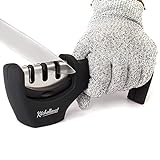
- TAR Score9.0
TAR Score is a ranking system developed by TopAppliancesReviews.com. TAR score has no relationship or impact from any manufacturers or sales agent websites. Learn more
- BrandKITCHELLENCE

- TAR Score8.8
TAR Score is a ranking system developed by TopAppliancesReviews.com. TAR score has no relationship or impact from any manufacturers or sales agent websites. Learn more
- BrandSabatier

- TAR Score8.8
TAR Score is a ranking system developed by TopAppliancesReviews.com. TAR score has no relationship or impact from any manufacturers or sales agent websites. Learn more
- BrandSabatier

- TAR Score8.8
TAR Score is a ranking system developed by TopAppliancesReviews.com. TAR score has no relationship or impact from any manufacturers or sales agent websites. Learn more
- BrandLUFFEXX

- TAR Score8.8
TAR Score is a ranking system developed by TopAppliancesReviews.com. TAR score has no relationship or impact from any manufacturers or sales agent websites. Learn more
- BrandSHARPAL

- TAR Score8.6
TAR Score is a ranking system developed by TopAppliancesReviews.com. TAR score has no relationship or impact from any manufacturers or sales agent websites. Learn more
- BrandSabatier

- TAR Score8.2
TAR Score is a ranking system developed by TopAppliancesReviews.com. TAR score has no relationship or impact from any manufacturers or sales agent websites. Learn more
- BrandGeneric
Last update on 2026-10-01 / Affiliate links / Images, Product Titles, and Product Highlights from Amazon Product Advertising API


Top Rated Best Quality Range Hoods: 2026 Expert Picks

The 12 Best Small Solar Generators 2026

10 Best Quality Semi Automatic Washing Machine of 2026 For Leak-Free Laundry

11 Best Small Washer Machine of 2026 For Everyday Laundry

12 Best Vibration Pads For Washing Machine of 2026 To Stop Walking and Shaking

11 Best Selling Front Load Washing Machine of 2026 For Quiet Odor-Free Laundry

11 Best Washing Machine For King Size Bedding of 2026 To Prevent Cycle Errors

10 Best Small Front Loader Washing Machine of 2026 For Tight Closets






