
How to Use a Nakiri Knife for Clean Vegetable Slices?

There is no need to worry about handling this unusual rectangular blade, because cutting with it is remarkably simple once the right rhythm clicks. The secret is to use a forward push-cut rather than rocking the steel, pressing down and slightly forward so the entire flat edge touches the board at once. That flat profile prevents food from hinging together at the bottom, giving clean chops with very little effort.
Getting the best results depends on matching the tool to the right prep work. This thin, delicate edge thrives on soft wooden boards and crisp vegetables like onions, cabbages, and peppers. Hard surfaces or stubborn items like frozen food, bones, and thick winter squash will quickly nick the steel or warp the straight profile. A few small adjustments to hand placement and cutting motion make daily slicing smooth, safe, and precise.
Understand Your Flat Blade Before You Start Chopping
A nakiri knife looks like a miniature meat cleaver at first glance, but it behaves very differently on a cutting board. Traditional Western chef knives feature a rounded belly with a curved cutting edge. That curve allows you to rest the tip on the board and rock the knife up and down to chop onions or herbs. If you try that same rocking cut with a nakiri, the blade will catch, stumble, and dig straight into your cutting board.
The nakiri features a flat, straight edge from heel to toe, ending in a squared-off front tip. Because the cutting edge is completely straight, it is designed to contact the cutting board evenly across its entire length. When home cooks attempt to rock a flat blade, the middle of the steel lifts away from the surface. This creates frustrating accordion cuts, where your sliced zucchini, carrots, or peppers remain linked together at the bottom by uncut vegetable skin.
The blade geometry also sets this knife apart from everyday kitchen tools. Western cutlery is typically ground with a thicker 20-degree edge angle to handle bones and tough roots. A nakiri uses a steep 15-degree slicing edge per side for delicate Japanese kitchen knives. This narrow bevel (the angled cutting edge) allows the blade to glide through crisp vegetables with minimal resistance. For cooks who appreciate precision slicing, investing in high-carbon Japanese chef knife sets demonstrates just how effortlessly a fine edge moves through dense produce.
Many nakiri knives feature a tsuchime finish (a hammered blade pattern that stops food from sticking). Those small dimples along the blade face create tiny pockets of air between the steel and the produce. When you slice wet, starchy vegetables like potatoes, cucumbers, or radishes, the dimples prevent suction from sticking the slices to the knife. Nakiri knives are typically made from stainless steel (rust-resistant, easy-to-clean metal) or high-carbon steel (harder metal that stays sharp longer but requires dry wiping and light oiling to prevent rust spots).
Lock In Your Pinch Grip for Steady Hand Control
Control starts with how your hand meets the knife. Holding the knife like a hammer by wrapping all five fingers around the handle gives you poor precision and tires your forearm quickly. Because a nakiri has a tall, flat blade face, you need a grip that stabilizes the knife sideways to keep every slice straight and uniform.
- Pinch the base of the blade: Place your thumb flat against one side of the blade just in front of the handle. Curl the first joint of your index finger against the opposite side of the steel. This pinch grip (gripping the blade base with your thumb and index finger) places your hand right over the knife balance point, giving you maximum steering control.
- Wrap your lower fingers around the handle: Let your middle, ring, and pinky fingers rest comfortably around the handle. Hold the handle firmly but avoid squeezing with white knuckles. If your knife features a full tang (one solid piece of blade steel extending all the way through the handle), the handle provides a solid counterweight to the tall blade.
- Keep your wrist straight and level: Align your wrist with your forearm rather than letting it droop or bend sideways. Never place your index finger along the top spine of the knife. Resting a finger on the spine might feel natural to beginners, but it weakens your grip and causes the tall blade to tilt during a downward cut.
- Form the claw with your guide hand: Rest your non-cutting hand on the vegetable you want to slice. Curl your fingertips inward toward your palm like a bear claw, keeping your thumb tucked behind your fingers. Rest the flat side of the nakiri blade gently against the middle knuckles of your guide hand to set your slice thickness safely.
Use a Forward Push-Cut Motion to Slice Produce Cleanly
The push cut is the fundamental cutting stroke for any flat-edged Japanese vegetable knife. A push cut means slicing straight down and slightly forward in a single, smooth stroke. Moving slightly forward engages the slicing sharpness of the steel, while pushing straight down ensures the full flat edge touches the board to finish the cut completely.
- Set up a stable wooden or soft board: Place your cutting board on a flat counter. Lay a damp kitchen towel or silicone mat underneath the board to stop it from shifting while you work. Always use end-grain wood or soft rubber boards, which cushion the steep 15-degree edge and keep it sharp.
- Align the blade flat over the produce: Position the nakiri so the entire flat cutting edge sits parallel to the cutting board surface. Rest your knuckles against the blade face, keeping the knife perpendicular to the board without tilting left or right.
- Push downward and glide forward: Lower the blade through the vegetable while pushing slightly forward away from your body. Do not smash the blade down with brute force. Let the razor-sharp edge do the work as the entire length of the blade meets the cutting board at the exact same moment.
- Lift straight up to reset: Once the blade contacts the board, lift it straight up and back to prepare for the next slice. Never drag the sharp edge backward across the cutting board surface. Dragging the blade backward bends the thin apex and rolls the burr (the microscopic wire edge or curved sliver of metal that forms during sharpening).
- Build a steady chopping rhythm: As your confidence grows, link the lift and push-cut motions into an easy, continuous loop. Shift your guide hand claw backward by small increments after each slice to create paper-thin shreds of cabbage, uniform onion dices, or translucent cucumber rounds.
Sort Your Produce to Keep the Thin Edge Intact
A nakiri knife is an exceptional prep tool, but its thin geometry requires smart boundary lines. Using the knife on the wrong ingredients can chip, notch, or crack the delicate steel edge. Always sort your prep list before reaching for your nakiri so you keep the blade in top shape.
- Vegetables that love a nakiri: Crisp celery, bell peppers, zucchini, yellow squash, cucumbers, onions, shallots, garlic, and fresh herbs. The tall blade face also excels at cutting through large, bulky produce like heads of green cabbage, iceberg lettuce, and bunches of kale.
- Firm root produce: Carrots, parsnips, daikon radishes, and medium potatoes slice cleanly under a forward push cut. The thin blade parts dense vegetable flesh without cracking it in half the way a thick Western knife often does.
- Using the spine as a food scoop: The broad, rectangular face of a nakiri makes an ideal scoop for moving chopped vegetables from your board into a hot skillet. Never scrape the sharp bottom edge across the cutting board to gather produce. Instead, flip the knife over and scrape with the blunt top spine, or slide the wide blade flat underneath the food like a spatula.
- Never cut through bones or joints: Even though a nakiri resembles a butcher cleaver, it has none of the thick, heavy steel needed for hacking through animal bone, poultry cartilage, or dense fish heads. Striking bone will chip the thin edge immediately.
- Avoid rock-hard winter squashes: Dense gourds like butternut squash, acorn squash, and kabocha squash can wedge around a thin blade. If the knife gets stuck and you twist the handle to pry it loose, the lateral pressure will snap pieces out of the thin bevel.
- Keep away from pits and frozen blocks: Never cut frozen meat, frozen fruit, or hard seeds. Avoid using your nakiri to chop into hard avocado pits or stone fruit centers, which require a heavier utility knife.
Clean and Store Your Blade Properly to Prevent Rust and Nicks
Proper maintenance ensures your nakiri stays sharp and safe between meal preps. Because these knives are built with thin edges and hard steel, careless washing or sloppy storage will ruin the blade faster than daily cutting ever will.
Always wash your nakiri by hand immediately after you finish cutting. Use warm tap water, mild dish soap, and a non-abrasive dishcloth or sponge. Never place your knife in an automatic dishwasher. Dishwasher detergent contains abrasive powders that dull razor edges, while high water pressure rattles the blade against metal racks and ceramic plates, leading to chipped steel.
Dry the entire knife right away using a clean cotton towel. Even stainless steel can develop surface spotting if left wet in a drying rack. If your knife blade is made of high-carbon steel, wipe it completely dry and apply a drop of food-safe mineral oil or camellia oil across both sides. The oil film forms an airtight barrier that stops rust from eating into the steel.
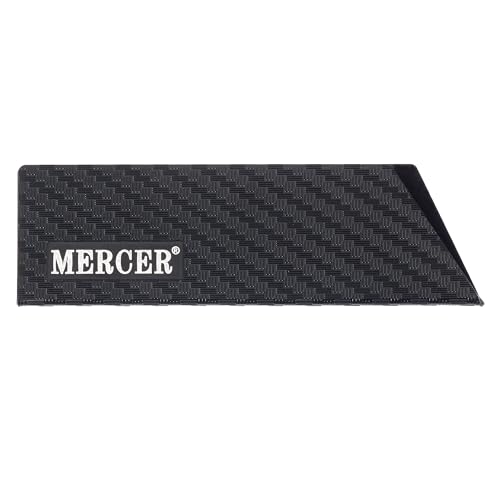
Store your knife where the cutting edge cannot bang against other metal tools. A fitted saya (fitted wooden blade cover) or a durable plastic blade guard protects the edge inside a kitchen drawer. Alternatively, display your cutlery securely on wall-mounted strips or magnetic knife block and knife set combos that keep the thin bevels separated and elevated away from hard surfaces. Never dump an unprotected nakiri into a loose utensil drawer full of forks, whisks, and spoons.
Pick the Right Blade Length and Protective Cover for Your Kitchen
Choosing the best knife setup for your kitchen comes down to blade length, handle comfort, and edge protection. Most home cooks get the best balance from a nakiri with a 6.5-inch to 7-inch blade. This length provides plenty of cutting surface to slice through large heads of cauliflower and cabbage while staying light enough for quick vegetable dicing.
Pay close attention to handle construction when picking your tool. Traditional Japanese handles are round, oval, or octagonal wood pieces that create a featherweight knife with forward balance. Western-style handles feature contoured scales secured by rivets along a full tang, offering more heft and a familiar palm feel. Make sure the handle permits a comfortable pinch grip without pinching your index finger against the blade bolster.
Verify that your knife includes a protective saya or fitted blade guard, especially if you plan to store it in a drawer or transport it for outdoor cooking. If your favorite knife comes without a sheath, purchase an aftermarket felt-lined plastic sleeve or wooden case that matches the exact length and height of the squared blade. A secure cover protects your fingers when reaching into storage and prevents accidental chips to the edge.

- TAR Score9.8
TAR Score is a ranking system developed by TopAppliancesReviews.com. TAR score has no relationship or impact from any manufacturers or sales agent websites. Learn more
- BrandCuisinart

- TAR Score9.6
TAR Score is a ranking system developed by TopAppliancesReviews.com. TAR score has no relationship or impact from any manufacturers or sales agent websites. Learn more
- BrandHOSHANHO

- TAR Score9.4
TAR Score is a ranking system developed by TopAppliancesReviews.com. TAR score has no relationship or impact from any manufacturers or sales agent websites. Learn more
- BrandPAUDIN
- TAR Score9.4
TAR Score is a ranking system developed by TopAppliancesReviews.com. TAR score has no relationship or impact from any manufacturers or sales agent websites. Learn more
- BrandMercer Culinary

- TAR Score9.4
TAR Score is a ranking system developed by TopAppliancesReviews.com. TAR score has no relationship or impact from any manufacturers or sales agent websites. Learn more
- BrandSunnecko

- TAR Score9.4
TAR Score is a ranking system developed by TopAppliancesReviews.com. TAR score has no relationship or impact from any manufacturers or sales agent websites. Learn more
- BrandUCCKEYI

- TAR Score9.2
TAR Score is a ranking system developed by TopAppliancesReviews.com. TAR score has no relationship or impact from any manufacturers or sales agent websites. Learn more
- BrandHOSHANHO

- TAR Score9.2
TAR Score is a ranking system developed by TopAppliancesReviews.com. TAR score has no relationship or impact from any manufacturers or sales agent websites. Learn more
- BrandMartha Stewart

- TAR Score8.8
TAR Score is a ranking system developed by TopAppliancesReviews.com. TAR score has no relationship or impact from any manufacturers or sales agent websites. Learn more
- BrandM METERXITY

- TAR Score8.4
TAR Score is a ranking system developed by TopAppliancesReviews.com. TAR score has no relationship or impact from any manufacturers or sales agent websites. Learn more
- BrandPATIKIL
Last update on 2026-10-11 / Affiliate links / Images, Product Titles, and Product Highlights from Amazon Product Advertising API
FAQs
Why are my vegetable slices still joined at the bottom like an accordion?
Accordion cuts happen when the flat edge of the knife fails to make full, flush contact with the cutting board. This usually occurs when you try to rock the blade like a Western chef knife, lifting the middle of the edge off the board. Using a deliberate push-cut motion and checking that your cutting board is completely flat will solve the problem.
Can you sharpen a nakiri knife on a standard pull-through sharpener?
Avoid using handheld pull-through sharpeners on a nakiri knife. Most pull-through units use harsh carbide wheels set to wide 20-degree angles that chew away metal and ruin fine Japanese cutlery. Sharpen your nakiri on a flat water whetstone, or use a fine ceramic honing rod held at the knife original 15-degree angle to keep the edge true.
What is the difference between a nakiri and a Chinese cleaver?
Although both knives have rectangular shapes, a Chinese chef knife is significantly larger, heavier, and taller, designed as an all-purpose tool for slicing meat, vegetables, and light bones. A nakiri is a dedicated vegetable knife with a much thinner, lighter blade and a strictly straight edge built solely for clean vegetable prep.
Can you rock-chop fresh herbs with a nakiri knife?
A nakiri cannot rock-chop herbs because it lacks the curved belly needed to pivot across the cutting board. Trying to rock a nakiri crushes the herbs and digs the front corner into the wood. To cut herbs cleanly, bunch them tightly together and use a rapid up-and-down push cut to slice through the pile without bruising the leaves.


Top Rated Best Quality Range Hoods: 2026 Expert Picks

The 12 Best Small Solar Generators 2026

10 Best Quality Semi Automatic Washing Machine of 2026 For Leak-Free Laundry

11 Best Small Washer Machine of 2026 For Everyday Laundry

12 Best Vibration Pads For Washing Machine of 2026 To Stop Walking and Shaking

11 Best Selling Front Load Washing Machine of 2026 For Quiet Odor-Free Laundry

11 Best Washing Machine For King Size Bedding of 2026 To Prevent Cycle Errors

10 Best Small Front Loader Washing Machine of 2026 For Tight Closets






