
How to Use a Manual Knife Sharpener for a Clean Edge

Setting a manual sharpener flat on a counter, resting the blade heel in the groove, and pulling the knife straight back with light pressure restores the edge in two minutes. The exact routine changes based on how blunt the blade has become. A gentle stroke does the work, so there is never a need to push down hard or saw back and forth. Drawing the steel smoothly from the thick base near the handle out to the tip keeps the shape true and protects fingers.
A heavily worn knife needs a coarse slot to reset the bevel (the angled cutting slope), while an everyday blade only needs a ceramic slot to polish the edge. Serrated bread knives also require different care, since their teeth should only touch fine ceramic bars. Sharpener designs also matter, whether the base sits on the counter or uses a handheld grip. The steps below show how to keep each pull safe and steady.
The Short Version
- Anchor the base: Place the sharpener flat on a clean, dry surface, gripping the handle firmly with your fingers behind the safety guard.
- Pull in one direction: Insert the blade heel into the slot and pull straight back toward your body with light pressure. Never push forward or saw back and forth.
- Match slot to dullness: Run blunt blades through the coarse carbide slot first, but always finish in the fine ceramic slot to polish the edge.
- Check your progress: Confirm sharpness by gliding the blade through a sheet of paper or across a ripe tomato skin.
Safe Setup: Securing Your Workspace and Sharpener
Kitchen counters often collect water droplets, oil, or stray food scraps during dinner prep. Before touching your knife, wipe the countertop completely dry. A manual sharpener that slides across a slick counter mid-stroke can scratch your blade or cause a slip. Pick a flat, stable surface at elbow height so you can look straight down at the tool.
Anchor the sharpener firmly with your non-dominant hand. Bench-style sharpeners rely on rubber feet to grip the counter. Some models feature a V-notch base that sits right over the counter edge, allowing long blades to pull through without scraping the countertop. Handheld models need a flat table surface rather than being held free in the air.
Keep your fingers safe by wrapping them behind the built-in hand guard. Never drape your thumb over the top of the slots or let your fingertips wrap around the front edge. If you want extra peace of mind, wearing a cut-resistant kitchen glove provides an easy layer of safety.
- Wipe the counter dry so the rubber base grips firmly.
- Position the sharpener square to your body to pull straight back without twisting.
- Wrap your holding hand behind the protective guard with fingers tucked back.
- Clear cutting boards and loose dishes away from your stroke path.
The Core Pull-Through Stroke: Step-by-Step
Pulling a knife through a manual sharpener is simple once you master the basic stroke. The goal is guiding the steel evenly between the abrasive cutters so you establish a uniform edge from end to end.
- Insert the heel into the slot: Hold the knife by its handle. Place the heel (the thick back end of the blade near the handle) straight down into the slot until the edge touches the abrasive cutters inside.
- Keep the blade upright: Hold the knife at a ninety-degree angle to the table. Do not tilt the blade to the left or right. Leaning will grind one side of the bevel (the angled slope that forms the sharp edge) unevenly.
- Apply light, steady pressure: Press down gently, using only the force needed to slice a ripe peach. Heavy pressure will gouge the steel and strip away metal unnecessarily.
- Pull straight back toward you: Draw the knife backward in one smooth motion lasting two to three seconds. As you reach the curved belly near the tip, raise your elbow slightly so the edge stays centered in the slot all the way to the point.
- Lift the blade clear: When the tip reaches the cutters, lift the knife out smoothly. Never let the tip snap off the end or drop onto the counter.
- Reset at the heel and repeat: Return the heel to the slot and pull again. Take three to five light pulls before checking your progress.
Choosing Your Slot: Coarse Carbide Versus Fine Ceramic
Most manual sharpeners feature two or three numbered slots, each designed for a different stage of blade care.
The coarse slot uses carbide (hard metal cutters used in coarse slots). These tungsten inserts shave away thin layers of steel to reshape a blunt or dinged edge. You only need this slot when a knife is noticeably dull, sliding off onion skins, or flattened along the edge. Because carbide removes metal quickly, limit its use to three to five pulls every few months. Overusing carbide thins the blade and shortens knife life.
The fine slot features ceramic rods. Ceramic performs honing (polishing and straightening the edge without removing much metal). As you sharpen steel, a burr (the microscopic wire edge or curved sliver of metal that forms during sharpening) develops along the apex. The ceramic rods gently smooth away this wire burr, leaving a crisp edge. Finish every sharpening session with five to eight passes through the ceramic slot.
Your knife style also matters. Standard kitchen knives made of stainless steel (rust-resistant, easy-to-clean metal) handle pull-through sharpeners well. Everyday knives from sturdy German high-carbon steel knife block sets feature durable, wider bevels that hold up well to routine slot maintenance. But delicate Japanese knives, like those found in specialty Japanese chef knife sets, often feature steep factory angles that generic V-slots can alter.
For serrated bread knives, proceed with caution. Never pull a serrated blade through coarse carbide slots because the hard teeth will catch, chip, and ruin the scallops. Only use the fine ceramic slot on serrated knives, pulling with light pressure to clean up small burrs.
Common Mistakes That Ruin Blade Steel
Manual sharpeners are convenient, but poor habits can damage good kitchen cutlery quickly. Avoiding a few common errors will keep your blades clean and sharp.
The most common mistake is sawing the blade back and forth inside the slot. Pushing forward drives the delicate apex directly against the hard cutters. This creates micro-chips, leaves flat spots, and tears the edge. Always pull in one direction, lift the knife clear at the tip, and reset at the heel.
Another frequent error is bearing down with heavy force. Forcing the blade down does not sharpen it faster. It causes the carbide cutters to chatter across the steel, leaving rough, uneven grooves along the edge. Let the weight of your hand do the work while the cutters shape the steel naturally.
Tilting or twisting the blade as you pull rounds the edge and ruins the factory bevel. Keep your wrist locked straight and maintain a vertical angle throughout the entire pull. Also, avoid sharpening dirty knives. Grease, cooking oils, and dried food glaze over ceramic rods, clogging their surface. Always wash and dry your knives before sharpening, and wipe away loose metal dust with a towel afterward.
How to Check Your Edge Safely
Never run a bare thumb across a blade edge to check if it is sharp. Microscopic wire burrs can cut into skin before you even realize it. Use safe, practical kitchen checks instead.
The paper slice check is the simplest way to confirm your progress. Hold a sheet of scrap copy paper upright by one corner. Rest the heel of your knife against the top edge of the sheet at a slight angle. Without hacking or sawing, draw the blade downward and forward. A properly sharpened blade will slice cleanly through the paper with a quiet, smooth glide. If it tears, catches, or bunches the sheet, the edge still has dull spots and needs another pass through the fine slot.
The ripe tomato check shows how the knife performs on real food. Place a ripe tomato on your cutting board. Rest the blade on the slick skin. Without pressing down, gently draw the knife backward. A sharp edge catches and bites into the skin immediately under its own weight. If the blade slides over the surface or crushes the tomato, give it two or three more light passes through the ceramic slot.
You can also check the edge under a bright kitchen light. Turn the blade edge up and look straight down along the line. A dull edge has flat spots that catch light, reflecting tiny white specks. A sharp edge is so thin that it reflects no light, appearing as a clean, dark line.
What to Look for in a Manual Sharpener
If you want to add a manual pull-through sharpener to your kitchen setup, keeping a few practical features in mind will help you pick a reliable tool.
Look for a model with multi-stage slots. Having both coarse carbide cutters to fix dull blades and fine ceramic rods for routine honing gives you the flexibility to maintain edges without removing excess metal. Tools with only a coarse slot wear down knives too quickly, while tools with only fine rods cannot restore very blunt edges.
Check the base for solid stability. Rubberized non-slip feet or an edge-grip design keep the unit steady on smooth countertops. Choose a model with an ergonomic handle and a tall, protective finger guard that keeps your non-dominant hand safely separated from the knife stroke. A compact size makes the tool easy to store in a drawer for fast touch-ups before cooking.

- TAR Score9.4
TAR Score is a ranking system developed by TopAppliancesReviews.com. TAR score has no relationship or impact from any manufacturers or sales agent websites. Learn more
- BrandACCUSHARP

- TAR Score9.4
TAR Score is a ranking system developed by TopAppliancesReviews.com. TAR score has no relationship or impact from any manufacturers or sales agent websites. Learn more
- BrandACCUSHARP

- TAR Score9.4
TAR Score is a ranking system developed by TopAppliancesReviews.com. TAR score has no relationship or impact from any manufacturers or sales agent websites. Learn more
- BrandACCUSHARP
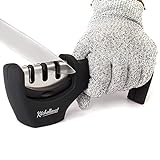
- TAR Score9.0
TAR Score is a ranking system developed by TopAppliancesReviews.com. TAR score has no relationship or impact from any manufacturers or sales agent websites. Learn more
- BrandKITCHELLENCE

- TAR Score8.8
TAR Score is a ranking system developed by TopAppliancesReviews.com. TAR score has no relationship or impact from any manufacturers or sales agent websites. Learn more
- BrandSharp Pebble

- TAR Score8.8
TAR Score is a ranking system developed by TopAppliancesReviews.com. TAR score has no relationship or impact from any manufacturers or sales agent websites. Learn more
- BrandKitchenIQ

- TAR Score8.6
TAR Score is a ranking system developed by TopAppliancesReviews.com. TAR score has no relationship or impact from any manufacturers or sales agent websites. Learn more
- Brandlongzon

- TAR Score8.6
TAR Score is a ranking system developed by TopAppliancesReviews.com. TAR score has no relationship or impact from any manufacturers or sales agent websites. Learn more
- Brandlongzon

Knife Sharpener,Jonurphy Kitchen Knife Sharpeners,Rotating Steel Wheel Sharpening Discs,Manual Knife
View on Amazon- TAR Score8.0
TAR Score is a ranking system developed by TopAppliancesReviews.com. TAR score has no relationship or impact from any manufacturers or sales agent websites. Learn more
- BrandJonurphy
Last update on 2026-10-24 / Affiliate links / Images, Product Titles, and Product Highlights from Amazon Product Advertising API
FAQs
How often should I use a manual sharpener on my kitchen knives?
Use the fine ceramic slot every one to two weeks to keep your edges straight and smooth during regular cooking. Reserve the coarse carbide slot for deeper tune-ups once or twice a year when the blade feels noticeably dull. Overusing the coarse slot strips away unnecessary steel and shortens the life of your knife.
Can I sharpen a serrated bread knife with a manual pull-through sharpener?
Never pull a serrated blade through coarse carbide slots because the cutters will snag, chip, and flatten the scalloped teeth. You can, however, draw a serrated knife gently through the fine ceramic slot using light pressure. The ceramic rods clean up tiny burrs along the teeth without altering the scalloped profile.
Why does my knife feel rough or sound scratchy after sharpening?
A rough edge happens when you press too hard in the coarse slot or skip the fine ceramic stage. Heavy pressure leaves coarse grind marks and creates a wire burr along the edge. Pull the knife through the fine ceramic slot five to six times with light pressure to smooth away the burr and polish the bevel.
How do I clean metal dust out of my manual sharpener?
Never soak your manual sharpener in water or place it in the dishwasher, as trapped moisture can damage internal parts. Instead, tap the base gently over a trash can to shake out loose metal shavings. You can wipe the exterior clean and clear the slots using a dry cloth or a small, soft brush.


Top Best Quiet Portable Generator Electric Start 2026 - (2026 Updated)

The 10 Best Portable Power Station For Tailgating 2026

10 Best Washing Machine For King Size Comforter of 2026 For Bulky Bedding

11 Best Semi Automatic Washing Machine Under 10000 of 2026 For Apartments and RVs

The Best Concrete Floor Buffer 2026 - Top Choices

Best Cooling Fan with HEPA Filter: Our 2026 Top Picks for Cleaner Air

Best poulan chainsaw 2026 - Reviews & Buying Guides

Value Picks: 10 Vitamix 5300 Best Price of 2026




