
How to Use a Knife Sharpening Stick Safely

Place the tip of the sharpening stick firmly down against a cutting board before bringing the blade near it. Anchoring the rod on the counter gives you steady control, allowing you to glide the blade downward at a consistent angle without risking your fingers. Pull the knife from heel to tip along the metal four or five times on each side. A standard kitchen rod does not grind off steel; it simply straightens a curled edge so your knife bites smoothly into food again.
A few details shift how you stroke the blade. Sturdy Western knives prefer a twenty-degree tilt, whereas thinner Japanese knives need a shallower fifteen-degree angle. Your rod material matters too: steel only realigns bent edges, while ceramic or diamond rods lightly shave away metal. If the blade is completely blunt, only a sharpening stone can rebuild it. Here is how to lock in your angle and reset your knife safely on your counter.
Does a sharpening stick really sharpen your knife?
Many home cooks pull the long metal rod from their wooden knife block expecting it to grind a dull blade into a razor. In most kitchens, that tool is not actually a sharpener. It is a honing rod, which functions as a metal straightening stick. Knowing the difference between sharpening and honing protects your knives from unnecessary wear.
When you chop food against a cutting board, the thin edge of your blade takes a beating. The bevel, which is the slanted cutting edge that tapers to the sharp apex, bends slightly under daily pressure. You might also notice a burr, which is the microscopic wire edge or curved sliver of metal that forms when steel folds over. When that edge curls, your knife feels dull because the flat side of that folded metal hits your ingredients instead of the sharp point.
A standard steel rod does not shave away metal. It gently pushes that bent rim back into a straight line. Think of it like combing tangled hair rather than cutting it off. Sharpening removes steel to create a brand new edge, while honing simply realigns what is already there. Ceramic or diamond rods do shave off microscopic amounts of metal, but classic steel rods strictly straighten the line.
How do you hold the stick safely on a counter?
Television chefs often hone knives in mid-air, but doing that at home is an easy way to slice a finger or round an edge. Waving a sharp blade in open space makes it almost impossible to maintain a steady angle or keep your hands safe. Placing the tip down on a counter gives you full control.
Use this simple setup every time you pick up the rod:
- Lay a damp dish towel or silicone mat on your kitchen counter to prevent slipping.
- Set a wooden or sturdy plastic cutting board over the damp towel so your workspace stays planted.
- Place the tip of the metal straightening stick firmly against the center of the cutting board.
- Hold the handle securely with your non-dominant hand, keeping your fingers tucked behind the safety guard.
- Keep the rod vertical, pointing straight up toward the ceiling like a fence post.
Holding the rod perpendicular to your cutting board provides a fixed reference point. Your blade moves across a steady surface, which stops wobbling and keeps your fingers far away from the sharp edge.
What angle should you hold your blade against the rod?
Holding the right angle determines whether you restore your edge or dull it further. If your angle is too wide, you mash the cutting apex against the steel. If your angle is too flat, the rod rubs against the blade face without ever touching the rolled edge.
Most kitchen knives fall into two main camps:
Western blades, like classic German cutlery, use a sturdy 20-degree utility edge per side. This angle creates a tough edge that handles squash, root vegetables, and thick cuts of meat without chipping. If you own knives from sets like those in our guide to German high-carbon steel knife block sets, staying close to 20 degrees protects that thicker steel design.
Japanese knives use harder, thinner steel ground to a steep 15-degree slicing edge per side. This narrow profile glides through raw fish and delicate vegetables with minimal drag. If you cut with blades like those featured in our roundup of high-carbon Japanese chef knife sets, use that shallower 15-degree angle to avoid damaging the refined edge.
To find these angles without special tools, place your knife flat against the vertical rod to form a 90-degree angle. Tilt the knife halfway toward the board to reach 45 degrees. Cut that space in half again for roughly 22 degrees. Keep it there for Western steel, or tilt it slightly closer to the rod for a Japanese blade. Lock your wrist so the angle does not drift.
What is the right way to slide the blade down?
Once the rod is anchored and your angle is set, the stroke should feel smooth, steady, and unhurried. You are guiding the steel with light contact rather than hacking into the rod.
Follow these steps for a clean stroke:
- Place the heel of the blade (the back end closest to the handle) against the top of the rod, just below the hand guard.
- Set your 15-degree or 20-degree angle, checking that the sharp edge makes light contact.
- Pull the knife downward toward the cutting board while pulling the handle back toward your body.
- Move smoothly so the blade glides along the rod from heel to tip in one fluid sweep.
- Stop just before the knife tip touches the cutting board to avoid chipping the point.
- Switch to the opposite side of the rod, match the angle, and repeat the downward stroke.
Use gentle pressure, similar to slicing through a ripe tomato. Heavy force will roll the steel unevenly or create flat spots. Four to six alternating strokes per side are plenty to bring an everyday edge back into alignment.
Which common honing mistakes ruin your knife edge?
Even careful home cooks pick up habits that harm their cutlery or cause slips. Watching out for a few frequent errors will protect your fingers and keep your knives slicing smoothly.
Avoid these common missteps:
- Honing in mid-air: Swinging a knife toward your body looks flashy, but a sudden slip can cause a severe cut on your hand or wrist.
- Pushing with heavy force: Pressing hard against the steel bends the thin cutting edge out of shape instead of aligning it.
- Rolling your wrist: Twisting your wrist during the stroke changes the angle, creating a rounded edge that slides off food.
- Missing the tip: Pulling the knife too fast often lifts the blade off the rod before the tip makes contact, leaving the front third of your knife dull.
- Clanging the steel: Smacking the blade loudly against the rod chips brittle steel and dings softer blades. Every pass should sound like a quiet, steady glide.
When should you switch to an actual whetstone?
A metal straightening stick works wonders on a bent edge, but it cannot fix every dull blade. Daily chopping eventually wears away microscopic particles of steel. Over time, the sharp V-shaped apex of the bevel wears into a blunt U-shape.
Once an edge becomes rounded, honing will not restore its bite because no steel is being removed to form a new apex.
You can check your edge condition at the cutting board:
- The paper check: Hold a sheet of printer paper by the corner and slice downward through the top edge. A well-honed knife glides through cleanly. If it catches, tears the sheet, or crumples the paper, the edge has worn down.
- The tomato skin check: Rest the blade on a ripe tomato without pressing down. Draw the knife back gently. A properly aligned edge bites through the skin instantly. If it skids across the surface, the bevel is too round for a rod.
When a knife fails these checks, switch to an abrasive whetstone. A whetstone uses coarse grit to reshape the edge by grinding off worn metal, followed by a fine grit stage to polish the bevel. Once that sharp V-shape is restored, your honing rod can take over regular maintenance once again.
What features should you look for in a honing rod?
If you need to add a metal straightening stick to your kitchen drawer, choosing the right style makes routine knife care much easier. You do not need an expensive setup, but a few core features ensure safe and consistent results.
Look for a rod that is at least two inches longer than your primary kitchen knife. If you use an eight-inch chef knife, pick a rod that measures ten or twelve inches. A shorter stick runs out of room before the blade tip finishes its sweep, leading to jerky, uneven strokes.
Check the rod material as well. Standard carbon steel rods with chrome plating offer dependable realignment for Western cutlery. Ceramic rods are harder and gently smooth tougher alloys, though they can break if dropped. Diamond-coated rods lightly shave metal to touch up dull spots quickly.
Finally, examine the handle and guard. A wide bolster or broad safety guard stops the blade from reaching your fingers if you slip, while an ergonomic handle keeps your grip secure throughout the stroke.

- TAR Score9.4
TAR Score is a ranking system developed by TopAppliancesReviews.com. TAR score has no relationship or impact from any manufacturers or sales agent websites. Learn more
- Brandwgsajlo

- TAR Score9.2
TAR Score is a ranking system developed by TopAppliancesReviews.com. TAR score has no relationship or impact from any manufacturers or sales agent websites. Learn more
- BrandUtopia Kitchen
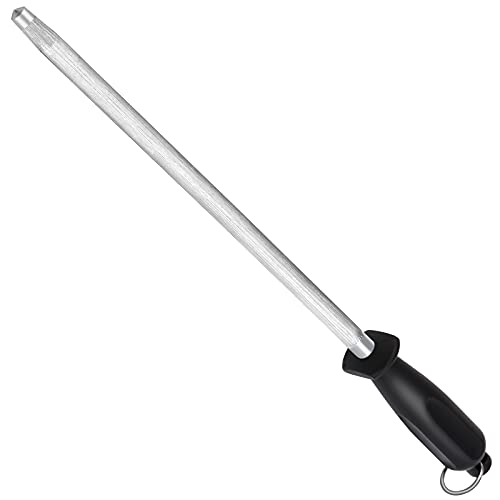
- TAR Score9.0
TAR Score is a ranking system developed by TopAppliancesReviews.com. TAR score has no relationship or impact from any manufacturers or sales agent websites. Learn more
- BrandAcoWELL
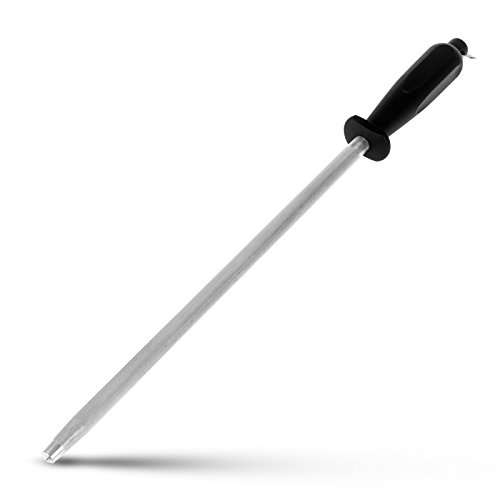
- TAR Score9.0
TAR Score is a ranking system developed by TopAppliancesReviews.com. TAR score has no relationship or impact from any manufacturers or sales agent websites. Learn more
- BrandALLWIN-HOUSEWARE W
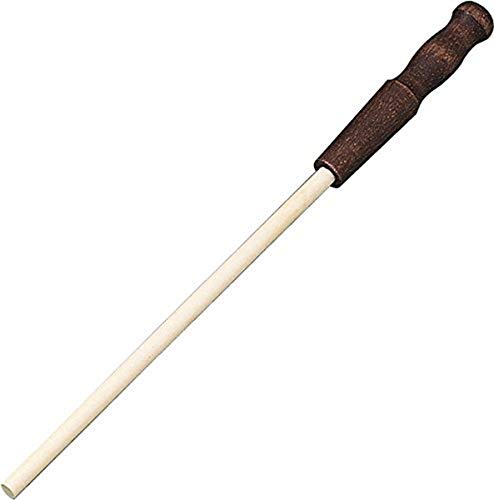
- TAR Score9.0
TAR Score is a ranking system developed by TopAppliancesReviews.com. TAR score has no relationship or impact from any manufacturers or sales agent websites. Learn more
- BrandArkansas Sharpeners
- TAR Score8.8
TAR Score is a ranking system developed by TopAppliancesReviews.com. TAR score has no relationship or impact from any manufacturers or sales agent websites. Learn more
- BrandKota Japan

- TAR Score8.8
TAR Score is a ranking system developed by TopAppliancesReviews.com. TAR score has no relationship or impact from any manufacturers or sales agent websites. Learn more
- BrandFANERFUN

- TAR Score8.8
TAR Score is a ranking system developed by TopAppliancesReviews.com. TAR score has no relationship or impact from any manufacturers or sales agent websites. Learn more
- BrandFeekoon

- TAR Score8.6
TAR Score is a ranking system developed by TopAppliancesReviews.com. TAR score has no relationship or impact from any manufacturers or sales agent websites. Learn more
- BrandUiozr
Last update on 2026-09-30 / Affiliate links / Images, Product Titles, and Product Highlights from Amazon Product Advertising API
FAQs
How often should you use a knife sharpening stick?
You can safely use a metal straightening stick every time you cook, either before starting prep or after washing your knife. Giving your blade three or four gentle passes keeps the cutting edge centered before it has a chance to fold over. Regular honing keeps prep work effortless and delays the need for abrasive whetstone sharpening.
Can you use a honing steel on serrated knives?
Standard honing rods are not designed for serrated bread knives or tomato slicers. The straight rod only touches the outer teeth points, skipping the curved recesses where most cutting happens. Serrated blades require a narrow, conical sharpening rod that fits inside each individual groove to realign the scalloped edge.
Should you wash the sharpening rod with soap and water?
Wipe your honing rod clean with a dry or lightly damp cloth after each use instead of soaking it in water. Steel rods can develop rust spots if moisture sits on the surface, and abrasive scouring pads can damage fine ridges. If cooking oils build up on the steel, clean it briefly with mild dish soap, rinse quickly, and dry it completely with a clean towel immediately.
Why does your knife still feel dull after honing?
If a knife still tears through food after several strokes on the rod, the edge has worn down completely or developed small chips. A metal straightening stick only re-centers bent steel; it cannot regrind missing metal. When honing no longer improves cutting performance, sharpen the blade on a stone to re-establish the slanted cutting bevel.


Top Rated Best Quality Range Hoods: 2026 Expert Picks

The 12 Best Small Solar Generators 2026

10 Best Quality Semi Automatic Washing Machine of 2026 For Leak-Free Laundry

11 Best Small Washer Machine of 2026 For Everyday Laundry

12 Best Vibration Pads For Washing Machine of 2026 To Stop Walking and Shaking

11 Best Selling Front Load Washing Machine of 2026 For Quiet Odor-Free Laundry

11 Best Washing Machine For King Size Bedding of 2026 To Prevent Cycle Errors

10 Best Small Front Loader Washing Machine of 2026 For Tight Closets






