
How to Use a Hot Knife for Clean Cuts

Tighten the blade into the handle while the tool is completely cold and unplugged. A loose connection prevents the metal from heating evenly and can slip once powered. After resting the tool on a metal stand to warm up, guide the edge with light pressure and let the heat melt the path. Moving at a steady pace in an airy room keeps the cut smooth without scorching the project or creating heavy smoke.
Hand speed depends on material density and tool wattage. Rigid craft foam parts quickly under a light wand, while thick plastic or dense rubber requires higher heat and a slower glide. Models with an adjustable dial let you balance heat against speed, whereas fixed-temperature tools force you to move faster to avoid melting deep gouges. Setting up your workspace correctly keeps the line crisp and keeps your fingers safe.
How should you set up your workspace and safety gear?
An electric hot knife works by heating a blade up to hundreds of degrees, melting synthetic materials on contact. Because the tool turns solid plastics into liquids and vapors, you must set up your cutting area to handle both intense heat and chemical fumes before plugging it in.
- Active cross-ventilation: Open two windows to create a steady breeze, or set up a fan blowing directly out an open window. Melting plastics and synthetic foam release invisible vapors that sting your eyes, nose, and throat. Never operate a hot knife in a closed room or a basement without fresh airflow.
- Heat-proof work surface: Place a thick glass cutting board, a glazed ceramic tile, or a sheet of bare plywood across your table. Never cut directly on plastic self-healing mats, vinyl craft tables, or finished furniture, because radiant heat from the blade tip will warp or scorch those surfaces instantly.
- Stable metal tool stand: Set your wire cradle or metal stand on a flat, level surface away from the edge of your bench. Tape the base down with painter's tape or clamp it lightly so the cord cannot yank the stand over.
- Hand and eye protection: Wear clear safety glasses to shield your eyes from stray drops of molten plastic. Keep a pair of snug leather work gloves or heat-resistant cotton gloves on your hands to protect your knuckles from accidental slips.
- Clear table perimeter: Clear all scrap paper, cardboard packaging, paper towels, and chemical cans at least three feet away from your cutting zone. A stray ember or dropped tool can quickly ignite dry workshop trash.
- Snag-free cord path: Route the electrical cord behind your hand so it hangs completely free. A power cable caught on a drawer pull or table leg can jerk a red-hot blade right off the stand and onto your lap.
How do you attach the blade safely before starting?
Never attempt to insert, adjust, or remove a hot knife blade while the tool is connected to power or still warm from a previous cut. Heating causes metal parts to expand slightly, which means mounting a blade into a warm tool often leads to loose fittings and bent shanks once the unit cools.
- Unplug the power cord from the wall outlet and feel the metal shaft with your bare fingers to confirm the tool is stone cold. Do not rely on an inline power switch alone, as switches can fail or turn on by accident.
- Loosen the blade locking collar (the chuck sleeve, which is the threaded metal ring that clamps the base of the blade to the heating core). Turn this collar counterclockwise using your fingers or the small stamped wrench included with your tool kit.
- Slide the flat shank of your chosen blade straight into the mounting slot until it stops against the inner seat. Position the blade so the sharpened cutting edge faces forward and lines up comfortably with your natural hand grip.
- Tighten the blade locking collar clockwise until it is snug against the blade base. Firm finger pressure or a light half-turn with a small wrench is plenty; cranking too hard on the collar can strip the brass threads.
- Gently tug the tip of the blade with a gloved hand to verify that it does not slide, twist, or rock in its socket. If it wobbles, loosen the collar, seat the shank deeper, and tighten it again.
- Rest the assembled tool securely in its metal cradle with the blade pointing up into open air before you plug the power cord into the wall.
How do you heat the knife and make smooth cuts?
A hot knife cuts through thermal melting, not physical arm strength. If you push the tool through the workpiece like a manual saw, you will bend the blade, crush the internal structure of your foam, and create ragged edges.
- Plug the tool into an outlet and let the heating core come up to full cutting temperature on its metal stand. A lightweight 30-watt craft wand warms up in about 25 seconds but needs 3 to 5 minutes to reach stable, full temperature, while a high-powered trigger gun reaches working heat in 5 to 10 seconds.
- Make a quick test cut on a scrap piece of your exact project material. If the blade snags or drags, it is running too cool; if the edges boil, flare, or puddle into wide valleys, your heat setting is too high.
- Hold the tool with a relaxed pencil grip for pen-style cutters, or a firm pistol grip for trigger tools. Position the blade against your cut line at a forward angle between 45 and 60 degrees.
- Rest the side of the blade against a metal straightedge if you need a clean, razor-straight line. Never use plastic rulers or wooden yardsticks as guides, because the heated edge will melt plastic and burn wood grooves into your guide.
- Guide the blade forward along the line using light, steady hand pressure. Move your entire forearm smoothly from the elbow rather than flicking your wrist, letting the heat liquefy a narrow path just ahead of the metal.
- Slice completely off the far edge of the material without stopping your forward motion. Pull the blade clear of the workpiece and immediately park the tool in its metal stand.
What stops foam from melting, gouging, or smoking?
Clean cuts depend entirely on matching your travel speed to your heat output. When problems happen during a cut, the cause is almost always resting time in one spot (dwell time), which allows heat to soak out into the surrounding material.
When you pause your hand along a cut line, heat radiates outward from the steel blade into the surrounding foam cells. This resting time causes large cavities, hollow craters, and melted dips along what should be a flat surface. To keep edges straight and clean, maintain a smooth, continuous glide from start to finish. If you need to stop to reposition your grip or clamp your board, pull the blade completely out of the cut first.
Heavy white or yellow smoke paired with black charring means your material is burning instead of cleanly melting. Clean thermal cutting creates a tiny, self-sealing bead of molten plastic along the cut border with almost zero visible smoke. If you see charred black crust forming on the foam or the blade, turn down your temperature dial. If your hot knife has a fixed single heat setting, speed up your hand movement across the cut line to limit how long the hot metal touches any single point.
Material density also changes how the knife behaves under heat. Cutting through rigid craft foam board (commonly sold as XPS or EPS foam for insulation and dioramas) requires steady forward momentum because the tight plastic cells trap heat. Soft upholstery foam behaves differently: pressing down on soft cushions compresses the foam fibers, resulting in wavy, uneven edges once the material springs back. When working with flexible foam, use a longer blade and slice with gentle surface contact without pushing down into the cushion.
People often try to force difficult cuts with physical muscle when the blade slows down. But forcing the tool is a mistake. Traditional food prep blades, such as those found in German high-carbon steel knife sets, cut by driving a sharp mechanical bevel through soft fibers using hand force. A hot knife does the opposite: it uses thermal energy to separate plastic polymers. If you feel resistance, pushing harder will only bow the hot metal shank or snap the brass collar. When the blade bogs down, slow your hand down or turn the heat dial up to let the temperature clear the path.
How do you cool, clean, and store the knife?
Burnt plastic residue left on a blade bakes into a hard carbon shell during future heat cycles. This crust ruins heat transfer, causes uneven drag during cuts, and smokes heavily every time you turn the tool on. Cleaning the blade while it is still warm keeps it working smoothly.
- Unplug the power cord from the outlet the moment you finish your final cut. Always cut power before cleaning so you do not risk shocks or run the heater dry.
- Wipe soft plastic residue off the warm blade using a folded, damp cotton rag or a soft brass wire brush. Gently swipe the brass bristles along the flat faces of the blade from the handle toward the tip. Never use synthetic shop towels, polyester fleece, or nylon scrubbers, as synthetic fibers will melt directly onto the hot metal.
- Set the unplugged tool back into its metal cradle. Make sure the hot tip rests in open air at the center of your table, well away from table edges, cords, and reaching children.
- Leave the tool alone to cool for at least 15 to 20 minutes. Check the temperature by holding the back of your hand two inches above the metal heating barrel. Only touch the tool once you feel zero heat radiating off the surface.
- Loosen the blade locking collar and remove the blade. Inspect the cutting edge for any stubborn burnt buildup, and polish it away using a fine steel wool pad or a brass cleaning sponge.
- Place your clean blades flat inside their plastic organizer box to prevent edge nicks. Loop the electrical cord loosely in wide circles rather than wrapping it tightly around the handle, which prevents the inner copper wires from kinking and snapping.
What type of hot knife works best for your projects?
Different cutting jobs require different tool designs, power levels, and blade shapes. Picking the right setup prevents frustration, broken blades, and ruined projects.
Craft wand cutters are lightweight tools shaped like a thick writing pen that draw around 30 watts of power. These craft wands are ideal for thin plastic stencils, lightweight hobby foam, fine curves, and decorative wood burning (pyrography). Their slim barrels let you hold the tool close to the tip with pencil-style control. But their lower heat capacity means they struggle on foam thicker than an inch and will drag if moved quickly.
Pistol-grip trigger cutters draw 100 watts or more and feature heavy-duty transformer bases. These tools heat up in seconds and cut through thick, dense blocks of rigid craft foam board, architectural insulation, and synthetic mooring ropes. The trigger handle gives you instant on-off power control, and the heavy blades resist bending during deep cuts. However, their larger size makes fine stencil work and tiny radius cuts clumsy.
Before buying a hot knife, check what comes in the box. Look for models with a built-in variable temperature dial that lets you adjust the heat for different plastic densities. Make sure the package includes a heavy metal stand that holds the tool securely, several blade styles (such as straight flat blades, curved gouges, and fabric sealing tips), and an easily replaceable blade locking collar so you can swap parts when wear occurs.

- TAR Score9.6
TAR Score is a ranking system developed by TopAppliancesReviews.com. TAR score has no relationship or impact from any manufacturers or sales agent websites. Learn more
- BrandRobert Rose

Special Sponge Cutting Knife, 6PCS Thickened Sofa Cushion/Mattress/High-Density Sponge Cutting
View on Amazon- TAR Score9.2
TAR Score is a ranking system developed by TopAppliancesReviews.com. TAR score has no relationship or impact from any manufacturers or sales agent websites. Learn more
- BrandRONGTER

- TAR Score8.8
TAR Score is a ranking system developed by TopAppliancesReviews.com. TAR score has no relationship or impact from any manufacturers or sales agent websites. Learn more
- BrandROMECH

- TAR Score8.4
TAR Score is a ranking system developed by TopAppliancesReviews.com. TAR score has no relationship or impact from any manufacturers or sales agent websites. Learn more
- BrandStorey Publishing

- TAR Score7.8
TAR Score is a ranking system developed by TopAppliancesReviews.com. TAR score has no relationship or impact from any manufacturers or sales agent websites. Learn more
- BrandHonoson

- TAR Score7.6
TAR Score is a ranking system developed by TopAppliancesReviews.com. TAR score has no relationship or impact from any manufacturers or sales agent websites. Learn more
- BrandHonoson

- TAR Score7.4
TAR Score is a ranking system developed by TopAppliancesReviews.com. TAR score has no relationship or impact from any manufacturers or sales agent websites. Learn more
- BrandV TOWER
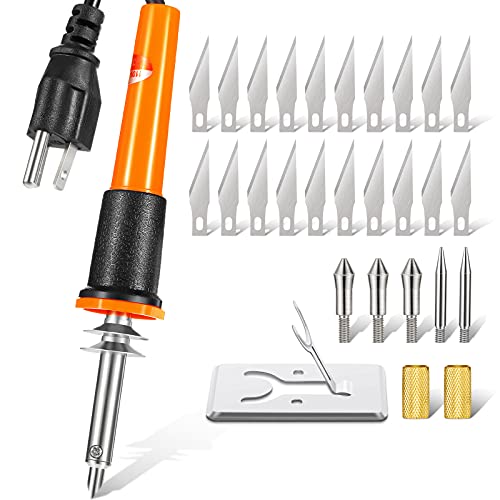
- TAR Score7.4
TAR Score is a ranking system developed by TopAppliancesReviews.com. TAR score has no relationship or impact from any manufacturers or sales agent websites. Learn more
- BrandHonoson

- TAR Score7.4
TAR Score is a ranking system developed by TopAppliancesReviews.com. TAR score has no relationship or impact from any manufacturers or sales agent websites. Learn more
- BrandVIKROM

- TAR Score6.6
TAR Score is a ranking system developed by TopAppliancesReviews.com. TAR score has no relationship or impact from any manufacturers or sales agent websites. Learn more
- BrandMENGMENGYAO
Last update on 2026-10-09 / Affiliate links / Images, Product Titles, and Product Highlights from Amazon Product Advertising API
FAQs
Can you use a hot knife to cut hard plastic containers?
Yes, a hot knife cuts cleanly through hard plastics like polypropylene flowerpots, storage bins, and toy shells without cracking the surrounding plastic. Keep the blade moving at a steady pace to prevent wide melted borders, and work next to an open window to clear the heavy smoke. Thin plastics cut best at lower heat, while thick plastic containers require slow passes at higher temperatures.
Why is my hot knife blade bending during cuts?
Blades bend when you push the tool with your arm instead of letting the heat melt the path. Heated metal softens slightly at high temperatures, making it easy to warp if forced against cool, dense material. Slow your hand down to let the heat lead the cut, or turn the heat dial higher so the blade glides freely without physical resistance.
What causes black char marks on the edges of foam?
Black char marks and harsh smoke happen when the blade temperature is too high or your hand is moving too slowly. The excess heat burns the chemical compounds in the foam instead of cleanly melting them. Lower your temperature setting by a few marks, or glide the blade faster across the cut line to reduce heat exposure.
Can you sharpen a hot knife blade like a normal knife?
Hot knife blades do not require a razor edge because heat performs the actual separation. The blade bevel only needs a clean, smooth taper to push the molten liquid aside as it travels forward. Instead of sharpening the edge with stones, simply wipe off baked-on plastic with brass wire brushes or steel wool so heat transfers evenly across the steel.


Top Rated Best Quality Range Hoods: 2026 Expert Picks

The 12 Best Small Solar Generators 2026

10 Best Quality Semi Automatic Washing Machine of 2026 For Leak-Free Laundry

11 Best Small Washer Machine of 2026 For Everyday Laundry

12 Best Vibration Pads For Washing Machine of 2026 To Stop Walking and Shaking

11 Best Selling Front Load Washing Machine of 2026 For Quiet Odor-Free Laundry

11 Best Washing Machine For King Size Bedding of 2026 To Prevent Cycle Errors

10 Best Small Front Loader Washing Machine of 2026 For Tight Closets






