
How to Use a Boning Knife Safely for Clean Cuts

Using a boning knife starts with keeping the flat of the blade pressed against the bone and using short, light strokes with the tip to follow the natural seams of the meat. How firmly you press and steer that blade changes with the cut on your cutting board. The sharp edge should glide along the skeleton rather than hack into it, slicing only through white sinew and soft cartilage (the rubbery tissue at the joints).
Soft poultry curves easily around a bendy blade that flexes with light pressure, while dense beef or pork roasts need a rigid blade that will not wander off track. Your grip also shifts with the angle. A close pinch grip gives you fine control on a flat board, while wrapping your fingers in a reverse grip helps pull thick meat away from stubborn joints. Here is how to handle each cut cleanly without slipping or wasting meat.
Mastering the Two Safe Grips and Free-Hand Placement
Raw meat and poultry quickly coat your fingers in slick fat. When hands lose their grip, a slender blade can slip off target. Establishing a secure hold before cutting keeps you in control and protects your fingers from the edge.
- Lock in the pinch grip for tabletop slicing: Place your thumb and the side of your index finger directly against the blade steel just ahead of the handle. Wrap your remaining three fingers firmly around the handle. This grip prevents the knife from rolling in greasy palms and gives you direct control to steer the pointed tip along flat cutting boards.
- Switch to the reverse grip for downward pulling: Grasp the handle in a solid fist with the blade pointing down from the bottom of your hand, resting your thumb over the butt end. This position lets you use your arm strength to pull meat away from hanging joints without twisting your wrist.
- Tuck your guide hand into a protective claw: When holding meat or bone steady, curl your free fingers inward like a bear claw, resting your flat fingernails against the food. Keep this hand stationed behind the forward path of the blade. If the knife skids across slick bone, the edge moves safely away from your fingers.
- Wipe down your board and handle regularly: Keep a dry kitchen towel right next to your cutting board. Pausing to wipe wet juices or fat off your knife handle restores your grip instantly, doing far more to prevent slips than relying on textured handles alone.
The Scrape-and-Glide Rule: Working Directly Against Bone
Many home cooks worry that touching bone ruins a sharp edge. To avoid contact, they steer the blade too far out, leaving thick ribbons of meat behind. In butchery, bone is not an obstacle. It is a solid guide rail that helps you make clean cuts.
The scrape-and-glide rule means keeping the flat side of the blade pressed flush against the bone while angling the cutting edge slightly toward it. Because bone is hard and smooth, the side of your knife skates along it without digging in. This position ensures your edge shears off meat right at the root, capturing every ounce of edible protein.
Always work with short, gliding strokes using the front third of the blade. The narrow tip is built to find the natural seams where muscle attaches to the skeleton. Long sawing cuts only shred tender muscle fibers and leave ragged edges. Short sweeps allow you to release connective tissue (tough white sinew and gristle) with minimal effort.
Listen to your knife as you work. A properly angled boning knife produces a soft scraping sound against the bone. If you feel sudden resistance, do not push harder. Pull the tip back slightly, adjust the blade until the flat face sits flush against the bone again, and resume your smooth cut.
Step-by-Step Guide to Removing Meat from Joints and Ribs
- Trace the skeleton by hand before cutting: Press your fingers along the meat to locate the exact path of the underlying bones.
Reason: Feeling the hard bone line gives you a clear visual map, stopping you from hacking blindly into prime meat. - Score a shallow groove along the bone ridge: Rest the pointed tip against the bone at one end and draw the blade lightly along the skeletal ridge.
Reason: This initial cut opens a clean channel and exposes the solid bone surface for your blade to ride against. - Peel the meat back with your guide hand: Grip the loosened meat flap with your non-cutting hand and gently pull it up and away from the carcass.
Reason: Pulling the meat taut stretches connective tissue (tough white sinew and gristle), making it pop open cleanly under light blade pressure. - Glide the flat of the blade along the bone wall: Lay the knife side flat against the bone surface and use smooth sweeping strokes along the skeletal wall.
Reason: Using the bone as a guide rail allows the edge to clear away meat without leaving pockets of edible protein behind. - Locate and pop open the joint socket: When you approach a ball joint or leg hinge, bend the limb backward with your hands until the joint pops open.
Reason: Popping the joint exposes the soft cartilage gap between the bones so you do not drive the knife edge into hard bone. - Slice straight through the soft cartilage gap: Insert the blade tip directly into the opened seam and sever the slippery gristle and bands connecting the bones.
Reason: Soft cartilage parts easily under a sharp edge, allowing the bones to separate smoothly without dulling or chipping the blade. - Finish with a downward sweep against the board: Angle the knife downward toward your cutting board and make one final sweeping stroke along the bone base.
Reason: A single clean sweep creates smooth cutlets and leaves the stripped carcass clean for homemade broth or soup stock.
What to Cut and What to Never Force with Your Knife
A boning knife uses a slim blade with a steep angle, such as a narrow 15-degree slicing edge per side. This narrow profile slips easily between tight muscles, but it cannot withstand brute force. Knowing what yields to your edge and what damages the blade protects your knife from chips or bent tips.
Keep this quick safety checklist in mind at your cutting station:
- Safe to cut: Soft white cartilage: The smooth, rubbery pads capping chicken knees, wing joints, and rib ends yield easily under gentle pressure. Slicing through these soft caps will not hurt your edge.
- Safe to cut: Connective sinew and silver skin: Tough white sinew and translucent silver skin slice away cleanly when you slip the blade flat beneath them and push forward.
- Safe to cut: Skin and fat layers: Poultry skin and outer fat caps offer minimal resistance and separate cleanly with smooth, steady strokes.
- Never force: Solid dense bone: Never try to cut through beef leg bones, pork ribs, or thick turkey drumsticks. Boning knives are not bone saws, and forcing the edge against solid bone will chip or roll the metal.
- Never force: Semi-frozen meat: Ice crystals inside frozen meat act like gravel against a thin blade. Always thaw meat completely before trimming.
- Never force: Prying sideways in tight joints: Never twist the blade sideways to force open a stubborn joint. Lateral twisting snaps slender tips; instead, put the knife down and break the joint by hand.
Stiff vs Flexible Boning Blades for Different Cuts
Boning knives come in two primary styles: a flexible blade (a bendy blade that curves around bone) and a stiff blade (a rigid blade that stays straight in thick cuts). Matching your blade style to the meat on your cutting board makes trimming faster, safer, and cleaner.
A flexible blade acts like an extension of your fingers. When pressed against the rib cage of a chicken or the curved backbone of a fish, the thin steel bends slightly to match that curve. This allows you to skin poultry cutlets or fillet fish without gouging the meat. It also excels at removing silver skin from tenderloins, flexing flat against the muscle so you trim only tough sinew.
A stiff blade provides firm strength for heavier cuts. When butchering large beef roasts, pork shoulders, or venison, a flexible blade bends unintentionally and veers off course. A stiff blade holds a straight line through thick muscle, giving you the leverage needed to scrape meat away from large leg bones. Many cooks pair a stiff boning knife with their German high carbon steel knife sets, since thicker steel designs offer the rigid backbone needed for heavy butchery.
Blade profile also matters. Curved boning blades allow for long rocking cuts along hanging carcasses during field dressing. Straight boning blades work best for downward tabletop prep, giving you a direct line of sight to peel chicken breasts or slice cutlets cleanly.
Choosing a Boning Knife That Fits Your Kitchen Prep
If your chef knife feels clumsy and shreds meat during trimming, adding a dedicated boning knife solves the problem immediately. When choosing a blade, focus on core construction details rather than decorative styling.
Start by verifying the tang construction. A full tang means one solid piece of blade steel extending all the way through the handle. This provides balance and stops the knife from cracking under downward pressure. A partial tang, where the blade metal narrows or stops inside the handle, can loosen over time when trimming tough meat.
Consider the steel type based on how you maintain your tools. Stainless steel provides rust-resistant, easy-to-clean metal that handles wet poultry without spotting. High-carbon steel stays sharp longer through heavy trimming, but it requires dry wiping and light oiling after use to avoid rust. Storing your knife in magnetic knife blocks protects the delicate edge from bumping against other tools inside a drawer.
Finally, check the handle ergonomics and safety guard. Look for a knife with an integrated finger guard or bolster at the base of the blade. That physical ridge stops greasy hands from sliding forward onto the edge when you cut through slick meats. A textured, moisture-resistant handle provides secure footing even when coated in poultry juices.

- TAR Score9.6
TAR Score is a ranking system developed by TopAppliancesReviews.com. TAR score has no relationship or impact from any manufacturers or sales agent websites. Learn more
- BrandStorey Publishing

- TAR Score9.2
TAR Score is a ranking system developed by TopAppliancesReviews.com. TAR score has no relationship or impact from any manufacturers or sales agent websites. Learn more
- BrandMOSFiATA

- TAR Score9.2
TAR Score is a ranking system developed by TopAppliancesReviews.com. TAR score has no relationship or impact from any manufacturers or sales agent websites. Learn more
- BrandTUO
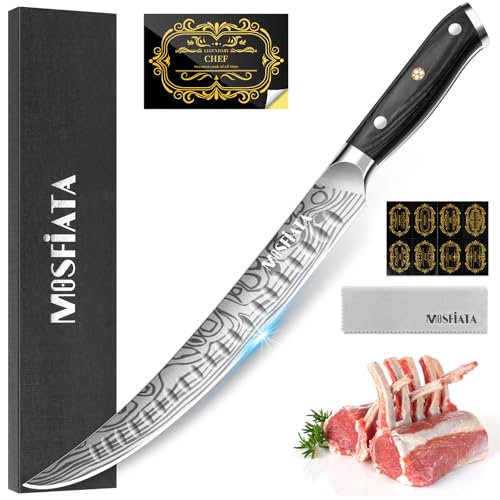
- TAR Score9.2
TAR Score is a ranking system developed by TopAppliancesReviews.com. TAR score has no relationship or impact from any manufacturers or sales agent websites. Learn more
- BrandMOSFiATA

- TAR Score9.0
TAR Score is a ranking system developed by TopAppliancesReviews.com. TAR score has no relationship or impact from any manufacturers or sales agent websites. Learn more
- BrandDream Reach

- TAR Score8.8
TAR Score is a ranking system developed by TopAppliancesReviews.com. TAR score has no relationship or impact from any manufacturers or sales agent websites. Learn more
- BrandKitory

- TAR Score8.6
TAR Score is a ranking system developed by TopAppliancesReviews.com. TAR score has no relationship or impact from any manufacturers or sales agent websites. Learn more
- BrandKitch N' Wares

- TAR Score8.2
TAR Score is a ranking system developed by TopAppliancesReviews.com. TAR score has no relationship or impact from any manufacturers or sales agent websites. Learn more
- BrandPlys
Last update on 2026-11-05 / Affiliate links / Images, Product Titles, and Product Highlights from Amazon Product Advertising API
Frequently Asked Questions
How do you hold a boning knife so it does not slip in wet hands?
Use a firm pinch grip by gripping the base of the blade between your thumb and index finger, while wrapping your remaining fingers securely around the handle. Keep a dry kitchen towel nearby to wipe fat and meat juices off your hands and the knife handle every few minutes.
Does a boning knife actually touch the bone while cutting?
Yes, the flat side of the blade should rest directly against the bone surface throughout your cut. The bone acts as a physical guide rail, allowing the sharp edge to shave meat cleanly off the skeleton without wasting edible portions.
Can a boning knife cut straight through thick beef bones?
No, a boning knife cannot cut through calcified bone. Its thin, tapered blade is built exclusively for slicing soft meat, connective gristle, and flexible cartilage. Hacking into hard bone will chip, bend, or snap the delicate cutting edge.
How do you cut through poultry joints without chipping the blade?
Bend the joint backward with your hands until the ball pops out of the socket before applying the knife. Once the joint opens, slide the pointed tip directly through the soft gap to sever the slippery cartilage and tendons holding the bones together.


Top Best Quiet Portable Generator Electric Start 2026 - (2026 Updated)

The 10 Best Portable Power Station For Tailgating 2026

10 Best Washing Machine For King Size Comforter of 2026 For Bulky Bedding

11 Best Semi Automatic Washing Machine Under 10000 of 2026 For Apartments and RVs

The Best Concrete Floor Buffer 2026 - Top Choices

Best Cooling Fan with HEPA Filter: Our 2026 Top Picks for Cleaner Air
Best poulan chainsaw 2026 - Reviews & Buying Guides

Value Picks: 10 Vitamix 5300 Best Price of 2026






