
How to Sharpen Scissors With a Knife Sharpener Safely

A dull pair of kitchen shears bends a sheet of parchment paper instead of slicing through it, leaving someone glancing at the countertop knife sharpener nearby. That tool will work only if it has a dedicated scissor slot or an exposed flat stone. Running scissors through a standard V-shaped knife notch grinds down the flat inside face, which creates a gap between the blades and ruins the cutting edge.
The right approach depends on the design of the sharpener and the shears themselves. A pull-through unit or an electric model must feature a specialized scissor guide, while a traditional whetstone or ceramic rod allows the single angled edge to be sharpened by hand. It also matters whether the center pivot screw comes apart so the blades can be handled separately. Here is how to check your setup and restore a clean cut safely.
Why can you not use regular knife slots on scissors?
Kitchen knives and scissors cut things in completely different ways. A standard kitchen knife uses a double bevel, which is an angled cutting edge ground on both sides of the blade. When you press a knife down into an onion or a roast, that sharp V-shaped wedge pushes the food apart from the center. You can see this symmetrical wedge design across almost all standard kitchen cutlery, including the blades in a German high-carbon steel knife block set.
Scissors do not wedge material apart. Scissors work by shearing, which is a cutting action where two flat metal edges slide directly past each other. Each scissor blade has two distinct surfaces you need to know. The outside surface has a steep angled cutting edge, known as the bevel. The inside surface, which faces the opposite blade, is completely flat. When you close the handles, those two flat faces glide past each other with virtually zero gap, shearing paper, herbs, cardboard, or fabric cleanly along the line.
A standard knife sharpener slot features two abrasive rods or ceramic wheels positioned in a narrow V-shape. When you pull a blade through, it removes metal from both sides at the exact same time. If you slide a scissor blade through that V-shaped knife slot, the abrasive surface will grind away metal from the flat inside face. It puts an angle where the blade must stay completely flat.
Once you put an angle on the flat inside face, the blades can no longer meet tightly. You create an open gap between the cutting edges. The next time you try to cut wrapping paper or cloth, the material will simply slip into that gap and fold over. You will end up with chewed edges, jammed blades, and a ruined pair of scissors that can no longer make a clean cut.
How do you tell if your sharpener works on scissors?
You can sharpen scissors at home, but you must verify that your sharpener has the right surface for the job. Take a close look at your sharpening equipment before touching any blades to abrasives. You are looking for a surface that touches only the single angled bevel, leaving the flat inside face untouched.
- A dedicated scissor slot on a pull-through sharpener: Many multi-use manual sharpeners feature an extra slot located on top of the handle or off to the side. Look for a small scissor icon stamped into the plastic. This slot does not have a V-shape. Instead, it contains a single flat abrasive plate or a spring-loaded rod that only contacts the outer bevel of the blade.
- A dedicated electric scissor guide: Some electric kitchen sharpeners include a narrow channel on the side casing designed specifically for shears. This slot holds the blade at a steep single angle against a spinning abrasive wheel or flexible belt, keeping the inside face safely out of the grinding zone.
- A flat sharpening stone or whetstone: A traditional bench stone is completely safe for scissors. Because the stone is a flat block, you control the angle with your hands. You can lay the factory bevel directly against the stone while keeping the flat inside face away from the grit.
- What to avoid completely: Avoid any pull-through slot that pinches the blade from both sides. Avoid crossed ceramic rods, fixed carbide V-notches, and narrow chef knife slots. If a slot sharpens both sides of a blade at the same time, keep your scissors away from it.
How do you sharpen scissors with a dedicated scissor slot?
If your sharpener includes a slot built specifically for scissors, restoring the edge is straightforward. Work slowly and follow these steps to keep the blades aligned.
- Clean and dry the blades: Scissor blades often collect tape adhesive, kitchen grease, or food residue. Wipe the blades clean with warm soapy water or rubbing alcohol. Dry them completely with a towel. Sharpening dirty blades pushes grime into the sharpener and causes uneven abrasion.
- Anchor the sharpener: Set the sharpener on a flat, sturdy counter. If your model has a non-slip rubber base or an active suction lock, press it down firmly. You need the sharpener completely stable so it does not wobble while you pull the blade.
- Open the scissors wide: Spread the blades open as far as they will go. Hold the sharpener handle firmly with your non-dominant hand.
- Seat the blade in the slot: Insert one scissor blade into the dedicated slot. Position the base of the blade, right next to the center pivot screw, down against the abrasive rod. Ensure the flat inside face rests against the guide wall, with the outer bevel resting on the abrasive bar.
- Draw the blade smoothly toward you: Pull the blade straight back in one smooth motion from pivot to tip. Apply light, gentle downward pressure. Let the abrasive do the work. Pressing down hard can gouge the steel or round off the fine point at the tip.
- Repeat with matching strokes: Pull the blade through three to five times. Take the second blade, seat it in the slot, and pull it through the exact same number of times. Keeping the stroke count identical ensures both blades wear down at the same rate.
- Wipe away metal shavings: Use a dry paper towel to wipe away the dark metal dust from both blades before closing the scissors.
How can you sharpen scissors on a flat sharpening stone?
A flat whetstone or water stone gives you complete control over the sharpening process. Unlike delicate kitchen knives found in Japanese Damascus chef knife sets that use acute 15-degree slicing angles, scissor blades have a steep, sturdy bevel, usually between 60 and 75 degrees. A flat stone lets you match that steep factory angle precisely.
- Prepare your workspace: Place a damp towel or a rubber stone holder on your counter. Set your sharpening stone on top so it cannot slide. If using a water stone, splash it with water until the surface is slick. If using an oil stone, apply a few drops of mineral oil.
- Separate the blades if possible: Look at the pivot screw, which is the center screw holding the two halves together. If your scissors have an adjustable screw, loosen it with a screwdriver and separate the two halves. Working with a single blade is much easier and safer. If your scissors use a permanent pressed rivet, simply open the handles as wide as possible.
- Find the factory bevel angle: Place the angled cutting edge of the blade flat on the stone. Rock the blade gently until you feel the flat face of that angled bevel resting flush against the stone surface. You should see no light underneath the bevel.
- Push the blade across the stone: Hold the blade firmly at that exact angle. Push the blade forward across the stone, moving diagonally from the base near the pivot screw out toward the tip. Think of it like trying to shave a microscopic slice off the top of the stone.
- Use light, consistent strokes: Make five to eight steady forward strokes. Lift the blade between strokes rather than dragging it backward. Check the edge under a bright light. You should see a clean, uniform scratch pattern along the entire length of the angled bevel.
- Do not grind the flat inside face: Keep the flat inside face away from the stone. Grinding an angle onto that flat side will destroy the shearing action. Repeat the process on the second blade using the exact same number of strokes.
Why are your scissors still folding paper instead of cutting?
If you sharpened your scissors but they still crush paper or bend fabric instead of slicing through, the blade edge is rarely the problem. A dull scissor edge usually folds material because of one of two mechanical issues: an unremoved burr or a loose center connection.
A burr is a rough wire edge or curved sliver of metal that forms on the opposite side of the blade during sharpening. When you grind the angled bevel, a microscopic lip of metal curls over onto the flat inside face. Because that rough lip curls inward, it physically pushes the two blades apart as they pass each other, creating an open gap that folds paper.
Removing the burr is simple, but you must do it correctly:
- The natural shearing clear: Put the scissors together and close them smoothly once. As the blades pass each other, the shearing action will snap the microscopic burr right off. Wipe the blades with a cloth to remove the loose metal particles.
- The flat stone swipe: If a stubborn burr remains, lay the flat inside face completely flush against your finest sharpening stone. Keep the blade totally flat with zero tilt. Push the blade across the stone once with very light pressure. This removes the burr without altering the flat face geometry.
The second common culprit is the pivot screw. Shearing requires constant, firm contact between both cutting edges. Over months of use, the center screw naturally backs out. If the screw is loose, the pressure of cutting pushes the blades away from each other sideways. Grab one handle in each hand and wiggle them gently side to side. If you feel any play or hear a click, the pivot is loose. Take a screwdriver and tighten the screw in tiny quarter-turn increments. The blades should open and close smoothly without wobbling, offering slight, even resistance through the entire stroke.
What sharpener features should you look for before buying?
If you want a single sharpener to maintain your kitchen knives and household scissors, choosing a versatile unit saves drawer space and protects your tools. Not all multi-purpose units handle scissors safely, so keep a few practical design features in mind.
First, verify that the sharpener provides a dedicated, labeled scissor slot with a single-sided guide. A quality unit never forces your scissor blades into standard double-bevel knife slots. Look for guides that automatically position the blade at a steep utility angle, taking the guesswork out of hand alignment.
Second, prioritize a multi-stage system with different grit levels. A coarse ceramic or tungsten stage works well to clear out small nicks and reshape blunt edges, while a fine ceramic slot smooths away rough spots and polishes the shearing edge. Sharpening scissors on an overly coarse grit without a fine finishing stage leaves jagged micro-teeth that snag on delicate fabric.
Finally, check the base design for stability. Pulling scissor blades requires steady, controlled motions. Look for a unit with a wide footprint, a non-slip rubber grip, or an active counter suction base. A sharpener that stays firmly locked to your countertop prevents slipping and protects your fingers while you work.
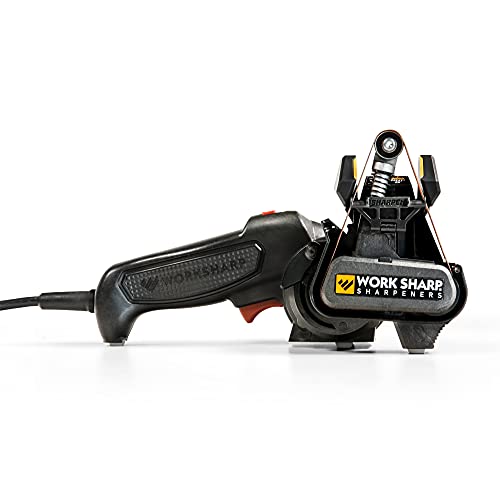
- TAR Score9.4
TAR Score is a ranking system developed by TopAppliancesReviews.com. TAR score has no relationship or impact from any manufacturers or sales agent websites. Learn more
- BrandWORK SHARP

- TAR Score9.2
TAR Score is a ranking system developed by TopAppliancesReviews.com. TAR score has no relationship or impact from any manufacturers or sales agent websites. Learn more
- BrandSULLARYA

- TAR Score9.2
TAR Score is a ranking system developed by TopAppliancesReviews.com. TAR score has no relationship or impact from any manufacturers or sales agent websites. Learn more
- BrandWORK SHARP

- TAR Score9.0
TAR Score is a ranking system developed by TopAppliancesReviews.com. TAR score has no relationship or impact from any manufacturers or sales agent websites. Learn more
- BrandSmith's
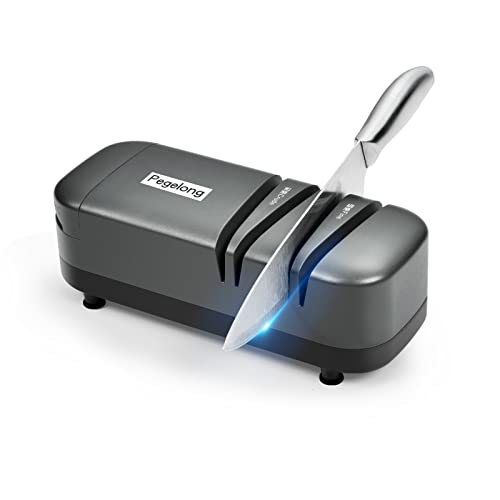
- TAR Score8.8
TAR Score is a ranking system developed by TopAppliancesReviews.com. TAR score has no relationship or impact from any manufacturers or sales agent websites. Learn more
- BrandPegelong

- TAR Score8.6
TAR Score is a ranking system developed by TopAppliancesReviews.com. TAR score has no relationship or impact from any manufacturers or sales agent websites. Learn more
- Brandlongzon

- TAR Score8.6
TAR Score is a ranking system developed by TopAppliancesReviews.com. TAR score has no relationship or impact from any manufacturers or sales agent websites. Learn more
- BrandSHARPAL

- TAR Score8.2
TAR Score is a ranking system developed by TopAppliancesReviews.com. TAR score has no relationship or impact from any manufacturers or sales agent websites. Learn more
- BrandFuceter
Last update on 2026-10-05 / Affiliate links / Images, Product Titles, and Product Highlights from Amazon Product Advertising API
FAQs
Can you sharpen scissors using aluminum foil?
Cutting through folded aluminum foil does not sharpen scissors in the true sense. It does not grind a fresh cutting edge or remove metal to restore a blunt bevel. Cutting foil can help clean away sticky residue and lightly polish minor rough spots along the edge. For genuinely dull blades, you must use an abrasive stone or a dedicated scissor sharpener slot to restore the cutting bevel.
Should you take scissors apart before sharpening them?
You should only take scissors apart if they feature an adjustable center screw and you plan to use a flat sharpening stone. Separating the halves makes sharpening on a flat stone much easier and safer. If you are using a pull-through sharpener with a dedicated scissor slot, leave the scissors assembled. If your scissors have a permanent stamped rivet instead of a screw, never try to force them apart.
What angle should you use when sharpening scissors?
Scissor blades typically use a steep bevel angle between 60 and 75 degrees measured from the flat inside face. This creates a sturdy, durable edge designed to slide hard against another steel blade. Kitchen knives, by comparison, use much lower slicing angles between 15 and 20 degrees. Always look closely at your scissor blade under a bright light and match the existing factory slope rather than grinding a new angle.
How do you know when scissor blades are sharp?
You can check the sharpness of your scissor blades by cutting through a single sheet of damp paper towel or lightweight fabric. Dull scissors will grab, tear, or fold damp paper towel between the blades. A sharp pair will glide through cleanly from the pivot all the way to the tips without catching or snagging.


Top Rated Best Quality Range Hoods: 2026 Expert Picks

The 12 Best Small Solar Generators 2026

10 Best Quality Semi Automatic Washing Machine of 2026 For Leak-Free Laundry

11 Best Small Washer Machine of 2026 For Everyday Laundry

12 Best Vibration Pads For Washing Machine of 2026 To Stop Walking and Shaking

11 Best Selling Front Load Washing Machine of 2026 For Quiet Odor-Free Laundry

11 Best Washing Machine For King Size Bedding of 2026 To Prevent Cycle Errors

10 Best Small Front Loader Washing Machine of 2026 For Tight Closets






