
How to Sharpen a Fillet Knife Without Bending the Blade

A dull blade skids right across slippery fish skin, tearing the meat instead of gliding through it cleanly. Getting that clean bite back means resting the edge at a shallow 15-degree angle and sweeping it across a stone with steady finger support. Keeping your free fingers flat against the blade stops the springy steel from flexing out of place, protecting the entire cutting edge from heel to tip.
How you tackle the job depends on your setup, the condition of the metal, and how springy the steel feels. Fixing a neglected edge on an oil stone takes more patience than a fast touch-up with a ceramic dockside tool. Longer, whippy blades also call for a lighter hand than stiffer boning knives so the delicate point stays straight. Learning these basic movements will keep your blade slicing cleanly through your next catch.
Finding the 15 to 18 Degree Angle on a Flexible Blade
A fillet knife needs a much thinner cutting edge than a standard kitchen knife. Everyday chef knives or hunting blades use a sturdy 20-degree edge per side to chop dense vegetables and meat. In contrast, a fillet knife requires a shallow 15 to 18 degree angle per side. This narrow profile creates a delicate bevel (the angled cutting edge ground along the side of the blade) that glides between delicate fish meat and skin without tearing flesh.
Thin kitchen blades often use similar shallow geometry to slice cleanly. For example, thin-bladed high-carbon Japanese chef knives also rely on narrow angles for clean, effortless slices rather than brute force. On a fillet knife, this slim profile allows you to steer the blade right along the spine and rib bones of a trout, bass, or salmon. A wider hunting angle bounces off rib bones, crushes meat, and snags on tough skin.
The biggest challenge when setting this angle is blade flexibility. Fillet knives are slender, springy blades made to bend around bones. When you press a rigid knife against a flat stone, the steel stays straight. When you press a flexible fillet knife down, the thin steel bows in the middle. If the blade bends, the angle shifts from a clean 15 degrees at the handle to an accidental 25 degrees near the curve. That flex rounds off your cutting edge and leaves the tool dull.
To find the angle without guessing, use an everyday visual guide. Lay the flat face of the blade against your sharpening stone. Slowly lift the spine until the gap matches the thickness of two stacked quarters, or roughly the slope of a folded matchbook. That small gap establishes a clean 15 to 17 degree pitch. Lock your wrist and keep that exact gap steady without pressing hard enough to bend the metal.
Step-by-Step Whetstone Technique for Thin, Springy Steel
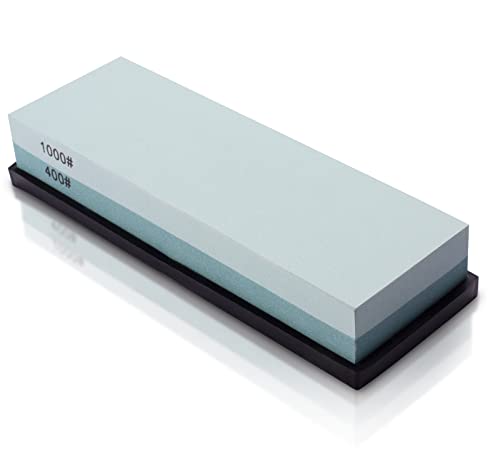
A flat bench stone gives you the most control when restoring a razor edge on flexible steel. Water stones work exceptionally well because the slurry of water and loose stone particles sharpens smoothly without overheating thin metal. Look at the grit (the roughness of the sharpening stone) before you begin. A coarse grit, such as 400 grit, reshapes dull edges or removes tiny nicks. A fine grit, such as 1000 grit, refines that edge into a keen, polished slicer.
Place your sharpening stone on a level table inside a non-slip silicone base or over a damp shop towel so it cannot slide. Apply water to the stone, then follow these steps:
- Set your stance and initial angle: Stand squarely in front of your work table. Hold the knife handle firmly in your dominant hand with your index finger resting lightly along the spine for direction. Place the heel of the blade across the far end of the stone, lifting the spine to your 15-degree angle.
- Support the blade with your free hand: Place the pads of two or three fingers from your off-hand flat on the blade face, directly above the contact point on the stone. This finger placement keeps the thin metal flat without bowing. Apply only feather-light pressure, about the weight of a ripe peach, so the blade stays true.
- Sweep smoothly from heel to tip: Pull the knife toward you in a steady diagonal sweep across the stone from heel to tip. As the stone reaches the curved belly near the tip, raise your wrist slightly to follow the curve of the blade. Keep your guiding fingers moving along the blade face to support the contact point.
- Feel for the burr: After six to eight strokes on the coarse grit side, check for the burr (the tiny metal lip or microscopic wire edge that forms on the opposite side during sharpening). Slide your thumb pad gently upward from the spine toward the cutting edge on the opposite side. If you feel a rough, catching ridge from heel to tip, you have ground through the old dull steel.
- Flip and repeat on the second side: Turn the knife over to sharpen the opposite bevel. Match the 15-degree angle, support the flexible steel with your guiding fingers, and pull the blade across the stone for the same number of strokes until the burr flips over.
- Polish on the fine stone: Switch your stone to the 1000-grit side. Repeat the sweeping motion with even lighter pressure. Make five strokes per side, then alternate single strokes back and forth to remove the burr. Rinse the blade under clean water and dry it with a clean towel.
Field Touch-Ups, Sharpness Checks, and Mistakes to Avoid
When you are standing at a dockside cleaning table with a cooler full of fresh fish, you rarely have time to soak a whetstone. That is when portable tools and honing rods save the day. It helps to understand honing (straightening a bent edge without grinding away steel). As a fillet knife slices along backbone ribs, the microscopic edge bends slightly out of line. Swiping the blade down a magnetized carbon steel honing rod four or five times pushes that folded edge back into straight alignment instantly without grinding away metal.
Portable pull-through sharpeners also work well for fast field resets if you treat them gently. These compact tools feature pre-set crossed carbide blades to strip away dull metal and ceramic rods to smooth the edge. The common trap with pull-through sharpeners is dragging a flexible blade through the slots with heavy downward force. Pushing down causes the thin blade to chatter and flex inside the slot, carving deep, wavy grooves into the cutting edge. Hold the sharpener firmly on a flat table, place the heel in the slot, and pull the blade straight through using only the light weight of the knife itself. Three or four light passes through the fine ceramic slot are usually enough to restore cutting bite.
Before cleaning fish, confirm that your edge is ready. Never check an edge by dragging a bare thumb along the blade. Instead, use these safe verification checks:
- The printer paper slice: Hold a piece of standard paper upright by one corner. Place the heel of the fillet knife on the top edge of the paper and push gently forward. A sharp 15-degree edge will glide through the paper silently without snagging or tearing.
- The thumbnail catch: Rest the cutting edge very lightly across the top of your thumbnail at a 45-degree angle with zero downward pressure. A properly sharpened blade catches the surface immediately, while a dull blade skitters across the nail without gripping.
- The tail-skin bite: At the fillet board, place the blade against the skin near the tail of the fish. A sharp edge cuts through the skin on a single gentle pull without needing a sawing motion.
Avoiding common sharpening errors extends blade life. Keeping edges aligned is just as critical on kitchen cutlery, such as the blades in German high-carbon steel knife sets, where angle control prevents damage. On fillet knives, avoid these four frequent mistakes:
First, avoid heavy downward pressure. Pressing hard bends the springy steel, creating an uneven bevel that makes the knife wander during filleting. Second, do not wobble your wrist. Rocking the knife up and down rounds off the sharp point where the two bevel sides meet. Third, avoid over-sharpening the center of the blade. Anglers often focus on the middle section, grinding away so much metal that the blade develops an inward swayback curve that cannot lie flat against the cutting board. Finally, never use high-speed electric workshop grinders or dry belt sanders on a fillet knife. Thin stainless steel heats up in seconds on a dry grinder. That intense friction ruins the factory temper of the metal, leaving the steel permanently soft and incapable of holding an edge.
What to Look for in Fillet Knives and Sharpening Gear
Maintaining a razor edge starts with choosing the right tools for your kitchen or tackle bag. When selecting a fillet knife, focus on blade materials that balance flexibility with spine strength. Look for quality stainless steel (rust-resistant, easy-to-clean metal) that resists pitting from salt water and fish blood. A knife with a full tang (one solid piece of blade steel extending all the way through the handle) offers greater balance, control, and leverage during sharpening than a knife with a partial tang (where the blade metal narrows or stops inside the handle).
For your sharpening setup, keep both a bench stone and a portable tool handy. A dual-sided water stone with a secure non-slip silicone base is ideal for seasonal maintenance at home. The rubber base stops the wet stone from skidding across counters while you work. For the boat or cleaning table, choose a compact two-stage sharpener with pre-set angles for thin sport knives, or a magnetized steel honing rod that gathers metal dust. Before buying, verify that portable tools have a wide grip with finger guards and rust-resistant parts.

- TAR Score9.4
TAR Score is a ranking system developed by TopAppliancesReviews.com. TAR score has no relationship or impact from any manufacturers or sales agent websites. Learn more
- BrandACCUSHARP

- TAR Score9.4
TAR Score is a ranking system developed by TopAppliancesReviews.com. TAR score has no relationship or impact from any manufacturers or sales agent websites. Learn more
- BrandQueego
- TAR Score9.0
TAR Score is a ranking system developed by TopAppliancesReviews.com. TAR score has no relationship or impact from any manufacturers or sales agent websites. Learn more
- BrandMIDO Professional Abrasive
- TAR Score9.0
TAR Score is a ranking system developed by TopAppliancesReviews.com. TAR score has no relationship or impact from any manufacturers or sales agent websites. Learn more
- BrandSmith's
- TAR Score9.0
TAR Score is a ranking system developed by TopAppliancesReviews.com. TAR score has no relationship or impact from any manufacturers or sales agent websites. Learn more
- BrandKITCHELLENCE
- TAR Score8.8
TAR Score is a ranking system developed by TopAppliancesReviews.com. TAR score has no relationship or impact from any manufacturers or sales agent websites. Learn more
- BrandSharp Pebble

- TAR Score8.8
TAR Score is a ranking system developed by TopAppliancesReviews.com. TAR score has no relationship or impact from any manufacturers or sales agent websites. Learn more
- BrandFANERFUN

- TAR Score8.8
TAR Score is a ranking system developed by TopAppliancesReviews.com. TAR score has no relationship or impact from any manufacturers or sales agent websites. Learn more
- BrandSharp Pebble

- TAR Score8.4
TAR Score is a ranking system developed by TopAppliancesReviews.com. TAR score has no relationship or impact from any manufacturers or sales agent websites. Learn more
- BrandStorey Publishing
Last update on 2026-10-03 / Affiliate links / Images, Product Titles, and Product Highlights from Amazon Product Advertising API
FAQs
How often should you sharpen a fillet knife while cleaning fish?
Touch up your blade with a honing rod or fine ceramic slot every three to five fish. Hard scales, rib bones, and sand on the skin bend the microscopic cutting edge quickly. Doing a light, ten-second touch-up throughout your cleaning session prevents dullness and saves you from having to grind the knife on a coarse stone later.
Can you sharpen a fillet knife with a standard kitchen pull-through sharpener?
Most standard kitchen sharpeners feature fixed slots set at 20 degrees per side for thick chef knives. While these tools make a dull knife cut, they create a wider bevel that resists slicing through tough fish skin. Look for a sharpener designed for thin sport or boning blades with slots preset between 15 and 18 degrees.
Why does my fillet knife slide across fish scales instead of cutting?
A blade slides over fish scales when the edge has rolled over or developed flat spots from striking bones. Without a crisp, pointed apex, the rounded metal cannot bite into slick surfaces. Realigning the edge on a smooth ceramic rod or removing damaged metal on a fine whetstone will restore that immediate cutting grip.


Top Rated Best Quality Range Hoods: 2026 Expert Picks

The 12 Best Small Solar Generators 2026

10 Best Quality Semi Automatic Washing Machine of 2026 For Leak-Free Laundry

11 Best Small Washer Machine of 2026 For Everyday Laundry

12 Best Vibration Pads For Washing Machine of 2026 To Stop Walking and Shaking

11 Best Selling Front Load Washing Machine of 2026 For Quiet Odor-Free Laundry

11 Best Washing Machine For King Size Bedding of 2026 To Prevent Cycle Errors

10 Best Small Front Loader Washing Machine of 2026 For Tight Closets






