
How to Sharpen a Serrated Knife Without Ruining the Teeth

Dull blade teeth feel intimidating to fix, but restoring them is completely safe and straightforward once you have the right motion. The secret is to sharpen each curved groove individually with a round tapered rod, working only on the angled side of the edge. After touching up each dip, a gentle stroke across the flat backside clears away the tiny raised ridge of metal.
The exact routine shifts slightly depending on the knife in your hand. Blades feature different scallop widths, so matching the thickness of the rod to the curve keeps the pointed tips intact. Almost all bread knives and pocket tools are ground on just one face, leaving the opposite side flat. A knife that simply tears soft bread needs only a few strokes per tooth, while chipped metal takes slower, steady work. Here is how to match your tool to the blade and refresh every curve cleanly.
Keep Your Serrated Blade Away From Standard Flat Stones and Pull-Through Slots
Straight kitchen knives make direct contact with cutting boards, which gradually dulls their flat edge. Serrated knives work differently. A serrated blade uses pointed teeth with curved dips, known as scallops, recessed between them. The sharp dips do the actual slicing, while the pointed tips pierce tough crusts and protect the inner curves from hitting hard cutting boards.
Using a flat whetstone on a serrated knife ruins the blade geometry. A bench stone is flat, so it touches only the outermost tips of the teeth. Rubbing the blade across a flat stone grinds those points into blunt stubs while the curved scallops never touch the abrasive. You lose your piercing tips while the blade remains dull.
Pull-through sharpeners cause even faster damage. These tools use V-shaped carbide or ceramic slots meant for straight edges. Dragging a wavy serrated blade through that narrow slot makes the teeth catch violently against the hard inserts. This jerking motion bends delicate teeth, chips hard steel, and tears uneven gouges into the blade.
Many home cooks face this when caring for knives from German high-carbon steel premium knife block sets. While the chef knife sharpens easily on flat stones, the serrated bread slicer requires individual care. Ruining the tooth pattern turns a precision slicer into an awkward saw that tears food. Each curved hollow must be sharpened on its own.
Pick a Tapered Sharpening Rod That Matches Your Blade Teeth
Sharpening a serrated blade requires an abrasive tool that fits inside the recessed curves without grinding down the points. A tapered sharpening rod is built specifically for this task. A tapered rod features a cone shape that is narrow at the tip and widens toward the base, letting it fit different curves.
Blade teeth vary in size across different knives. A bread knife usually features wide, sweeping curves, while an everyday carry pocket knife or steak knife has narrow grooves. A tapered rod solves this problem because you can slide it into any scallop until its diameter matches the width of that curve, ensuring even contact across the inner dip.
Two abrasive materials handle this work best:
- Diamond-coated steel: Diamond particles cut rapidly into tough metals. A medium diamond grit (around 400 to 600 grit) removes worn steel quickly and restores a crisp edge in just a few light strokes.
- Fine ceramic: Ceramic rods provide a smoother surface for routine touch-ups when the teeth only need light polishing.
When selecting a sharpening rod, look for these key features:
- Wide taper range: Choose a rod tapering from about 1/16 inch at the tip to roughly 1/4 inch near the handle to fit tiny grooves and broad scallops alike.
- Durable diamond surface: Diamond coatings work efficiently on modern stainless steel (rust-resistant, easy-to-clean metal) as well as harder high-carbon steel (harder metal that stays sharp longer but requires dry wiping and light oiling).
- Secure handle: Pick a tool with a non-slip handle or a retractable pen-style housing that locks rigidly during use, preventing the rod from slipping and scratching the blade.
Sharpen Each Curved Tooth From the Beveled Front Side
Sharpening a serrated blade requires steady patience because you must work on each tooth individually. Once you establish a rhythm, the process moves quickly.
- Locate the beveled side: Look down the spine under bright light. Nearly all serrated knives are ground on only one face, leaving the opposite side flat. The front face features an angled slope (the bevel) leading into each hollow. You will do your sharpening work exclusively on this sloped face.
- Fit the rod to the first scallop: Hold the knife firmly with the beveled face pointing toward you. Place your tapered rod into the first curve near the heel of the blade. Slide the rod along its length until its diameter matches the width of the dip without riding over the pointed tips.
- Match the factory bevel angle: Tilt the rod until it rests flush against the angled slope of the tooth, typically between 15 and 20 degrees. Holding the rod too flat scratches the blade cheek, while holding it too steep blunts the cutting edge.
- Stroke through the scallop with light pressure: Push the rod across the curve in a smooth stroke away from the spine toward the edge. Use light, controlled pressure and let the abrasive do the cutting. Heavy force can gouge the steel or distort the tooth shape.
- Apply equal strokes to every tooth: Give the first curve four to six light strokes. Move to the next scallop, match the width, align the angle, and apply the exact same number of strokes. Work methodically along the blade until you reach the tip.
Gently Smooth Away the Raised Metal Burr on the Flat Back
Sharpening the beveled face pushes steel over to the opposite side of the blade. This creates a burr (a tiny rough ridge of raised metal or microscopic wire edge) along the flat back of each tooth. Leaving this rough lip in place causes the knife to catch, drag, and tear food rather than slicing cleanly.
Clearing this burr requires a light touch so you do not alter the flat side of the blade:
- Locate the burr with your fingers: Turn the knife over with the flat back facing up. Glide the pad of your finger across the flat face, moving from the spine outward past the cutting edge. Never slide your finger along the length of the teeth. You will feel a scratchy ridge catching on your skin along the edge of each tooth.
- Lay your tool flat against the back: Place your tapered rod, a flat ceramic stone, or fine sandpaper flat against the back face of the blade. Keep the tool at a zero-degree angle. Tilting the tool creates a reverse bevel, which alters the factory geometry and stops the knife from cutting straight.
- Make light sweeping passes: With the tool resting flat against the steel, sweep it gently from the heel of the blade to the tip. Use feather-light pressure. The goal is simply to snap off the thin wire burr without grinding metal away from the flat face.
- Clean and store the blade properly: Wipe the blade with a clean microfiber cloth to remove loose metal filings. Wash the knife by hand with warm water and mild dish soap, then dry it immediately. Storing your clean slicer on magnetic knife blocks and knife set combos protects the fresh edges from knocking against other utensils inside crowded drawers.
Confirm the Edge on Crusty Bread Instead of Forcing the Cut
After sharpening and deburring, confirm that the blade cuts cleanly without requiring downward force. A sharp serrated knife should bite into slick surfaces and slice cleanly under light hand pressure.
Use these simple checks to verify your edge:
- The paper slice check: Hold a sheet of printer paper upright by one corner. Place a scallop against the top edge and draw the blade forward with gentle downward pressure. A sharp tooth bites cleanly into the paper and slices straight through without snagging or tearing.
- The crusty bread check: Place a loaf of crusty sourdough or artisan bread on your cutting board. Rest the teeth on top of the crust and draw the knife backward using gentle strokes. The sharp scallops should puncture and separate the hard crust immediately without crushing the soft bread below.
- The ripe tomato check: Lay the blade across a ripe tomato and draw it forward using only the weight of the knife. A keen serrated edge pierces the slick skin effortlessly without slipping or flattening the fruit.
- The light reflection check: Hold the blade directly beneath a bright light bulb and tilt it back and forth. A dull edge or rounded tooth reflects light back as a shiny white spot. A properly sharpened tooth absorbs light and presents a dark, clean cutting apex.
Choose a Portable Tapered Diamond Rod for Easy Blade Upkeep
Restoring a serrated blade does not require motorized grinding wheels or complicated sharpening systems. A simple tapered diamond sharpening rod provides the control needed to maintain each scallop individually without damaging factory profiles.
When selecting a sharpening rod for your serrated knives, keep these practical points in mind:
- Cone diameter range: Verify that the rod tapers down to a fine 1/16-inch tip and expands to at least 1/4 inch at the base. This ensures the tool fits narrow micro-serrations on utility knives as well as broad hollows on bread slicers.
- Abrasive grit quality: Diamond-coated steel provides fast metal removal on tough stainless steel (rust-resistant, easy-to-clean metal) as well as harder high-carbon steel alloys with minimal pressure. A medium grit around 400 to 600 grit reshapes dull teeth quickly without leaving deep scratches.
- Rigid handle mechanism: Look for a rod that locks firmly into its handle or storage housing. Retractable pen-style models allow you to store the rod inside an aluminum barrel, keeping the abrasive clean and protected in a drawer or outdoor pack.
- Versatile shaping profiles: Some tapered rods feature a flat side or a half-round spine along one section. This design allows you to touch up plain straight edges alongside your serrated blades using a single compact tool.

- TAR Score9.4
TAR Score is a ranking system developed by TopAppliancesReviews.com. TAR score has no relationship or impact from any manufacturers or sales agent websites. Learn more
- BrandACCUSHARP

- TAR Score9.2
TAR Score is a ranking system developed by TopAppliancesReviews.com. TAR score has no relationship or impact from any manufacturers or sales agent websites. Learn more
- BrandSmith's
- TAR Score9.0
TAR Score is a ranking system developed by TopAppliancesReviews.com. TAR score has no relationship or impact from any manufacturers or sales agent websites. Learn more
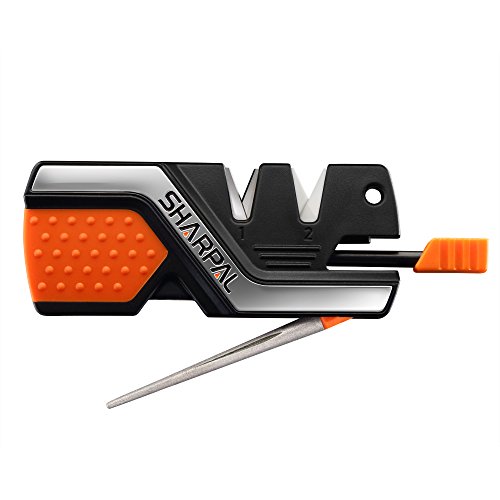
- BrandSHARPAL

Wolfride 2Pcs Serrated Knife Sharpener, Retractable Diamond Sharpening Rod Multifunctional
View on Amazon- TAR Score9.0
TAR Score is a ranking system developed by TopAppliancesReviews.com. TAR score has no relationship or impact from any manufacturers or sales agent websites. Learn more
- BrandWolfride

- TAR Score9.0
TAR Score is a ranking system developed by TopAppliancesReviews.com. TAR score has no relationship or impact from any manufacturers or sales agent websites. Learn more
- BrandWamery

- TAR Score8.6
TAR Score is a ranking system developed by TopAppliancesReviews.com. TAR score has no relationship or impact from any manufacturers or sales agent websites. Learn more
- BrandSHARPAL

- TAR Score8.6
TAR Score is a ranking system developed by TopAppliancesReviews.com. TAR score has no relationship or impact from any manufacturers or sales agent websites. Learn more
- Brandlongzon

- TAR Score8.6
TAR Score is a ranking system developed by TopAppliancesReviews.com. TAR score has no relationship or impact from any manufacturers or sales agent websites. Learn more
- BrandDMT (Diamond Machining Technology)

- TAR Score8.6
TAR Score is a ranking system developed by TopAppliancesReviews.com. TAR score has no relationship or impact from any manufacturers or sales agent websites. Learn more
- BrandSharp Pebble
Last update on 2026-10-02 / Affiliate links / Images, Product Titles, and Product Highlights from Amazon Product Advertising API
FAQs
Can you sharpen a serrated bread knife with a smooth kitchen honing steel?
A standard kitchen honing steel is too thick to fit inside the curved scallops of a serrated knife. It only contacts the outer tips of the teeth, which can bend or blunt them without touching the dull hollows where cutting happens. Use a tapered sharpening rod that matches the curve of each tooth instead.
How often do serrated blades actually need sharpening?
Serrated knives stay sharp much longer than straight-edge chef knives because their cutting curves rarely strike the hard surface of a cutting board. A bread knife used a few times a week typically needs sharpening only once every two to three years. If the knife squishes soft bread crusts or slips on tomato skins, it is time for a touch-up.
What should you do if a tooth on a serrated knife is chipped?
Small chips inside a scallop can be smoothed out gradually by working that specific tooth with a medium-grit diamond rod until the notch disappears. If a large tooth is broken or snapped off entirely, reshaping it by hand takes hours and alters the blade profile. For severe damage, send the knife to the manufacturer or a professional cutlery sharpening service to regrind the tooth pattern.
Can you use sandpaper wrapped around a wooden dowel in an emergency?
If you do not own a tapered rod, you can wrap a piece of 600-grit wet-or-dry sandpaper tightly around a thin wooden dowel or pen that matches the tooth width. Apply light, sweeping strokes through each scallop just as you would with a sharpening rod. While this works in a pinch, a diamond-coated tapered rod is much more durable and fits varying tooth sizes more accurately.


Top Rated Best Quality Range Hoods: 2026 Expert Picks

The 12 Best Small Solar Generators 2026

10 Best Quality Semi Automatic Washing Machine of 2026 For Leak-Free Laundry

11 Best Small Washer Machine of 2026 For Everyday Laundry

12 Best Vibration Pads For Washing Machine of 2026 To Stop Walking and Shaking

11 Best Selling Front Load Washing Machine of 2026 For Quiet Odor-Free Laundry

11 Best Washing Machine For King Size Bedding of 2026 To Prevent Cycle Errors

10 Best Small Front Loader Washing Machine of 2026 For Tight Closets






