
How to Sharpen a Porcelain Knife Without Chipping It

A porcelain knife can only be sharpened using diamond abrasives, since ceramic is far harder than regular steel and standard sharpening stones. That approach changes completely if the blade has deep cracks instead of simple dullness, which makes home repair unsafe. Everyday metal rods and pull-through sharpeners cannot scrape ceramic into shape. Instead, those tools catch against the rigid material, snapping tiny flakes off the edge and ruining the blade for good.
The right fix depends on the tools available and the size of the damage. A handheld diamond stone offers great control for smoothing out light wear, while a diamond-wheel electric unit reshapes the bevel (the slanted cutting edge) with minimal effort. Large chips, however, often call for factory mail-in sharpening rather than a DIY fix. Here is how to restore that sharp edge step by step without breaking the blade.
The Short Version
- Use diamond abrasives only: Porcelain ceramic is harder than steel, so standard whetstones and steel rods cannot cut it. Only diamond abrasives can safely reshape the edge.
- Avoid standard pull-through sharpeners: Metal carbide blades and coarse ceramic rods catch on brittle porcelain, snapping off chunks and ruining the edge.
- Work with zero downforce: When sharpening by hand, use feather-light pressure at a 15-degree angle. Let the diamond crystals shave the ceramic without forcing the blade.
- Consider factory mail-in service: For deep notches or snapped tips, professional sharpening from the knife maker is often cheaper and safer than buying diamond gear.
Why Standard Kitchen Sharpeners Ruin Porcelain Blades
To understand why ordinary kitchen sharpeners destroy a porcelain blade, you have to look at what ceramic actually is. Most kitchen porcelain knives are made from pressed zirconium oxide powder, fired under extreme heat. This creates a surface nearly as hard as diamond. Steel knife blades register much lower on the hardness scale. Because ceramic is so hard, it holds a razor-sharp factory edge for months or years without dulling.
Steel knives dull when their thin metal edge rolls over under pressure. You can use a steel honing rod to push the metal straight again, or an aluminum oxide stone to shave away slivers. Steel is ductile, meaning it bends without breaking. That is why traditional sharpening methods work so well on blades like those found in German high-carbon steel premium knife sets.
Porcelain behaves in the opposite way. It is completely rigid, with zero flex. When you run a porcelain blade across a standard steel honing rod, the ceramic edge does not bend back into place. Instead, the hard ceramic gouges the softer steel, while the impact chatters along the blade and shatters the thin cutting edge into microscopic fragments.
Tungsten carbide pull-through sharpeners cause even worse destruction. These tools use two carbide plates in a V-notch to scrape metal away. When brittle porcelain meets those rigid cutters, they catch on surface irregularities. Instead of shaving off smooth material, the carbide breaks off visible chunks of ceramic, turning your edge into a ruined, jagged line.
Sharpening Tools That Safely Cut Ceramic
Because porcelain is harder than almost any common mineral, you can only cut and smooth it with an abrasive that is harder than zirconium oxide: diamond. A diamond abrasive uses microscopic pieces of industrial diamond bonded to a metal base to cleanly shave particles off the ceramic edge without fracturing it.
When sharpening a porcelain knife at home, choose one of these diamond tools:
- Diamond bench plates: Solid steel plates electroplated with industrial diamond grit. They stay flat, giving you steady control over your bevel (the angled cutting edge). A medium 600-grit plate reshapes the profile, and a fine 1000-grit plate polishes the edge.
- Electric diamond-wheel sharpeners: Countertop machines using spinning discs coated in fine diamond abrasive. Built-in angle guides hold the blade while motorized wheels grind ceramic with minimal pressure.
- Diamond manual pull-through units: Compact sharpeners featuring diamond-coated wheels or rods in their slots, designed to guide the blade without snagging.
Avoid these everyday kitchen tools entirely:
- Tungsten carbide V-notches: They catch and rip large chunks out of the brittle edge.
- Steel honing rods: They chip the apex without sharpening anything.
- Ceramic honing rods: Rubbing brittle ceramic against ceramic causes surface micro-fractures.
- Aluminum oxide whetstones: Standard waterstones are softer than zirconia, meaning the knife gouges the stone while staying dull.
Step-by-Step Guide to Diamond Sharpening at Home
Sharpening a porcelain knife requires a different touch than sharpening steel. With steel, you apply moderate pressure to raise a burr (the microscopic wire edge of bent metal that forms on the opposite side). Porcelain does not bend, so it never forms a burr. If you feel a rough wire edge on ceramic, you have created micro-chips (tiny nicks along the edge). Follow these steps using a diamond bench plate:
- Clean and dry the blade: Wash the knife with warm soapy water and wipe it dry. A clean surface ensures the diamond grit makes direct contact with the ceramic.
- Anchor your stone: Place your diamond plate on a damp towel or rubber base so it cannot slip. Add a few drops of water to the plate to rinse away white ceramic dust as you work.
- Set your cutting angle: Find the factory bevel (the angled cutting edge). On most porcelain knives, this is about 15 degrees per side. Visualize the thickness of two pennies stacked together between the spine of the knife and the stone. Lay the bevel flat at that angle.
- Use feather-light pressure: Do not press down into the plate. Use only the light weight of the knife itself, guided by your fingers. Downward pressure concentrates force onto the brittle edge and causes chips. Let the diamond crystals do the cutting.
- Sweep from heel to tip: Draw the blade across the diamond plate in a smooth stroke from heel to tip. Keep your wrist steady. Lift the blade cleanly at the end rather than dragging it backwards.
- Switch sides frequently: Because ceramic does not form a flexible burr, alternate sides every three to four strokes. Grind both sides evenly for two to three minutes.
- Inspect the edge: Wipe the blade clean and check it under a bright light. A dull or chipped edge reflects light like a shiny wire. A sharpened edge looks dark because the apex is razor-thin.
- Check on food: Test the sharpness by slicing through a ripe tomato skin. The blade should slide through effortlessly without pushing down.
How to Fix Minor Edge Chips Without Cracking the Blade
Accidents happen in busy kitchens. Dropping a porcelain knife into a sink, cutting against glass, or hitting an avocado pit can cause micro-chips (tiny nicks along the edge). If these nicks are smaller than a millimeter, you can grind them out at home using a coarse diamond plate.
To eliminate a micro-chip, do not grind only the notch itself. Grinding one spot creates a hollow dip in the blade that prevents flat contact with a cutting board. You must lower the entire cutting profile evenly.
Use a 400-grit or 600-grit diamond plate. Hold the knife at a 20-degree angle and make light sweeping passes from heel to tip. Grind both sides evenly until the edge line drops to the bottom of the chip. Once the edge is straight again, lower the blade back to its original 15-degree bevel angle to rebuild the cutting apex. Finish with a 1000-grit plate to smooth away grinding marks.
Watch for structural cracks while you work. Hold the blade up to a bright light. If you see a dark hairline crack running upward from a chip toward the spine, stop immediately. A vertical fracture means the blade could snap in half during normal cutting, leaving sharp shards in your food. A cracked porcelain blade cannot be saved and must be discarded.
Factory Mail-In Service Versus Home Sharpening
Before buying diamond sharpening equipment, compare home maintenance with professional factory service. Leading ceramic knife makers, like Kyocera, offer dedicated mail-in sharpening programs.
Factory sharpening has significant benefits. Manufacturers use specialized, water-cooled diamond grinding wheels. Technicians can reshape severe chips, grind a new tip if yours snapped off, and restore precise factory bevels that are hard to replicate by hand. For many brands, the sharpening labor is free, requiring only a small shipping and handling fee of around ten to fifteen dollars.
Home sharpening makes sense if you already own diamond bench plates and your knife only has minor dullness. Spending ten minutes making light passes on a fine diamond stone restores slicing power without waiting weeks for return shipping.
If your knife has chips deeper than a millimeter, a snapped tip, or if you do not own diamond plates, factory service is the smarter route. High-quality diamond stones often cost more than buying a replacement porcelain knife.
Once your knife is sharp, store it carefully to prevent future chips. Avoid storing ceramic knives loose in drawers. Use blade guards or a dedicated rack, such as a magnetic knife block, where the edge never touches hard cookware.
What to Look for in a Ceramic-Safe Knife Sharpener
If you want to maintain porcelain knives at home, selecting the right type of knife sharpener is essential. The most important feature to verify is the abrasive material. The sharpener must explicitly state that it uses diamond abrasives, diamond-coated rods, or diamond-surfaced wheels. Any tool relying on tungsten carbide blades, ceramic stones, or aluminum oxide will shatter your knife.
Check the slot design carefully. Many countertop sharpeners feature multiple sharpening stages in one unit. If you pick a multi-stage sharpener, ensure the diamond stage can be used independently. You must be able to sharpen your ceramic knife on the diamond slot without pulling it through carbide blades or non-diamond finishing slots.
Look for stable safety features. Porcelain blades can snap if they twist mid-stroke, so choose a sharpener with non-slip rubber feet, a secure handle grip, or a suction base.

- TAR Score9.4
TAR Score is a ranking system developed by TopAppliancesReviews.com. TAR score has no relationship or impact from any manufacturers or sales agent websites. Learn more
- BrandACCUSHARP

- TAR Score9.2
TAR Score is a ranking system developed by TopAppliancesReviews.com. TAR score has no relationship or impact from any manufacturers or sales agent websites. Learn more
- BrandKEENBEST

- TAR Score9.2
TAR Score is a ranking system developed by TopAppliancesReviews.com. TAR score has no relationship or impact from any manufacturers or sales agent websites. Learn more
- BrandHiramWare
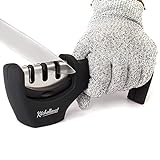
- TAR Score9.0
TAR Score is a ranking system developed by TopAppliancesReviews.com. TAR score has no relationship or impact from any manufacturers or sales agent websites. Learn more
- BrandKITCHELLENCE

- TAR Score8.8
TAR Score is a ranking system developed by TopAppliancesReviews.com. TAR score has no relationship or impact from any manufacturers or sales agent websites. Learn more
- BrandSHARPAL
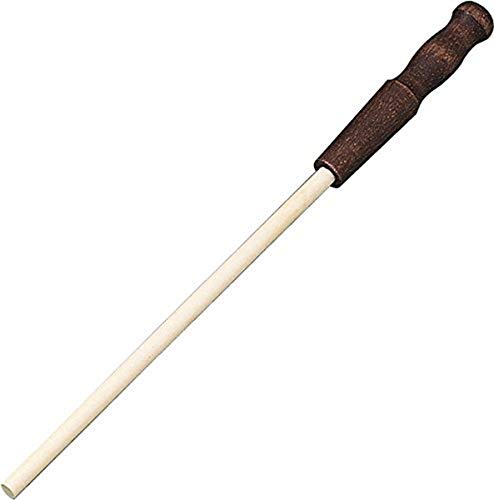
- TAR Score8.8
TAR Score is a ranking system developed by TopAppliancesReviews.com. TAR score has no relationship or impact from any manufacturers or sales agent websites. Learn more
- BrandArkansas Sharpeners

- TAR Score8.8
TAR Score is a ranking system developed by TopAppliancesReviews.com. TAR score has no relationship or impact from any manufacturers or sales agent websites. Learn more
- Brandlongzon

- TAR Score8.6
TAR Score is a ranking system developed by TopAppliancesReviews.com. TAR score has no relationship or impact from any manufacturers or sales agent websites. Learn more
- BrandHOTEC

- TAR Score8.6
TAR Score is a ranking system developed by TopAppliancesReviews.com. TAR score has no relationship or impact from any manufacturers or sales agent websites. Learn more
- BrandLUFFEXX
Last update on 2026-10-01 / Affiliate links / Images, Product Titles, and Product Highlights from Amazon Product Advertising API
FAQs
Can I use a regular steel honing rod on a porcelain knife?
No, you should never use a steel honing rod on a porcelain knife. Porcelain ceramic is harder than steel, so a metal rod cannot realign the edge. The hard impact against the metal will shatter the delicate ceramic apex, leaving permanent chips along the blade.
How often does a porcelain knife need sharpening?
Porcelain knives stay sharp much longer than metal knives under normal use. If you cut on soft wood or plastic boards and avoid frozen food and bones, you may only need to sharpen the blade every one to two years. Sharpen it only when it starts squishing tomato skins instead of cutting cleanly.
Why does my porcelain knife feel rough or snag after sharpening?
A rough or jagged edge usually means you pushed down too hard while sharpening. Heavy pressure fractures the brittle ceramic edge, creating tiny micro-chips instead of a smooth bevel. Fix this by making light, sweeping strokes across a fine 1000-grit diamond stone using almost zero downforce.
Can you fix a broken tip on a porcelain knife?
You can reshape a broken tip if the break is small. Use a coarse diamond stone to grind the spine of the knife down toward the edge, forming a new curved point. Never grind straight up into the fragile cutting edge, and discard the knife if you see cracks spreading into the blade body.


Top Rated Best Quality Range Hoods: 2026 Expert Picks

The 12 Best Small Solar Generators 2026

10 Best Quality Semi Automatic Washing Machine of 2026 For Leak-Free Laundry

11 Best Small Washer Machine of 2026 For Everyday Laundry

12 Best Vibration Pads For Washing Machine of 2026 To Stop Walking and Shaking

11 Best Selling Front Load Washing Machine of 2026 For Quiet Odor-Free Laundry

11 Best Washing Machine For King Size Bedding of 2026 To Prevent Cycle Errors

10 Best Small Front Loader Washing Machine of 2026 For Tight Closets






