
How to Sharpen a Knife Without a Sharpening Stone

Most cooks assume a blunt blade is completely out of commission until someone brings home a specialty whetstone. That belief is false, because the rough bottom ring of a ceramic coffee mug or a strip of fine sandpaper can put a working edge back on steel in minutes. Hard ceramic grinds away dull metal just like shop equipment, while an old leather belt can quickly polish off any rough metal burrs to leave the knife slicing cleanly again.
How well this quick fix works depends on what the blade actually needs. A bent edge only needs gentle straightening, but a truly rounded knife requires a hard abrasive surface that can shave away worn steel. The final result also rests on holding a steady angle of about twenty degrees on every stroke so the cutting edge stays even. Here is how to grab the right household items and restore that blade safely.
Household Items That Can Grind Steel in an Emergency
To sharpen a dull knife, you must rub it against something harder than the blade itself. Kitchen cutlery is made of hardened steel, so soft household objects will not reshape the cutting edge. Luckily, several ordinary items contain abrasive minerals capable of shaving away tiny bits of metal to expose a fresh apex.
Make sure any surface you use is steady and flat. An uneven surface will wobble against the blade and round off the edge you are trying to restore. Here are the most reliable household items for the job:
- The bottom of a ceramic coffee mug: The exposed ring on the base of most mugs is unglazed ceramic. Ceramic is harder than blade steel, making it the most effective makeshift sharpening tool in any home.
- Fine-grit sandpaper: Silicon carbide or aluminum oxide sandpaper (400 to 1000 grit) works well when laid flat on glass or a smooth counter. Grit refers to the coarseness of the abrasive particles on the paper.
- A smooth river stone: Outdoors, a flat, water-smoothed rock with a dense texture works like a natural quarry stone. Avoid crumbly sandstone or rough, jagged rocks.
- The unglazed base of a ceramic plate: Heavy ceramic plates, crocks, and bowls share the same raw ceramic contact ring found on coffee mugs, giving you a wider working surface.
- The top edge of a car window: The top rim of a rolled-down vehicle window has a frosted, unpolished texture. This fine abrasive surface can lightly sharpen an outdoor blade in an urgent situation.
How to Sharpen a Knife on a Ceramic Mug Step by Step
The ceramic mug method is the cleanest and most reliable way to restore an edge when you do not own a sharpening stone. It takes only a few minutes and requires no special tools. Follow these steps to sharpen your knife safely without scratching the blade face:
- Set a damp cloth flat on your counter and place the mug upside down on top of it. A wet towel locks the mug in place so it does not slide across the counter while you guide an exposed blade across its base.
- Locate the rough, unglazed ceramic ring on the mug bottom. Glazed ceramic is slick, but the raw, unglazed ceramic acts like a fine stone that grinds away microscopic layers of dull metal.
- Match the knife edge to its factory bevel angle, usually between 15 and 20 degrees. The bevel is the angled slope that forms the cutting edge, and matching this original slant sharpens the true apex instead of scratching the blade sides.
- Pull the blade across the ceramic ring from heel to tip in one smooth sweep. Drawing the full blade across the abrasive ring sharpens the entire curve evenly instead of leaving flat spots near the handle.
- Apply light, steady downward pressure as you sweep the blade. Heavy pressure gouges the ceramic and rolls the thin edge, while light pressure allows the abrasive ceramic to cleanly shave off steel.
- Complete six to eight passes on one side, then flip the blade and match the count on the other side. Sharpening both sides equally keeps the cutting edge centered rather than pushing the apex over to one side.
- Check for a tiny burr by gently running your thumb pad upward across the opposite side of the edge. The burr is a tiny rough lip of curled metal that confirms you have ground through the dull steel to form a fresh edge.
- Wipe the blade thoroughly with a damp towel before cutting food. Sharpening leaves fine grey metal filings and mineral dust along the edge that will contaminate food if left behind.
Setting the Correct Sharpening Angle and Pressure
Holding a steady angle is the most critical part of sharpening any knife. If your hand wobbles, you will create a rounded, blunt edge rather than a sharp apex. Most people struggle with this because estimating angles by eye can feel tricky.
You can find your angle quickly with a simple visual trick. Hold the knife straight up against the bottom of the mug so the side of the blade forms a 90-degree right angle with the ceramic surface. Tilt the knife halfway toward the mug surface to find 45 degrees. Cut that angle in half once more, and you are resting at roughly 22 degrees. Lower the blade just a tiny fraction further, and you are right in the ideal zone for most kitchen knives.
Different knives require slightly different angles based on their build. Sturdier kitchen blades, such as German high-carbon steel blades, generally rely on a sturdy 20-degree utility edge per side to handle dense vegetables and hard squash without chipping. Thinner and harder blades, like Japanese chef knives, usually carry a steep 15-degree slicing edge per side for delicate cuts through raw fish and herbs.
Pressure matters just as much as the angle. Pushing down harder will not sharpen the knife faster. Heavy pressure bends the fine cutting edge, creates an oversized wire burr, and can chip brittle steel. Use only the weight of the knife itself plus light guiding pressure from your fingers, similar to the force you would use to slice a ripe tomato without crushing it.
Smoothing the Edge with a Leather Belt or Cardboard
Grinding steel against a ceramic mug creates a fresh cutting edge, but it also leaves behind a microscopic wire edge or curved sliver of metal on the opposite side of the blade. This curled lip of steel is called a burr. If you leave the burr attached, your knife might feel sharp for a single slice, but that tiny metal lip will quickly bend sideways and tear through food instead of cutting cleanly.
To remove this burr, you need to strop the blade. Stropping simply means polishing the edge on leather or another smooth, dense material to break off the ragged metal sliver and align the clean edge beneath it.
You do not need dedicated workshop gear to strop a blade. A standard leather belt, smooth cardboard, or the back cover of a notebook works well. Follow these steps to clean up your edge using a basic leather belt:
- Fasten the belt securely: Loop the belt buckle around a sturdy doorknob or drawer pull, and hold the other end tight so the strap stays flat and rigid.
- Turn the blade backward: Lay the knife flat against the leather with the spine facing your pulling direction and the sharp edge pointing away from the direction of travel. Never push the cutting edge forward into leather, or the blade will slice straight through the strap.
- Drag the blade along the strap: Pull the knife toward you along the leather, sweeping from heel to tip while applying light, flat pressure against the surface.
- Alternate sides: Flip the knife over and make a trailing stroke on the other side. Complete 10 to 15 light passes per side to polish off the burr completely.
Emergency Sharpening Hacks You Should Avoid
The internet is full of quick sharpening hacks, but several popular tricks do far more harm than good. Using the wrong material can permanently scratch your blade faces, ruin the bevel, or chip large chunks out of the cutting edge.
The first risky hack is using rough concrete steps, bricks, or cinder blocks. Concrete contains abrasive sand, but the grit size is wildly uneven and far too coarse for cutlery. Scraping a knife across concrete gouges deep valleys into the edge, strips away excessive metal, and leaves a jagged profile that takes hours of grinding to fix.
Another common mistake is rubbing two knife edges against each other in a cross pattern. Steel-on-steel friction at an angle will dull or chip both blades at the same time. The cutting apex of a knife is microscopic and fragile; forcing two edges to collide simply folds and dents both of them. You can use the smooth spine (the unsharpened back of the blade) of a thick knife to straighten a bent edge, but never bring two sharp edges together.
Avoid using regular glass bottles as well. While the top rim of a car window works because of its frosted, matte edge, standard household glass is smooth, brittle, and prone to flaking. Applying pressure with steel against a thin glass rim can chip tiny, invisible glass splinters directly into your workspace.
Finally, never use a motorized bench grinder or power sander to sharpen a kitchen knife. High-speed power tools produce extreme friction that quickly turns blade steel yellow or blue. This color shift indicates that the heat has ruined the factory heat treatment, softening the metal permanently so it will never hold a sharp edge again.
Inexpensive Alternatives to Traditional Sharpening Stones
Makeshift sharpening works well in an urgent situation, but using proper tools at home keeps your blade bevels consistent and extends the lifespan of your cutlery. Traditional water whetstones provide fantastic results, but they demand patience, dedicated muscle memory, and regular water soaking that many cooks do not have time for. Fortunately, several simple alternatives provide fast, reliable results without requiring stone-sharpening skills.
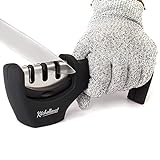
Pull-through sharpeners are the most straightforward option for busy kitchens. These handheld devices feature preset V-shaped slots lined with abrasive materials like carbide, diamond, or fine ceramic. You simply set the heel of the blade into the slot and pull it through three or four times. When shopping for one, look for multi-stage models that provide both a coarse slot to reshape worn metal and a fine ceramic slot to polish the finished edge. Always check that the slot angle matches your knife style, as steep Japanese blades need narrower angles than standard Western knives.
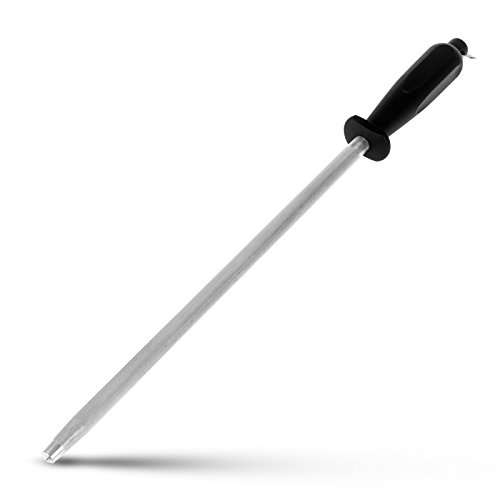
Honing steels and ceramic sharpening rods offer another practical solution. A honing rod does not grind away metal; instead, it straightens the bent cutting edge between prep sessions to keep the knife slicing cleanly without removing steel. If your knives need light sharpening rather than simple alignment, a rod coated in fine diamond abrasive or micro-grooved high-carbon steel can lightly restore an edge in seconds. Look for a rod with an ergonomic handle and a magnetized shaft to gather tiny loose metal filings before they fall onto your counter.
Rolling sharpeners have also gained popularity for people who want precise bevel angles without guesswork. These systems pair a magnetic wood block that holds your blade firmly at a fixed 15 or 20-degree angle with a rolling cylinder fitted with diamond and ceramic discs. You simply roll the abrasive cylinder back and forth along the fixed blade. This setup keeps the sharpening angle completely flat and steady from heel to tip, eliminating the human error that usually ruins freehand sharpening.

- TAR Score9.4
TAR Score is a ranking system developed by TopAppliancesReviews.com. TAR score has no relationship or impact from any manufacturers or sales agent websites. Learn more
- Brandwgsajlo

- TAR Score9.4
TAR Score is a ranking system developed by TopAppliancesReviews.com. TAR score has no relationship or impact from any manufacturers or sales agent websites. Learn more
- BrandACCUSHARP
- TAR Score9.0
TAR Score is a ranking system developed by TopAppliancesReviews.com. TAR score has no relationship or impact from any manufacturers or sales agent websites. Learn more
- BrandALLWIN-HOUSEWARE W
- TAR Score9.0
TAR Score is a ranking system developed by TopAppliancesReviews.com. TAR score has no relationship or impact from any manufacturers or sales agent websites. Learn more
- BrandKITCHELLENCE

- TAR Score8.8
TAR Score is a ranking system developed by TopAppliancesReviews.com. TAR score has no relationship or impact from any manufacturers or sales agent websites. Learn more
- BrandFANERFUN

- TAR Score8.8
TAR Score is a ranking system developed by TopAppliancesReviews.com. TAR score has no relationship or impact from any manufacturers or sales agent websites. Learn more
- BrandAIERLIAN

- TAR Score8.6
TAR Score is a ranking system developed by TopAppliancesReviews.com. TAR score has no relationship or impact from any manufacturers or sales agent websites. Learn more
- BrandBANTBSKT

- TAR Score7.0
TAR Score is a ranking system developed by TopAppliancesReviews.com. TAR score has no relationship or impact from any manufacturers or sales agent websites. Learn more
- BrandMajosta
Last update on 2026-10-02 / Affiliate links / Images, Product Titles, and Product Highlights from Amazon Product Advertising API
Frequently Asked Questions
How do I check if my knife is sharp enough without cutting myself?
The paper slice check and the tomato check are the safest verification methods. Hold a standard sheet of printer paper vertically by one corner and slide the knife edge downward through the top edge; a sharp knife will slice cleanly through the paper without snagging or tearing. Alternatively, place the blade on the skin of a ripe tomato and pull gently without pressing down; a properly sharpened edge will bite straight through the slick skin under its own weight.
Will sharpening on a ceramic mug leave permanent marks on the cup?
The unglazed ring will develop visible dark grey streaks, but the ceramic will not crack or break. These grey marks are microscopic shavings of steel that rubbed off the knife and embedded into the tiny pores of the ceramic stone. You can usually scrub these metal streaks away using warm water, dish soap, and a stiff scouring pad or baking soda paste.
What is the difference between honing a knife and sharpening it?
Sharpening removes steel from the blade bevel to create a brand-new, sharp cutting apex. Honing, by contrast, does not remove metal; it simply straightens and realigns an existing edge that has bent or rolled microscopic teeth sideways during routine cutting. A dull knife that has lost its apex must be sharpened on an abrasive surface, whereas a sharp knife that feels slightly sluggish usually just needs a quick pass on a honing steel.
Can folded aluminum foil sharpen a dull knife edge?
Cutting through folded aluminum foil will not sharpen a dull knife because aluminum is far softer than cutlery steel. Slicing foil can scrape away loose burrs or clean light corrosion off the bevel, which might make a blade feel marginally smoother for a moment. But foil cannot grind away hardened steel to form a new bevel, so a truly blunt knife will remain dull until rubbed against an abrasive surface like ceramic or stone.


Top Rated Best Quality Range Hoods: 2026 Expert Picks

The 12 Best Small Solar Generators 2026

10 Best Quality Semi Automatic Washing Machine of 2026 For Leak-Free Laundry

11 Best Small Washer Machine of 2026 For Everyday Laundry

12 Best Vibration Pads For Washing Machine of 2026 To Stop Walking and Shaking

11 Best Selling Front Load Washing Machine of 2026 For Quiet Odor-Free Laundry

11 Best Washing Machine For King Size Bedding of 2026 To Prevent Cycle Errors

10 Best Small Front Loader Washing Machine of 2026 For Tight Closets






