
How to Sharpen a Knife with a Steel the Safe Way?

Using a kitchen steel is not something to stress over, even if cooking shows make it look fast and risky. The safest way to restore a clean cut is to anchor the rod tip-down on a cutting board and draw the blade downward at a slight angle. A steel does not shave metal away; it simply straightens out a curled edge so your blade glides through food again.
How much this helps depends on your knife style and how dull it has become. Thinner Japanese blades require a narrower fifteen-degree slant, while standard Western chef knives rest closer to twenty degrees. A steel works wonders on an edge that feels snaggy, but a blade worn completely flat will need a whetstone to cut fresh metal instead. Here is how to steady the rod and reset your knife without risking a slip.
Does a sharpening steel actually sharpen your knife?
Most home cooks pull that long metal rod out of their knife block and assume it grinds a fresh edge onto a dull blade. In reality, a traditional steel rod does not sharpen a knife in the literal sense. Instead, it hones the edge. Honing means realigning a bent edge rather than stripping away metal to create a new one.
Your kitchen knife ends in a thin bevel (the slanted cutting edge). Under high magnification, that edge looks like a delicate foil wedge. Every time that edge strikes a cutting board or slices tough ingredients, the metal flexes. Over days of routine prep work, the very tip of that thin edge curls sideways or folds over.
When you slice with a folded edge, the blade skips or squashes food. The knife feels dull, but the steel is still sharp. It is simply pointing in the wrong direction. A steel rod pushes those bent sections back into a straight line. With a few passes, the cutting edge stands tall again, restoring clean slicing without removing any metal.
True sharpening, by contrast, grinds away steel with an abrasive tool like a water stone. That process creates a burr (the microscopic wire edge or curved sliver of metal that forms when steel is ground down), which is polished away to reveal a fresh edge. A steel rod cannot grind away metal. Honing simply straightens what is already there.
How do you find the right sharpening angle?
The biggest worry for most cooks is dragging the blade at the wrong slant and dulling the knife further. Finding the right angle feels tricky on cooking shows, but you do not need special tools to get it right.
Most kitchen knives are ground to an angle between 15 and 20 degrees per side. Knives with a sturdy 20-degree utility edge per side are standard for Western cutlery, such as blades in German high-carbon steel knife block sets. These thicker edges handle dense vegetables without chipping. In contrast, a steep 15-degree slicing edge per side is common on Japanese cutlery, like blades from high-carbon Japanese chef knife sets. These thinner blades slice delicate foods cleanly, but need a slightly shallower stroke.
If you are unsure of your blade style, 20 degrees is a safe baseline for almost all kitchen knives. You can find this angle in three steps:
First, hold your knife perpendicular to the upright rod at a 90-degree right angle.
Next, tilt the knife outward to cut that space in half, creating a 45-degree angle.
Finally, cut that space in half once more to reach roughly 22 degrees, then tilt it a hair flatter to hit 20 degrees.
You can also use the matchbook trick. A standard paper matchbook matches the thickness of a 20-degree wedge under the spine of a chef knife resting against the steel. Keep your wrist locked so that angle stays steady throughout each pass.
What is the safest way to use the steel?
Holding a metal rod in midair and slashing a knife toward your stomach is an easy way to slip, chip your blade, or cut your fingers.
The safest method is the tip-down technique on your kitchen counter. It anchors the steel, gives you clear sight of your angle, and directs the edge down toward a flat board instead of your body.
Follow these steps for a clean, safe edge:
- Anchor your cutting board: Place a damp cloth flat on your counter, then set a cutting board on top so it cannot slip.
- Position the rod vertically: Grip the handle firmly with your non-dominant hand. Place the tip of the rod straight down on the center of the board at a 90-degree angle. Keep your fingers behind the handle guard.
- Set the heel of the blade: Hold your knife in your dominant hand. Place the heel of the blade (the back part of the cutting edge closest to the handle) against the top of the rod, right below the guard. Tilt the blade to your 15 or 20-degree angle.
- Pull down and backward: Glide the knife downward toward the board while pulling the blade toward you. Let the contact point travel from the heel through the belly to the tip. Finish with the blade tip resting on the board near the base of the rod.
- Switch to the other side: Place the opposite side of the blade heel near the top of the rod. Match your angle, and pull downward in the same smooth motion.
- Make five light passes per side: Alternate sides for four to six strokes each. Use light pressure, about the weight of an apple resting in your hand.
- Wipe the blade clean: Wipe your knife with a clean towel after honing to remove any loose metal dust.
Which knife steel mistakes should you avoid?
Honing is simple once your hands learn the motion, but a few subtle habits can damage your edge or cause slips.
Pressing too hard is the most frequent mistake. A steel rod is not a heavy file. Heavy pressure bends the delicate edge sideways, scuffs the blade face, or chips hard steel. You only need gentle contact. Let the natural weight of the knife guide each pass.
Waving the rod in open air is another common error. When you hold a steel horizontally without support, your wrist wobbles. As your hand shifts, the angle changes on every stroke. This angle drift rounds off the cutting bevel, leaving the knife duller than before. Keep the tip planted firmly on a cutting board.
Rolling your wrist toward the tip also causes problems. As you reach the curved belly of a chef knife, twisting your wrist widens the angle at the front of the blade, blunting the tip. Keep your wrist locked straight and let your elbow guide the downward sweep.
Finally, avoid rushing. Slashing the blade against the rod at high speed causes bouncing contact that nicks the razor edge. Five smooth, controlled passes work much better than twenty frantic swipes.
How do you know when a steel is not enough?
A sharpening steel is a maintenance tool, not a cure for a completely blunt blade. Because a steel rod straightens an edge without grinding away metal, it requires a functional edge to work with. Over months of chopping against cutting boards, the triangular apex of the blade wears into a rounded, flat surface. When that happens, a steel rod has nothing left to realign. You must use an abrasive sharpening stone or a professional service to grind away dull steel and build a fresh bevel.
You can confirm whether your knife needs true sharpening using three quick checks:
The tomato check reveals cutting performance. Place the knife edge on the skin of a ripe tomato without pressing down. Draw the knife backward using only the blade weight. A properly aligned edge bites through the skin instantly. If the blade slides over the skin or requires crushing force, the edge is worn flat and needs a stone.
The paper check verifies sharpness. Hold a sheet of printer paper vertically. Place the heel of your knife on the top edge and draw it downward. A sharp knife slices cleanly with a quiet hiss. If the blade catches, tears, or crumples the paper, the edge is dull, not just misaligned.
The light check lets you inspect the edge directly. Stand under a bright kitchen light and look straight down the cutting edge. A sharp edge is microscopic and cannot reflect light. If you see shiny silver glints or a continuous bright line, light is bouncing off flat spots where the edge has worn away.
What should you look for in a honing rod?
If your knife set lacks a rod, or if your current steel is scratched or too short, choosing a solid replacement is simple. You only need one well-made rod to keep your kitchen blades aligned.
Pay attention to rod length first. Many basic block sets include short 8-inch rods that feel cramped when honing an 8-inch chef knife. Look for a rod that measures 10 to 12 inches long. A longer steel provides plenty of runway to swipe a large chef knife from heel to tip in one smooth stroke.
Consider the rod material. High-carbon steel rods with fine vertical grooves are the standard choice for home kitchens. The fine grooves grip the blade edge and guide it back into place. Nickel-chrome plating prevents kitchen moisture from causing rust. Ceramic rods are another good option, offering gentle burnishing while removing a microscopic trace of steel.
Make sure the handle offers a non-slip grip and a wide protective guard to catch an accidental slip. Storing your tools in setups like magnetic knife block sets keeps the rod clean, protected from drawer clutter, and ready for daily cooking prep.

- TAR Score9.4
TAR Score is a ranking system developed by TopAppliancesReviews.com. TAR score has no relationship or impact from any manufacturers or sales agent websites. Learn more
- Brandwgsajlo

- TAR Score9.4
TAR Score is a ranking system developed by TopAppliancesReviews.com. TAR score has no relationship or impact from any manufacturers or sales agent websites. Learn more
- BrandKimura

- TAR Score9.2
TAR Score is a ranking system developed by TopAppliancesReviews.com. TAR score has no relationship or impact from any manufacturers or sales agent websites. Learn more
- BrandHENCKELS

- TAR Score9.0
TAR Score is a ranking system developed by TopAppliancesReviews.com. TAR score has no relationship or impact from any manufacturers or sales agent websites. Learn more
- BrandIndependently Published
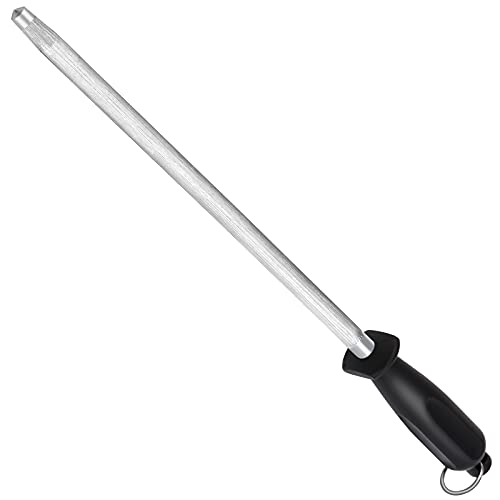
- TAR Score9.0
TAR Score is a ranking system developed by TopAppliancesReviews.com. TAR score has no relationship or impact from any manufacturers or sales agent websites. Learn more
- BrandAcoWELL
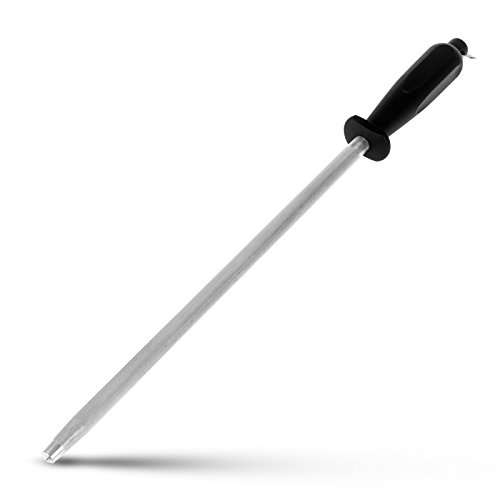
- TAR Score9.0
TAR Score is a ranking system developed by TopAppliancesReviews.com. TAR score has no relationship or impact from any manufacturers or sales agent websites. Learn more
- BrandALLWIN-HOUSEWARE W

- TAR Score8.8
TAR Score is a ranking system developed by TopAppliancesReviews.com. TAR score has no relationship or impact from any manufacturers or sales agent websites. Learn more
- BrandFANERFUN

- TAR Score7.0
TAR Score is a ranking system developed by TopAppliancesReviews.com. TAR score has no relationship or impact from any manufacturers or sales agent websites. Learn more
- BrandMajosta
Last update on 2026-10-02 / Affiliate links / Images, Product Titles, and Product Highlights from Amazon Product Advertising API
FAQs
How often should you use a sharpening steel?
You can safely use a honing steel every time you cook or every two to three kitchen sessions. Because a steel rod straightens the metal rather than grinding it away, frequent use does not wear down your blade. Giving your knife four light passes on each side before prep work keeps the edge cutting cleanly.
Can a sharpening steel ruin a knife?
Yes, a sharpening steel can dull your knife if you use an excessively steep angle or press down with heavy force. Scraping the blade at a 40-degree angle or rolling your wrist through the stroke blunts the thin bevel. Honing gently at a steady 15 to 20-degree angle protects the edge from harm.
Can you use a sharpening steel on serrated knives?
Standard round sharpening steels cannot hone the recessed teeth of a serrated bread knife. A round rod only makes contact with the outer tips of the teeth, missing the curved gullets where the slicing happens. Sharpening a serrated blade requires a narrow, tapered ceramic or diamond rod sized to fit inside each individual scallop.
Should you wash your knife after using a steel?
Always wipe your knife with a clean cloth or rinse it under warm water after using a sharpening steel. Friction between the blade and the rod can loosen microscopic flecks of metal dust. Wiping the blade thoroughly ensures that none of these tiny steel particles end up in your food.


Top Rated Best Quality Range Hoods: 2026 Expert Picks

The 12 Best Small Solar Generators 2026

10 Best Quality Semi Automatic Washing Machine of 2026 For Leak-Free Laundry

11 Best Small Washer Machine of 2026 For Everyday Laundry

12 Best Vibration Pads For Washing Machine of 2026 To Stop Walking and Shaking

11 Best Selling Front Load Washing Machine of 2026 For Quiet Odor-Free Laundry

11 Best Washing Machine For King Size Bedding of 2026 To Prevent Cycle Errors

10 Best Small Front Loader Washing Machine of 2026 For Tight Closets






