
How to Sharpen a Knife With a Honing Steel Safely

Plant the tip of the steel rod down on a folded towel over the cutting board. Anchoring the rod vertically keeps the blade steady so it cannot slip toward your fingers. To restore the bite, tilt the blade between fifteen and twenty degrees and glide it downward with light pressure four to six times per side. A standard steel rod does not grind away metal. It simply pushes the microscopic, bent teeth of the edge back into line.
The exact technique depends on your knife and the rod itself. Thinner Japanese blades need a fifteen-degree slant, while heavier Western blades hold twenty degrees. Steel rods merely straighten folded edges, but diamond-coated rods shave off a tiny bit of metal. If the blade is nicked or completely blunt, a real sharpening stone is necessary instead of a rod. Here is how to steady your hands, set the right angle, and get back to cooking.
Does a honing steel actually sharpen your knife?
Under a microscope, a sharp knife edge is not a solid wedge. It is a thin sheet of metal that tapers down to a delicate hairline. Every time your knife strikes a cutting board or slices food, pressure pushes against that thin edge, bending it out of line.
When this happens, the knife feels dull. This bend creates a burr (the microscopic wire edge or curved sliver of metal that forms along the blade edge). When you slice with a curled edge, you push the rounded side of that fold against your food instead of the sharp apex.
Honing means straightening that folded edge back into line. A standard steel rod does not grind away metal. Instead, its smooth or grooved surface pushes the bent burr upright, realigning the microscopic teeth so they point straight down. A few light passes center the edge, restoring crisp cutting action without removing blade steel.
Sharpening is completely different. Sharpening uses an abrasive (a rough grit surface that grinds away metal) to shave steel off the blade and create a new edge. You sharpen on a whetstone or grinder when the bevel (the slanted cutting edge of the knife) has rounded over or chipped. A honing steel maintains an existing edge; a whetstone rebuilds one that is worn away.
How do you find the right sharpening angle?
To hone a blade properly, match the existing bevel (the slanted cutting edge of the knife) ground onto the steel at the factory. If you hold the knife too flat against the rod, the edge never touches the steel. If you tilt the blade too far out, you scrape the fine apex sideways and crush it flat.
Most kitchen knives fall into two clear design groups:
Western-style blades, such as classic German cutlery, typically use a sturdy 20-degree utility edge per side. These knives use tough, forgiving steel that handles heavy chopping without chipping. Many German high-carbon steel knife sets rely on this durable 20-degree profile for lasting stability on busy cutting boards.
Asian-style knives, particularly thin Japanese blades, usually feature a steep 15-degree slicing edge per side. Knives like those found in high-carbon Japanese chef knife sets use harder steel that supports a narrower bevel. This gives you clean precision when slicing fish or vegetables, though it requires gentler handling.
You can eyeball your angle at the counter with a simple visual check:
- Hold your knife blade flat against the steel rod at a 90-degree angle.
- Tilt the blade halfway toward the rod to reach 45 degrees.
- Tilt the blade halfway again to land at roughly 22.5 degrees.
- For a 20-degree Western knife, leave the blade right around that position.
- For a 15-degree Japanese blade, nudge the spine just a fraction closer to the rod.
Lock your wrist once you find this angle. Holding that consistent angle through the entire stroke matters far more than hitting an exact mathematical fraction.
What is the safest way to hone a blade?
Television shows often feature chefs holding a steel rod in midair and whipping a knife toward their chest. Do not copy this. Honing in midair is unpredictable. If the blade slips off the rod, it can strike your hand or wrist. Swinging freely also makes it difficult to keep your angle steady, which can dull your knife instead of trueing it.
The safest, most consistent way to hone is the vertical, tip-down method on a stable kitchen counter. Follow these steps every time:
- Anchor your cutting board: Lay a damp kitchen towel flat on your counter, then place a solid cutting board on top so nothing slips.
- Plant the steel tip down: Hold the honing steel by its handle with your non-dominant hand. Press the tip firmly into the board with the rod straight up and down. Keep your fingers behind the handle guard.
- Position the knife heel: Hold your knife in your dominant hand. Place the heel of the blade (the rear part of the edge closest to the handle) against the top of the rod, right below the guard.
- Set your angle: Tilt the spine away from the rod to match your bevel, using 15 degrees for Japanese blades or 20 degrees for Western knives.
- Glide downward and backward: Smoothly draw the knife downward along the rod toward the cutting board while pulling the blade toward you. The entire edge should slide across the steel, finishing with the knife tip near the bottom of the rod.
- Use light pressure: Use only the natural weight of the knife. You are gently guiding bent metal back into line, not grinding it down.
- Switch sides and alternate: Place the heel against the opposite side of the rod. Repeat the downward sweep, alternating sides four to six times.
- Wipe the blade clean: Wipe the blade carefully from spine to edge with a dry cloth to clear away loose metal dust before slicing food.
Which bad habits will ruin your knife edge?
Honing takes under two minutes, but small technique mistakes can quickly damage your blade. Watch out for these four common errors:
- Pushing with heavy force: Heavy force crushes the fragile hairline edge, mashing the metal flat or curling it into a worse burr. A gentle stroke that barely touches the steel is all it takes to align the edge. If your knuckles turn white, you are pushing too hard.
- Sawing back and forth: Never drag a knife up and down the rod like a violin bow. Honing requires clean passes from heel to tip. Scrubbing back and forth grinds irregular notches into the steel and chips brittle edges. Always lift the knife off the steel at the bottom of each stroke.
- Honing at top speed: When you swing a knife rapidly, your hand wobbles and your angle changes with every inch of travel. That erratic contact rounds off the cutting edge and leaves the knife duller than when you started. Keep your pace slow and deliberate.
- Flicking the tip off early: Many people rush their downward pass and flick their wrist outward, pulling the blade away before the tip touches the rod. Over time, this leaves the tip dull while the rest of the blade stays sharp. Keep the blade touching the rod all the way to the tip.
How do you know when honing stops working?
A honing steel is an everyday maintenance tool, not a permanent fix. Regular honing keeps a knife slicing cleanly for months of ordinary home cooking. But a steel rod can only straighten metal that is still present. Every time you chop against a board, microscopic bits of metal wear away. Over time, the cutting edge rounds off like the tip of a crayon, or develops tiny chips. Once the bevel is rounded, a honing steel has nothing left to push upright.
You can easily confirm whether your knife is ready to cut or needs a real stone by using the simple paper slice check. Pick up a standard sheet of scrap printer paper. Hold the sheet upright by one corner so it hangs freely. Place the belly of your knife against the top edge of the paper at a slight forward angle, and slice downward using gentle forward motion.
If the knife catches the paper immediately and glides straight through with a clean hiss, your edge is aligned and ready. If the blade slides across the paper without catching, tears the sheet with a ragged rip, or simply bends the paper in half, your honing rod has reached its limit.
Another clear sign is how the knife handles produce. If the blade rolls off the slick skin of a bell pepper, crushes a tomato, or slips across an onion, the steel has done all it can do. When your knife fails these checks after several careful passes, stop using the rod. Your blade bevel needs to be reground using an abrasive whetstone or serviced by a professional sharpener.
What should you look for in a honing rod?
Choosing the right honing rod makes kitchen maintenance easier and keeps your cutlery in prime condition between stone sharpenings. When looking for a rod to pair with your kitchen knives, keep these essential features in mind before making a purchase:
- Rod length: The steel should always be longer than your longest knife. An eight-inch chef knife requires a rod measuring at least ten to twelve inches. A short rod runs out of room before the tip finishes its stroke, leading to awkward wrist adjustments and uneven edge alignment.
- Rod material: High-carbon steel rods plated with nickel-chrome are the standard choice for home kitchens. They feature fine grooves that guide the edge back into position without removing metal. Ceramic rods are slightly abrasive, trueing the edge while removing a microscopic amount of steel, which suits hard Japanese knives. Diamond-coated rods act like files and remove metal quickly, so reserve them for dull blades rather than daily alignment.
- Safety guard and handle grip: Look for an ergonomic handle made from non-slip material like textured polypropylene or contoured wood. Ensure the rod features a broad, sturdy hand guard where the metal meets the handle to protect your fingers if the blade slips.

- TAR Score9.4
TAR Score is a ranking system developed by TopAppliancesReviews.com. TAR score has no relationship or impact from any manufacturers or sales agent websites. Learn more
- Brandwgsajlo

- TAR Score9.0
TAR Score is a ranking system developed by TopAppliancesReviews.com. TAR score has no relationship or impact from any manufacturers or sales agent websites. Learn more
- BrandIndependently Published
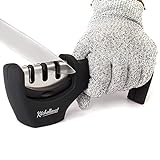
- TAR Score9.0
TAR Score is a ranking system developed by TopAppliancesReviews.com. TAR score has no relationship or impact from any manufacturers or sales agent websites. Learn more
- BrandKITCHELLENCE
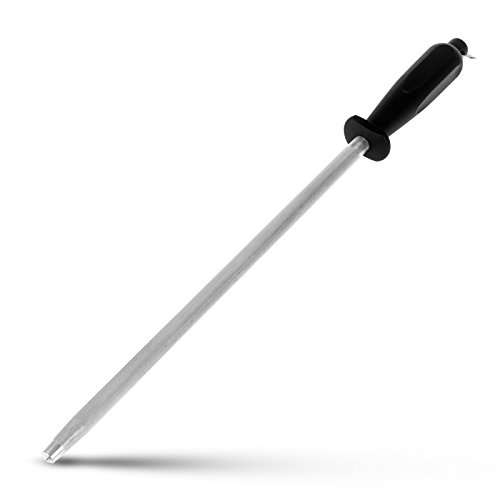
- TAR Score9.0
TAR Score is a ranking system developed by TopAppliancesReviews.com. TAR score has no relationship or impact from any manufacturers or sales agent websites. Learn more
- BrandALLWIN-HOUSEWARE W

- TAR Score8.8
TAR Score is a ranking system developed by TopAppliancesReviews.com. TAR score has no relationship or impact from any manufacturers or sales agent websites. Learn more
- BrandN/A
- TAR Score8.8
TAR Score is a ranking system developed by TopAppliancesReviews.com. TAR score has no relationship or impact from any manufacturers or sales agent websites. Learn more
- BrandKota Japan

- TAR Score8.8
TAR Score is a ranking system developed by TopAppliancesReviews.com. TAR score has no relationship or impact from any manufacturers or sales agent websites. Learn more
- BrandFANERFUN

- TAR Score8.8
TAR Score is a ranking system developed by TopAppliancesReviews.com. TAR score has no relationship or impact from any manufacturers or sales agent websites. Learn more
- BrandChronicle Books

- TAR Score8.0
TAR Score is a ranking system developed by TopAppliancesReviews.com. TAR score has no relationship or impact from any manufacturers or sales agent websites. Learn more
- BrandSHARPAL

- TAR Score7.0
TAR Score is a ranking system developed by TopAppliancesReviews.com. TAR score has no relationship or impact from any manufacturers or sales agent websites. Learn more
- BrandMajosta
Last update on 2026-10-01 / Affiliate links / Images, Product Titles, and Product Highlights from Amazon Product Advertising API
FAQs
How often should you use a honing steel?
You can safely use a honing steel every time you cook, or after every couple of heavy cutting sessions. Since a smooth or lightly grooved steel does not grind away metal, frequent light use keeps the microscopic edge straight before severe curling can happen. Giving your blade three or four gentle passes before prepping dinner ensures effortless slicing every time.
Can you hone a serrated bread knife?
You should not run a serrated knife down a standard honing steel using normal slicing strokes. A serrated knife features individual scalloped teeth, and dragging those teeth across a round rod will ruin their pointed tips. To hone serrated knives, you need a slender, tapered ceramic or diamond rod that fits inside each individual scallop one at a time.
Should you wash a honing steel with water?
Avoid washing a steel honing rod in the sink or soaking it with water. Moisture can lead to rust spots, especially on high-carbon steel cores. Instead, wipe the rod down with a dry or very slightly damp microfiber cloth after each use to remove loose metal filings, and store it in a dry knife block or drawer.
Why does my knife feel dull after honing?
If your knife still feels dull after several passes, the edge is either completely worn flat or you used an inconsistent angle that rounded the cutting apex. A honing steel only straightens an edge that has curled over; it cannot rebuild metal that has chipped or worn away through months of board impact. When honing fails to restore the bite, the knife must be reshaped on an abrasive whetstone.


Top Rated Best Quality Range Hoods: 2026 Expert Picks

The 12 Best Small Solar Generators 2026

10 Best Quality Semi Automatic Washing Machine of 2026 For Leak-Free Laundry

11 Best Small Washer Machine of 2026 For Everyday Laundry

12 Best Vibration Pads For Washing Machine of 2026 To Stop Walking and Shaking

11 Best Selling Front Load Washing Machine of 2026 For Quiet Odor-Free Laundry

11 Best Washing Machine For King Size Bedding of 2026 To Prevent Cycle Errors

10 Best Small Front Loader Washing Machine of 2026 For Tight Closets






