
How to Sharpen a Folding Knife with a Stone

Sharpening a dull pocket blade on a stone can feel intimidating, but there is no reason to stress over ruining the steel. The secret is to lock the blade open securely and push the cutting edge across the stone at a steady 20-degree angle from heel to tip. Working the metal evenly until a tiny ridge forms along the back side will bring back a crisp, clean edge without scratching your knife.
A few details will shape your exact routine. Different stones need water, mineral oil, or no liquid at all to keep clean. Very dull or chipped edges need a rough grit to start, while an edge that just lost its bite can go straight to a fine surface. Curved pocket blades also require a gentle wrist lift near the tip. Here is how to protect your fingers, keep a steady tilt, and restore your knife safely.
How Do You Prepare Your Stone and Knife Safely?
Setting up your stone and blade properly prevents two common problems: cut fingers and a ruined folding mechanism. A folding knife has moving parts that fixed blades do not have. If you push hard against an unlocked or loose blade, the lock can slip and snap closed on your hand.
Run through these safety and preparation checks before touching the stone:
- Check the lock: Open the blade until it clicks firmly into place. Whether your knife uses a liner lock (the spring bar inside the handle that snaps behind the open blade to stop it from closing on your fingers) or a lockback, press your thumb against the blade spine. Confirm the lock holds solid with no wobble.
- Tape the pivot: The pivot (the folding hinge pin and screw that lets the blade open and shut) houses tiny washers. Sharpening creates slurry, which is a wet paste of water, worn stone grit (the roughness rating of the stone particles), and ground steel. Put a strip of blue painter's tape over the pivot so grit cannot grind into the hinge.
- Secure the stone: A sliding stone is dangerous. Fit your stone into a non-slip rubber base. If your stone came without a base, set it flat on a damp kitchen towel on a solid counter.
- Lubricate correctly: Soak traditional waterstones in water for 10 minutes until air bubbles stop rising. For diamond stones with a honeycomb pattern, work dry or splash a few drops of water on top. For oil stones, spread three drops of mineral honing oil over the surface.
What Angle Should You Hold on the Sharpening Stone?
Holding a consistent angle matters more than speed. If your angle changes on every stroke, you will grind the bevel (the angled cutting slope that forms the edge) into a rounded shape. A rounded edge feels smooth to the touch, but it slides off surfaces instead of cutting.
Hold the blade at a 20-degree angle per side. An EDC (everyday carry pocket knife) needs a durable cutting edge for opening boxes, cutting rope, or whittling sticks. A 20-degree bevel leaves enough steel behind the cutting apex to prevent chips. Unlike the steep 15-degree edge found on German high-carbon steel knife sets meant for soft kitchen prep, a 20-degree utility edge stands up to rough, daily chores.
To find 20 degrees without a guide, use this reference:
- Rest the knife edge vertically on the stone at 90 degrees.
- Tilt the blade halfway down toward the stone to reach 45 degrees.
- Tilt it halfway down once more to reach roughly 22 degrees.
- Lower the spine just a hair further, and you are right at 20 degrees.
You can also stack two standard quarters flat on the stone and rest the knife spine on top of them. That height matches 20 degrees on most pocket knives. Once you set that angle, lock your wrist rigid. Move your arm from the elbow and shoulder so the blade stays at that exact angle across the whole stroke.
How Do You Sweep the Blade Across the Stone?
Always use an edge-leading stroke on a bench stone. That means moving the blade forward as if you are trying to slice a thin sliver off the surface of the stone. Pushing the edge forward creates a crisp cutting apex and prevents heavy wire edges from forming.
Follow these steps to complete a clean stroke:
- Start on coarse grit: Place the knife on your coarse stone (around 400 grit). Coarse grit removes dull, worn steel quickly to set your new edge.
- Set the heel: Place the heel of the blade (the edge closest to the handle) at the far end of the stone. Set your 20-degree angle with the edge facing you. Rest two fingertips of your free hand on the blade face for balance.
- Sweep diagonally toward you: Pull the knife toward your body while drawing the blade sideways. The contact point should travel smoothly along the steel from heel to tip in one continuous pass.
- Lift the handle on the curve: Pocket knives curve upward along the belly toward the point. As that curved belly contacts the stone, lift your handle upward about half an inch. This keeps the curved tip flat against the abrasive surface.
- Apply light pressure: Press down with about three pounds of force, similar to wiping a smudge off a countertop. Heavy pressure rounds the edge and risks slipping.
- Repeat 8 to 10 times: Complete 8 to 10 slow, controlled passes along that first side before pausing to check your progress.
How Do You Know When to Flip the Blade?
Never flip the knife just because you finished 10 strokes. You only switch sides when you feel a burr (the microscopic wire edge or curved sliver of metal that forms on the opposite side during sharpening).
As you grind the first side, steel wears away until the cutting bevel reaches the very edge. When that steel becomes paper-thin, the excess metal bends over to the unsharpened side. This rough lip is your physical proof that you have sharpened all the way through the dull apex.
Check for the burr using these safe movements:
- Never run your finger along the edge: Sliding your thumb down the sharp edge will cut your skin.
- Swipe downward across the blade: Place the pad of your thumb flat against the side of the blade that was facing away from the stone. Slide your thumb downward past the edge into open air.
- Feel for a rough catch: If the bevel reached the apex, your thumb will feel a tiny wire lip catching your skin, much like the lid of an opened soup can.
- Check from heel to tip: Confirm the wire edge runs along the entire length. If the curved belly feels smooth, make two more passes while lifting the handle to finish the tip.
Once you feel that wire edge along the entire opposite side, flip the knife. Sharpen the second side at that same 20-degree angle until the burr bends back over. Once both sides have formed a burr, you are ready for fine grit.
How Do You Polish the Edge and Clean the Pivot?
After shaping the edge on coarse grit, you must polish the bevel and clean the knife. A coarse 400-grit edge leaves deep scratch marks and a rough wire edge that dulls quickly in daily use.
Follow these steps to hone the edge and clear out the pivot:
- Wipe the blade: Clean off coarse metal sludge with a paper towel. Loose coarse particles will gouge your fine stone if left on the steel.
- Switch to fine grit: Move to your fine stone (around 600 to 1000 grit) and add a splash of water or oil.
- Hone with light pressure: Hold your 20-degree angle using only the weight of your hand. Heavy pressure bends the fine edge rather than sharpening it. Make four light sweeping passes per side.
- Use alternating single strokes: Make one light pass on the left side, flip the knife, and make one light pass on the right side. Repeat this back-and-forth pattern six times. Alternating strokes cuts the fragile wire burr cleanly away from the apex.
- Strop the edge: Drag the blade backward across a leather strop with the spine leading and the edge trailing. This removes leftover microscopic foil.
- Rinse and dry immediately: Remove the painter's tape and wash away any remaining slurry. Dry the knife thoroughly. Similar to caring for high-carbon Japanese chef knife sets, high-carbon or tool steel (harder metal that stays sharp longer but requires dry wiping and light oiling to prevent rust spots) will rust quickly if left damp. Even stainless steel (rust-resistant, easy-to-clean metal) can pit if wet grit sits trapped inside the liners.
- Oil the pivot: Put one small drop of mineral oil or knife lubricant into the pivot pin. Open and shut the blade five times to distribute the oil across the washers.
What Kind of Sharpening Stone Works Best for Pocket Knives?
Choosing the right sharpening stone comes down to where you sharpen and how much space you have. Pocket knives need two grit stages: a coarse surface to fix blunt edges and a fine surface to hone a clean cutting bevel.
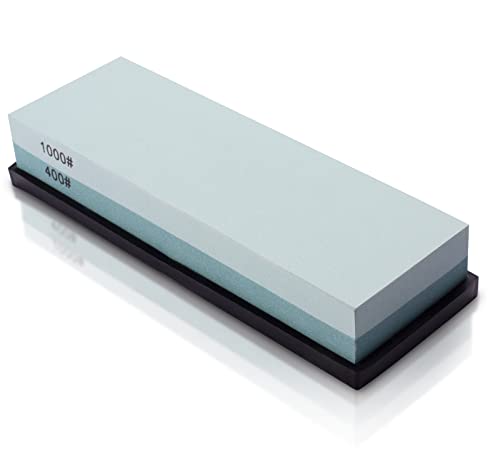
Dual-grit bench stones made from waterstone or silicon carbide are ideal for home sharpening. Their wide rectangular surface provides plenty of space to sweep a folding blade smoothly from heel to tip. If you choose a bench stone, ensure it includes a non-slip rubber or silicone base. A stable base prevents the stone from sliding across your work table, letting you keep both hands focused on maintaining a steady 20-degree angle.
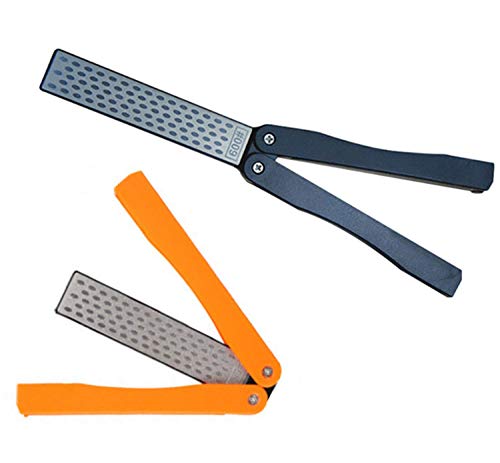
Portable diamond folding stones work best if you want to sharpen gear on the go. Diamond plates use diamond grit bonded to metal, often with a honeycomb surface that captures metal shavings. They cut through hard pocket knife steels quickly without soaking or messy oils. Look for portable diamond sharpeners with folding handles that close around the stones to protect the abrasive surfaces inside your pocket or gear bag.

- TAR Score9.2
TAR Score is a ranking system developed by TopAppliancesReviews.com. TAR score has no relationship or impact from any manufacturers or sales agent websites. Learn more
- BrandIntelitopia

- TAR Score9.2
TAR Score is a ranking system developed by TopAppliancesReviews.com. TAR score has no relationship or impact from any manufacturers or sales agent websites. Learn more
- BrandKEENBEST

- TAR Score9.2
TAR Score is a ranking system developed by TopAppliancesReviews.com. TAR score has no relationship or impact from any manufacturers or sales agent websites. Learn more
- BrandSharp Pebble
- TAR Score9.0
TAR Score is a ranking system developed by TopAppliancesReviews.com. TAR score has no relationship or impact from any manufacturers or sales agent websites. Learn more
- BrandXILEWHZF
- TAR Score9.0
TAR Score is a ranking system developed by TopAppliancesReviews.com. TAR score has no relationship or impact from any manufacturers or sales agent websites. Learn more
- BrandMIDO Professional Abrasive

- TAR Score8.8
TAR Score is a ranking system developed by TopAppliancesReviews.com. TAR score has no relationship or impact from any manufacturers or sales agent websites. Learn more
- BrandHonoson

- TAR Score8.8
TAR Score is a ranking system developed by TopAppliancesReviews.com. TAR score has no relationship or impact from any manufacturers or sales agent websites. Learn more
- BrandOSFTBVT

- TAR Score8.8
TAR Score is a ranking system developed by TopAppliancesReviews.com. TAR score has no relationship or impact from any manufacturers or sales agent websites. Learn more
- BrandOSFTBVT

- TAR Score8.8
TAR Score is a ranking system developed by TopAppliancesReviews.com. TAR score has no relationship or impact from any manufacturers or sales agent websites. Learn more
- BrandBABOSTOW
Last update on 2026-10-02 / Affiliate links / Images, Product Titles, and Product Highlights from Amazon Product Advertising API
FAQs
Do you push or pull the blade across the stone?
Push the blade edge-first across the stone, moving forward as if shaving a thin layer off the top. Pushing edge-first cuts away steel cleanly and keeps the burr small. Pulling the blade backward with the edge trailing creates a heavy wire edge that rolls over easily during pocket chores.
Can you sharpen a pocket knife without oil or water?
It depends on your stone material. Diamond sharpeners and dry ceramic stones work well without any liquid. Traditional waterstones and oil stones require water or mineral honing oil. Using a waterstone or oil stone dry clogs the pores with ground metal dust, which ruins the stone and stops it from cutting.
Why is your pocket knife still dull after sharpening?
The most common cause is failing to form a complete burr along the entire edge before flipping sides. If you switch too early, the two bevels never meet at a crisp apex. Another frequent issue is rolling your wrist during strokes, which rounds the bevel instead of leaving a flat cutting angle.
How do you check if your knife is sharp?
Hold a sheet of regular printer paper upright in the air and rest the knife edge on the top edge. Push down gently without sawing back and forth. A properly sharpened pocket knife will slice cleanly through the paper from heel to tip without snagging or ripping the sheet.


Top Rated Best Quality Range Hoods: 2026 Expert Picks

The 12 Best Small Solar Generators 2026

10 Best Quality Semi Automatic Washing Machine of 2026 For Leak-Free Laundry

11 Best Small Washer Machine of 2026 For Everyday Laundry

12 Best Vibration Pads For Washing Machine of 2026 To Stop Walking and Shaking

11 Best Selling Front Load Washing Machine of 2026 For Quiet Odor-Free Laundry

11 Best Washing Machine For King Size Bedding of 2026 To Prevent Cycle Errors

10 Best Small Front Loader Washing Machine of 2026 For Tight Closets






