
How To Repair Washer That’s Off Balance When Spinning Fast

How To Repair Washer That’s Off Balance When Spinning starts with spotting the little warning signs most people brush off at first. A washer that bangs against the wall, rattles the floor, or suddenly walks across the laundry room usually isn’t “just old.” Loose leveling legs, uneven loads, worn suspension rods, or overloaded drums can throw the entire spin cycle into chaos before you even realize what’s happening. One noisy load can quickly turn into damaged flooring, soaked laundry, or expensive parts replacement if the issue keeps getting ignored.
Laundry rooms aren’t exactly anyone’s favorite hangout spot, so yeah, it’s frustrating when a simple wash turns into a noisy circus act. The good news is that many balance problems come from parts you can actually inspect without tearing the whole machine apart. Tightening adjustable feet, redistributing heavy towels, or cleaning debris trapped underneath the washer can sometimes calm things down almost immediately. Small fixes often save a surprising amount of money, especially before internal components start wearing out from repeated shaking.
Some washers develop balance issues after years of heavy use, while others act up because of flooring problems or overloaded weekly laundry piles. Front-load and top-load machines each have their own quirks, and ignoring those differences can make troubleshooting a real headache. A top-load washer may struggle with uneven bedding, while a front-load model might bounce from worn shock absorbers or damaged drum supports. Getting familiar with these patterns helps narrow the issue faster instead of blindly replacing random parts.
Washer vibration also affects more than just noise levels. Constant shaking can loosen nearby plumbing connections, wear down belts faster, and create strain on suspension systems that weren’t designed for nonstop movement. Some people even notice doors rattling in nearby rooms during spin cycles, which usually means the imbalance has already become severe. Catching the problem early keeps the washer from snowballing into a much bigger repair bill later on.
Repair work doesn’t always require fancy tools or a service appointment that drains your wallet. Plenty of balance-related fixes involve basic adjustments, careful inspection, and a bit of patience. Checking whether the floor underneath the appliance has shifted can matter just as much as replacing worn components inside the machine. A washer sitting unevenly on soft flooring can wobble like crazy even when every internal part still works properly.
How To Repair Washer That’s Off Balance When Spinning also involves understanding everyday habits that quietly create the issue over time. Stuffing heavy blankets into one side of the drum, washing single bulky items, or skipping regular maintenance all contribute to unstable spinning cycles. A few simple changes in loading habits can dramatically reduce stress on the washer while helping clothes rinse and spin more evenly. Sometimes the smartest repair starts before the next load even begins.

- TAR Score10.0
TAR Score is a ranking system developed by TopAppliancesReviews.com. TAR score has no relationship or impact from any manufacturers or sales agent websites. Learn more
- BrandIWIWE

- TAR Score8.8
TAR Score is a ranking system developed by TopAppliancesReviews.com. TAR score has no relationship or impact from any manufacturers or sales agent websites. Learn more
- BrandSumato Stuff

- TAR Score8.8
TAR Score is a ranking system developed by TopAppliancesReviews.com. TAR score has no relationship or impact from any manufacturers or sales agent websites. Learn more
- BrandLinda's Essentials

- TAR Score8.8
TAR Score is a ranking system developed by TopAppliancesReviews.com. TAR score has no relationship or impact from any manufacturers or sales agent websites. Learn more
- BrandRUDUOMA

- TAR Score8.6
TAR Score is a ranking system developed by TopAppliancesReviews.com. TAR score has no relationship or impact from any manufacturers or sales agent websites. Learn more
- BrandSumato Stuff
- TAR Score8.6
TAR Score is a ranking system developed by TopAppliancesReviews.com. TAR score has no relationship or impact from any manufacturers or sales agent websites. Learn more
- BrandKnivel

- TAR Score8.4
TAR Score is a ranking system developed by TopAppliancesReviews.com. TAR score has no relationship or impact from any manufacturers or sales agent websites. Learn more
- BrandCUISIBOT
- TAR Score8.0
TAR Score is a ranking system developed by TopAppliancesReviews.com. TAR score has no relationship or impact from any manufacturers or sales agent websites. Learn more
- Branddadop

- TAR Score7.6
TAR Score is a ranking system developed by TopAppliancesReviews.com. TAR score has no relationship or impact from any manufacturers or sales agent websites. Learn more
- Brandiayokocc
Last update on 2026-07-21 / Affiliate links / Images, Product Titles, and Product Highlights from Amazon Product Advertising API
How To Repair Washer That’s Off Balance When Spinning
A washer that thumps, hops, and shakes the floor can make laundry feel like a small home emergency. The noise is annoying, sure, but the bigger headache is the hidden strain on the drum, suspension parts, and flooring. Many spin-cycle problems start with something simple, then snowball because the machine keeps fighting an uneven load at high speed. That is where how to repair washer that’s off balance when spinning becomes less about guesswork and more about smart, practical checks.
Stop The Shaking Before It Damages Parts
A violent spin cycle usually means the washer is struggling to spread weight evenly inside the drum. Heavy towels, soaked jeans, bath mats, or one bulky comforter can clump to one side and create a lopsided load. Once the drum speeds up, that weight pulls hard in one direction, and the machine starts banging like it has a mind of its own. The first fix is simple: pause the washer, open the lid or door after it unlocks, and redistribute the laundry by hand.
That quick reset may sound too easy, but it solves plenty of off-balance spin problems. A washer can spin several hundred times per minute, and some models climb far higher during the final spin. Even a small imbalance gets magnified at that speed, so a wet blanket sitting on one side can feel like a brick swinging inside the tub. Keep loads mixed with similar fabric weights instead of tossing one bulky item in alone.
Overloading causes another kind of trouble. Clothes need room to tumble, shift, rinse, and spin without turning into a packed ball. A drum stuffed to the top may look efficient, but it often leaves laundry wetter and forces the washer to work harder. Leave enough space for your hand to fit loosely above the load, because proper load size protects both the washer and the clothes.
Small loads can also create balance problems, especially with absorbent pieces like robes or rugs. A couple of heavy items may slap against the drum instead of spreading evenly. Add a few similar pieces to help balance the weight, but do not bury the washer in fabric just to fill it. The sweet spot is a load that moves freely, because free movement keeps the spin cycle smoother.
Level The Washer The Right Way
A washer sitting slightly crooked can shake even with a normal load. Floors settle, adjustable legs loosen, and laundry rooms with tile or vinyl sometimes hide tiny slopes that throw the machine off. Place a level across the top from side to side, then front to back, and check whether the bubble sits centered. A properly adjusted machine should feel stable, because level footing gives the drum a fair chance to spin evenly.
Adjusting the feet takes patience, not brute force. Turn the legs a little at a time, then press down on opposite corners to see if the washer rocks. If one corner lifts or taps the floor, that leg needs adjustment until the machine feels planted. Tighten the lock nuts after leveling, since loose feet can back out slowly and bring the wobble right back.
Floor strength matters too. A washer on a weak wooden floor may bounce even after the legs are adjusted correctly. Basement concrete usually handles vibration better, while upstairs laundry rooms may need extra support or a sturdy platform. To reduce floor movement and improve stability, compare a stand for washing machine that fits the appliance footprint and keeps the base from shifting during spin.
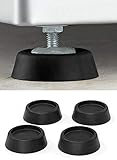
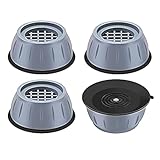
Do not use cardboard, folded towels, or random scraps under the washer feet. Those quick fixes compress, slide, and trap moisture, which can create more trouble over time. A solid anti-vibration pad or properly built platform is safer than a soft shim that squashes flat after a few loads. The goal is firm contact with the floor, not a wobbly cushion pretending to be support.
Check Suspension Parts And Shock Absorbers
Load balance and leveling come first, but a washer that keeps shaking may have worn internal support parts. Top-load washers often rely on suspension rods, springs, and dampening straps to steady the tub. Front-load washers commonly use shock absorbers to control drum movement during spin. These parts wear down slowly, so the problem can creep in before anyone notices.
A simple bounce test can reveal a lot. With the washer empty and unplugged, press down gently on the inner tub and let it rise back into place. A healthy tub should settle quickly instead of bouncing several times. Too much movement points toward worn suspension, especially if the washer bangs even with a balanced load.
Shock absorbers on front-load washers can leak, crack, loosen, or lose resistance. If the drum slams forward during spin, the shocks may no longer be controlling movement properly. A repair often involves removing the lower or rear panel, depending on the model, then inspecting each shock for damage. Replace shocks in pairs or sets when recommended, because mixing old and new support parts can leave the drum moving unevenly.
Top-load suspension rods can stretch or weaken after years of heavy loads. A washer used for blankets, rugs, and large family laundry piles tends to wear these rods faster than a lightly used machine. Replacement is usually manageable for careful DIY repair, but the tub can be awkward to handle. Keep safety first by unplugging the machine, turning off the water, and checking the model diagram before touching internal washer parts.
Spot Problems With The Drum And Bearings
Some off-balance symptoms come from deeper mechanical wear. A loose drum, grinding noise, or metal-on-metal sound during spin may point toward bearing trouble rather than a simple leveling issue. Bearings support the drum shaft and help it rotate smoothly. Once they wear out, the washer may shake, roar, or leave clothes wetter than expected.
Grab the inner drum and try to lift it slightly. A tiny bit of movement can be normal on some models, but clunking or obvious looseness is not a good sign. Spin the drum by hand and listen for scraping, rumbling, or rough movement. Those sounds often mean the repair is more involved than adjusting feet or rearranging towels.
Drum problems deserve a realistic cost check. Bearing replacement can require major disassembly, and on some machines the tub assembly may be sold as a large combined part. That can push repair costs close to replacement territory, especially on older washers. A practical rule from repair benches is simple: cheap fixes first, deep repairs second.
Semi-automatic models bring a different set of balance issues, especially during spin-dry cycles with unevenly placed clothing. Smaller spin tubs need laundry arranged evenly around the basket instead of piled to one side. To compare budget-friendly replacements before sinking money into a tired unit, review a washing machine semi automatic under 10000 option that matches lighter laundry routines. That choice makes sense when the current washer has both balance problems and aging mechanical parts.
Clean Hidden Areas That Throw Off Balance
Dirt and debris can make a washer act worse than expected. Coins, hair clips, lint clumps, and small fabric pieces may lodge near the pump, filter, or tub area. A blocked drain can leave too much water in the drum, and that extra weight makes the spin cycle harder to control. Clean filters and drain paths help restore proper water removal.
Front-load washers often have an accessible drain pump filter near the bottom panel. Place towels nearby, open the filter slowly, and let trapped water drain into a shallow pan. Remove debris carefully, then reinstall the filter tightly to prevent leaks. A washer that drains fully has a better chance of spinning evenly because wet laundry weight drops before high-speed rotation begins.
Top-load washers may hide lint, detergent residue, or debris around the tub ring and balance area. Sticky buildup can make parts move less smoothly, especially in older machines that have seen years of soap overload. Use the recommended cleaning cycle or a washer-safe cleaner, then wipe reachable areas around the lid, tub rim, and dispensers. A clean washer does not just smell better, it also reduces small problems that quietly affect spin performance.
Laundry rooms can hold damp odors after repeated off-balance loads leave water sitting in towels or around the machine base. Poor airflow makes that musty smell linger, especially in small utility corners. To keep the space fresher while troubleshooting the washer, rely on an air purifier for odor elimination that suits the room size and moisture conditions. Odor control will not repair the washer, but it can make the area less miserable while you fix the real vibration issue.
Fix Washer Balance Problems After Basic Checks
A washer that still shakes after load changes and leveling needs a closer look at the parts that control movement. The tricky bit is that off-balance spinning can look the same from the outside even when the cause is totally different inside. A machine may bang because of worn suspension rods, loose counterweights, weak shocks, or a tired tub bearing. Start with the least expensive checks, then work toward the deeper repairs so you don’t throw money at the wrong problem.
Inspect Counterweights And Mounting Bolts
Front-load washers usually rely on heavy counterweights to keep the drum steady during fast spin cycles. If a counterweight cracks or its bolts loosen, the washer can slam hard even with a balanced load. Unplug the machine, remove the proper access panel, and look for broken concrete blocks, loose bolts, or powdery debris near the tub. A loose counterweight is not something to ignore because it can damage the outer tub fast.
Tightening bolts may solve the issue if the weight is still intact. Use the correct socket and avoid overtightening because cracked mounts can turn a small repair into a bigger mess. If the counterweight is broken, replacement is the safer route. That repair restores drum stability and helps the washer stop fighting itself during the final spin.
Top-load washers may not use the same front-load counterweight setup, but they still depend on balanced support around the tub. Loose brackets, worn pads, or shifted mounting points can make the cabinet shake more than normal. A careful visual inspection often reveals scuffs, rub marks, or areas where the tub has been hitting the frame. Those marks are clues, not decoration.
Older machines can keep running for years with small repairs, but repeated shaking shortens their life. If the washer already has rust, bearing noise, drainage problems, and balance trouble, repair costs deserve a hard look. For replacement planning, compare a washing machine for longevity before spending heavily on a machine that’s already limping. A durable washer won’t fix today’s load, but it can prevent the same headache from becoming a yearly routine.
Replace Worn Suspension Rods Or Springs
Top-load washers often bounce because the suspension rods have lost tension. These rods hold the tub centered, and once they weaken, the basket swings too freely during spin. A washer that bangs side to side with normal loads usually points toward weak suspension support. The repair is common, but it takes patience because the tub can shift while you work.
Replace suspension rods as a full set whenever possible. Mixing one new rod with three tired ones can leave the tub uneven, which means the washer may still shake after the repair. Model-specific parts matter here because rod length, spring tension, and mounting ends vary by machine. Using the wrong set can make spin imbalance worse instead of better.
Before removing parts, take photos of each mounting point. Those quick pictures save frustration later, especially when clips or plastic retainers look similar. Lift the tub carefully, unhook one rod at a time, and keep fingers away from pinch points. Slow work beats a rushed repair because safe handling matters more than shaving a few minutes off the job.
After replacement, run a small rinse and spin cycle with no laundry first. Listen for scraping, knocking, or uneven tub movement before loading clothes again. Then try a medium load with mixed fabrics to confirm the washer settles into a smoother rhythm. A successful repair should reduce banging, walking, and cabinet vibration without needing constant load babysitting.
Handle Front-Load Shock Absorber Failure
Front-load washers use shock absorbers to control the drum’s forward and backward movement. Worn shocks often create a heavy thud during spin, especially as the machine ramps up speed. The drum may look like it’s lunging inside the cabinet instead of spinning smoothly. That movement puts extra stress on door seals, bearings, and tub mounts.
Inspect the shocks for cracks, loose pins, oil residue, or broken plastic ends. A shock can look fine at a glance but still fail if it has little resistance when compressed. Remove one only after checking your model’s service layout and unplugging the washer. The right replacement restores controlled drum movement and helps reduce violent vibration.
Replacing only one failed shock might seem cheaper, but worn pairs usually age together. A fresh shock paired with a weak one can create uneven control from side to side. Replacing the full set often gives a cleaner repair and reduces the chance of repeat labor. That’s the kind of practical tradeoff that saves headaches later.
Run a test cycle after the repair and watch the washer during acceleration. A little movement is normal, but hard banging is not. The machine should build spin speed without sounding like it’s punching the cabinet. If the noise remains, move on to bearings, counterweights, and floor support instead of blaming the new shocks too quickly.
Know When The Floor Is The Real Problem
A perfectly repaired washer can still shake on a weak floor. Upstairs laundry rooms, old wood subfloors, and flexible vinyl surfaces can amplify vibration like a drum. The washer may be level, yet the floor beneath it moves just enough to cause trouble. That’s why floor stiffness belongs on the checklist, not at the bottom as an afterthought.
Stand near the washer during spin and feel the floor. If the floor flexes under your feet, the machine may need a sturdier base or better placement. Moving the washer closer to a load-bearing wall can sometimes reduce bounce. A rigid surface gives the washer a better foundation for stable spinning.
Anti-vibration pads can help, but they are not magic. Thick rubber pads may reduce noise transfer, yet they won’t fix broken suspension or a sagging floor. Use them after confirming the washer is level and mechanically sound. That order keeps the repair logical instead of turning it into a guessing game.
Laundry areas near kitchens, mudrooms, or utility corners often share airflow and odor issues too. Damp floors, detergent spills, and trapped lint can make nearby spaces feel musty, especially around wood finishes and cabinets. For nearby kitchen ventilation upgrades, explore rustic range hoods only if the layout connects laundry odor with cooking-area airflow. Keep the washer repair separate, but don’t ignore how moisture and ventilation affect the whole room.
Reset Daily Laundry Habits That Cause Shaking
Some washer problems come back because the loading routine never changes. Heavy bedding, bath rugs, hoodies, and towels can bunch together and throw the drum off balance. Split bulky items into smaller loads or pair one heavy item with a few similar pieces. Better loading habits protect suspension parts from constant strain.
Use the right cycle for the load instead of forcing everything through the same setting. Bulky cycles usually add more water movement or gentler tumbling to help large items spread out. Fast spin settings remove more water, but they also expose balance problems faster. Choose spin speed with fabric weight and washer condition in mind.
Detergent matters more than it gets credit for. Too much soap creates residue, traps grime, and can leave laundry heavier than expected during spin. High-efficiency washers need low-sudsing detergent in measured amounts, not a generous pour from habit. Clean rinsing supports lighter, more even spinning.
Watch for patterns after each fix. If the washer only shakes with rugs, the machine may be fine and the load is the problem. If every load shakes, even light mixed clothing, the issue is likely mechanical or floor-related. That difference keeps washer troubleshooting honest and saves money.
Decide Between Repair And Replacement
Repair makes sense when the washer is otherwise healthy. Leveling feet, replacing suspension rods, cleaning filters, or tightening loose parts can bring a shaky machine back under control. These repairs are usually worth considering before shopping for a new appliance. A targeted fix protects washer lifespan without wasting cash.
Replacement becomes more reasonable when several expensive symptoms appear together. Loud bearing roar, tub looseness, rusted cabinet panels, control board issues, and repeated balance errors can stack up quickly. A repair that costs nearly as much as a dependable replacement deserves a second look. The smartest move is the one that fits long-term reliability, not just today’s panic.
Age also affects the decision. A newer washer with one worn suspension part is a better repair candidate than an older unit with multiple failing systems. Parts availability can be another headache, especially for discontinued models. Before committing, compare the repair estimate against the washer’s condition, capacity, and history of problems.
Keep one practical rule in mind: fix the simple causes first, then judge the bigger ones clearly. Start with load balance, leveling, drain cleaning, and visible support parts before assuming the worst. A calm washer is usually the result of stable footing, balanced loads, healthy suspension, and clean drainage working together. Skip one of those pieces, and the spin cycle may start throwing a fit all over again.


10 Best Quality Semi Automatic Washing Machine of 2026 For Leak-Free Laundry

11 Best Small Washer Machine of 2026 For Everyday Laundry
12 Best Vibration Pads For Washing Machine of 2026 To Stop Walking and Shaking

11 Best Selling Front Load Washing Machine of 2026 For Quiet Odor-Free Laundry

11 Best Washing Machine For King Size Bedding of 2026 To Prevent Cycle Errors

10 Best Small Front Loader Washing Machine of 2026 For Tight Closets

12 Best Side Load Washing Machine of 2026 For Low Vibration

11 Best Single Tub Washing Machine of 2026 For Apartments Without Hookups






