How to Open a Pocket Knife Safely

Rotate the blade out until it clicks. Start by keeping your fingers clear of the handle channel where the sharp edge rests. Grip the sides of the frame firmly, grab the blade opener, and swing the metal outward away from your palm until the joint seats firmly. That keeps your skin completely out of the cutting path while the blade travels.
The exact motion depends on how the knife is built. Traditional folding knives feature a small nail groove (a tiny slot cut for a fingernail) that requires two hands to pull open. Modern knives often use a thumb peg on the blade or a back tab on the handle that opens with one finger. Internal helper springs can make the blade snap open fast, while a tight pivot (the hinge pin the blade swings on) can make it feel stiff. Here is how to identify what you have and open it smoothly without slipping.
The Short Version
- Identify the opening tool: Look for a nail groove, a thumb peg on the blade face, or a lever tab on the back of the handle.
- Grip the handle safely: Hold the side panels firmly, keeping fingertips out of the channel where the sharp edge rests.
- Rotate in a smooth arc: Push or pull the blade outward along its natural hinge curve rather than forcing it straight out.
- Verify the lock: Listen for a click and confirm the locking bar snaps behind the blade heel before cutting.
Identifying Your Knife Style and Opening Features
Before opening a pocket knife, look closely at the blade to see how it was designed to open. Folding knives fall into two broad groups: classic two-handed designs and modern one-handed everyday carry models.
Traditional knives, such as classic slipjoint folders, feature a nail nick. A nail nick is a small groove cut into the blade for a fingernail. Because these knives lack mechanical levers, you grip the handle with one hand and pinch the blade with your other hand to swing it open.
Modern one-handed folding knives use small parts attached directly to the steel. The most common feature is a thumb stud, which is a small metal peg on the side of the blade. Some knives have a round hole cut through the steel instead of a peg, but both work the same way by giving your thumb leverage to push the blade outward.
Another popular style is the flipper knife. This design features a flipper tab, which is a small lever sticking out from the back of the handle when the blade is folded. Pushing downward on this tab with your index finger kicks the blade outward through its pivot, which is the hinge pin the blade swings on.
You will also encounter manual and spring-assisted knives. A manual knife moves only as far as your finger pushes it. A spring-assisted knife uses an internal spring that catches the blade after you start the motion and snaps it fully open.
Hand Placement: Keeping Fingers Clear of the Blade Path
Most cuts happen during opening when fingers slip across the slot where the sharp edge travels. Before touching the opening mechanism, establish safe hand placement.
- Grip the outer handle scales: Squeeze the flat side panels between your palm and fingers. Never wrap your fingertips over the top spine or into the open channel where the blade swings through.
- Keep the pivot unobstructed: Leave space around the front hinge pin so your thumb and forefinger can move without bumping the frame.
- Point the tip outward: Always aim the folding end away from your body, legs, and anyone sitting nearby before applying pressure.
- Keep hands dry: Wet or oily hands cause slips, especially when working against the spring tension of a new pocket knife.
The blade travels through a wide half-circle arc. Any fingertip resting along the open channel sits directly in the path of that sharpened steel. Give the blade open air to complete its swing.
How to Open a Traditional Knife with Two Hands
Traditional folding knives rely on steady spring tension along the back spine to keep the blade closed. Opening one safely requires deliberate control so the knife does not snap shut unexpectedly.
- Hold the handle in your non-dominant hand: Grasp the lower handle firmly. Keep your thumb and fingers resting flat on the side scales, well clear of the open slot.
- Pinch the blade spine: Use the thumb and index finger of your dominant hand to grasp the dull top spine near the tip. If the blade has a nail nick, slide your thumbnail into the groove while your index finger pad supports the opposite side of the steel.
- Rotate in an outward arc: Pull the blade away from the handle in a steady curve following the hinge circle.
- Pause at the half-stop: Many classic knives feature a half-stop, a safety notch that pauses the blade movement at ninety degrees. If your knife pauses halfway, do not force it. Confirm your fingers are clear of the channel and continue the rotation.
- Engage the open position: Pull the blade until it snaps flush with the handle spine. You will feel a solid mechanical snap as the backspring locks the blade open.
How to Open a Pocket Knife with One Hand
Modern folding knives let you open the blade using only your dominant hand. Proper finger leverage is essential to avoid slipping.
Opening with a Thumb Stud or Hole
- Settle the handle into your palm: Rest the base of the handle against your palm, curling your lower three fingers around the back handle scale or pocket clip.
- Place your thumb pad on the peg: Set the fleshy pad of your thumb against the side of the thumb stud or the rim of the thumb hole.
- Push in an upward arc: Do not push straight outward into the air. Push your thumb forward and upward toward the front tip of the knife in a curved sweeping motion.
- Follow through to lockup: As the blade swings open, roll your thumb forward until the locking mechanism engages with an audible click.
Opening with a Flipper Tab
- Orient the knife vertically: Hold the handle upright with the pivot pin pointing upward. The small flipper tab will stick out from the spine facing your index finger.
- Position your index finger: Rest the pad of your index finger on the top corner of the flipper tab. Keep your other fingers on the handle sides, clear of the blade path.
- Pull backward firmly: Pull your index finger straight down toward your wrist, like flicking a light switch on a wall.
- Let momentum finish the swing: The mechanical leverage kicks the blade out of its detent. On spring-assisted knives, the internal spring engages instantly to finish the swing into full lockup.
Confirming Lockup: How to Verify the Blade Is Safe
Never begin cutting until you verify that the blade is completely open and mechanically locked. An unlocked blade can fold backward unexpectedly under pressure and slice your fingers.
Most modern folding knives rely on a liner lock. A liner lock is the spring bar inside the handle that snaps behind the open blade to stop it from closing on your fingers. Look directly down into the handle slot near the pivot hinge. You should see the flat metal spring leaf shifted sideways so it rests squarely against the rear tang of the blade steel. If that bar sits partially off to the side, the lock is not secure.
Other knives use a frame lock, where a section of the handle itself springs behind the blade, or a lockback, where a spring-loaded spine lever clicks into a deep notch. Traditional slipjoint knives do not have a mechanical lock, relying instead on backspring tension.
To verify lockup, keep your fingers clear of the cutting edge and lightly hold the sides of the handle. Gently push against the dull spine of the blade. The blade should stay completely rigid without any rocking, wobbling, or movement toward the closed position.
Fixing Stiff Blades: How to Ease a Tight Pivot Safely
If your pocket knife feels uncomfortably stiff, requiring painful force to swing open, do not wrestle with it. Forcing a stiff blade drastically increases the risk of slipping.
Pocket knives collect lint, dust, and dried factory grease inside the hinge. Start by blowing out the handle slot with compressed air. If sticky dirt remains, wash the pivot area under warm tap water with mild dish soap, rinse thoroughly, and dry it completely. Knives made with rust-resistant stainless steel handle washing well, but moisture trapped in the hinge pin can still attract grime if left wet. High-carbon or tool steel blades require extra care to prevent rust spots.
Next, lubricate the moving parts. Place one single drop of light mineral oil or knife pivot lubricant directly onto each side of the hinge washers where the blade meets the handle. Swing the blade back and forth several times to distribute the oil evenly.
If the blade remains stiff, check the pivot screw. The pivot screw is the central fastener holding the blade in the handle. Using the correct miniature Torx wrench, turn the pivot screw counterclockwise by an extremely small amount, no more than a sixteenth of a turn. Check the opening action. The blade should swing smoothly without any side-to-side wobble.
What to Look for in an Easy-Opening Pocket Knife
If you struggle to swing open a pocket knife smoothly, choosing a model designed for effortless opening makes everyday tasks much safer. The right knife eliminates awkward finger strain and allows smooth, predictable movement every time you reach for it.
Look for blades with dual thumb studs or large, textured thumb holes that offer plenty of surface area for your thumb pad. Knives with back flipper tabs are especially friendly for beginners because using your index finger provides more natural leverage than pushing sideways with your thumb. If hand strength or joint stiffness is a concern, spring-assisted knives take over the mechanical effort once you start the motion.
Pay attention to the pivot construction. Knives built with internal ball-bearing washers glide open with far less friction than traditional nylon washers. Just as maintaining high cutting performance on kitchen cutlery like German high-carbon steel premium knife block sets depends on clean, balanced design, a pocket knife that opens smoothly keeps you confident and protected during daily chores.
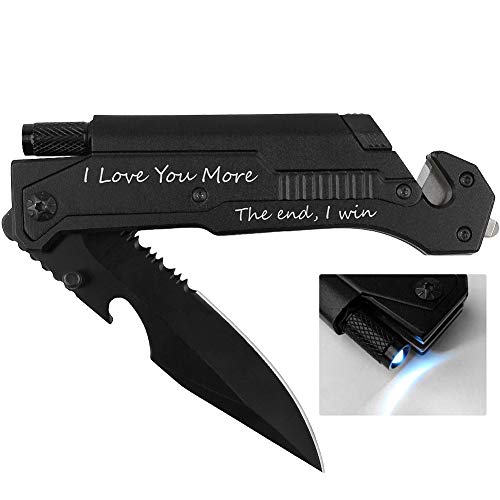
- TAR Score9.4
TAR Score is a ranking system developed by TopAppliancesReviews.com. TAR score has no relationship or impact from any manufacturers or sales agent websites. Learn more
- BrandFanfoobi

- TAR Score9.2
TAR Score is a ranking system developed by TopAppliancesReviews.com. TAR score has no relationship or impact from any manufacturers or sales agent websites. Learn more
- BrandKershaw

- TAR Score9.2
TAR Score is a ranking system developed by TopAppliancesReviews.com. TAR score has no relationship or impact from any manufacturers or sales agent websites. Learn more
- BrandCoast

- TAR Score9.0
TAR Score is a ranking system developed by TopAppliancesReviews.com. TAR score has no relationship or impact from any manufacturers or sales agent websites. Learn more
- BrandGerber

- TAR Score9.0
TAR Score is a ranking system developed by TopAppliancesReviews.com. TAR score has no relationship or impact from any manufacturers or sales agent websites. Learn more
- BrandKershaw

- TAR Score8.8
TAR Score is a ranking system developed by TopAppliancesReviews.com. TAR score has no relationship or impact from any manufacturers or sales agent websites. Learn more
- BrandCOHOMELARS

- TAR Score8.4
TAR Score is a ranking system developed by TopAppliancesReviews.com. TAR score has no relationship or impact from any manufacturers or sales agent websites. Learn more
- BrandRam-Pro
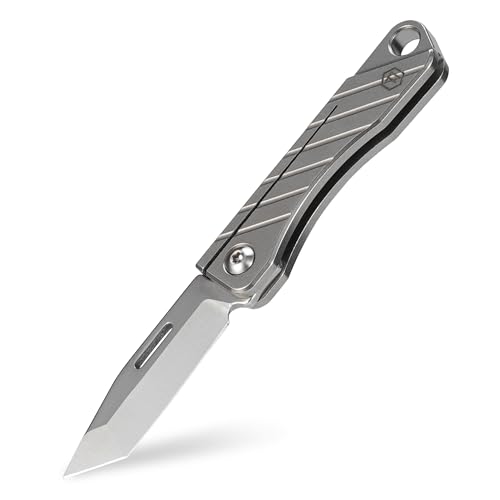
- TAR Score8.2
TAR Score is a ranking system developed by TopAppliancesReviews.com. TAR score has no relationship or impact from any manufacturers or sales agent websites. Learn more
- BrandKeyUnity
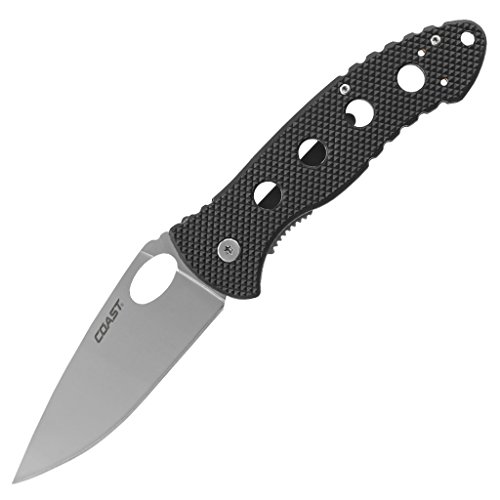
- TAR Score8.0
TAR Score is a ranking system developed by TopAppliancesReviews.com. TAR score has no relationship or impact from any manufacturers or sales agent websites. Learn more
- BrandCoast
Last update on 2026-10-03 / Affiliate links / Images, Product Titles, and Product Highlights from Amazon Product Advertising API
FAQs
Why does my pocket knife hurt my thumb when I try to push it open?
Pain occurs when you push your thumb straight inward into the handle rather than along the blade arc. Pushing inward jams the blade against its internal detent ball, creating intense resistance. Angle your thumb forward and sweep upward toward the knife tip so the blade rolls smoothly along its natural hinge curve.
Is it safe to flick a pocket knife open with a hard wrist snap?
Snapping your wrist to whip a folding blade open can wear down the locking bar and cause your grip to slip. While some users flick their knives, the violent motion increases the chance of dropping the tool or bouncing the blade off the lock. Controlled thumb or index finger pressure is always the safest and most reliable way to deploy a blade.
What should I do if my pocket knife blade will not stay open?
Check the interior channel of the handle for packed pocket lint or grit that prevents the locking bar from springing into place. Clean the cavity thoroughly and verify that the pivot screw has not loosened to the point of blade wobble. If the locking bar is bent, worn, or fails to catch under light pressure, stop using the knife immediately to prevent serious hand injury.
Can left-handed people open standard one-handed pocket knives?
Left-handed users can easily operate knives equipped with dual thumb studs, ambidextrous thumb holes, or back flipper tabs. Knives with only a single thumb stud on the left side force awkward hand movements that place fingers dangerously close to the sharp edge. If you carry on your left side, look for knives with reversible pocket clips and symmetrical opening features.

Top Rated Best Quality Range Hoods: 2026 Expert Picks
The 12 Best Small Solar Generators 2026

10 Best Quality Semi Automatic Washing Machine of 2026 For Leak-Free Laundry

11 Best Small Washer Machine of 2026 For Everyday Laundry

12 Best Vibration Pads For Washing Machine of 2026 To Stop Walking and Shaking

11 Best Selling Front Load Washing Machine of 2026 For Quiet Odor-Free Laundry

11 Best Washing Machine For King Size Bedding of 2026 To Prevent Cycle Errors

10 Best Small Front Loader Washing Machine of 2026 For Tight Closets