How to Safely Open a Pineapple With a Knife

A ripe pineapple sits on the cutting board, wobbling and rolling every time a blade touches the spiky rind. The safest fix is to slice off the top and bottom to create flat, stable ends, stand the fruit upright, and shave the skin downward along the natural curve. Removing those ends anchors the fruit firmly against the board, letting you peel away the rough outer layer without the knife slipping.
The exact approach depends on your knife and how you plan to serve the fruit. A heavy chef's knife or a sharp serrated blade cuts through the thick rind with minimal pressure. You can slice deeply to clear out the brown spots immediately, or peel thinly to save more sweet fruit. From there, dividing the pineapple into wedges makes it easy to slice off the woody center. Here is how to trim, core, and chop the fruit cleanly on your kitchen counter.
How do you set up your cutting board safely?
A fresh pineapple is heavy, wobbly, and coated in a tough, prickly rind that sheds slick juice as soon as you cut into it. If your cutting board slides across the countertop while you press down, the blade can slip. Safe prep starts by securing your workstation before the blade touches the fruit.
Dampen a paper towel or a clean dishcloth with water, wring it out completely, and lay it flat on your counter. Set a large, heavy cutting board directly on top of the towel. Try to nudge the board with your hand. If it shifts, adjust the towel underneath until the board stays completely motionless.
Next, choose the right blade. You need a broad knife with enough length and stiffness to cut through dense fruit without bending sideways. An 8-inch chef knife with a full tang (meaning one solid piece of blade steel extending all the way through the handle) gives you the weight and control you need. Selecting a knife crafted from sturdy steel, such as those found in German high-carbon steel knife block sets, gives you the rigid spine needed to press down cleanly through tough rind. A long serrated bread knife is also a solid backup because the teeth bite into waxy skin without skating off. Confirm the blade is made from stainless steel (a rust-resistant, easy-to-clean metal) and freshly sharpened. A dull knife forces you to press down with dangerous force.
Keep a dry towel beside your board to wipe sticky juice off your hands and knife handle between cuts.
How do you cut off the top and bottom?
A round fruit rolls around on a flat surface, creating an unsteady target that invites slips. Your first physical goal is to remove both ends so the pineapple stands on its own without tilting.
- Lay the pineapple on its side across the middle of your board. Rest your non-knife hand firmly on the fruit body, curling your fingers inward like a claw so your fingertips stay tucked away from the blade path.
- Position your knife about a half inch below the crown (the spiky green top leaves). Push down in one steady, smooth motion to sever the top leaves completely. If the fruit feels stiff, rock the blade gently from heel to tip rather than sawing back and forth. Discard the leafy crown.
- Turn the pineapple so the bottom stem faces your knife hand. Slice off about a half inch from the bottom base in the exact same way to remove the tough, woody root base.
- Stand the pineapple upright on its cut bottom. Tap the side lightly to verify its balance. If it wobbles, lay it back down and shave off a thin sliver to level it. Once it stands completely upright, your base is secure.
What is the safest way to peel the skin?
With the pineapple standing flat on your board, removing the tough rind becomes a steady downward shave instead of an awkward struggle.
- Keep the fruit upright on its flat base. Place your non-knife hand flat on top of the upper cut surface to anchor it. If the flesh feels slick, put a dry paper towel between your palm and the fruit to prevent slipping. Keep your fingers flat on top, never curling down over the sides.
- Set your knife blade at the top edge, placing the sharp edge right where the green rind meets the yellow interior flesh.
- Slice downward in a gentle curve that follows the natural barrel shape of the fruit. Pineapples bulge outward in the middle. Cutting straight down in a rigid line cuts away too much sweet flesh. Follow that gentle curve until the blade reaches the board.
- Rotate the pineapple an inch after each cut. Overlap slightly with the previous cut strip and shave away the next ribbon of peel until all the outer skin is gone.
Do not worry if small brown spots remain scattered across the yellow surface. Trying to cut deep enough on the first pass to remove every spot wastes the sweetest fruit. A shallow initial peel keeps more fruit intact.
How should you remove the brown eyes?
After peeling the outer rind, you will see the eyes (small brown spots under the outer peel). These spots are rough, fibrous, and prickly, so you want to remove them before serving. You have two simple ways to tackle them.
The first option is the quick shave method. If you are making a quick snack or blending the fruit into smoothies, saving every drop of juice might not matter. Simply run your chef knife down the sides of the fruit a second time, shaving off a thin layer about an eighth of an inch deep. This pass takes thirty seconds and strips away almost all the brown spots at once. You lose a little fruit around the edges, but you save time.
The second option is the spiral V-groove method, which preserves the maximum amount of fruit. Notice that the brown eyes naturally line up in neat diagonal spiral rows wrapping around the fruit. Place your knife tip at a 45-degree angle just above one diagonal line of spots. Cut a shallow slit about a quarter inch deep along that line. Then move the knife just below that row and cut another 45-degree slit angling upward. The two cuts meet behind the spots, releasing a neat, V-shaped strip containing the entire row of eyes. Repeat this along each spiral row until the fruit is completely clean.
How do you remove the tough core and chop?
In the center of the fruit sits the core (the tough, woody center). While this center column smells sweet, it is fibrous and hard to chew. Removing it leaves you with purely tender fruit.
- Stand the peeled pineapple upright on your board. Place your knife edge across the center of the top cut circle. Push down smoothly to slice the fruit into two equal halves from top to bottom.
- Lay both halves flat on the board, cut side down. Slice each half down the middle lengthwise to create four long, triangular spears.
- Stand one spear upright on its base. Look at the inner point of the triangle to spot the pale, fibrous core running down the edge. Hold the spear with your fingers behind the blade path. Cut straight down about a half inch behind the pointed edge to slice the core away in one strip. Repeat on the remaining spears.
- Lay the trimmed spears flat on your board. For bite-sized chunks, slice each spear lengthwise into two strips, then cut crosswise every half inch. For simple wedges, slice straight across each spear into thick triangles.
If you want round pineapple rings for grilling or upside-down cake, lay the whole peeled pineapple sideways and slice crosswise into half-inch disks. Then use a small paring knife or a round cookie cutter to cut out the hard round core in the center of each disk.
When you finish, storing your prep knives in dedicated blocks, such as magnetic knife block sets, protects edges from dulling and keeps blades ready for your next project.
What specialty tools can make this job easier?
A standard kitchen knife handles this job with ease, but peeling multiple pineapples by hand can tire your hands if you have limited grip strength or a large batch of fruit to prepare. Dedicated kitchen gadgets can take over the heavy effort.
Cylindrical fruit corers are the most popular option. These tools use a central tube with a circular base blade that twists into the top of the fruit like a corkscrew. As you turn the handle clockwise, the circular blade cuts downward through the meat while leaving the woody center standing inside the tube. Pulling the handle upward lifts out a continuous spiral of fruit rings in seconds. When shopping for this kind of tool, check that the cutting ring is made from thick stainless steel with sharp, serrated tips. Serrated teeth bite into dense fruit with minimal downward force. Built-in depth marks along the shaft are another helpful feature to confirm, as they keep you from cutting through the bottom rind and leaking juice onto your counter.
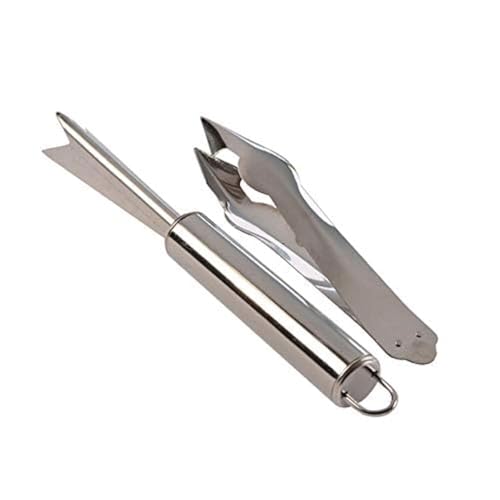
Dedicated eye extractors are also helpful if you like spiral carving without using a full-sized knife for fine trimming. These come as small V-shaped scrapers or stainless steel pinch clips. They let you pluck out individual brown spots with a light pinch, preserving the sweet outer meat with minimal effort.

- TAR Score9.6
TAR Score is a ranking system developed by TopAppliancesReviews.com. TAR score has no relationship or impact from any manufacturers or sales agent websites. Learn more
- BrandCHEOTIME

- TAR Score9.2
TAR Score is a ranking system developed by TopAppliancesReviews.com. TAR score has no relationship or impact from any manufacturers or sales agent websites. Learn more
- BrandAUBENR

- TAR Score9.0
TAR Score is a ranking system developed by TopAppliancesReviews.com. TAR score has no relationship or impact from any manufacturers or sales agent websites. Learn more
- BrandYYP

- TAR Score8.4
TAR Score is a ranking system developed by TopAppliancesReviews.com. TAR score has no relationship or impact from any manufacturers or sales agent websites. Learn more
- BrandAIYAYI

- TAR Score8.4
TAR Score is a ranking system developed by TopAppliancesReviews.com. TAR score has no relationship or impact from any manufacturers or sales agent websites. Learn more
- BrandiRecord

- TAR Score8.4
TAR Score is a ranking system developed by TopAppliancesReviews.com. TAR score has no relationship or impact from any manufacturers or sales agent websites. Learn more
- BrandHonbay
- TAR Score8.2
TAR Score is a ranking system developed by TopAppliancesReviews.com. TAR score has no relationship or impact from any manufacturers or sales agent websites. Learn more
- BrandWixine

- TAR Score8.0
TAR Score is a ranking system developed by TopAppliancesReviews.com. TAR score has no relationship or impact from any manufacturers or sales agent websites. Learn more
- BrandFTVOGUE
Last update on 2026-10-03 / Affiliate links / Images, Product Titles, and Product Highlights from Amazon Product Advertising API
FAQs
Is the tough pineapple center core safe to eat?
Yes, the central core is completely safe to eat and holds high amounts of fiber, vitamin C, and bromelain. People usually remove it because the woody, dense texture makes it hard to chew. If you want to use the core instead of throwing it away, save the trimmed strips in a freezer bag and drop them into a blender for smoothies. You can also drop core slices into a pitcher of cold water or iced tea to infuse fresh tropical flavor without any stringy pulp in your glass.
How do you store cut pineapple to keep it juicy?
Store cut pineapple pieces in an airtight glass or plastic container in your refrigerator. Cut pineapple quickly releases its sweet juice, and a sealed container stops that juice from drying out or absorbing food odors from your fridge. Chilled in a proper container, fresh pineapple stays crisp and sweet for three to five days. If the fruit smells like vinegar or alcohol, or if the flesh turns dull brown with a slimy film, throw it out.
Why does fresh pineapple make your tongue tingle?
Fresh pineapple contains bromelain, a natural enzyme that breaks down protein. When you chew raw pineapple, the enzyme briefly breaks down the protective surface proteins inside your mouth, creating a mild prickling or stinging feeling. The sensation is harmless and fades quickly as your mouth replenishes its natural saliva barrier. If the prickle bothers you, grilling the fruit or soaking raw chunks in light saltwater for two minutes neutralizes the bromelain.
Can you freeze fresh pineapple chunks for later?
Yes, pineapple freezes very well and keeps its sweet flavor for up to twelve months. To keep the pieces from sticking together in one big block, spread the cut chunks on a baking sheet lined with parchment paper and freeze for two hours. Once the outside of each chunk is frozen solid, pour them into a heavy-duty freezer bag, squeeze out the extra air, and seal. You can toss frozen chunks straight into a blender for drinks or thaw them in the fridge for baking.


Top Rated Best Quality Range Hoods: 2026 Expert Picks

The 12 Best Small Solar Generators 2026

10 Best Quality Semi Automatic Washing Machine of 2026 For Leak-Free Laundry

11 Best Small Washer Machine of 2026 For Everyday Laundry

12 Best Vibration Pads For Washing Machine of 2026 To Stop Walking and Shaking

11 Best Selling Front Load Washing Machine of 2026 For Quiet Odor-Free Laundry

11 Best Washing Machine For King Size Bedding of 2026 To Prevent Cycle Errors

10 Best Small Front Loader Washing Machine of 2026 For Tight Closets